Recipe
Servings
2 1×
Serves 2Prep 5 minCook 10 minTotal 15 min
Ingredients
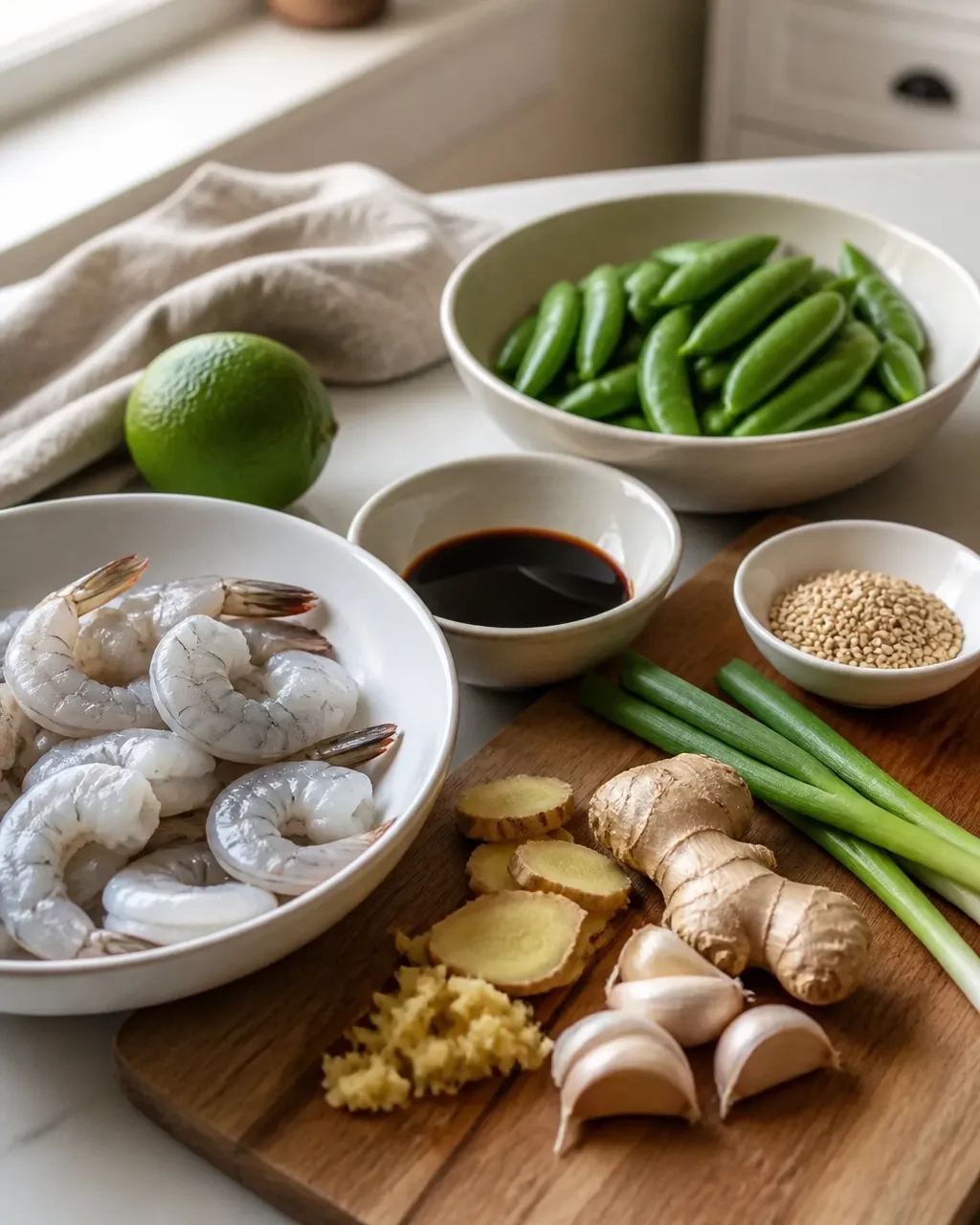
- 10–12 ounces peeled and deveined shrimp
- 6–8 ounces sugar snap peas
- 2 scallions, sliced
- 1 tablespoon fresh ginger, minced
- 2 garlic cloves, minced
- 2 tablespoons soy sauce
- 3 tablespoons broth or water
- 1 tablespoon rice vinegar
- 1–1½ teaspoons honey or brown sugar
- 1 teaspoon cornstarch
- 1 tablespoon neutral cooking oil
- 1 teaspoon toasted sesame oil
- Optional: chili sauce, sesame seeds, lime wedges, cooked rice
Method
- Whisk the soy sauce, broth, vinegar, honey, cornstarch, and optional chili sauce until smooth.
- Pat the shrimp dry. Heat a wide skillet over medium-high to high heat and add the neutral oil.
- Cook the ginger, garlic, and scallion whites briefly until fragrant.
- Add the snap peas and stir-fry until bright green and crisp-tender.
- Add the shrimp in a single layer. Cook until pink, opaque, and gently C-shaped.
- Stir the sauce again, pour it into the skillet, and let it bubble until lightly thickened.
- Finish with sesame oil, scallion greens, sesame seeds, and lime if using. Serve immediately.
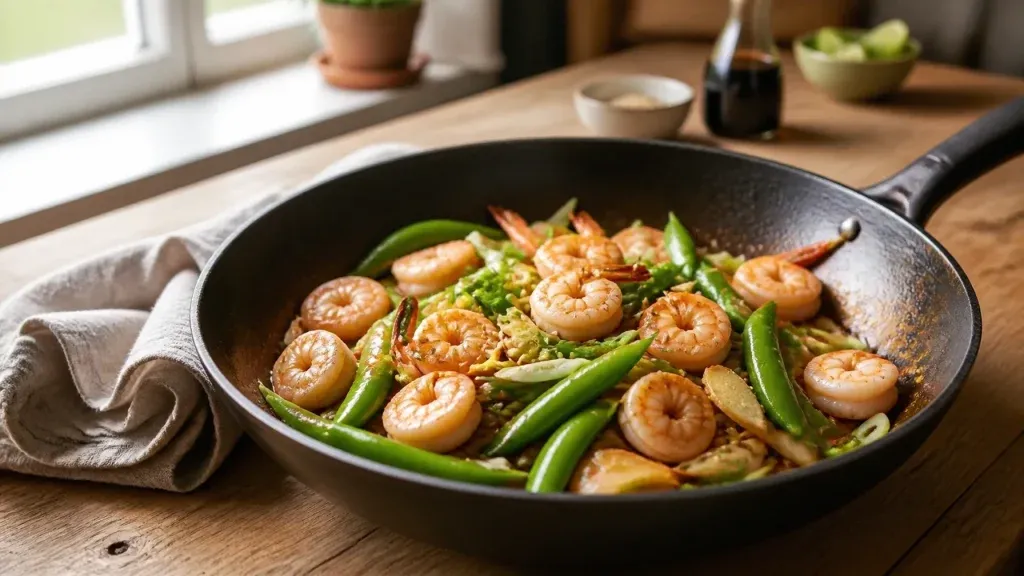
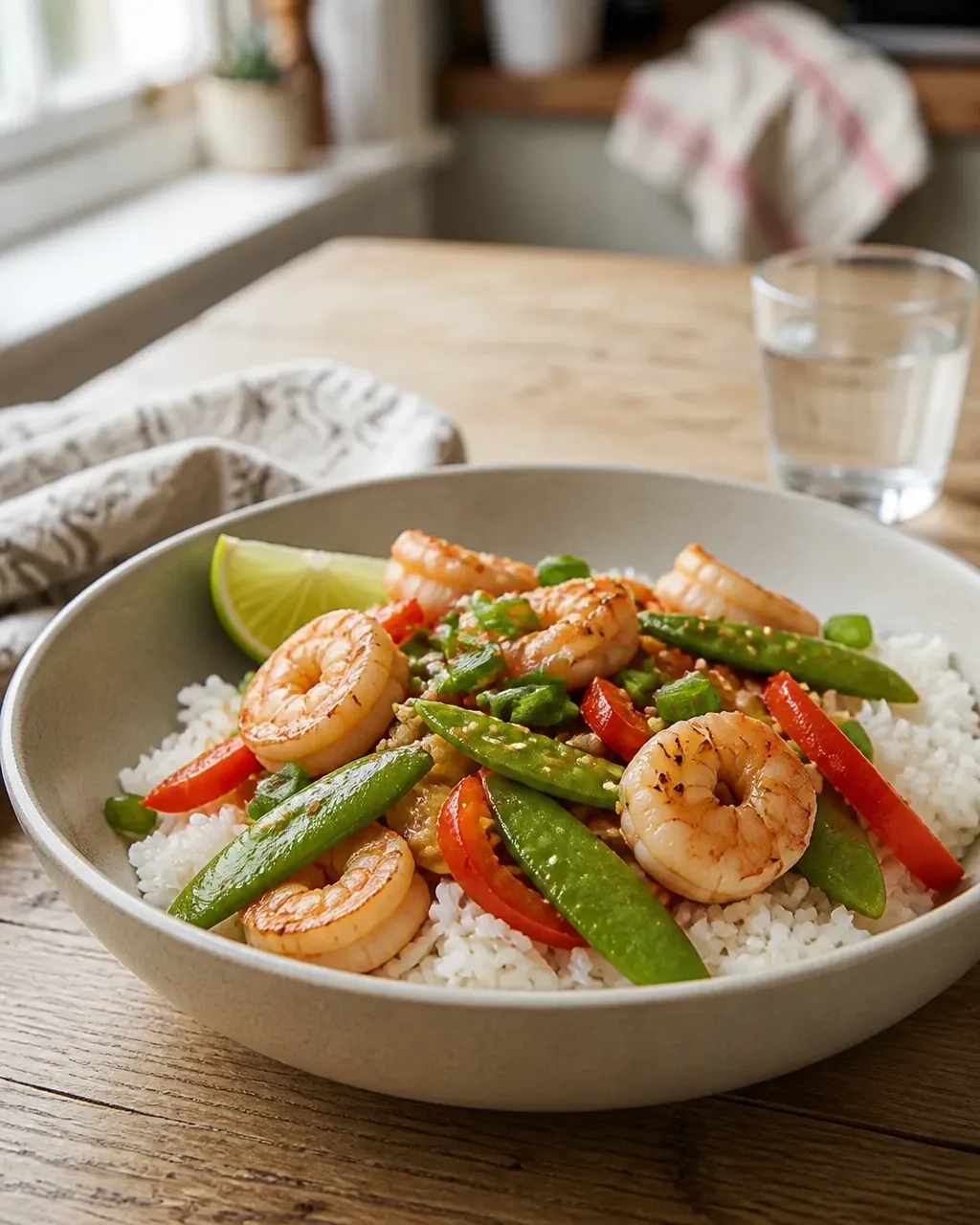
When dinner needs to happen quickly, shrimp is your best little shortcut. It cooks in minutes, loves bold flavors, and turns a handful of snap peas into something that feels far more exciting than “whatever was in the fridge.” This sesame ginger shrimp skillet brings savory, sweet, spicy, and bright flavors together in one pan. Keep the heat high, respect the timing, and you’ll have one of my favorite healthy dinner ideas on the table before anyone asks, “What’s for dinner?”
Tips & Technique: Make the Pan Work Faster
Start with a dry surface
Dry the shrimp thoroughly before they meet the skillet. This is non-negotiable.
Shrimp naturally carry quite a bit of surface moisture, and thawed shrimp can bring even more. If that moisture stays on the outside, the pan must evaporate it before browning can begin. The temperature lingers around the boiling point of water, so the shrimp steam instead of sear.
Use paper towels and blot firmly. You are not being rude to the shrimp. You are giving them a better chance at golden edges and concentrated flavor.
Preheat the skillet properly
Use a wide skillet with enough surface area to keep the shrimp in a mostly single layer. Heat it before adding the cooking oil, then give the oil a moment to become fluid and shimmery.
A hot pan provides fast, direct heat. That matters because shrimp have delicate muscle proteins that firm up quickly. You want the outside to develop flavor while the center cooks through, not a long, gentle simmer that squeezes the moisture out of the seafood.
Avoid crowding. If the shrimp overlap, the released moisture has nowhere to go. The result is pale, wet shrimp and a sauce that tastes diluted. Cook in two batches if your skillet is small. It may add a minute, but it saves the entire dish.
Bloom the aromatics, but do not burn them
Ginger, garlic, and scallion whites carry powerful aromatic compounds. Warm them briefly in the oil so their fragrance spreads through the fat and coats the rest of the skillet.
Start with ginger because it can handle a little more heat. Add garlic shortly afterward. Garlic burns quickly because its fine pieces have lots of exposed surface area. Once it turns dark brown, it becomes bitter and bossy in all the wrong ways.
Keep the aromatics moving. Cook until fragrant, not toasted into oblivion. You should smell the ginger and garlic before you add anything else.
Cook snap peas for color and crunch
Add the snap peas before the shrimp. They need slightly more time, but not much.
High heat quickly softens the outer skin while leaving the inside crisp. That gives you the sweet crunch that makes this skillet feel fresh rather than heavy. Watch for a brighter green color and a texture that bends slightly but still offers resistance.
Do not cook snap peas until they collapse. Their water content will escape, their color will dull, and the pan will become wetter. A two-minute head start is usually enough.
Add shrimp late and watch the curve
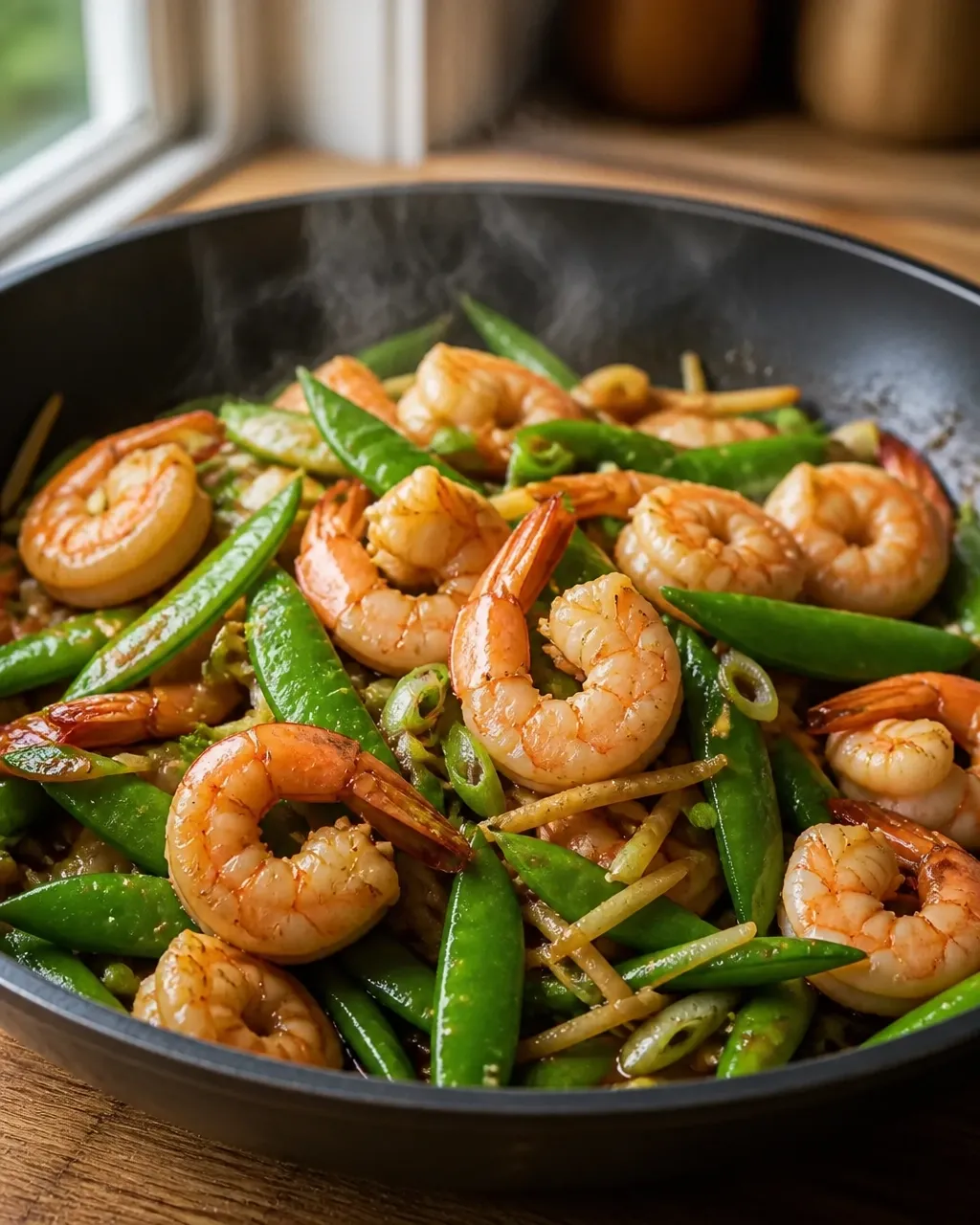
Shrimp are ready when they turn opaque and curl into a relaxed “C.” Straight and translucent means they need more time. A tight “O” usually means they have gone too far.
That shape is useful because heat causes shrimp proteins to denature and contract. A gentle curl indicates that the muscle fibers have set without squeezing out too much moisture. A tight ring signals a firmer, drier texture.
Pull the shrimp from the heat as soon as the thickest part is opaque. Residual heat will continue cooking them for a short time. Do not wait for them to look dramatically “done” in the pan. Shrimp are fast. They do not need a speech.
Thicken the sauce at the end
The sauce works because it combines salty, sweet, acidic, and aromatic notes. A small amount of cornstarch helps it cling to the shrimp and peas instead of running straight to the bottom of the plate.
Whisk the sauce well before adding it because cornstarch settles quickly. Let it bubble briefly in the hot skillet. Heat causes the starch granules to absorb liquid, swell, and create a glossy texture.
Add toasted sesame oil near the end rather than using it as your main high-heat cooking fat. Its nutty aroma is delicate, and prolonged high heat can flatten that fragrance. Finish with it after the sauce thickens, then toss everything together.
Taste before serving. Add vinegar or lime if the sauce feels heavy, a splash of soy sauce if it needs more savory depth, or chili if dinner has been suspiciously well-behaved.
For another fast seafood option using similar timing principles, try Cookpedia’s 15-Minute Garlic Butter Shrimp. You can also browse the full 15-Minute Meals collection when the clock is being dramatic.
Flavor Variations: Keep the Balance
Make it spicy
Add chili crisp, sambal, or red pepper flakes to the sauce. Increase heat gradually because spice becomes more noticeable as the sauce reduces. Finish with lime to keep the flavor sharp rather than merely hot.
Make it citrusy
Replace some of the vinegar with fresh lime juice and add a little lime zest at the end. Zest contributes aromatic oils without adding extra liquid, so it brightens the dish without thinning the glaze.
Make it sweeter and kid-friendly
Use a touch more honey or brown sugar and reduce the chili. Keep the ginger present, though. Its warm, fresh flavor prevents the sauce from becoming flat or candy-like. This version fits neatly into a rotation of quick family meals.
Make it plant-based
Swap the shrimp for cubed extra-firm tofu or sliced mushrooms. Tofu needs a drier surface and a little more browning time, while mushrooms should cook until their moisture evaporates. Use a plant-based soy sauce alternative if needed, and check out Cookpedia’s Teriyaki Tofu with Charred Spring Onions for another quick flavor route.
Side Dish Pairings: Add Contrast
Serve the skillet over steamed rice, brown rice, or noodles if you want something that catches every drop of sauce. Keep the starch plain; the shrimp already brings plenty of personality.
For a lighter plate, pair it with cucumber ribbons, shredded cabbage, or simply dressed greens. A sharp rice vinegar dressing cuts through the savory glaze and refreshes your palate.
Add roasted or steamed broccoli when you want more vegetable volume. Keep it lightly cooked so it contributes texture instead of turning the meal soft from edge to edge. For more ideas, browse Cookpedia’s healthy recipes and one-pot meals.
FAQ: What If Dinner Does Not Go to Plan?
What if I only have frozen shrimp?
Use them, but thaw them fully first. Place the shrimp in cold water until flexible, then drain and dry them extremely well. Avoid hot water and the microwave. Both can start cooking the outside before the center has thawed, which creates uneven texture.
Frozen shrimp often hold more surface water than fresh shrimp, so drying matters even more. If they go into the skillet wet, they will steam instead of brown.
What if my shrimp turn rubbery?
They cooked too long or at too low a heat. Long cooking gives the proteins more time to tighten and squeeze out moisture. Pull the shrimp as soon as the centers become opaque and the curves look relaxed.
For next time, cook the snap peas first and add the shrimp later. Keep the sauce ready beside the stove so you do not leave the shrimp sitting in a hot pan while you search for it.
What if my sauce is too thin?
Let it bubble for another 30–60 seconds. Heat activates the cornstarch and reduces excess liquid. If it still seems loose, mix a small amount of additional cornstarch with cold water in a separate cup, then add it gradually.
Never sprinkle dry cornstarch directly into the hot skillet. It clumps immediately and produces tiny white dumplings where you wanted a smooth glaze.
What if my sauce is too salty?
Add a splash of water or unsalted broth, then balance it with a little vinegar or lime juice. Acidity does not remove salt, but it makes the overall flavor feel brighter and less heavy.
Serve the shrimp with plain rice or noodles, which dilute the seasoning in each bite. Avoid adding more sweetener as your first fix; sweetness can mask salt temporarily without actually restoring balance.
Can I use another vegetable?
Yes. Use thin bell pepper strips, broccoli florets, shredded cabbage, or snow peas. Match the vegetable size to the cooking time. Dense vegetables need a head start, while tender greens should go in near the end.
Keep the pan from becoming crowded. If you add too many vegetables at once, they release water and lower the skillet temperature. Cook in batches when necessary.
Can I reheat leftovers?
Reheat gently in a covered skillet with a spoonful of water. Warm the shrimp just until heated through, then remove them from the pan. High heat and repeated cooking will make them firm and dry.
For the best texture, store the shrimp separately from rice and use leftovers within a day or two. You can also serve them chilled over greens for an easy lunch. This skillet earns its place among reliable quick family meals because it is fast fresh, but it is still useful after dinner.
Is this suitable for meal prep?
Prepare the sauce, trim the snap peas, and portion the shrimp ahead of time, but cook the dish close to serving. The vegetables stay crisper and the shrimp stay more tender when they are not repeatedly chilled and reheated.
If you need air fryer recipes dinner ideas for another night, keep the same principle in mind: cook shrimp briefly, avoid crowding, and check them early. Small seafood does not reward optimism.