Recipe
Servings
2 servings 1×
Serves 2Prep 20 minCook 15 minTotal 35 min
Nutrition per serving
Ingredients
- 350 g extra firm tofu pressed and sliced
- 150 g cooked jasmine rice
- 50 ml soy sauce or tamari
- 30 ml mirin
- 5 tsp fresh ginger finely grated
- 1 tsp honey or maple syrup
- 3 large spring onions kept whole
- 2 tsp cooking oil
Method
- Wrap tofu in towels and press with a heavy weight for 15 minutes to remove moisture.
- Simmer soy sauce, mirin, ginger, and honey until reduced and glossy.
- Brush tofu and onions with oil.
- Griddle on medium-high until dark char lines appear on both sides.
- Serve tofu and onions over fluffed rice.
- Drizzle generously with teriyaki sauce.
Intro
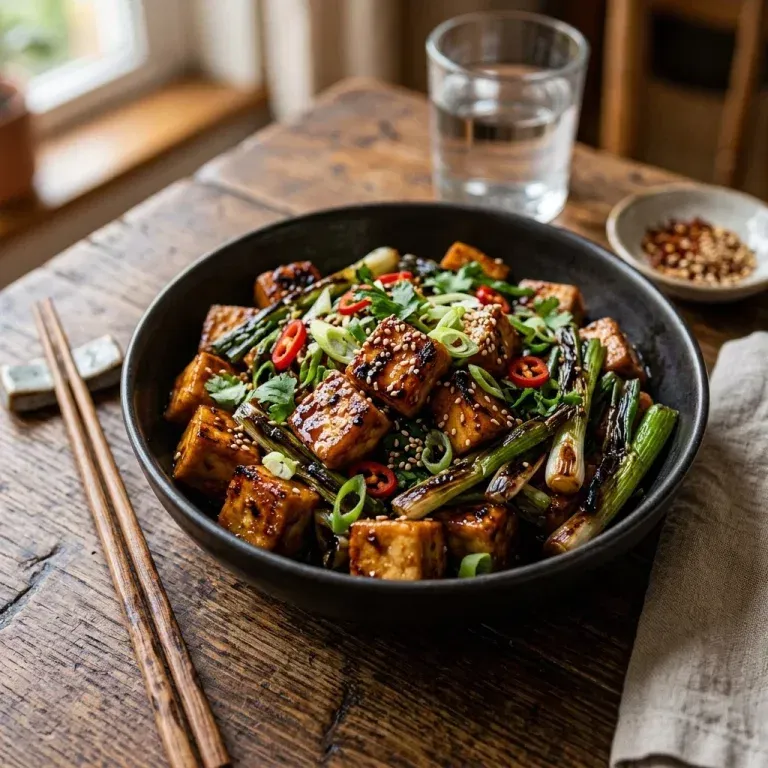
Teriyaki tofu with charred spring onions is one of those meals that looks suspiciously impressive for something that lands firmly in the camp of quick family meals. It’s glossy, smoky, savoury, a little sweet, and just dramatic enough to make you feel like you’ve got your life together, even if you absolutely do not. For anyone collecting healthy dinner ideas that don’t taste like punishment, this dish earns a permanent spot.
What makes it so good is not just the flavour combination, but the science doing all the heavy lifting behind the scenes. Tofu is often unfairly accused of being bland, which is a bit like blaming a sponge for not being soup. Its magic is in what happens on the surface. Once heat hits a properly dried piece of tofu, the Maillard reaction starts to kick in. That’s the same family of browning reactions that gives seared steak, toasted bread, and roast potatoes their deep, craveable flavour. In tofu, it creates a firmer outer layer, nuttier notes, and those irresistible browned edges that make people suddenly stop pretending they “don’t really like tofu.”
Then there’s the teriyaki side of the equation. A good teriyaki profile leans heavily on soy sauce, and soy sauce is not some one-note salty splash. Traditional soy sauce is the result of a long fermentation process involving soybeans, wheat, salt, mould cultures, yeast, and lactic acid bacteria. In other words, a tiny microbial soap opera with a delicious ending. During fermentation, proteins are broken down into amino acids, including glutamates, which are a huge part of that deep umami character. Sugars and aromatic compounds also develop over time, so by the time soy sauce joins the party, it’s bringing much more than salt. It’s bringing history, chemistry, and frankly a lot of attitude.
The charred spring onions are the final trick. They start grassy and fresh, but under high heat they release volatile aromatic compounds that shift the flavour into something sweeter, smokier, and more complex. As the onion tissues break down and the surface blisters, sulphur compounds mellow and new roasted aromas show up. That smell that makes everybody wander into the kitchen asking, “What’s cooking?” That’s chemistry showing off again.
Tips & Technique
If you want tofu that actually browns instead of lounging sadly in a pan, surface moisture matters more than people think. Water is the enemy of browning because the surface has to shed that moisture before temperatures can climb high enough for the Maillard reaction to really get going. Until then, the tofu is basically steaming in place, which is not nearly as exciting. A dry exterior gives heat direct access to proteins and sugars on the surface, and that’s when the golden crust begins to happen.
Texture also changes because of this browning. As the outside firms up, it creates contrast with the softer centre. That contrast is a big reason tofu feels satisfying here rather than merely virtuous. Good tofu should have a crisp-edged, caramelised exterior that catches sauce without turning into mush. We’re aiming for “takeaway fakeaway hero,” not “wet beige cube.”
The teriyaki element deserves a moment too. Soy sauce fermentation is doing serious flavour work, and it pairs brilliantly with sweetness because the contrast makes the umami feel even deeper. During fermentation, enzymes break large soy proteins into smaller compounds, which creates complexity that can’t be faked with plain salt. That’s why teriyaki has such a rounded, savoury backbone. It tastes layered because it is layered. A well-balanced teriyaki glaze doesn’t just sit on tofu; it clings, shines, and amplifies those browned notes.
And then we get to the spring onions, which are honestly a little underrated. Charring changes their whole personality. Fresh spring onions can be sharp and bright, but once blistered, their natural sugars become more noticeable and the aroma turns smoky and sweet. Volatile compounds are released rapidly under high heat, which is why the fragrance feels so immediate and dramatic. It’s basically the culinary equivalent of entering a room in a very good jacket.
A few practical ideas help this dish shine without turning dinner into a three-hour life project:
- Give tofu space so heat can circulate and browning can happen.
- Let colour develop before moving anything around too much.
- Use the char on the onions as flavour, not as something to fear.
- Balance savoury depth with a little sweetness so the teriyaki profile stays glossy and lively.
- Keep the overall plate simple so the tofu, sauce, and onions can do the main-character thing.
Variations
One of the reasons this dish works so well for quick family meals is that the core technique is flexible. Once you understand that browning plus umami plus char equals dinner that disappears fast, you can shift the details without losing the soul of the dish.
For a punchier version, lean into extra aromatics. Ginger brings warmth, garlic adds savoury depth, and chilli gives the whole thing a little swagger. None of these need to steal the spotlight, but they can absolutely help the tofu feel bolder.
If you want a sweeter edge, a richer glaze profile works well with the bitterness of charred spring onions. That sweet-savoury contrast is classic teriyaki territory and tends to go down especially well with anyone who claims tofu is “fine, I guess” right before going back for seconds.
You can also play with texture around the tofu. Soft grains, crisp greens, or crunchy toppings all work because the tofu itself offers chew and caramelised edges. The point is to keep enough contrast on the plate that every bite feels like something is happening. Dinner should not have the texture of administrative paperwork.
For a lighter spin that still fits neatly into healthy dinner ideas, pair the tofu with greens and a cleaner, less sticky glaze profile. For a comfort-food version, build around warm rice and let the sauce seep into everything in the best possible way. Either way, the real anchors are still the same: browned tofu, fermented soy depth, and smoky onion aroma.
Side Dish Pairings
This tofu is strong enough to carry a plate but friendly enough to work with all sorts of sides. That’s why it’s handy for healthy dinner ideas during the week when you want something balanced, and also for quick family meals when everyone wants dinner now, not after a long motivational speech from the cook.
Steamed rice is the obvious classic because it catches every drop of teriyaki flavour and gives the charred onions a soft backdrop. Brown rice or mixed grains are great if you want things a bit nuttier and more filling.
Noodles also make sense here, especially if you want something slurp-friendly and comforting. The glossy sauce coats them beautifully, and the tofu holds its own without getting lost.
For something greener, try a simple side of steamed broccoli, wilted greens, or a cucumber salad. Fresh, watery vegetables are particularly good against the concentrated umami of soy sauce. They keep the meal from feeling too heavy and make the charred flavours pop more.
If you’re feeding a crowd, a mix-and-match spread works brilliantly: rice, greens, tofu, spring onions, maybe a crunchy topping or two. It feels generous without being complicated, which is really the sweet spot for weeknight cooking.
FAQ
Why does tofu brown better sometimes than others?
Usually, it comes down to moisture and heat. A wetter surface struggles to brown because the water has to evaporate first. Once the surface dries and gets hot enough, the Maillard reaction can do its thing and create that savoury crust.
What exactly is the Maillard reaction?
It’s a series of chemical reactions between amino acids and reducing sugars that happens under heat. In plain English: it’s the reason browned food tastes amazing and makes your kitchen smell like you know what you’re doing.
Why is soy sauce so flavourful?
Because fermentation is doing a lot of work behind the scenes. Microbes and enzymes break down soybeans and wheat into smaller compounds, including amino acids and aromatic molecules, which build that signature salty, savoury, complex flavour.
Why do charred spring onions taste sweeter than raw ones?
High heat changes their chemistry. Some sharp compounds mellow out, natural sugars become more noticeable, and volatile aromatic compounds are released, giving them that smoky-sweet smell and flavour.
Is this good for weeknights?
Absolutely. It ticks the boxes for quick family meals because the flavours are big, the components are straightforward, and it feels more exciting than the average “what’s in the fridge?” dinner.
Does tofu actually make a satisfying dinner?
Yes, especially when it’s browned well. Texture matters. Once tofu has a caramelised outer layer and a rich sauce, it becomes hearty, savoury, and far more satisfying than its bland reputation suggests.
Final Thoughts
Teriyaki tofu with charred spring onions proves that smart technique can do more than a giant ingredient list ever could. Browning transforms tofu, fermentation gives soy sauce its deep savoury backbone, and high heat turns spring onions into smoky little flavour bombs. Put it all together and you’ve got one of those healthy dinner ideas that doesn’t feel like a compromise.
Better still, it belongs in the regular rotation of quick family meals because it delivers serious flavour without demanding unnecessary fuss. It’s clever, comforting, and just a bit showy in the nicest possible way. Basically, dinner with a good personality.