Recipe
Servings
Servings 1×
Ingredients
- Chicken
- Pasta
- Asparagus
- Mushrooms
- Spinach
- Lemon
- Pesto
- Cream
- Hard cheese
- Cooking oil
Method
- Keep the technique simple, respect the heat, and let pasta water do its quietly impressive work.
- Use a large pot and keep the pasta moving occasionally, not constantly.
- Cook the rotini until it is just firm at the center.
- Add the water gradually while tossing.
- Start with a small splash, mix well, and add more only if the sauce needs loosening.
- Pat the chicken dry before it meets the pan.
Intro
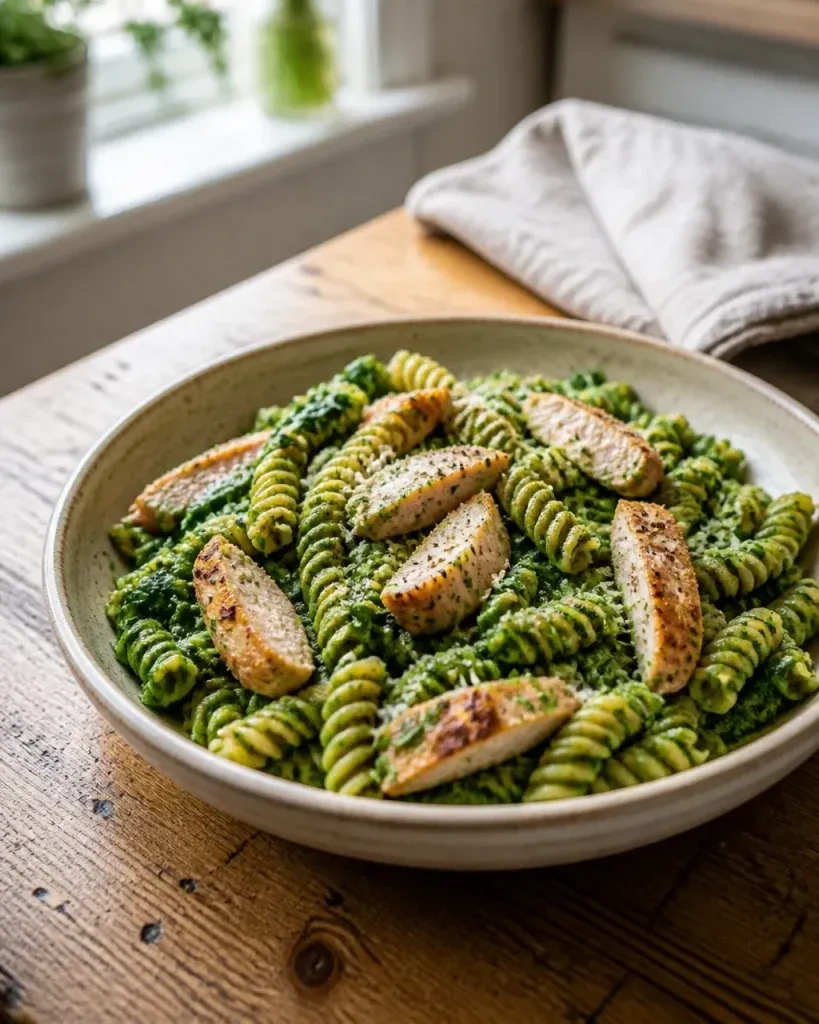
Some pasta dishes need a long ingredient list and a full evening of attention. This one does not. Spinach pesto chicken rotini brings together tender chicken, fresh green flavor, and a sauce that hugs every twist of pasta. It is cheerful without being fussy, filling without feeling heavy, and exactly the sort of dinner that earns a permanent spot in your weeknight rotation. Keep the technique simple, respect the heat, and let pasta water do its quietly impressive work.
Tips & Technique: Build Flavor, Then Protect It
Use rotini because shape is part of the sauce
Choose rotini for more than its cheerful corkscrew shape. Those ridges and curves create little pockets for pesto, Parmesan, and starchy cooking water. Every forkful gets a proper coating instead of leaving half the sauce behind in the bowl.
Short pasta also cooks more evenly than long strands when you are combining several components at the end. It is easier to toss, easier to serve, and far less likely to launch itself onto your shirt. Use a large pot and keep the pasta moving occasionally, not constantly. Gentle movement prevents sticking while allowing enough starch to move into the water.
Cook the rotini until it is just firm at the center. That slightly resistant bite matters because the pasta continues softening while it meets the warm pesto and chicken. Overcook it at the start, and the final dish loses its structure.
Save the cloudy water: it is your sauce insurance
Do not drain every drop of pasta water and then stare sadly at a dry bowl. Reserve some before draining. The cloudy water contains starch released from the pasta during cooking, and that starch helps the olive oil, cheese, and liquid in pesto come together into a smoother coating.
Think of it as a gentle emulsion. Oil and water naturally want to separate, but starch increases the liquid’s viscosity and helps suspend tiny droplets of fat. Add the water gradually while tossing. Start with a small splash, mix well, and add more only if the sauce needs loosening. Aim for glossy and clingy, not watery.
Avoid rinsing the pasta. Rinsing removes the surface starch that helps pesto hold on. You want those spirals slightly tacky and ready to catch the sauce.
For more on this useful bit of kitchen chemistry, read Cookpedia’s guide to one-pot lemon asparagus spaghetti and the science of pasta water.
Dry the chicken before you sear it
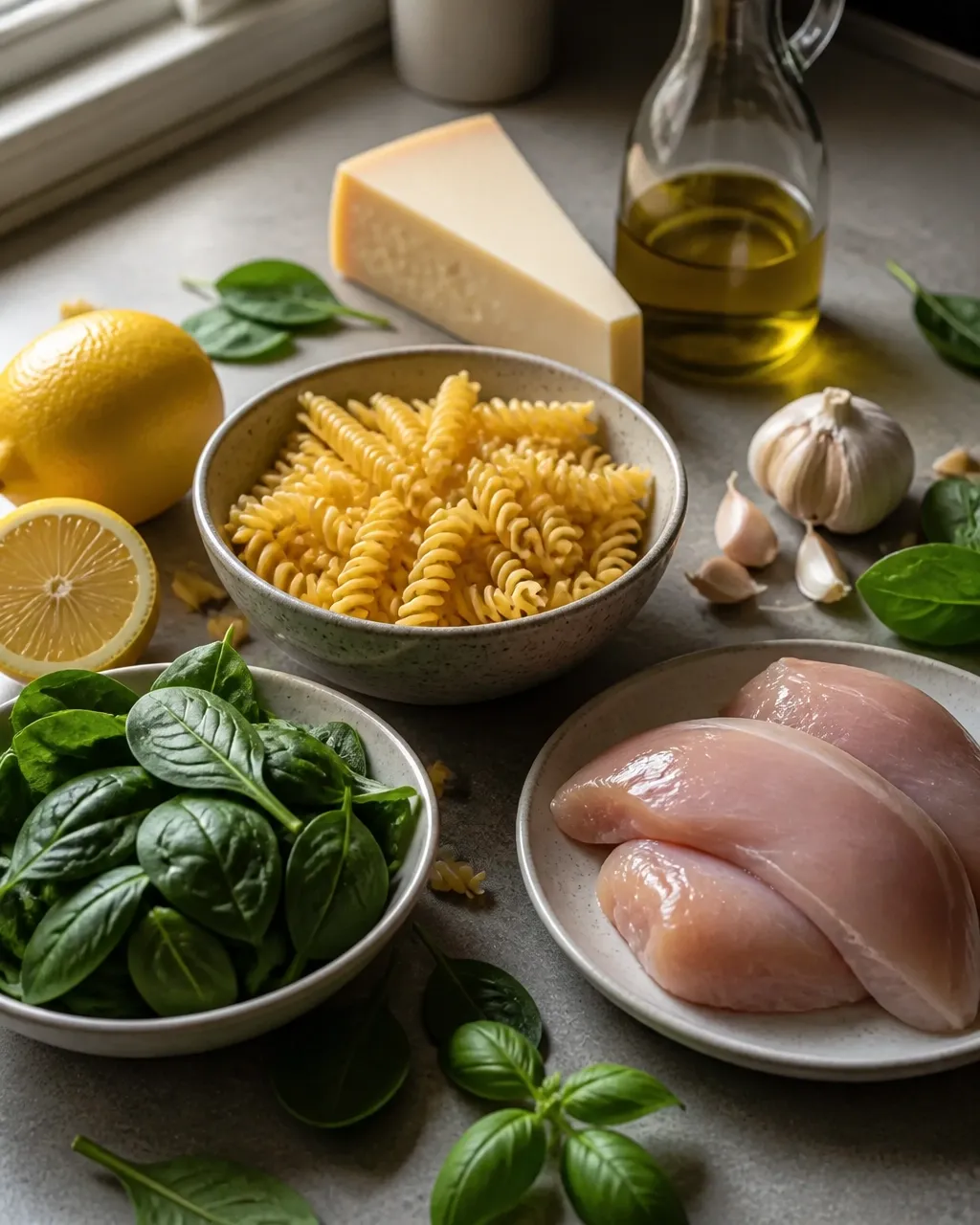
Pat the chicken dry before it meets the pan. Surface moisture has to evaporate before browning can begin, so wet chicken tends to steam first. Steaming cooks the meat, but it does not create the deep savory flavor you want.
Use a properly heated pan and give the chicken space. Crowding lowers the pan temperature and creates a little chicken sauna. Let the first side sit long enough to develop golden edges before turning it. That color comes from the Maillard reaction, where heat transforms proteins and sugars into more complex aromas and flavors.
Do not rely on color alone to judge doneness. Check the thickest part with an instant-read thermometer and cook chicken to 165°F (74°C). Rest it briefly before slicing. Resting gives the juices time to redistribute, so they are less likely to run straight onto the cutting board.
Cut the chicken into bite-size pieces or thin slices after resting. Smaller pieces spread the protein through the pasta without overpowering the pesto.
Keep the pesto green and fresh
Spinach gives pesto body and color while basil supplies its familiar aromatic lift. Both are sensitive to heat. Add the pesto after the pasta has left the direct heat, then toss with the warm rotini and chicken.
High heat can darken leafy greens and flatten their fresh flavor. It can also make the oil separate more noticeably. Warm pasta is enough to bring everything together. You do not need to simmer pesto as if it were tomato sauce.
Add lemon near the end rather than cooking it for ages. Acidity brightens the greens and cuts through the richness of olive oil, cheese, and chicken. It should make the dish taste livelier, not sour. Taste after the sauce loosens, because pasta water also brings seasoning to the bowl.
Finish with movement, not more cream
When the pesto, pasta, and chicken meet, toss vigorously enough to distribute the sauce. That movement matters. It encourages the starchy water and pesto oils to blend into a unified coating.
If the pasta looks dry, add more reserved water one spoonful at a time. If it looks loose, keep tossing briefly off the heat. Avoid reaching immediately for cream. The goal is a light, glossy sauce built from pesto and starch, not a heavy coating that buries the green flavor.
For another lesson in building a silky sauce with starch, try Cookpedia’s creamy mushroom pasta. The ingredients differ, but the emulsification principle is wonderfully similar.
Variations: Keep the Balance, Change the Mood
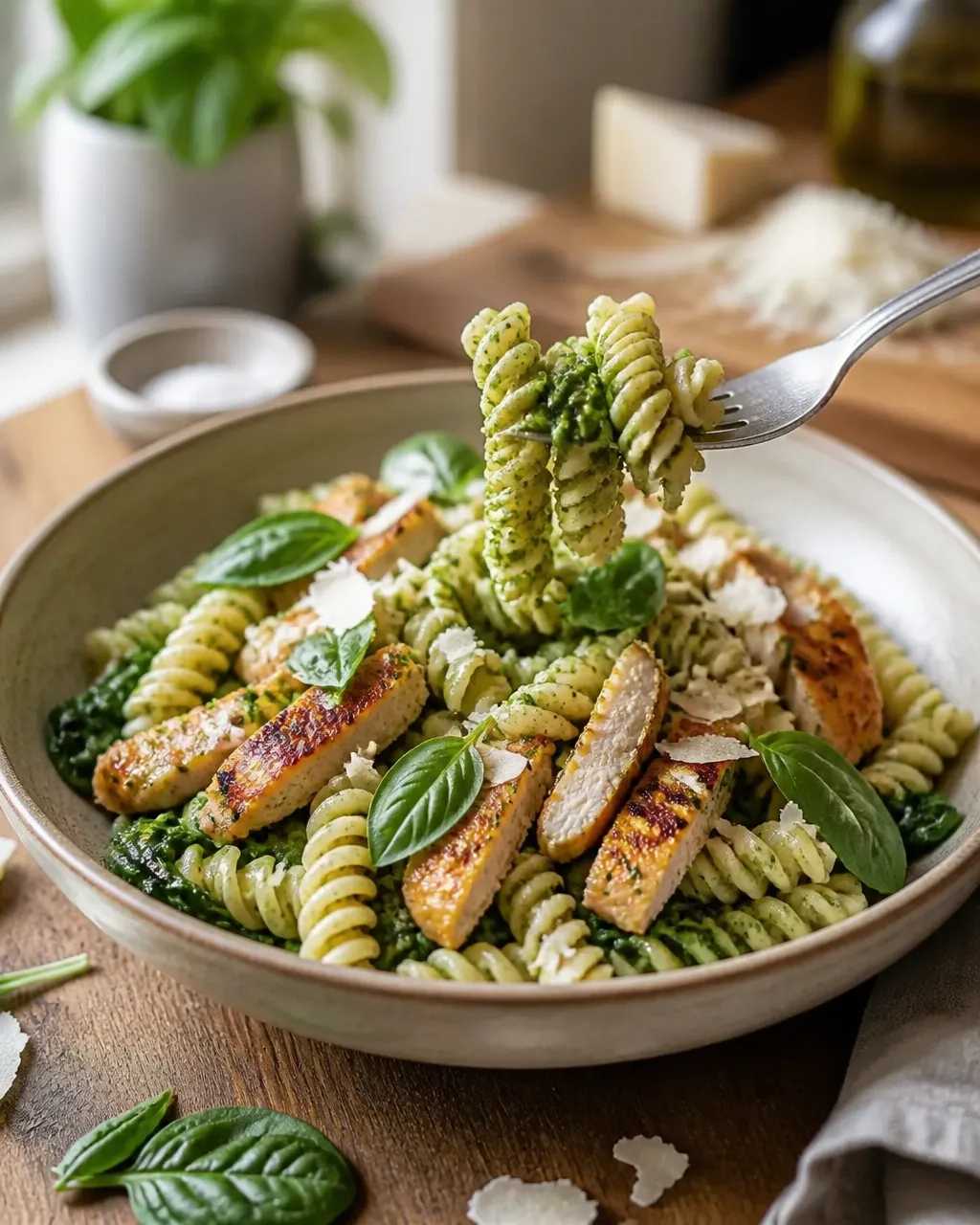
Turn the dish Mediterranean by folding in halved cherry tomatoes and a few crumbled olives. The tomatoes bring juicy sweetness and acidity, while the olives add a salty edge. Keep the olives restrained so they support the pesto rather than taking over the entire conversation.
Use roasted red peppers for a softer, sweeter variation. Their gentle acidity and caramelized flavor work especially well with spinach. Add toasted walnuts or pumpkin seeds when you want crunch without changing the basic sauce.
Make it vegetarian by replacing the chicken with white beans, roasted mushrooms, or crisped tofu. Add the substitute at the end so it keeps its texture. For a lighter green version, increase the spinach and use less cheese, then rely on lemon and pasta water for brightness and body.
Need a dairy-free bowl? Use a dairy-free pesto or blend the greens with toasted nuts and nutritional yeast. Check the texture carefully because dairy-free sauces can be thinner. Starchy pasta water is particularly useful here.
For a gluten-free version, choose a sturdy corn-and-rice or lentil rotini and watch it closely near the end of cooking. Gluten-free pasta can soften quickly and may release starch differently. If you enjoy using countertop appliances for air fryer recipes dinner, crisp the chicken or a breadcrumb topping separately: but add the crunchy element just before serving.
Side Dish Pairings: Add Contrast
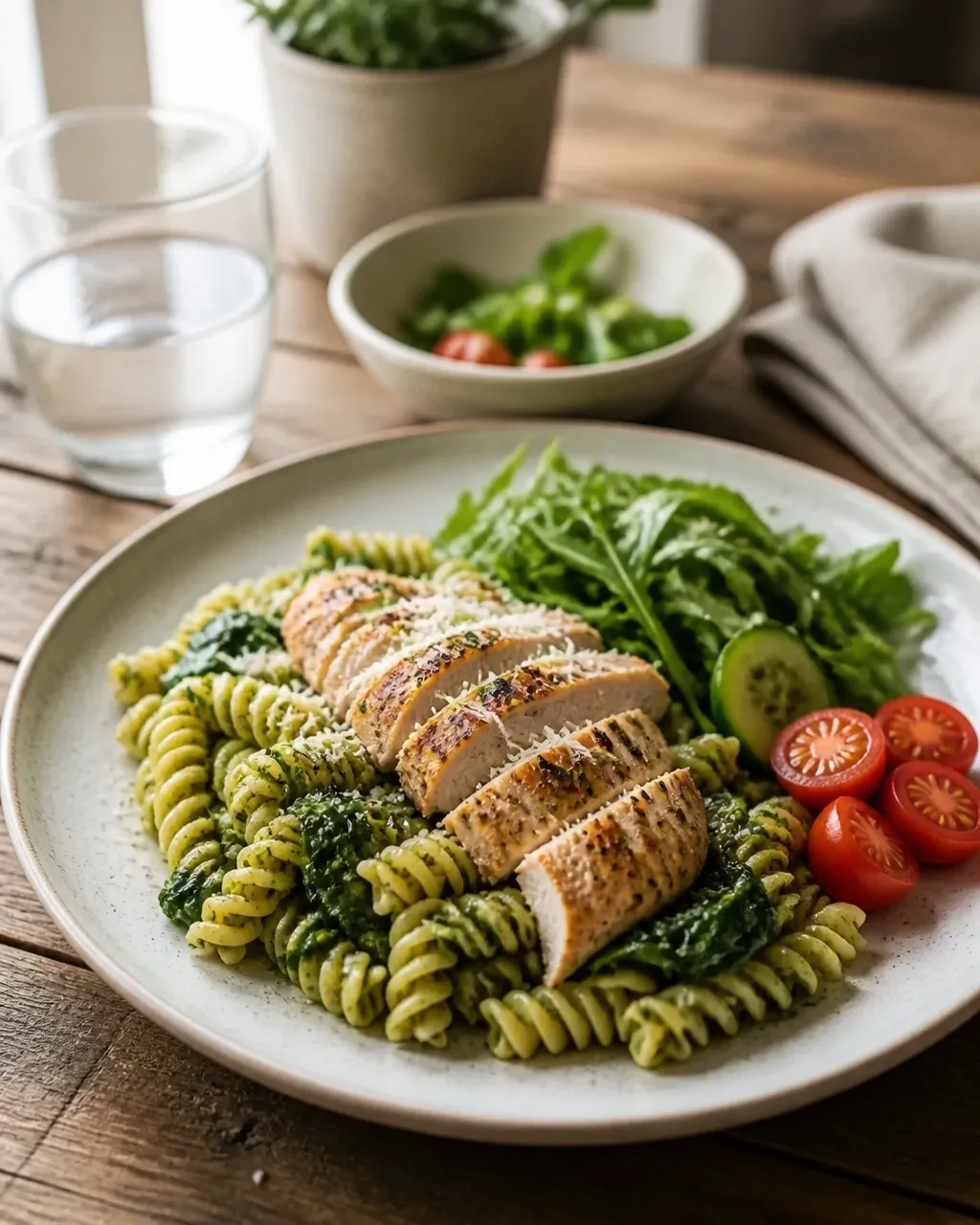
Pair this pasta with something crisp, bright, or lightly bitter. An arugula salad with lemon vinaigrette is an easy win because peppery greens and acidity cut through the pesto’s richness. Keep the dressing sharp but not aggressive.
Roasted broccolini, asparagus, or green beans add a little char and a firm bite. That texture keeps the meal from becoming soft-on-soft, while the vegetables bring freshness without demanding another complicated recipe.
A cucumber salad works when you want maximum contrast: cool, crunchy, and lightly acidic beside warm, savory pasta. Serve it well chilled and keep the seasoning clean.
If you are feeding a hungry table, add a small piece of crusty bread for scooping up the last of the sauce. For more efficient dinner inspiration, browse Cookpedia’s quick meals collection or explore the pasta category.
FAQ: Troubleshoot Your Spinach Pesto Chicken Rotini
What if the pesto turns dark green?
Leafy greens darken when exposed to heat, air, and prolonged cooking. The pesto may still taste good, but it will lose some of its fresh color. Toss it with warm pasta rather than boiling it, and add lemon at the finish. Use the freshest spinach and basil you can find, and avoid leaving the finished pasta sitting uncovered for a long time.
What if the sauce looks oily instead of silky?
The emulsion likely needs more starchy liquid and gentler handling. Remove the pan from direct heat, add a small splash of reserved pasta water, and toss firmly. The starch helps disperse the oil through the sauce. Add water gradually; too much at once can make the pasta soupy.
What if my chicken is dry?
Dry chicken usually comes from overcooking, uneven thickness, or slicing it immediately after cooking. Flatten very thick pieces so they cook more evenly, use a thermometer, and remove the chicken as soon as it reaches 165°F (74°C). Rest it before cutting. If your chicken is already cooked and dry, slice it thinly and fold it into the sauced pasta rather than cooking it again.
Can I use jarred pesto?
Yes. Jarred pesto is a practical shortcut, especially on a busy evening. Choose one with a fresh aroma and taste it before adding extra salt or Parmesan. Brighten it with lemon if it tastes flat, and loosen it with pasta water so it coats the rotini instead of sitting in oily patches.
What if I do not have a food processor?
Chop the spinach, basil, and garlic very finely with a sharp knife, then stir them together with olive oil, cheese, and seasoning. The texture will be more rustic, but the flavor will still work. You can also use prepared pesto and stir in finely chopped spinach for a quick green boost.
Can I make this ahead?
This dish is best immediately after tossing, but leftovers are still useful. The pasta will absorb more sauce as it cools, so expect a firmer, thicker texture the next day. Reheat gently in a skillet with a splash of water or broth. Stir often and stop as soon as the pasta is warm. Avoid high heat, which can make the pesto oily and the chicken tough.
Can I freeze spinach pesto chicken rotini?
You can, but the texture will not be quite as fresh. Pasta softens during freezing and thawing, while pesto may separate slightly. For the best result, freeze the cooked chicken separately from the pasta if possible, then combine everything with fresh pesto and a little warm pasta water after reheating.
Is this a healthy dinner?
It can fit comfortably into a balanced meal, especially when you serve it with a crisp salad or green vegetable. Spinach adds color and nutrients, chicken contributes protein, and the pesto provides concentrated flavor. Keep portions sensible, use enough pesto to coat rather than drown the pasta, and add vegetables when you want more volume. That is the practical route to healthy dinner ideas that still taste like dinner.
{“@type”:”FAQPage”,”@context”:”https://schema.org”,”mainEntity”:[{“name”:”What if the pesto turns dark green?”,”@type”:”Question”,”acceptedAnswer”:{“text”:”Leafy greens darken when exposed to heat, air, and prolonged cooking. Toss pesto with warm pasta rather than boiling it, add lemon at the finish, and avoid leaving the finished pasta uncovered for a long time.”,”@type”:”Answer”}},{“name”:”What if the sauce looks oily instead of silky?”,”@type”:”Question”,”acceptedAnswer”:{“text”:”Remove the pan from direct heat, add a small splash of reserved pasta water, and toss firmly. The starch helps disperse the oil through the sauce. Add water gradually so the pasta does not become soupy.”,”@type”:”Answer”}},{“name”:”What if my chicken is dry?”,”@type”:”Question”,”acceptedAnswer”:{“text”:”Dry chicken usually comes from overcooking, uneven thickness, or slicing it immediately after cooking. Use a thermometer, cook to 165°F (74°C), remove it promptly, and rest it before cutting.”,”@type”:”Answer”}},{“name”:”Can I use jarred pesto?”,”@type”:”Question”,”acceptedAnswer”:{“text”:”Yes. Taste jarred pesto before adding extra salt or Parmesan, brighten it with lemon if needed, and loosen it with pasta water so it coats the rotini.”,”@type”:”Answer”}},{“name”:”Can I make this ahead?”,”@type”:”Question”,”acceptedAnswer”:{“text”:”This pasta is best immediately after tossing, but leftovers can be reheated gently in a skillet with a splash of water or broth. Stir often and avoid high heat.”,”@type”:”Answer”}},{“name”:”Is this a healthy dinner?”,”@type”:”Question”,”acceptedAnswer”:{“text”:”It can fit into a balanced meal when served with a crisp salad or green vegetable. Spinach adds nutrients, chicken contributes protein, and pesto provides concentrated flavor.”,”@type”:”Answer”}}]}