Recipe
Servings
Servings 1×
Ingredients
- Tofu
- Noodles
- Rice
- Bread
- Onion
- Lime
- Peanut butter
- Coconut milk
- Butter
- Cooking oil
- Soy sauce or tamari
- Chili seasoning
- Salt
Method
- Start with the tofu’s surface.
- Give the tofu room in the pan.
- Keep the pieces in a single layer and let the first side develop colour before turning them.
- Whisk the sauce smoothly and keep it at a gentle simmer rather than a furious boil.
- Use noodle cooking water to adjust the texture.
- Add it near the end so its fresh aroma remains noticeable.
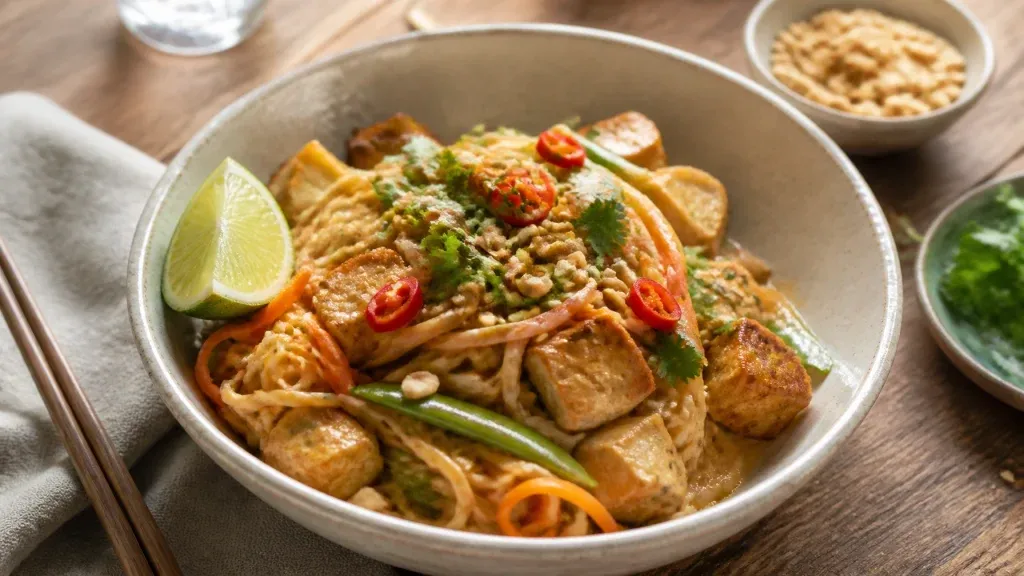
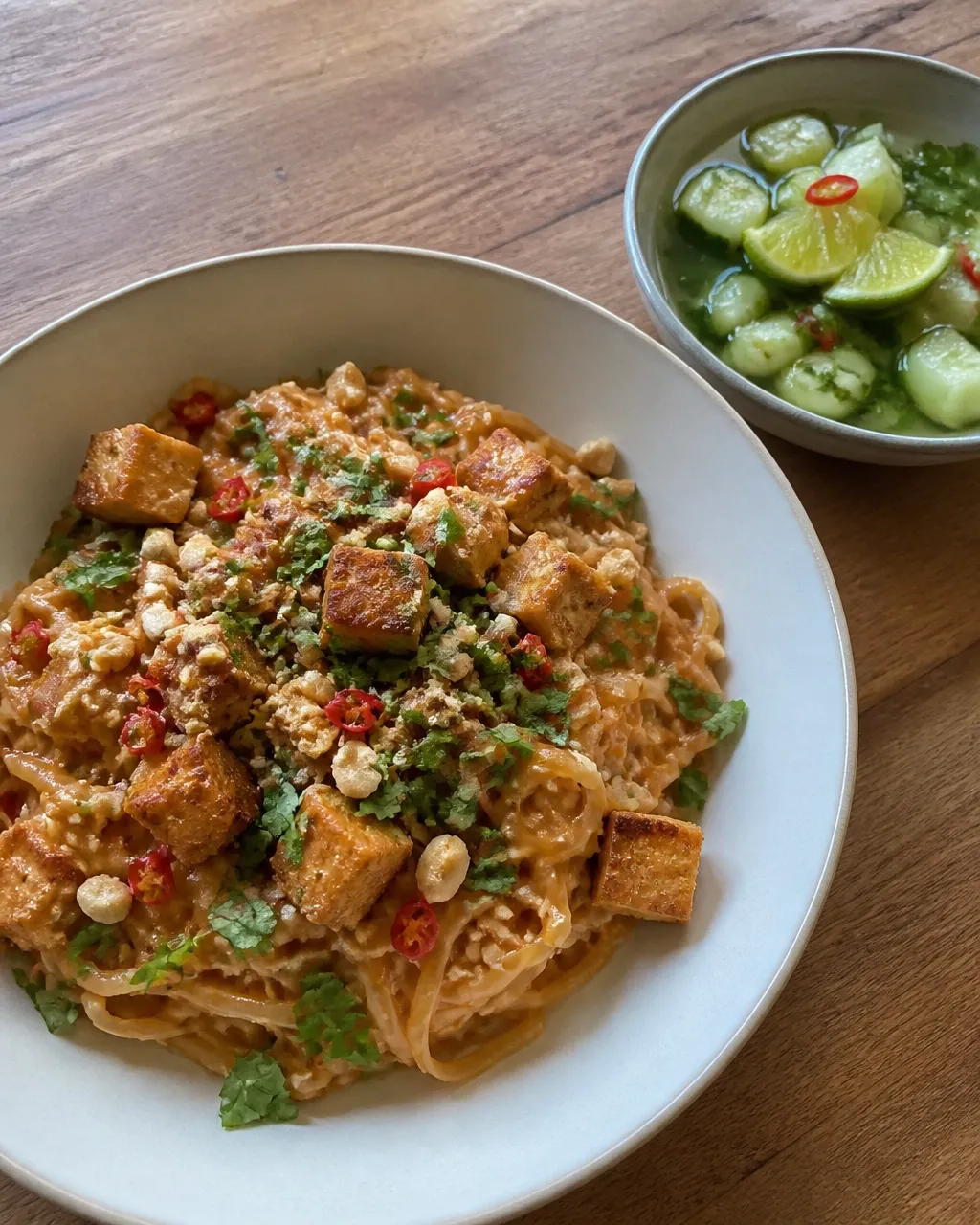
Creamy peanut coconut tofu noodles are the kind of dinner that makes a busy evening feel far more organised than it really was. You get chewy noodles, crisp-edged tofu, a silky sauce, and enough lime and chili to keep every bite lively. It is comforting without feeling heavy and quick enough for the regular rotation of healthy dinner ideas. Follow the technique, trust the heat, and let a few simple flavour contrasts do the work.
Tips & Technique: Build Texture Before You Add the Sauce
Dry tofu browns; wet tofu steams
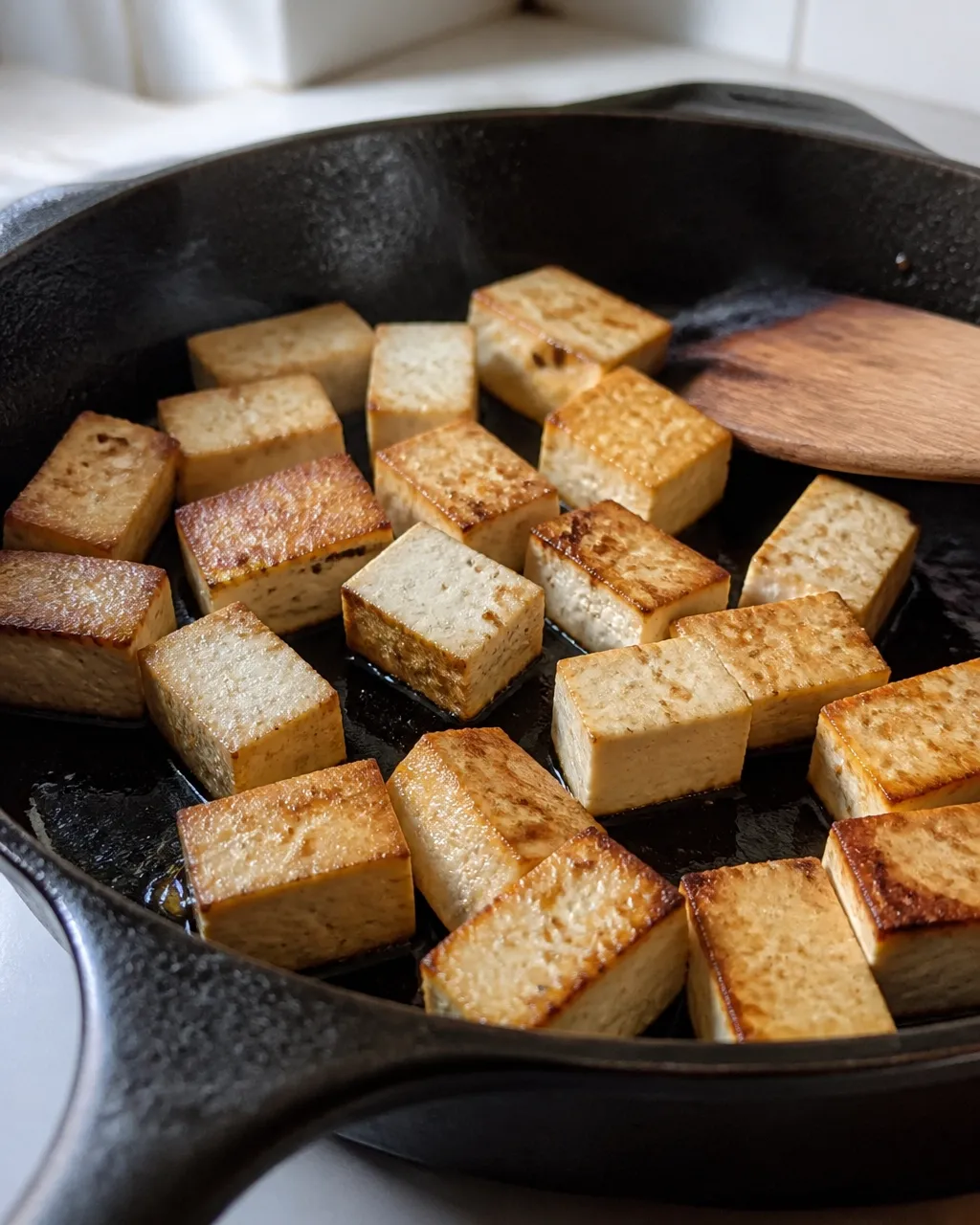
Start with the tofu’s surface. Moisture is the main reason tofu turns pale, soft, and slightly apologetic in the pan. Before browning can happen, water on the outside must evaporate. Until then, the tofu stays close to the temperature of boiling water, which encourages steaming rather than crisping.
Pressing and patting tofu dry changes that equation. A drier surface heats faster, allowing the Maillard reaction to begin. This family of reactions occurs when amino acids and sugars meet sufficiently high heat, creating the browned colour and savoury aromas associated with toast, roasted vegetables, and a good sear.
Give the tofu room in the pan. Crowding traps steam and lowers the cooking surface temperature. Keep the pieces in a single layer and let the first side develop colour before turning them. Constant movement may feel productive, but it usually produces tofu with many sides that are equally under-browned. Let the pan do its job.
Use starch for a more reliable crust
A light starch coating gives the tofu’s exterior extra structure. It absorbs a little remaining moisture and creates a dry, powdery surface that can set into a delicate crust when it meets hot oil. Keep the coating light. Too much starch becomes pasty, while too little heat leaves it chalky.
Think of the coating as support, not armour. The tofu should still taste like tofu, with a browned outside and a tender centre. For more tofu inspiration, compare this method with Cookpedia’s teriyaki tofu with charred spring onions, which uses the same essential principle: remove moisture, create colour, then add a bold sauce.
Treat the peanut coconut sauce gently
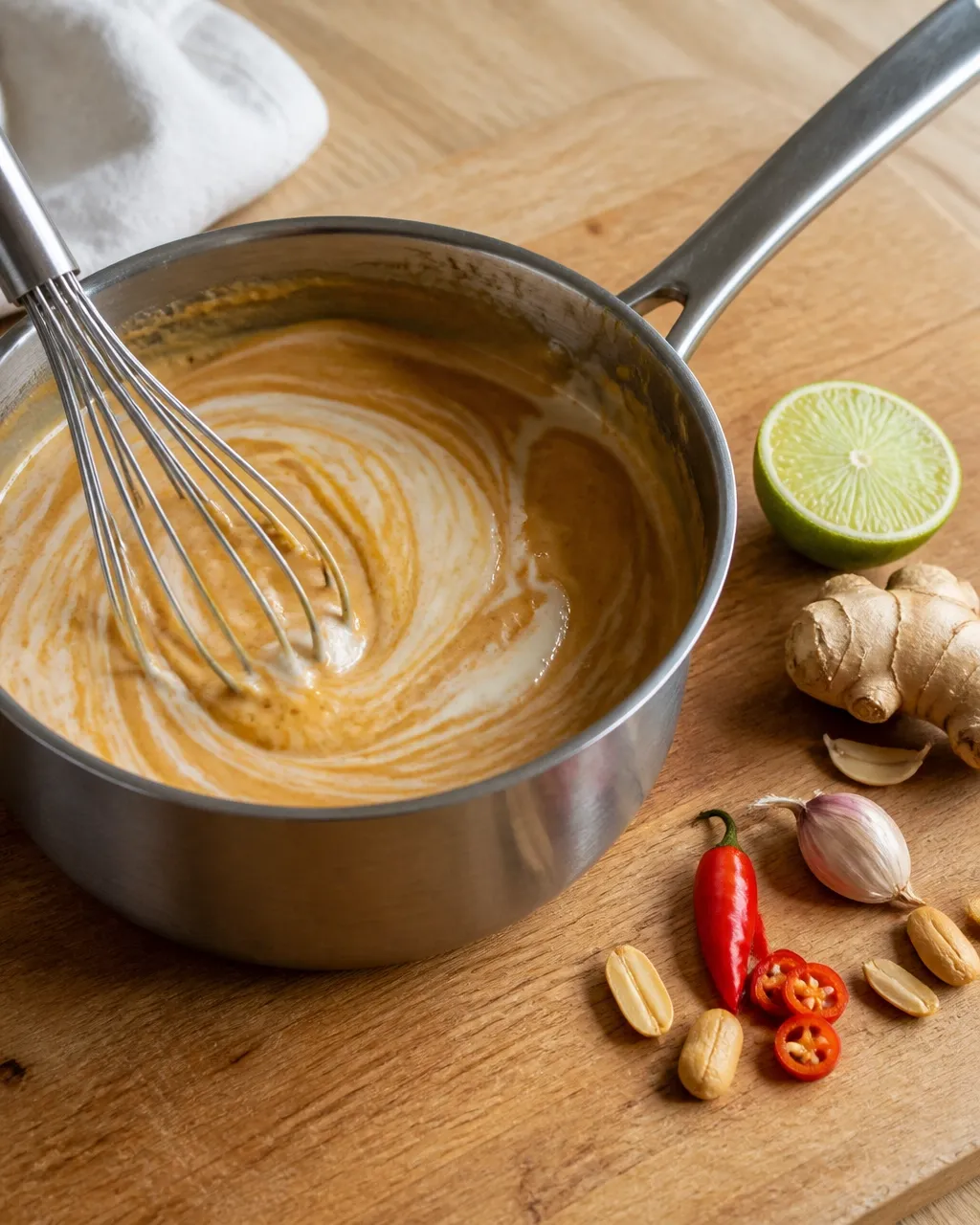
Coconut milk and peanut butter bring richness because both contain plenty of fat. That richness is exactly what makes the sauce comforting, but it also means the mixture needs gentle handling. Whisk the sauce smoothly and keep it at a gentle simmer rather than a furious boil.
A hard boil can cause the fat and water phases to separate. The sauce may look oily or slightly grainy instead of creamy. Moderate heat gives the emulsion time to stay cohesive while the flavours blend and the sauce thickens.
Use noodle cooking water to adjust the texture. Even rice noodles leave behind a little starch, and that starchy water helps the sauce spread evenly across the noodles. Add it gradually. A small splash can turn a thick paste into a silky coating; too much can make the sauce watery and dilute its flavour.
Balance fat with acid, salt, sweetness, and heat
Peanut and coconut are rich, so the finished dish needs contrast. Lime juice provides acidity, which brightens fatty flavours and makes the sauce taste less dense. Add it near the end so its fresh aroma remains noticeable.
Salt and fermented soy sauce bring umami. Umami does not simply make food “saltier”; it gives savoury flavours more depth and persistence. Add enough to make the peanut and coconut taste fuller, but avoid pouring in so much that the sauce becomes aggressively salty.
A small amount of sweetness rounds off the sharp edges of lime and chili. Keep it restrained. You are balancing the sauce, not turning it into dessert noodles. Then use chili for warmth and energy. Start modestly and increase it at the table if your household has mixed heat preferences.
Cook noodles to the point of no return: but stop there
Rice noodles soften quickly, and they can cross from pleasantly chewy to floppy with surprising speed. Check them early and aim for just tender. They will continue softening slightly when they meet the hot sauce.
Avoid leaving cooked noodles sitting in a colander for too long. Their surface starch can make them cling together, and the strands may cool before the sauce is ready. Toss them while they are still warm, using a little cooking water if needed to loosen any stubborn clumps.
Keep the crisp tofu separate until the last moment. Sauce is moisture, and moisture is the enemy of crunch. Fold the tofu through briefly for maximum flavour absorption, or place it on top to protect more of its crisp crust. Choose your preferred level of crunch. There is no wrong answer, only different levels of noodle-related happiness.
Variations: Keep the Balance, Change the Personality
Use this dish as a flexible template rather than a fragile formula. For extra freshness, add crisp vegetables such as snap peas, cucumber, or shredded cabbage. Their water content and crunch lighten the richness of the sauce.
Make it more aromatic with ginger, garlic, scallions, or fresh cilantro. Add these in different ways to create contrast: cooked aromatics give depth, while fresh herbs provide a brighter finish. A little grated lime zest can sharpen the citrus character without adding extra liquid.
For a deeper, warmer bowl, stir in a little red curry paste or chili crisp. Keep an eye on salt because both can bring their own savoury intensity. For a gentler family version, leave the chili out of the main sauce and offer it separately.
Use tamari instead of regular soy sauce if you need a gluten-free option, and choose certified gluten-free noodles where necessary. Make the dish fully vegan by using maple syrup or another plant-based sweetener. If you prefer a lighter texture, thin the sauce with extra noodle water and increase the vegetables rather than simply reducing the peanut butter.
These small shifts make the recipe useful for quick family meals without making it feel repetitive. Change the crunch, acidity, or heat first; keep the creamy sauce and browned tofu as the anchors.
Side Dish Pairings: Add Freshness, Not More Heaviness
Pair the noodles with something crisp, green, or acidic. A cucumber and lime salad is an excellent match because its cool, watery texture cuts through the creamy sauce. Add herbs or a little rice vinegar for extra lift.
Steamed broccoli, bok choy, or wilted greens also work well. Their gentle bitterness keeps the peanut coconut sauce from tasting one-dimensional, while their soft texture contrasts with the tofu’s browned edges.
Serve a simple cabbage slaw if you want more crunch. Keep the dressing sharp and light rather than creamy. The noodles already bring plenty of richness to the plate.
For a larger spread, add fresh lime wedges, chopped herbs, and toasted peanuts at the table. Let everyone adjust acidity, heat, and crunch. That makes dinner easier to serve and helps satisfy different preferences without cooking several separate meals.
FAQ: Troubleshoot the Bowl Before You Blame the Tofu
Why did my tofu turn soft instead of crisp?
Check the surface moisture first. Wet tofu steams, especially when the pan is crowded. Press it well, pat it dry, and use enough space for heat to circulate. Also, avoid adding sauce too early. Once the tofu is coated, its crust will naturally soften.
Can I use soft or silken tofu?
Use extra-firm tofu for browned cubes. Soft tofu contains more water and has a delicate structure, so it is more likely to break during cooking. Silken tofu works better blended into sauces, soups, or dressings where its smooth texture is an advantage.
Why did my peanut coconut sauce separate?
The heat was probably too high, or the sauce reduced too aggressively. Coconut milk contains fat suspended in water, and vigorous boiling can disrupt that balance. Lower the heat and whisk in a small splash of water or noodle cooking water. The sauce should come back together as it loosens.
What if the sauce is too thick?
Add warm noodle water a little at a time and whisk between additions. Starchy water helps the sauce coat the noodles instead of sliding straight to the bottom of the bowl. Avoid adding a large amount at once, or the sauce may become thin and bland.
What if the sauce tastes too rich?
Add acidity first. Lime juice cuts through fat and makes the flavours feel brighter. A little extra chili can also add energy, while crunchy vegetables provide a fresher texture. Do not immediately add more salt; richness and saltiness are separate problems.
Why are my rice noodles clumping?
They may have been overcooked, left standing too long, or drained without enough movement. Cook them just until tender, then toss them with the sauce while warm. If they have already clumped, loosen them with warm water before combining everything.
Can I prepare this ahead of time?
Prepare the sauce and tofu separately, then refrigerate them in covered containers. Reheat the sauce gently and warm the tofu in a dry skillet or oven so it can regain some crispness. Cook the noodles close to serving time for the best texture.
How can I make this suitable for children?
Keep the base sauce mild and serve chili separately. Offer crunchy toppings and lime at the table so each person can adjust the bowl. If your children are cautious about tofu, cut it into small pieces and brown it thoroughly; a crisp edge is usually a much easier sell than a soft cube.
Is this a complete plant-based meal?
It provides noodles for energy, tofu for plant-based protein, and the option to add vegetables for fibre, colour, and freshness. For a more balanced bowl, include at least one crisp or leafy vegetable and use the sauce as a coating rather than a soup-like quantity.
Final Thoughts
Peanut coconut tofu noodles work because every part has a clear job. Dry heat creates browned tofu, gentle simmering protects the creamy sauce, noodle starch helps everything cling, and lime keeps the richness awake.
Keep this recipe close when you need healthy dinner ideas that still feel generous and comforting. Then browse Cookpedia’s 15-minute meals for more fast options, including air fryer recipes dinner ideas for nights when noodles are not on the menu. Cook the tofu boldly, balance the sauce firmly, and serve the crunchy toppings generously.
FAQ Structured Data
{“@type”:”FAQPage”,”@context”:”https://schema.org”,”mainEntity”:[{“name”:”Why did my tofu turn soft instead of crisp?”,”@type”:”Question”,”acceptedAnswer”:{“text”:”Wet tofu steams, especially when the pan is crowded. Press it well, pat it dry, give the pieces room, and avoid adding sauce until the tofu is browned.”,”@type”:”Answer”}},{“name”:”Can I use soft or silken tofu?”,”@type”:”Question”,”acceptedAnswer”:{“text”:”Use extra-firm tofu for browned cubes. Soft and silken tofu contain more water and have a delicate structure, making them better suited to blended sauces, soups, and dressings.”,”@type”:”Answer”}},{“name”:”Why did my peanut coconut sauce separate?”,”@type”:”Question”,”acceptedAnswer”:{“text”:”The heat was likely too high. Coconut milk contains fat suspended in water, and vigorous boiling can disrupt that balance. Lower the heat and whisk in a small splash of water or noodle cooking water.”,”@type”:”Answer”}},{“name”:”What if the sauce is too thick?”,”@type”:”Question”,”acceptedAnswer”:{“text”:”Add warm noodle cooking water gradually and whisk between additions. The starch helps the sauce loosen while still coating the noodles.”,”@type”:”Answer”}},{“name”:”What if the sauce tastes too rich?”,”@type”:”Question”,”acceptedAnswer”:{“text”:”Add lime juice first to cut through the fat and brighten the flavour. Crunchy vegetables and a little chili can also make the bowl feel fresher and more lively.”,”@type”:”Answer”}},{“name”:”Can I prepare this ahead of time?”,”@type”:”Question”,”acceptedAnswer”:{“text”:”Prepare the sauce and tofu separately, then refrigerate them in covered containers. Reheat the sauce gently and warm the tofu in a dry skillet or oven to restore some crispness.”,”@type”:”Answer”}},{“name”:”How can I make this suitable for children?”,”@type”:”Question”,”acceptedAnswer”:{“text”:”Keep the sauce mild and serve chili separately. Let each person add lime and crunchy toppings at the table, and brown the tofu thoroughly for a more appealing texture.”,”@type”:”Answer”}},{“name”:”Is this a complete plant-based meal?”,”@type”:”Question”,”acceptedAnswer”:{“text”:”The dish combines noodles, tofu, and optional vegetables for a satisfying plant-based meal. Add a crisp or leafy vegetable for more fibre, colour, and freshness.”,”@type”:”Answer”}}]}