Recipe
Servings
Servings 1×
Ingredients
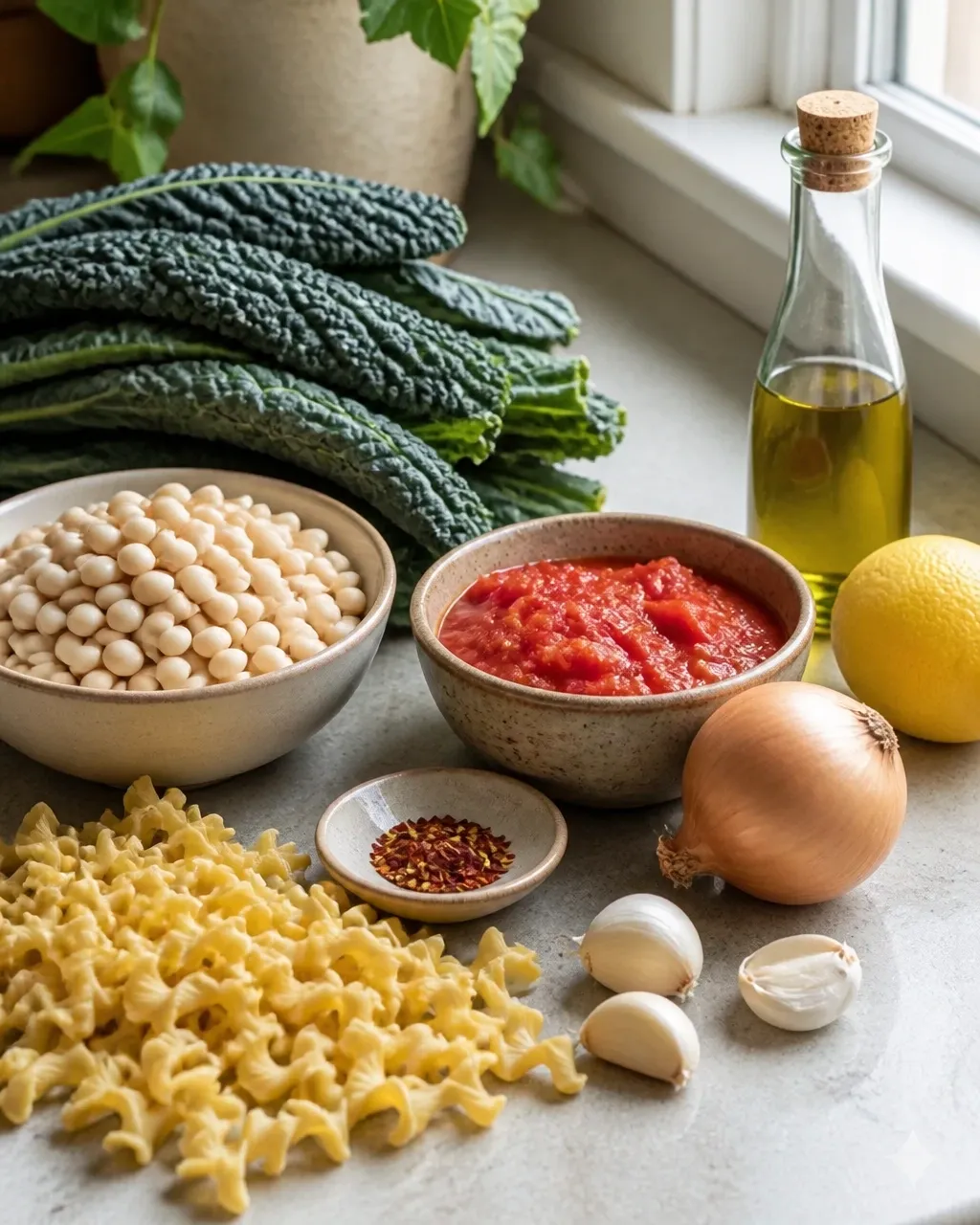
- White beans
- Beans
- Pasta
- Noodles
- Asparagus
- Mushrooms
- Kale
- Tomatoes
- Garlic
- Lemon
- Cream
- Cooking oil
- Chili seasoning
- Salt
- Black pepper
Method
- Use enough to keep the pasta cooking evenly, but avoid flooding the pot.
- Keep the heat at a steady simmer.
- Stir periodically, especially around the base and edges of the pot.
- Add canned beans gently and avoid an aggressive simmer.
- Cut it into manageable ribbons so the heat reaches it evenly.
- Cook it until the leaves are tender but still visibly green.
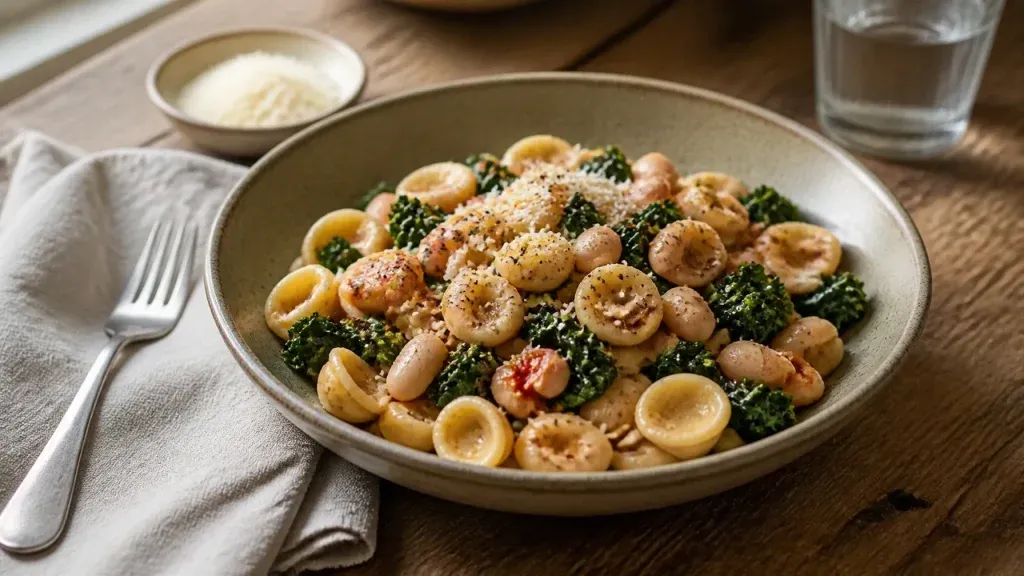
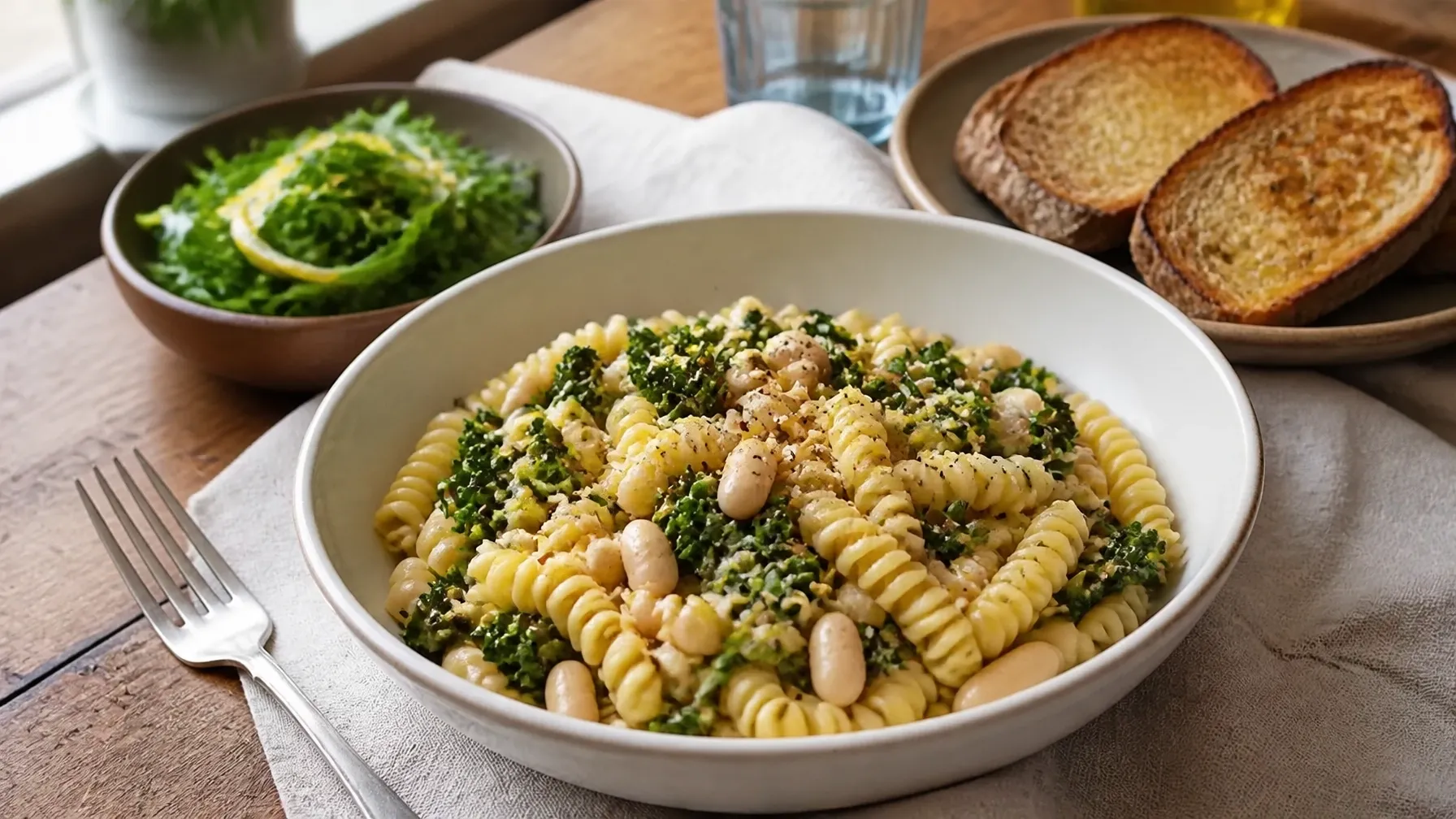
Some dinners ask for a mountain of chopping, three pans, and the patience of a saint. This Tuscan white bean and kale pasta asks for one pot and a little respect for food science. You get tender pasta, creamy cannellini beans, silky greens, and a tomato-garlic sauce that tastes far more involved than it is. It is exactly the kind of dinner I rely on when I want something nourishing, cozy, and wonderfully low on washing up.
Why One-Pot Pasta Turns Starch Into Sauce
The magic of this dish starts with the pasta itself. In a traditional pasta dinner, noodles cook in a large volume of water. Some starch escapes into the water, but much of that cloudy liquid goes straight down the drain. With one-pot pasta, the cooking liquid stays in the pan, so the released starch remains available to thicken and bind the sauce.
As pasta heats and hydrates, its starch granules swell and gelatinize. That process turns a portion of the cooking liquid viscous, giving it body. The result is not exactly cream, but it creates the same satisfying coating effect without needing a heavy sauce. As the liquid reduces, the starch becomes more concentrated and clings to the curves of short pasta.
Control the liquid carefully. Use enough to keep the pasta cooking evenly, but avoid flooding the pot. Too much liquid dilutes the starch and leaves you with a thin sauce. Too little creates sticky pasta, uneven cooking, and a bottom layer that may catch before dinner is ready. Follow the recipe card’s liquid guidance, then make small adjustments rather than dramatic ones.
Keep the heat at a steady simmer. A hard boil makes the outside of the pasta release starch too quickly while the center remains firm. It can also cause the beans to split and the sauce to reduce before the noodles are tender. Stir periodically, especially around the base and edges of the pot. You are encouraging starch into the liquid, not whipping the pasta into submission.
This is the same principle behind the silky finish in Cookpedia’s One-Pot Lemon Asparagus Spaghetti. The method works because the pasta cooks directly in a concentrated, flavorful environment. Your sauce develops while the noodles cook, rather than being hurriedly assembled afterward.
Let the Beans Choose Their Texture
White beans bring more than protein and fiber. They also contain soft starches that can enrich the cooking liquid as they warm. Some beans stay intact, while others break slightly and dissolve into the sauce. That gentle breakdown is useful: it gives the pasta a creamy, almost stew-like texture without turning the dish into a purée.
Add canned beans gently and avoid an aggressive simmer. They are already cooked, so their main job is to warm through and contribute body. Vigorous boiling can split their skins and make the sauce feel mealy. If you prefer distinct, plump beans, handle them with a light touch. If you enjoy a thicker, more rustic sauce, allow a few to soften and collapse as the pasta finishes.
Do not use dry beans as a direct substitute unless you cook them fully first. Dry beans need a much longer cooking time than pasta, and their texture changes significantly as they hydrate. They also respond differently to acidic ingredients. For this one-pot dinner, cooked beans keep the timing practical and the results reliable.
Give Kale Enough Heat, Then Add Brightness
Kale has sturdy leaves and firm cell walls, which is why it can survive a simmer without disappearing completely. Cut it into manageable ribbons so the heat reaches it evenly. Large pieces may remain chewy while the pasta is already tender; tiny pieces can overcook and lose their character.
Salt and heat help kale soften, while olive oil carries aromatic flavors across its surface. Cook it until the leaves are tender but still visibly green. That balance matters. Undercooked kale can taste tough and sharply bitter, while overcooked kale turns dull and muddy.
Add strong acidity near the end. Lemon juice or a small splash of vinegar brightens the beans, balances the tomato sauce, and softens kale’s bitter edge on the palate. However, a strongly acidic cooking liquid can slow the softening of pasta and vegetables. Finish with brightness once the pasta is nearly tender, and you will protect both texture and flavor.
Build Depth Without Making the Dish Heavy
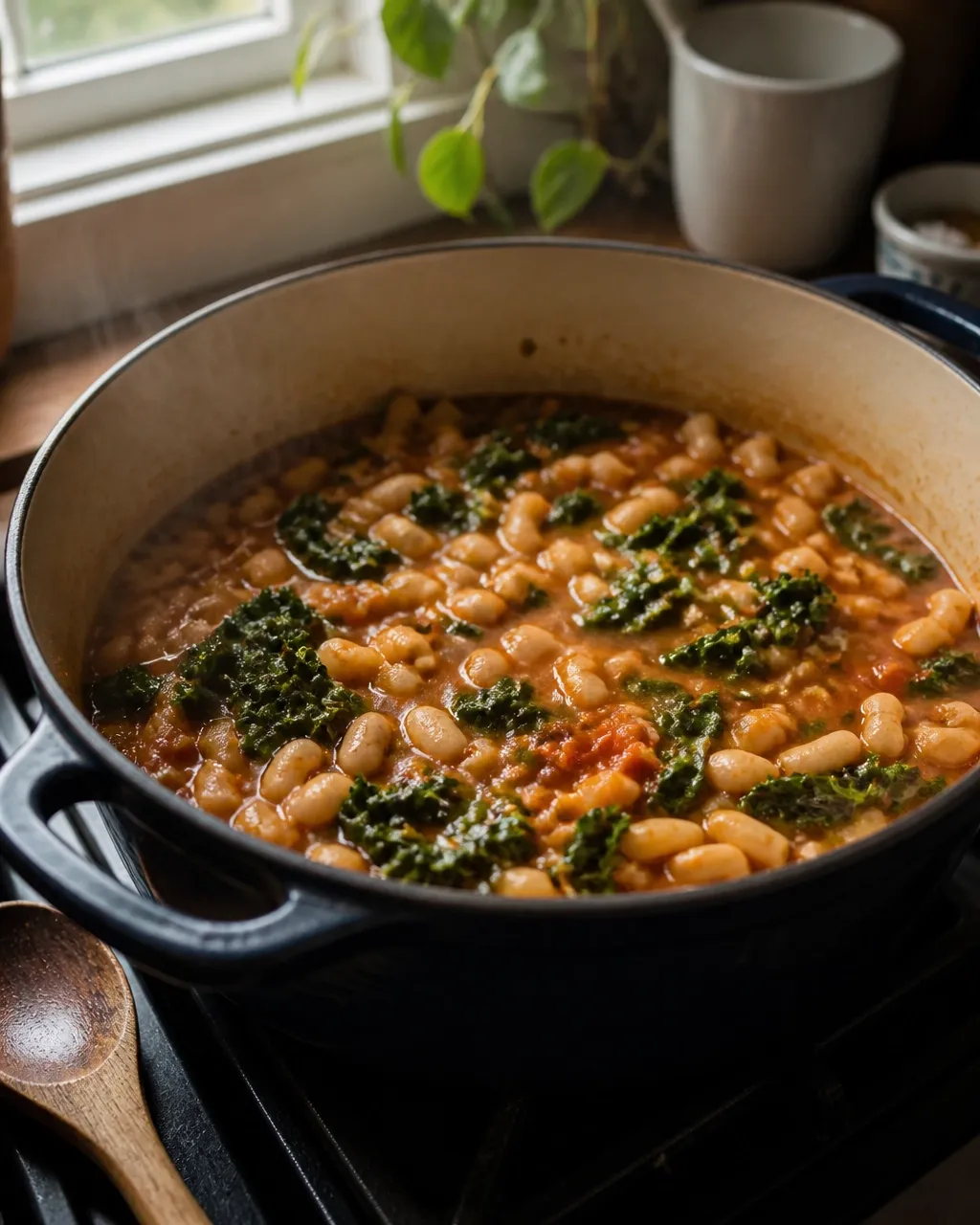
Tuscan cooking is often at its best when a few humble ingredients are allowed to do real work. Aromatics create the savory foundation. Tomatoes bring sweetness and acidity. Beans add softness and substance. Kale contributes a pleasant green bitterness. Pasta ties everything together with starch.
Use dried herbs and chili sparingly but confidently. Herbs bloom in warm fat and release more aroma than they would if scattered into a watery sauce. Chili does not need to make the dish fiery; a small amount simply prevents the beans and pasta from tasting flat.
Finish with a little good olive oil, grated cheese if you use it, black pepper, or fresh lemon zest. Treat these as finishing tools rather than decoration. Fat carries aroma, pepper adds lift, and zest gives you citrus fragrance without adding much liquid. For another look at how starch creates a satisfying sauce, read Cookpedia’s creamy mushroom pasta guide.
Variations for Different Tables
Keep the core balance intact while changing the personality of the bowl. Swap kale for Swiss chard if you want softer greens, or use spinach for the quickest-cooking version. Add the spinach late because it wilts rapidly and can release more water than kale.
Use chickpeas instead of white beans for a firmer bite and a slightly nuttier flavor. Butter beans create an especially plush sauce because their large, tender interiors break down easily. For a higher-protein variation, stir in cooked lentils, but expect the sauce to become thicker and more earthy.
Make the dish vegan by skipping cheese and finishing with extra olive oil, lemon zest, and toasted breadcrumbs. The starch still provides the creamy structure. For a gluten-free version, choose a sturdy pasta and watch it closely; rice-based pasta can soften quickly and release starch differently from wheat pasta.
Add roasted red peppers for sweetness, or fold in a handful of chopped sun-dried tomatoes for a sharper, more concentrated flavor. If you want a smoky version, use smoked paprika or a little chili oil. Keep one bright element in the bowl so the beans and starch do not make the meal feel too rich. That is what makes it one of my favorite healthy dinner ideas for a cold or busy evening.
Side Dish Pairings That Bring Balance
This pasta is soft, saucy, earthy, and filling, so pair it with something crisp or acidic. A simple arugula salad with lemon dressing is my first choice. Peppery greens cut through the creamy beans, while citrus refreshes the palate.
Serve roasted broccolini, green beans, or asparagus when you want a warm vegetable side. Give the vegetables a little color at the edges; gentle charring adds bitterness and texture that contrast with the pasta.
For extra crunch, offer toasted whole-grain bread or garlicky breadcrumbs. Keep the bread portion modest because the pasta already brings plenty of starch. A cool cucumber salad also works beautifully, especially when the main dish is hot and deeply savory.
FAQ: Making One-Pot White Bean and Kale Pasta Work
What if my pasta is still firm but the pot looks dry?
Add a small splash of water or broth, reduce the heat, and continue simmering. Pasta needs both heat and moisture to hydrate its center. Adding liquid gradually protects the developing starch sauce instead of washing it out with too much water at once.
What if the sauce is too thin?
Let the pasta stand uncovered for a minute or two, then stir. Evaporation will concentrate the starch and flavor. If the pasta is already tender, avoid prolonged boiling. The sauce will continue thickening as it cools slightly.
What if the sauce becomes too thick?
Stir in warm water or broth a little at a time. Cooling causes starch molecules to tighten, so a sauce that looked perfect in the pot may seem stiff in the bowl. A small amount of liquid loosens the emulsion and restores its coating texture.
Why did my beans break apart?
The heat was probably too high, or the beans simmered longer than necessary. Canned beans are already tender. Keep the pot at a gentle simmer and stir carefully, especially once the beans are warm.
How can I make kale less bitter?
Cook it until properly tender, season it evenly, and finish with acidity. Salt reduces the perception of bitterness, while lemon juice or vinegar adds contrast. Do not rely on raw kale stirred in at the very end; it will stay tough and assertive.
Can I use whole-wheat pasta?
Yes. Expect a firmer, nuttier result and potentially a slightly longer cooking time. Whole-wheat pasta can absorb more liquid, so monitor the pot and add small splashes if needed. Keep the simmer gentle to prevent the outside from becoming overly soft.
Can I prepare this ahead of time?
Serve it fresh when possible because the starch sauce tightens as it cools. For leftovers, reheat gently with a little water or broth and stir until smooth. Avoid overheating, which can make the pasta soft and cause the sauce to separate.
Is this a complete meal?
Yes. The pasta provides carbohydrates, the beans add plant protein and fiber, and the kale contributes a substantial serving of greens. Add a sharp salad or roasted vegetable if you want more color and contrast at the table. For more practical quick family meals, browse Cookpedia’s one-pot meal collection and healthy recipe ideas.