Recipe
Servings
Servings 1×
Ingredients
- Fettuccine
- Pasta
- Noodles
- Asparagus
- Garlic
- Lemon
- Cream
- Hard cheese
- Butter
- Black pepper
Method
- Cook it gently in butter until fragrant and softened, but stop before it turns deeply brown.
- Use medium-low heat and watch the pan rather than the clock.
- Add it gradually when the sauce needs loosening or when the noodles look dry.
- Use small splashes rather than one dramatic pour.
- Warm the cream mixture until it lightly thickens, then reduce the heat.
- Keep the pan calm, especially once Parmesan enters the picture.
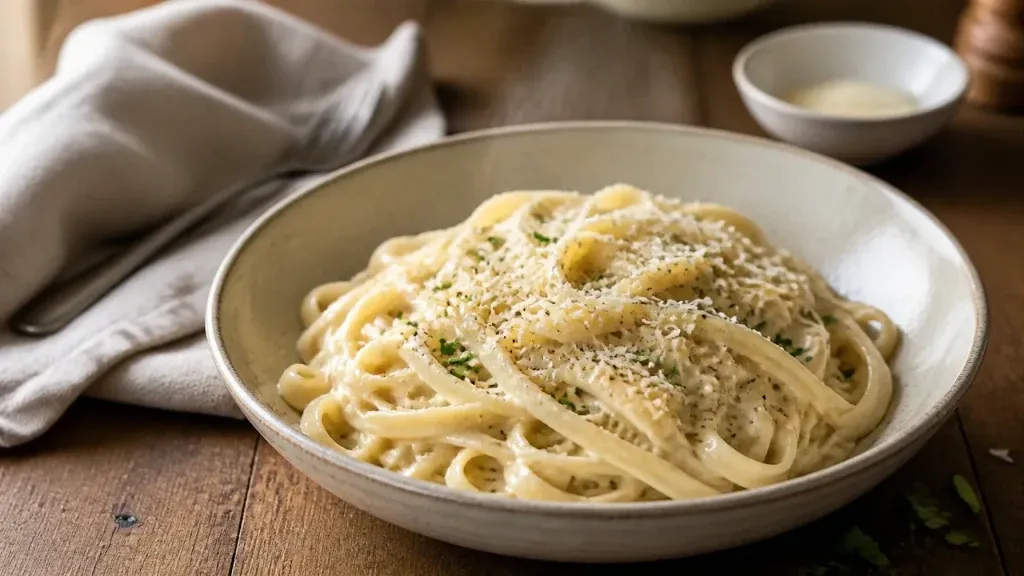
Creamy garlic Parmesan fettuccine is the sort of dinner that makes a busy evening feel briefly under control. It uses familiar ingredients, cooks quickly, and delivers a silky sauce without demanding restaurant-level technique. The trick is not piling on more cream or cheese. The trick is managing heat, starch, and timing so the sauce clings to every ribbon of pasta. Follow a few non-negotiable rules, and this simple dish becomes one of the most dependable quick family meals in your kitchen.
Tips & Technique: Build a Sauce That Stays Silky
Start with a gentle garlic foundation
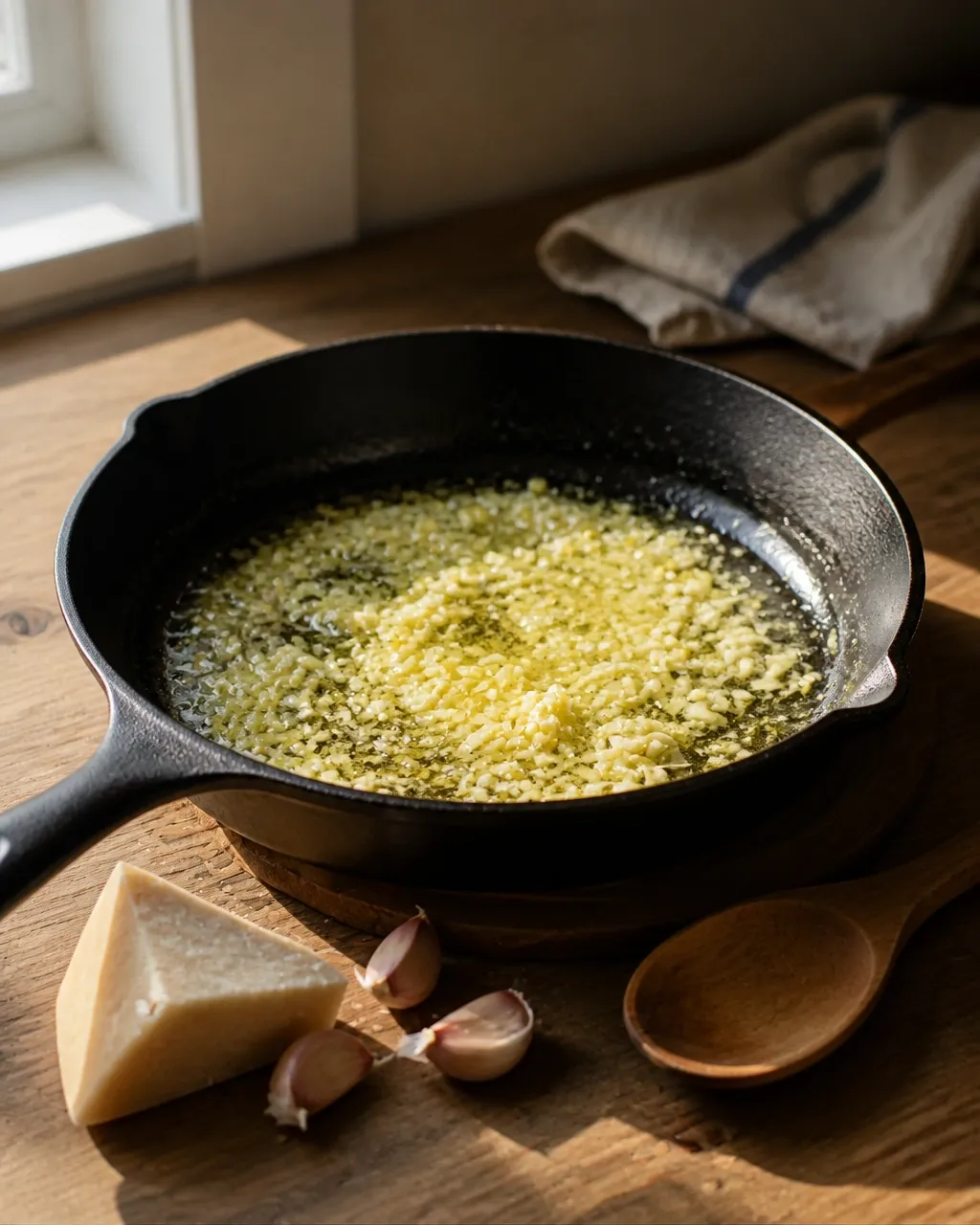
Garlic needs patience, even when dinner does not. Cook it gently in butter until fragrant and softened, but stop before it turns deeply brown. Garlic contains sulfur compounds that become sweeter and rounder with moderate heat. Push the temperature too far, and those compounds become harsh and bitter.
Use medium-low heat and watch the pan rather than the clock. Garlic can move from pale and fragrant to burnt in the time it takes to answer one message. If it starts sizzling aggressively or darkening around the edges, lower the heat immediately.
Treat pasta water as a cooking tool
Do not drain the pasta and pour all that cloudy water away. It is your sauce insurance.
As the fettuccine cooks, it releases starch into the water. That starch helps water and fat stay together, creating the foundation of a smooth emulsion. Butter and cream bring richness, while pasta water gives the sauce enough structure to coat the noodles instead of sliding to the bottom of the bowl.
Reserve some pasta water before draining. Add it gradually when the sauce needs loosening or when the noodles look dry. Use small splashes rather than one dramatic pour. You can always add more, but you cannot easily rescue a watery sauce without reducing it and risking overcooked cheese.
For another practical look at this principle, read Cookpedia’s One-Pot Lemon Asparagus Spaghetti, which uses pasta starch as part of the sauce-building process.
Keep the cream below a rolling boil
A gentle simmer is useful; a furious boil is not. High heat can cause the water in the cream to evaporate too quickly, leaving the fat behind. It can also make the finished sauce feel oily or heavy.
Warm the cream mixture until it lightly thickens, then reduce the heat. Think of the sauce as a warm bath for the cheese, not a bubbling cauldron. This small distinction is the difference between velvety and vaguely scrambled.
Keep the pan calm, especially once Parmesan enters the picture. The sauce should look smooth and fluid before you add the pasta.
Grate Parmesan finely and add it away from direct heat
Use freshly grated Parmesan whenever possible. A fine grate melts more evenly because each piece has greater contact with the warm sauce. Pre-grated cheese often contains anti-caking agents, which can interfere with melting and leave you with a grainy texture.
Remove the pan from direct heat before adding the cheese. Stir it in gradually, allowing each addition to melt before adding the next. This gives the proteins and fat time to disperse through the liquid instead of clumping together.
Parmesan is also salty, so season thoughtfully near the end. Taste after the cheese has melted rather than salting the sauce aggressively at the beginning. Your future self: and your water glass: will appreciate the restraint.
Toss hot pasta directly in the sauce
Do not let the drained fettuccine sit in the colander while you finish the sauce. The surface starch cools and becomes less helpful, while the pasta begins sticking to itself.
Move the hot noodles straight into the skillet. Toss them over low heat so the sauce can settle around each ribbon. Add a little pasta water if the coating looks thick or pasty. Keep tossing until the sauce looks glossy and moves with the noodles.
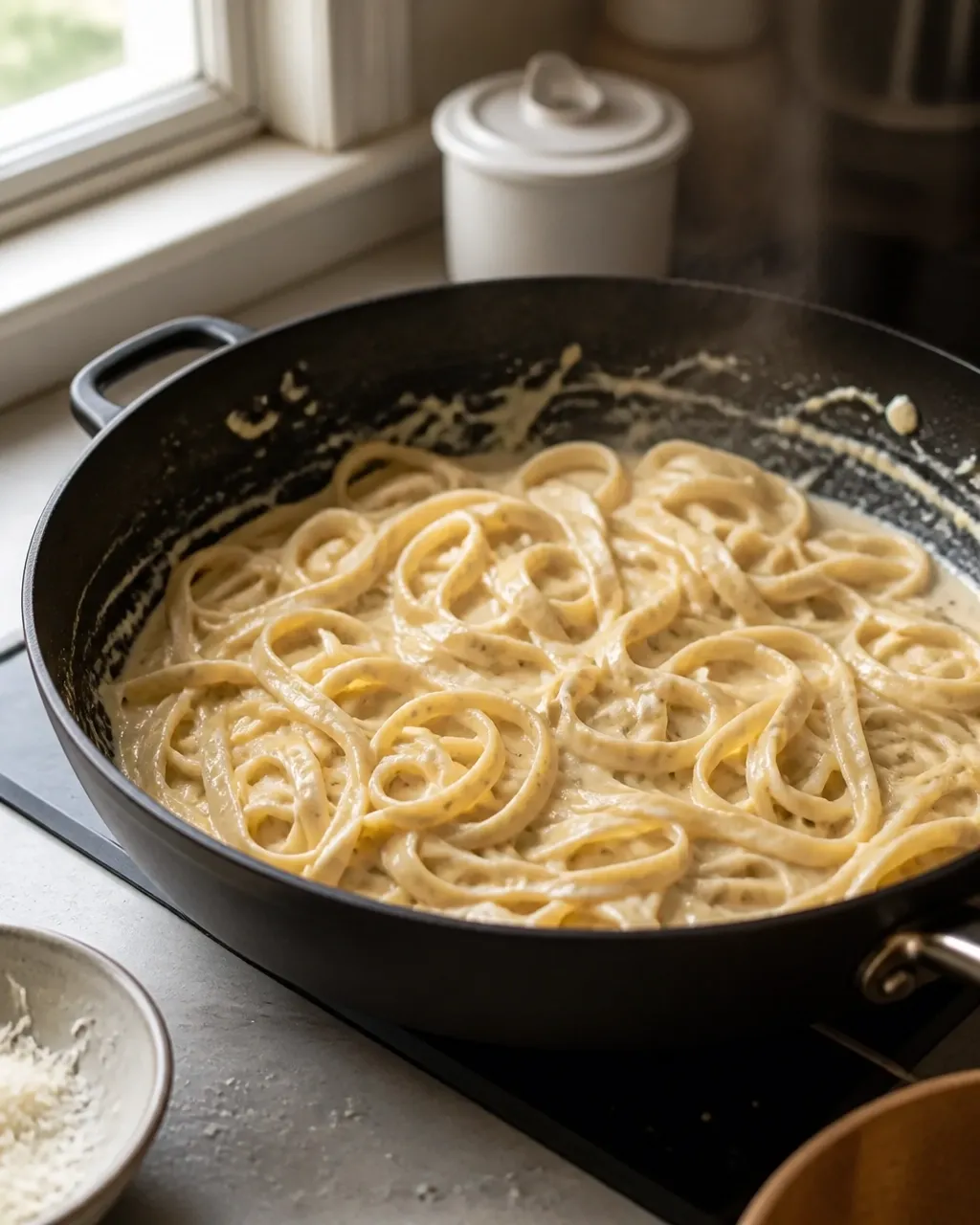
This final tossing stage is where the dish comes together. You are not simply mixing pasta and sauce; you are encouraging starch, fat, and water to form one cohesive coating. Give it a minute of active movement. A lazy stir produces lazy coverage.
Finish with contrast, not just more richness
Creamy pasta needs contrast. Add freshly cracked pepper for gentle heat and a little bitterness. Use parsley or another fresh herb for a clean, green note. A small touch of lemon can brighten the sauce, but add it carefully and late so the acidity does not cause the dairy to tighten.
Aim for balance: rich, savory, aromatic, and slightly fresh. More Parmesan is not always the answer. Sometimes the sauce needs a splash of pasta water or a squeeze of lemon instead.
Variations: Change the Mood Without Losing the Method
Turn this into a mushroom version by browning sliced mushrooms separately before folding them through the finished pasta. Browning drives off moisture and creates deeper savory flavors, while adding mushrooms straight into the cream can make the sauce watery. Cookpedia’s Creamy Mushroom Pasta Starch is a useful companion if you enjoy starch-led sauces.
Add peas, baby spinach, or tender asparagus for color and freshness. Blanch firm vegetables briefly or sauté them until just tender before combining them with the pasta. Keep the vegetables slightly crisp; soft vegetables disappear into a creamy sauce and leave the dish feeling one-note.
For extra protein, add shredded roast chicken, seared shrimp, or flaked salmon. Keep the portion moderate so the fettuccine remains the star. Salmon and dill offer a particularly fresh contrast, while chicken makes the dish more substantial for hungry eaters.
Use roasted garlic instead of gently cooked minced garlic for a sweeter, softer flavor. Stir in a pinch of chili flakes if you want warmth, or add lemon zest for a brighter finish. For a lighter variation, replace part of the cream with warm pasta water, but do not remove all the fat. The sauce still needs enough richness to emulsify and coat the noodles.
Side Dish Pairings: Add Freshness and Texture
Pair creamy fettuccine with something crisp, green, or acidic. A lemony salad with a sharp vinaigrette cuts through the richness and refreshes your palate between bites. Keep the dressing bright rather than creamy; doubling down on dairy makes the meal feel heavier.
Roasted broccoli, asparagus, or green beans bring mild bitterness and a little chew. That contrast makes the pasta taste creamier without adding more sauce. Serve the vegetables simply, with lemon, olive oil, and black pepper.
Garlic bread is tempting, naturally, but use it strategically. A small piece is perfect for catching the last sauce from the bowl. A whole basket can turn a balanced dinner into a carbohydrate convention.
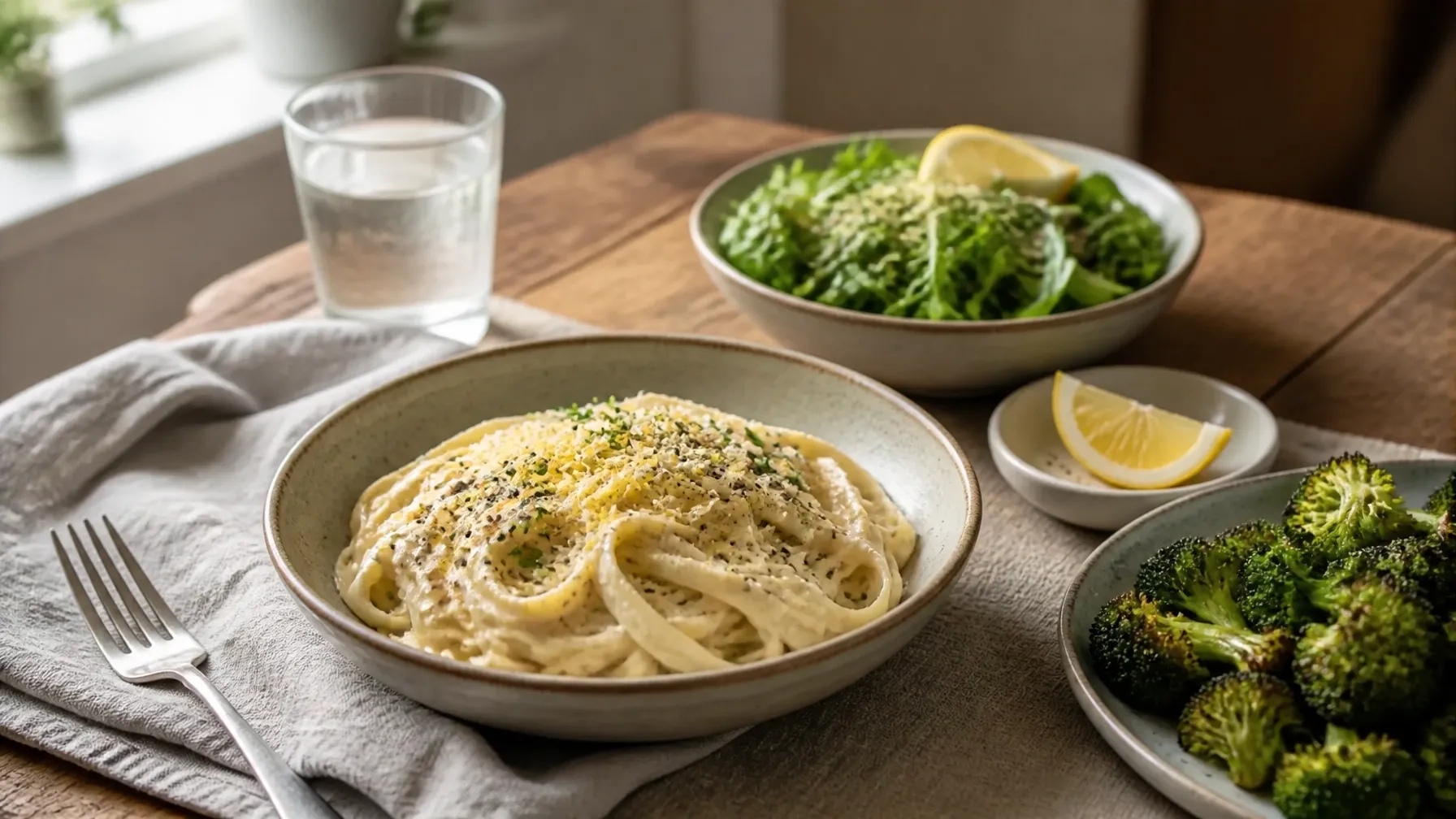
If your search history is full of “air fryer recipes dinner” ideas, use the air fryer for crisp broccoli or green beans while the pasta cooks. Let the appliance handle texture, and let the skillet handle the sauce.
FAQ: What If the Sauce Goes Wrong?
What if my Parmesan sauce turns grainy?
Take the pan off the heat immediately. Graininess usually comes from excessive heat, cheese added too quickly, or pre-grated Parmesan. Add a small splash of warm pasta water and whisk firmly. The extra liquid can help redistribute the fat and cheese.
Prevent the problem by grating the cheese finely and adding it gradually to a warm: not boiling: sauce. If the sauce is already severely clumped, it may not return completely to its original texture, but vigorous whisking can still improve it.
What if the sauce is too thick?
Add warm pasta water one splash at a time while tossing the noodles. The water does more than thin the sauce: its starch helps maintain the emulsion, so the result stays creamy rather than watery.
Avoid adding cold water straight from the tap. A sudden temperature change can make the butter and cheese tighten, and it will cool the pasta before the sauce has properly coated it.
What if the sauce is too thin?
Keep the pan over low heat and toss the pasta for another minute or two. Gentle evaporation will concentrate the sauce, while the noodles release more starch into the pan.
Add a little more Parmesan only after checking the consistency. Cheese thickens as it cools, so stop when the sauce is slightly looser than your ideal serving texture. If you reduce it until it looks perfect in the pan, it may become stiff on the plate.
What if the garlic tastes bitter?
The garlic probably browned too far. Burnt garlic cannot be completely disguised with more cream or cheese. If the bitterness is mild, balance it with a little lemon juice, fresh parsley, or extra unsalted butter. If it tastes sharply burnt, start the garlic base again. It is annoying, but less annoying than eating a whole bowl of regret.
Prevent bitterness by lowering the heat before adding garlic and removing the pan from the burner if it begins coloring rapidly. For a gentler flavor, use roasted garlic.
What if I do not have heavy cream?
Use a combination of milk and extra pasta water, but expect a lighter sauce with less stability. Heavy cream contains enough fat to help prevent curdling and gives the sauce body. Lower-fat dairy can work if you keep the heat gentle and avoid boiling.
Do not substitute cold milk directly into a hot, buttery pan. Warm it first and add it gradually. The goal is to avoid a sudden temperature change that encourages separation.
Can I make this pasta ahead?
Make it close to serving time for the best texture. Cream sauces thicken as they cool, and fettuccine continues absorbing liquid. If you need to reheat leftovers, use low heat and add a splash of milk, cream, or pasta water while stirring gently.
Avoid blasting it in the microwave until piping hot. Rapid heating can split the sauce and make the cheese rubbery. Reheat in short intervals, stirring between each one, or warm it slowly in a skillet.
Is creamy fettuccine a healthy dinner idea?
It can fit into a balanced meal when you serve a sensible portion and add vegetables or a fresh salad. The sauce is rich, so let it provide the indulgence while the side dish supplies color, fiber, and contrast. Build the plate thoughtfully rather than trying to make the pasta pretend it is something else.
For more flexible weeknight inspiration, browse Cookpedia’s quick meals, pasta recipes, and vegetarian dinner recipes. Keep the method, adjust the vegetables, and make the dish work for the people sitting at your table.