Recipe
Servings
4 servings 1×
Serves 4Prep 5 minCook 12 minTotal 17 min
Ingredients
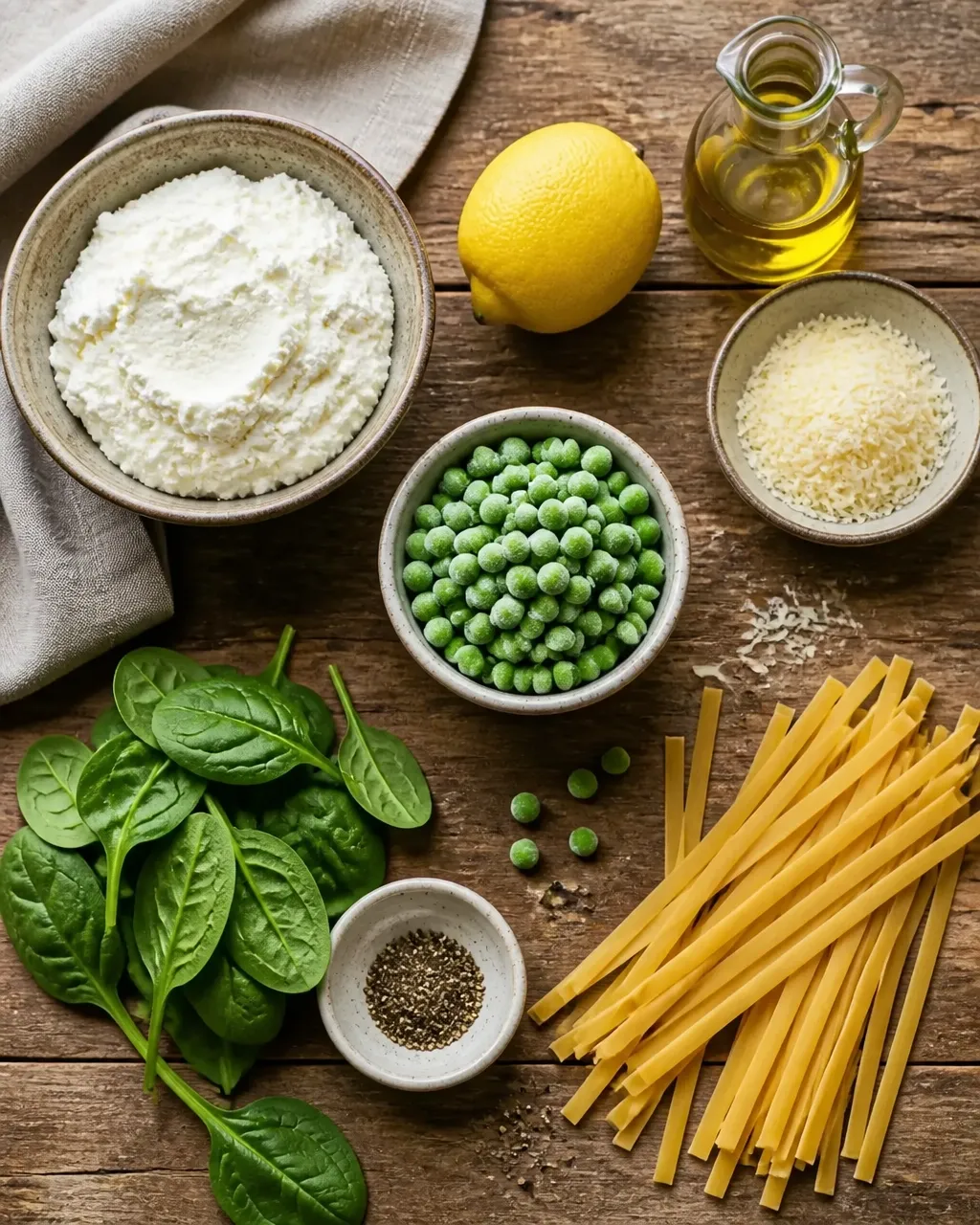
- 12 ounces pasta
- 1 cup ricotta
- 1/2 cup grated Parmesan
- 1 lemon, zested and juiced
- 1 cup frozen peas
- 3 cups baby spinach
- 1 tablespoon olive oil
- Salt and black pepper, to taste
- Reserved pasta water, as needed
Method
- Bring a large pot of generously salted water to a boil. Cook the pasta until just shy of al dente, following the package timing.
- Before draining, reserve at least 1 cup of the starchy pasta water. Add the peas and spinach to the pot during the last 2 minutes of cooking so the peas warm and the spinach wilts.
- Whisk the ricotta, Parmesan, lemon zest, lemon juice, olive oil, salt, and pepper in a large warm bowl. Add a splash of pasta water until the mixture is loose and spoonable.
- Add the drained pasta and vegetables to the ricotta mixture. Toss energetically, adding reserved pasta water a little at a time until the sauce clings to the pasta.
- Taste and adjust the lemon, salt, and pepper. Serve immediately, with extra Parmesan if desired.
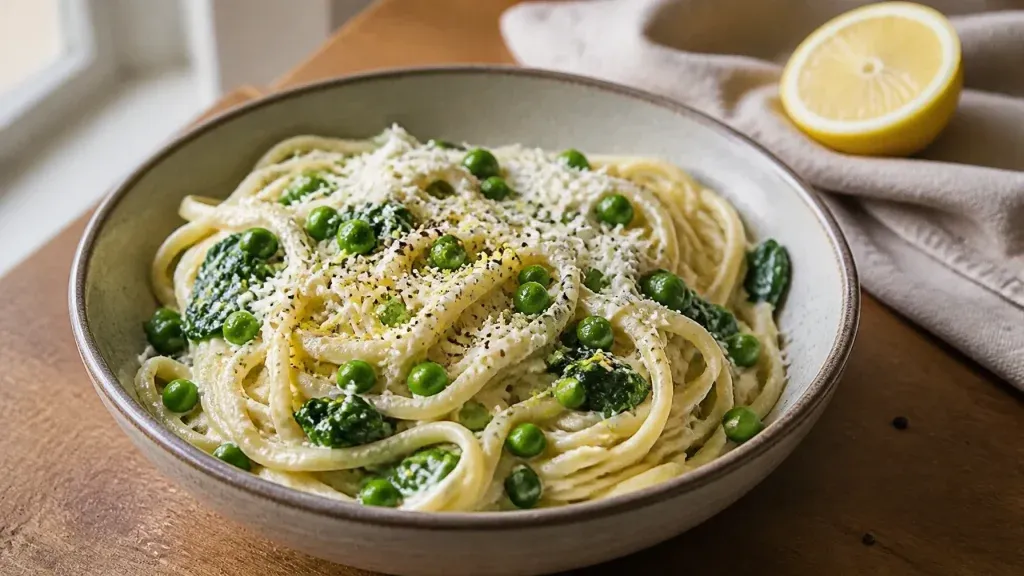
Some pasta dinners work hard for very little applause. This lemon ricotta pasta is one of them. It brings together creamy ricotta, bright lemon, sweet peas, and tender spinach without needing heavy cream or a complicated sauce. The result is fresh, comforting, and ready for a busy weeknight. Treat it as a flexible template, not a fragile performance, and keep a little pasta water nearby. It is the quiet hero of the whole dish.
Tips & Technique: Build a Silky Sauce Without Cream
Start with properly salted pasta water
Salt the cooking water generously. Do not wait until the sauce is finished to add all the seasoning, because pasta absorbs water as it cooks. When that water is seasoned, the pasta develops flavor from the inside rather than tasting like a bland vehicle for sauce.
The water also becomes useful beyond cooking. As pasta boils, it releases some surface starch into the pot. That starchy liquid can loosen the ricotta mixture while helping it cling to the pasta. Think of it as a simple kitchen thickener that costs nothing and is already sitting beside your stove.
Use a mug or measuring cup to save some before draining. This is non-negotiable. Draining first and trying to recreate pasta water with plain water later will give you less seasoning and less starch.
For a deeper look at how this works, read Cookpedia’s guide to the science of pasta water.
Keep ricotta away from fierce heat
Ricotta gives this pasta its creamy texture, but it does not want to be boiled. High heat can cause its milk proteins to tighten, especially when lemon juice is involved. That tightening is what turns a smooth-looking sauce into a grainy or slightly curdled one.
Mix the ricotta with the other sauce elements away from direct heat, then let the hot pasta and reserved water warm it gently. Stir until the mixture looks loose and spoonable before it meets the pasta. Avoid putting the ricotta mixture in a ripping-hot skillet and expecting good manners. Dairy is not known for them.
The best temperature is warm enough to melt and combine the cheese, but not so hot that the sauce bubbles aggressively. Tossing in a warm pot or serving bowl gives you more control than cooking the sauce over a burner.
Use lemon in two different ways
Lemon zest and lemon juice do different jobs. Zest supplies fragrant citrus oils, which make the pasta smell bright before you even take a bite. Juice adds acidity, cutting through the richness of ricotta and Parmesan.
Add enough juice to make the sauce lively, but do not treat the lemon like a dare. Too much acid can overpower the peas and make the dairy taste sharp. Taste near the end and adjust gradually.
Acidity is especially useful in creamy dishes because fat can coat the tongue and make flavors seem muted. A small amount of lemon wakes everything up. It should make you want another forkful, not make you reach for a glass of water.
Stop the vegetables before they become tired
Add the peas and spinach only near the end of the pasta’s cooking time. Frozen peas are usually blanched before freezing, so they need warming rather than a long boil. Overcook them and their sweetness fades into a soft green murmur.
Spinach wilts quickly. It needs just enough heat to collapse and blend with the pasta, not enough to turn dark, watery, and limp. Short cooking protects its color and keeps a little structure in the finished dish.
This timing also reduces extra pans and helps the vegetables pick up a little seasoning from the pasta water. It is an efficient technique for quick family meals, particularly when everyone is hungry and the sink is already judging you.
Finish the pasta just before it is fully tender
Cook the pasta until it is firm but no longer chalky in the center. Pasta continues to soften as it sits in the hot sauce, and the final toss gives it time to absorb flavor.
A slightly firm texture also balances the soft ricotta and tender vegetables. Without that contrast, the dish can feel heavy and one-note. Texture is not decoration; it is part of how your brain experiences flavor.
Toss with energy. The movement helps the sauce spread over every piece while the starch thickens the mixture. Add reserved pasta water little by little. Too much at once creates a thin sauce, while a careful addition gives you a creamy coating that stays on the pasta instead of puddling at the bottom of the bowl.
Season in layers, then taste at the end
Ricotta is mild, peas are sweet, and spinach is gentle. The dish needs enough salt, black pepper, lemon, and cheese to keep those quiet flavors from disappearing.
Season the cooking water, season the ricotta mixture, and taste the finished pasta. Check the balance while the dish is still warm. Warm food releases aroma more readily, so it is easier to judge whether the lemon is bright enough and the pepper is doing its job.
Do not assume extra Parmesan will fix everything. More cheese adds salt and richness, but it cannot replace acidity or pepper. Build balance instead of piling on toppings like a nervous restaurant chef.
For another weeknight pasta idea using a simple, high-impact sauce, browse Cookpedia’s pasta collection.
Variations: Keep the Balance, Change the Personality
Use different pasta shapes according to the texture you want. Short ridged shapes catch ricotta in their grooves, while spaghetti creates a lighter, more twirlable finish. Orecchiette is particularly good at holding peas, although a few will inevitably roll onto the counter. Consider that part of the cooking experience.
Add garlic for a savory backbone, or use a pinch of red pepper flakes for gentle heat. Keep both restrained so they support the lemon rather than crowd it. Fresh herbs such as basil, parsley, mint, or dill can make the pasta taste greener and more seasonal.
Swap peas for asparagus pieces, edamame, broad beans, or chopped broccoli. Choose vegetables with a little bite and cook them briefly. If you use mushrooms, brown them separately first so their moisture does not dilute the sauce. Cookpedia’s creamy mushroom pasta with peas uses the same useful principle: develop flavor before adding moisture.
For extra protein, fold in white beans, flaked salmon, shredded chicken, or crisped chickpeas. Add them gently so the ricotta sauce stays creamy. If you want a completely plant-based version, use a dairy-free ricotta-style alternative and nutritional yeast, then rely on lemon, pepper, and pasta water for structure and brightness.
Need a lower-effort variation? Turn it into a one-pot meal, but watch the liquid carefully. One-pot cooking can produce excellent starch-rich water, yet too much liquid leaves you with soup wearing a pasta costume.
Side Dish Pairings: Add Freshness and Crunch
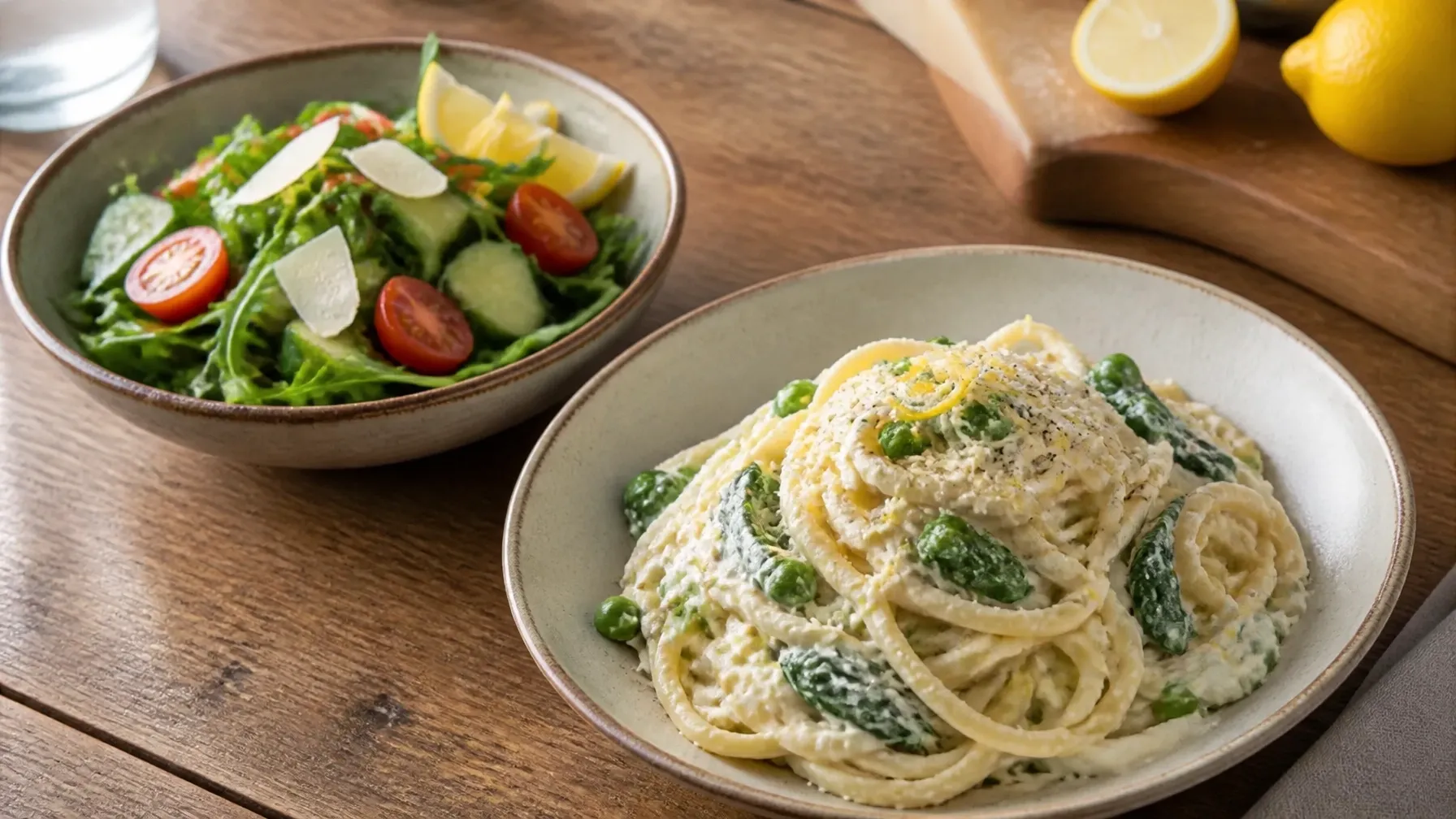
Pair this pasta with something crisp and acidic. A simple arugula salad with cucumber, tomatoes, and lemon dressing brings peppery freshness and cuts through the ricotta’s richness. Keep the dressing bright rather than creamy; the pasta already has that department covered.
Roasted broccoli, asparagus, or green beans also work well. Give the vegetables enough color to add a lightly bitter, toasted note, which balances the sweet peas. A few toasted breadcrumbs scattered over the pasta can provide crunch without turning the meal into a cheese mountain.
Serve crusty bread only if you have plenty of sauce left in the bowl. Otherwise, let the pasta stand on its own. It already includes vegetables, carbohydrates, and satisfying dairy, making it a useful option among simple healthy dinner ideas.
For dessert, choose fruit or a small lemony treat. Keep the ending fresh and light.
FAQ: What If the Sauce Goes Wrong?
What if my ricotta sauce looks grainy?
Lower the heat immediately and add a small splash of reserved pasta water. Stir or toss steadily to loosen the mixture. Graininess usually comes from overheating, low-moisture ricotta, or adding lemon to very hot dairy.
You may not be able to make a badly curdled sauce perfectly smooth again, but you can improve its texture. Next time, bring the ricotta closer to room temperature, combine it away from direct heat, and add the hot pasta gradually rather than pouring everything together at once.
What if the pasta is too dry?
Add pasta water one tablespoon at a time and toss after each addition. The sauce may seem thick at first because the starch continues to absorb liquid as the pasta sits. Give it a few seconds before adding more.
Avoid adding a large amount of water all at once. You want a sauce that moves freely around the pasta but still clings to it. If you overshoot, a little extra ricotta or Parmesan can restore body, but prevention is much easier than rescue.
What if the sauce is watery?
Keep tossing off the heat for a minute. Starch needs time to hydrate, and the pasta may absorb some of the excess liquid. If it remains thin, add a small amount of grated Parmesan or ricotta.
Do not boil the finished sauce to force it to thicken. That increases the risk of separating the dairy. A gentle rest and steady tossing are safer than turning up the burner.
Can I use low-fat ricotta?
Yes, but expect a slightly less creamy result. Full-fat ricotta contains more fat, which contributes richness and a smoother mouthfeel. Lower-fat versions can be drier or more prone to becoming grainy when overheated.
If using low-fat ricotta, loosen it gradually with pasta water and avoid aggressive heat. Add a small drizzle of olive oil if the finished pasta tastes lean. Balance matters more than following a rigid rule.
Can I make this pasta ahead?
This dish is best immediately after tossing because the sauce thickens as it cools. If you need to prepare it ahead, keep the pasta and sauce separate when possible, then rewarm gently with a splash of water.
Microwave leftovers in short intervals, stirring between each one. Add water before reheating, not after the sauce has already tightened. Do not expect the texture to be identical to freshly tossed pasta, but careful reheating will keep it pleasantly creamy.
Why did my spinach turn dull?
Spinach loses its bright color when it cooks for too long. It also releases water, which can dilute the sauce. Add it near the end and remove the pasta from the heat as soon as the leaves wilt.
A little color change is normal, so do not chase restaurant-green spinach in a home kitchen. Aim for tender leaves with fresh flavor, not a vegetable that has been boiled into surrender.
Is this a good option for busy weeknights?
Absolutely. It uses a short cooking window, a no-fuss sauce, and vegetables that need very little preparation. It is also flexible enough to absorb substitutions based on what is in your refrigerator.
For more fast dinner inspiration, explore Cookpedia’s vegetarian dinner recipes and 15-minute meals. Keep the heat moderate, reserve the pasta water, and taste before serving. Those three habits will save more pasta dinners than any fancy gadget: including the air fryer recipes dinner trend currently trying to move into every meal.