Recipe
Servings
Servings 1×
Ingredients
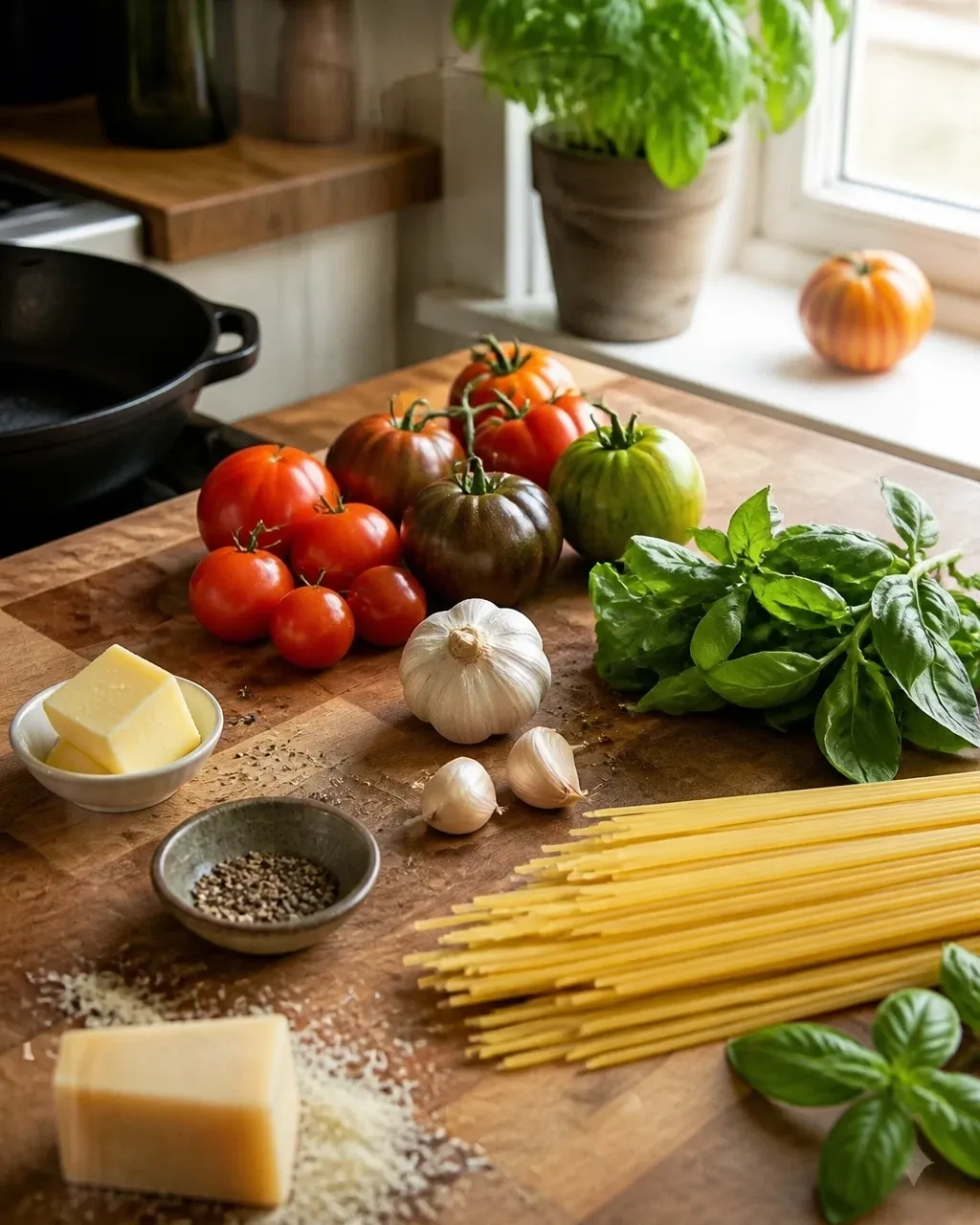
- Pasta
- Noodles
- Tomatoes
- Garlic
- Hard cheese
- Butter
- Cooking oil
- Salt
Method
- Use the pasta water gradually.
- Add small splashes while tossing the hot pasta through the sauce, and keep the mixture moving.
- Give the spaghetti room to move, and you will coat more noodles with less effort.
- Cook the tomato base until the tomatoes soften and release their juices, but do not turn this into an all-afternoon sauce.
- Start with moderate heat and warm the garlic gently in the butter and oil.
- Keep the heat controlled, and do not leave the skillet unattended while the garlic is infusing the fat.
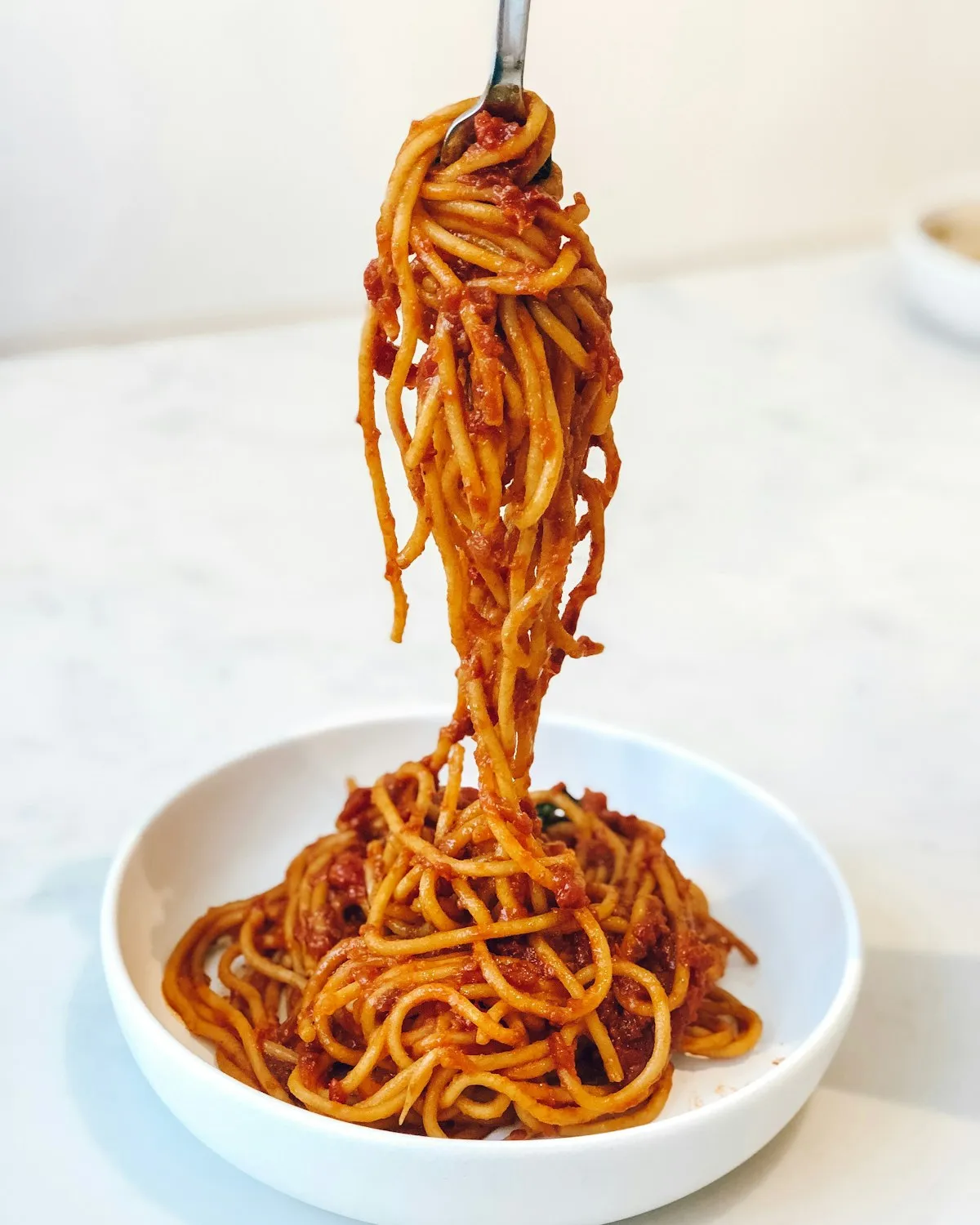
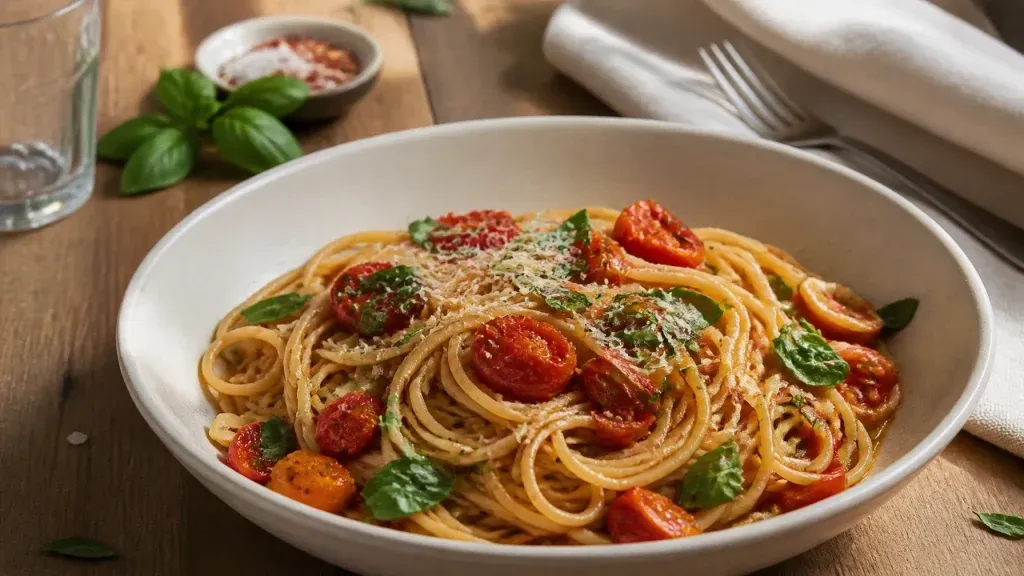
Some dinners need a clever plan. This one needs a skillet, a little attention, and the good sense not to burn the garlic. Garlic butter tomato basil spaghetti turns ordinary pantry staples into a glossy, comforting bowl with bright tomato flavor and plenty of aromatic basil. It belongs in your rotation of quick family meals because it feels generous without making you wash half the kitchen.
Why This Spaghetti Works: Starch, Fat, and Gentle Heat
The sauce succeeds because it is more than melted butter poured over noodles. It is an emulsion: a stable mixture of water-based tomato juices and fat from the butter and olive oil. The trick is to help those two naturally reluctant partners cooperate.
Save some of the cloudy water from cooking the spaghetti. That water contains starch released from the pasta. Starch helps suspend tiny droplets of fat in the tomato liquid, giving the sauce a smooth texture that clings to the noodles instead of pooling at the bottom of the bowl.
Use the pasta water gradually. Too little, and the sauce may look greasy or dry. Too much, and you will dilute the tomato flavor. Add small splashes while tossing the hot pasta through the sauce, and keep the mixture moving. Agitation matters because stirring and tossing break up the fat into smaller droplets, encouraging a smoother emulsion.
Choose a wide skillet rather than a narrow saucepan. Give the spaghetti room to move, and you will coat more noodles with less effort. A broad surface also lets excess water evaporate quickly, which helps the sauce thicken without requiring a long simmer.
Cook the tomato base until the tomatoes soften and release their juices, but do not turn this into an all-afternoon sauce. Fresh tomatoes should remain lively, with a little texture. Canned tomatoes can simmer slightly longer because they often need time to lose their raw edge. Either way, stop before the flavor becomes heavy and flat.
Treat Garlic Like a Fragrant Ingredient, Not a Dare
Garlic carries much of the personality in this dish, so handle it with care. Start with moderate heat and warm the garlic gently in the butter and oil. You want it soft and fragrant, not dark brown.
When garlic browns too aggressively, its flavor shifts from sweet and savory to bitter and harsh. The milk solids in butter can also scorch quickly, especially in a thin pan. Keep the heat controlled, and do not leave the skillet unattended while the garlic is infusing the fat. It only takes a moment to go from “lovely aroma” to “why does dinner taste like a campfire?”
Add tomatoes soon after the garlic becomes fragrant. Their moisture lowers the pan temperature and protects the garlic from continuing to brown. This also helps the aromatic fat spread through the tomato juices, creating a more even sauce.
Balance Tomato Acidity Instead of Fighting It
Tomatoes bring natural acidity, and that brightness is one reason this pasta does not taste overwhelmingly rich. Still, tomato quality varies. Some tomatoes are sweet and mellow; others are sharp enough to make your eyebrows file a complaint.
Use butter to round out the sauce. Fat softens the perception of acidity and gives the tomatoes a fuller mouthfeel. Taste before making adjustments, then respond carefully. If the sauce is still too sharp, a tiny amount of sweetness can balance the flavor, but do not turn the spaghetti into tomato candy. You are looking for harmony, not dessert.
Salt also changes how you perceive acidity. Season the tomato base thoughtfully, but remember that pasta water, Parmesan, and salted butter can all contribute saltiness later. Taste near the end, when the sauce has reduced and the noodles have joined the party.
Keep the Pasta Al Dente
Texture is not a minor detail here. Spaghetti that is too soft will absorb sauce quickly and become heavy. Pasta with a firm center gives you time to toss, emulsify, and serve without ending up with limp noodles.
Pull the pasta when it is just shy of your preferred doneness if it will finish in the skillet. The hot sauce and active tossing will continue cooking it while the starch thickens the glaze. This is also why you should transfer the pasta directly into the sauce rather than rinsing it. Rinsing removes surface starch and cools the noodles, making the sauce less willing to cling.
Finish the sauce with the heat turned low or off, especially when adding more butter or Parmesan. Very high heat can cause dairy proteins and fats to separate, leaving you with a grainy or oily finish. Let residual heat do the gentle work. Your sauce should look shiny and fluid, not watery and not stiff.
Add Basil at the Last Possible Moment
Fresh basil is delicate. Long cooking dulls its color and drives away the volatile aromatic compounds that make it smell so wonderfully fresh. Tear or roughly chop it just before using, then fold most of it through the pasta after the heat is off.
Save a little for the bowl. That final basil has a brighter aroma and gives each serving a fresh lift. Do not overwork it, either. A few uneven pieces look and taste more natural than a perfectly minced green confetti situation.
For another Cookpedia lesson in controlling starch and finishing temperature, explore our guide to one-pan creamy garlic Parmesan pasta. The same principle applies: use starch, fat, and movement to create a sauce that behaves.
Variations That Keep the Balance
Make It Plant-Based
Replace the butter with a plant-based butter or use extra-virgin olive oil for a lighter, fruitier finish. Add nutritional yeast or a dairy-free Parmesan alternative if you want a savory note. Keep the tomato base bright, and finish with lemon zest or a small squeeze of lemon to replace some of the richness that butter normally provides. Browse more ideas in Cookpedia’s vegetarian dinner recipes.
Add Heat
Bloom red pepper flakes in the warm fat with the garlic. Fat carries the capsaicin through the sauce more evenly than adding the flakes at the end, so the heat tastes integrated rather than randomly aggressive. Use a small amount first; you can always add more at the table.
Add Vegetables
Fold in baby spinach, peas, zucchini, or roasted peppers near the end. Choose vegetables that bring either freshness, sweetness, or texture. Avoid adding watery vegetables too early, because their moisture can thin the emulsion. For a heartier bowl, stir through white beans or chickpeas and add a little extra pasta water to keep the sauce loose.
Make It Richer
Add a small splash of cream or extra Parmesan for a silkier finish. Use restraint. The tomatoes should still taste like tomatoes, and the basil should remain noticeable. Richness is useful when it supports balance; it becomes a problem when it puts the whole dish in a butter-shaped fog.
Side Dish Pairings That Brighten the Plate
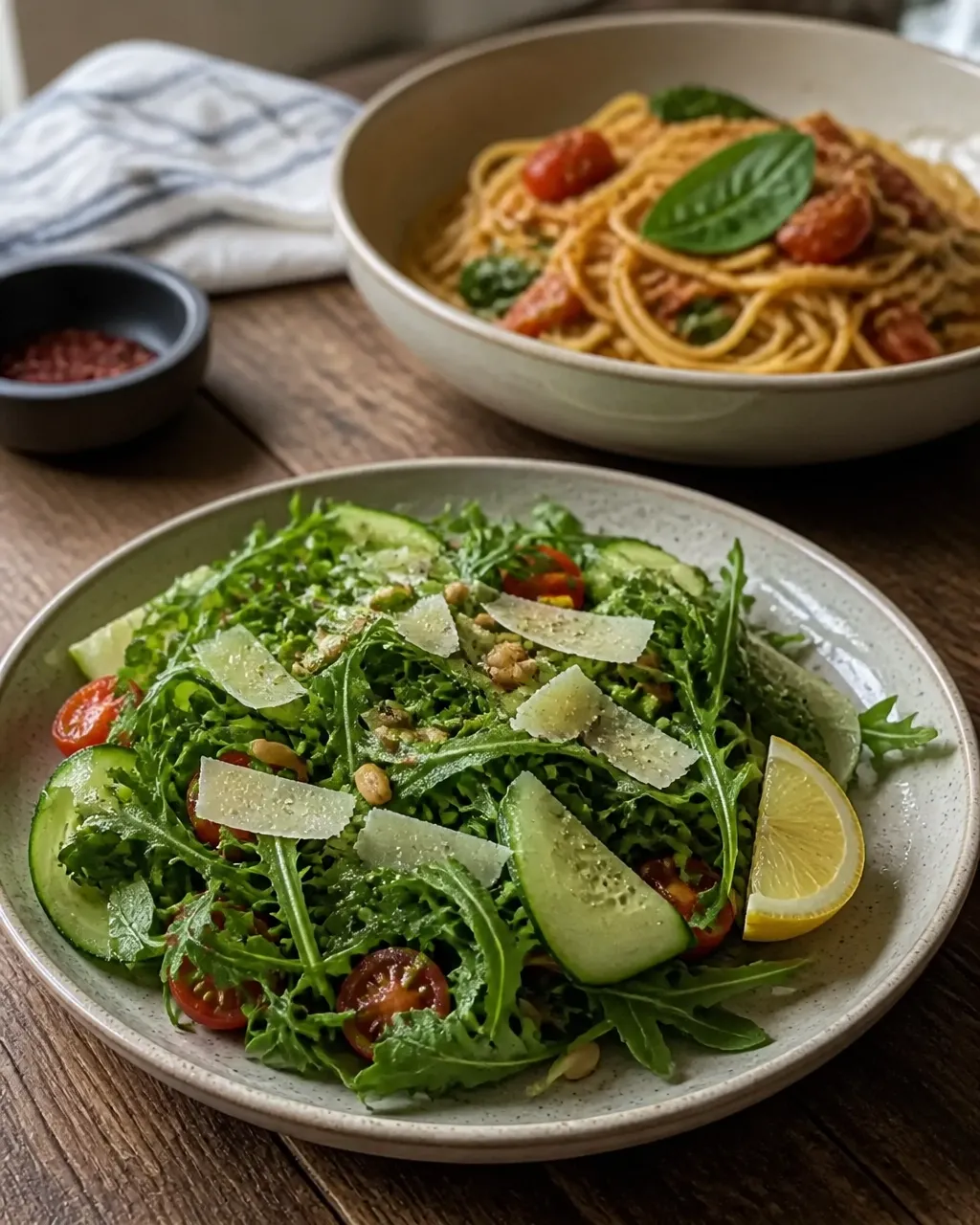
Pair this spaghetti with something crisp, bitter, or acidic. An arugula salad dressed with lemon vinaigrette is an excellent match because peppery greens and acidity cut through the buttery sauce. A cucumber salad brings cool crunch, while roasted broccolini adds char and a pleasant bitter edge.
Serve crusty bread if you want something comforting for catching the last streaks of sauce. Keep it simple and avoid pairing the pasta with another rich, creamy side. The bowl already has plenty of personality.
For a faster vegetable option, use roasted asparagus or broccoli from your favorite air fryer recipes dinner routine. High heat adds browned edges and texture, while the vegetables keep the meal from feeling soft from start to finish.
Frequently Asked Questions
What if my sauce looks oily?
Add a small splash of pasta water and toss vigorously over gentle heat. The starch helps disperse the fat through the tomato liquid. Do not add a large amount at once, or you may create a thin sauce that needs unnecessary reduction.
What if the sauce is watery?
Keep the skillet uncovered and let it simmer briefly while tossing the pasta. Evaporation will concentrate the tomato flavor and allow the starch to thicken the sauce. If the pasta is already perfectly cooked, avoid prolonged heat; remove some liquid with a spoon instead and finish with a little butter or Parmesan.
What if my tomatoes taste too acidic?
Add a little more butter first, then taste again. If the sharpness remains, use a very small pinch of sugar to balance the perception of acidity. Do not rely on sugar to rescue bland tomatoes. Add salt, black pepper, or Parmesan as needed to build a more complete flavor.
Can I use canned tomatoes instead of fresh?
Yes. Crushed or finely chopped canned tomatoes work well, especially when fresh tomatoes are out of season. Simmer them long enough to lose their raw taste, but keep the sauce relatively light. If the canned tomatoes are very concentrated, loosen the mixture with pasta water while tossing.
Why did my garlic taste bitter?
The pan was probably too hot, or the garlic cooked too long before the tomatoes were added. Burned garlic cannot be meaningfully repaired. Start again with fresh butter and garlic, and use lower heat. Watch the pan closely during this short stage; it is the one non-negotiable.
Can I make this ahead?
You can, but freshly finished pasta has the best texture. As it sits, spaghetti continues absorbing the sauce and may become dry. Reheat leftovers gently in a skillet with a spoonful of water. Toss until loosened, then add fresh basil after removing the pan from the heat.
How should I store leftovers?
Cool the pasta promptly and refrigerate it in a sealed container. Eat it within three to four days, and reheat it until steaming hot throughout. Keep the reheating gentle because repeated high heat tightens the noodles and can split the butter-tomato sauce.
What if I do not have Parmesan?
Leave it out, or use Pecorino Romano for a saltier finish. A little nutritional yeast works for a plant-based version. The sauce can still be glossy and flavorful without cheese if you use pasta water carefully and toss with enough movement. For more approachable weeknight inspiration, explore Cookpedia’s quick meals collection and simple pasta recipes.