Recipe
Servings
2–3 1×
Serves 2–3Total 15 min
Ingredients
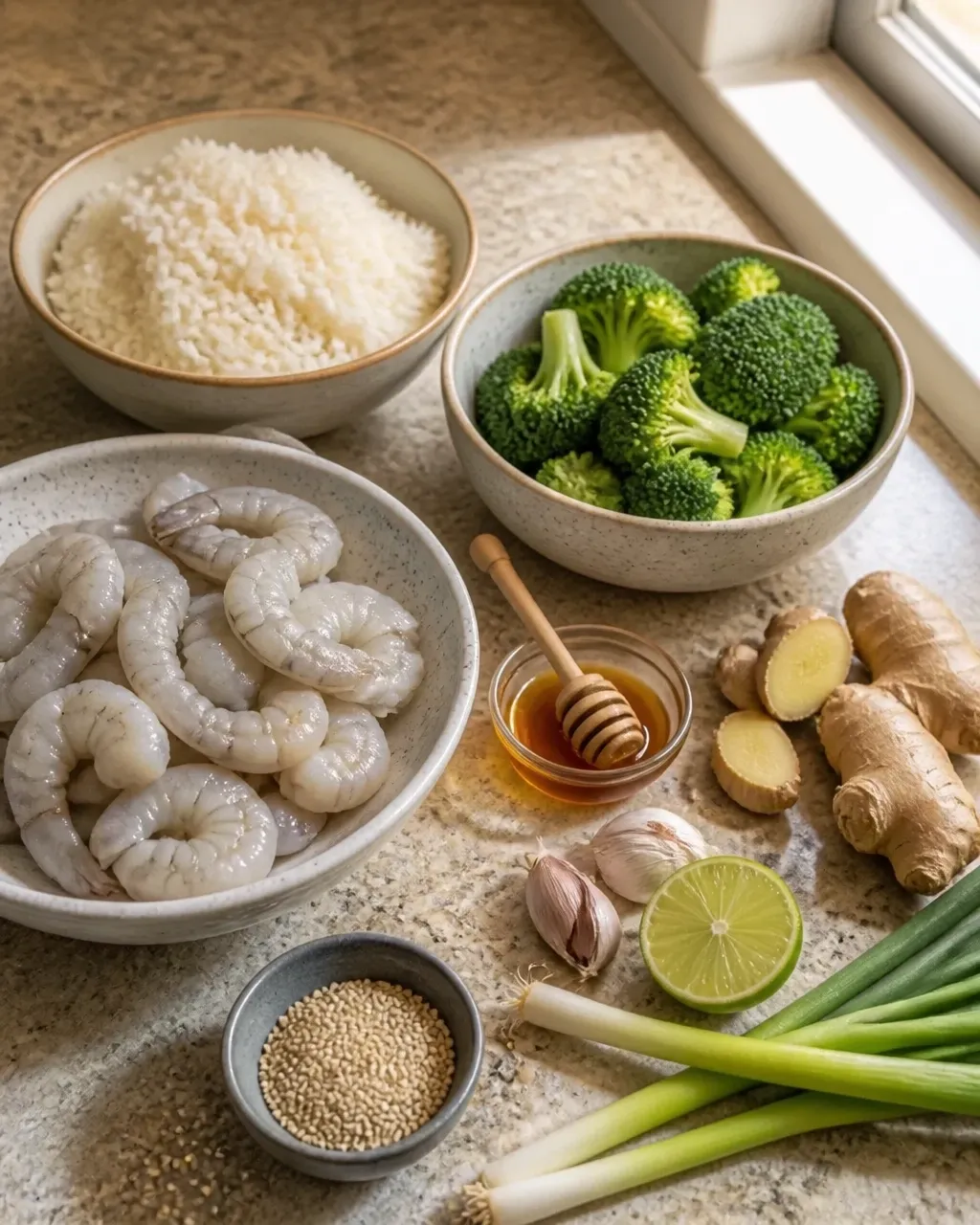
- 1 pound peeled and deveined shrimp
- 2–3 cups small broccoli florets
- 2–3 cups cooked white or brown rice
- 3 tablespoons honey
- 3 tablespoons soy sauce or tamari
- 1 tablespoon rice vinegar or lime juice
- 1–2 teaspoons toasted sesame oil
- 2 garlic cloves, minced
- 1 teaspoon grated fresh ginger
- 1–2 teaspoons sriracha or chili flakes, optional
- 1 teaspoon cornstarch mixed with 2 tablespoons water
- Neutral oil for cooking
- Sesame seeds and sliced scallions, for serving
Method
- Whisk the honey, soy sauce, vinegar or lime juice, sesame oil, garlic, ginger, and optional chili together.
- Set aside half the sauce before adding shrimp.
- Stir-fry the broccoli in a hot, lightly oiled skillet until bright green and crisp-tender, then transfer it to a plate.
- Cook the shrimp in the same skillet until opaque and just firm.
- Add the reserved sauce with the cornstarch slurry, return the broccoli, and toss briefly until the glaze bubbles and coats everything.
- Serve over hot rice with sesame seeds and scallions.
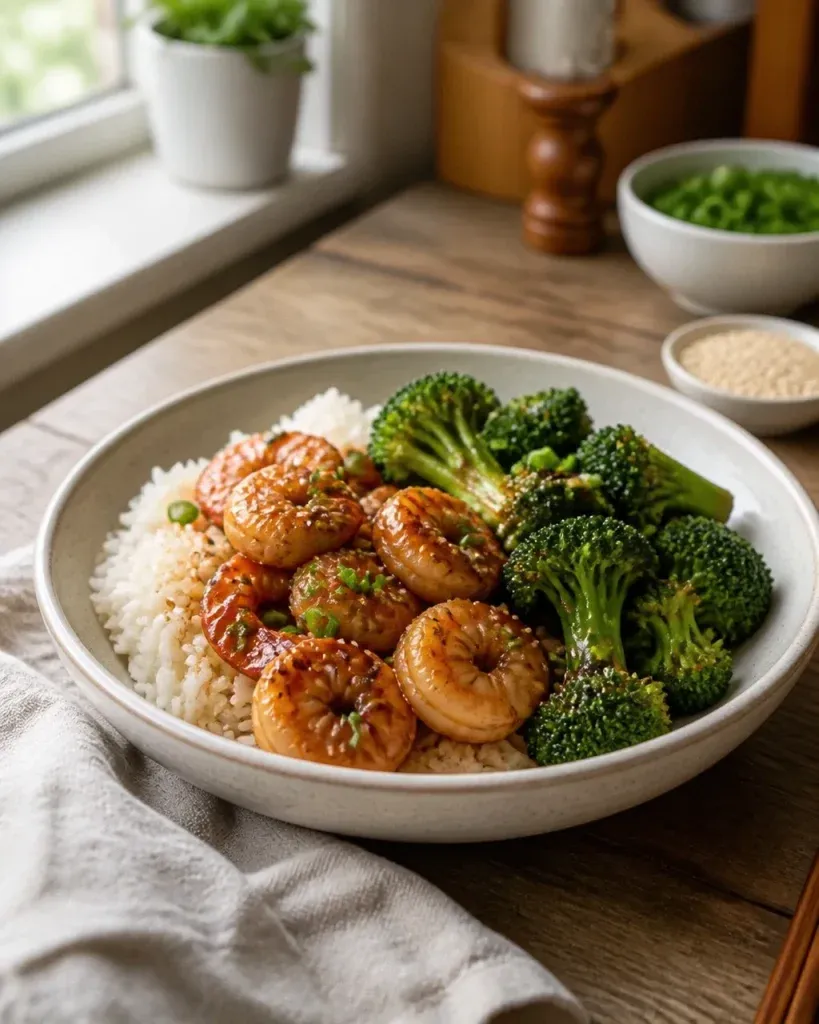
When dinner needs to happen quickly, shrimp is one of my favorite shortcuts. It cooks in minutes, welcomes bold sauces, and has no interest in making you wash three pans. This honey sesame shrimp and broccoli rice bowl brings sweet, salty, tangy flavor to the table fast, with enough broccoli to make the bowl feel properly balanced. Keep cooked or microwave-ready rice on hand, and you have one of those quick family meals that tastes much more complicated than it is.
Tips and Technique: The Science of a Fast, Glossy Bowl
Start with the rice, not the shrimp
Standard rice is not a 15-minute ingredient. It is a patient little project that prefers to take 20 minutes or more. Use leftover rice, microwave rice, or quick-cooking rice instead. Begin reheating it before the skillet gets busy so the finished shrimp does not sit around waiting for its carbohydrate companion.
Slightly cooled rice is especially useful here. It contains less loose surface moisture than freshly cooked rice, so it stays distinct under the sauce instead of turning into a sticky puddle. If your rice is refrigerated, loosen it with a fork before reheating. Avoid packing it tightly into the bowl; fluffy rice gives the glaze somewhere to travel.
For more speedy dinner inspiration, browse Cookpedia’s 15-minute meals collection.
Dry shrimp sear; wet shrimp steam
Pat the shrimp dry before they meet the pan. This small move makes a major difference. Surface water must evaporate before browning can begin, and a crowded, wet skillet will spend its energy making steam instead of creating those lightly caramelized edges.
Use a wide skillet and leave space between the shrimp. Cook them in a single layer, and resist the urge to keep moving them. A brief period of contact with the hot pan helps the exterior develop color while the center cooks quickly.
Shrimp are lean and relatively small, so their proteins firm up fast. Look for a change from translucent gray to opaque pink, with a gentle C shape rather than a tightly curled O. Remove them as soon as they are cooked through. They will continue gaining heat when the hot glaze is added, and nobody wants shrimp with the bounce of a rubber band.
For the safest result, check that the thickest shrimp reaches 145°F if you are using an instant-read thermometer.
Split the sauce before it meets raw seafood
This is non-negotiable. Reserve half of the honey sesame sauce before tossing any shrimp in it. Use the untouched half for the final glaze, and discard any marinade that contacted raw seafood unless it is thoroughly boiled separately.
Splitting the sauce keeps the final cooking stage simple and safe. It also gives you better control over texture. The first portion lightly seasons the shrimp, while the clean portion becomes the glossy coating that brings the bowl together.
Balance honey with acid and salt
Honey supplies sweetness and helps the sauce caramelize, but sweetness alone can taste flat. Soy sauce adds salt and savory depth, while rice vinegar or lime juice cuts through the honey with a clean, sharp finish. Keep all three in balance.
Taste the sauce before cooking if you can. If it seems too sweet, add a little more vinegar or lime. If it tastes harsh, a touch more honey will round it out. Avoid adding extra soy sauce automatically; once the sauce reduces in the pan, its saltiness becomes more concentrated.
Sesame oil is powerful, so use it as seasoning rather than frying oil. Its toasted aroma can disappear or turn bitter over very high heat. Add it to the sauce, where it can stay fragrant.
Let cornstarch do the quiet heavy lifting
A small cornstarch slurry transforms a thin, watery sauce into a coating that clings to shrimp and broccoli. Cornstarch granules absorb moisture and swell as the sauce heats, thickening it once the liquid reaches a simmer.
Mix the cornstarch with cold water before adding it to the sauce. Do not sprinkle dry cornstarch directly into the hot skillet unless you enjoy chasing little white lumps around your dinner. Stir the sauce as it bubbles, and give it only a minute or two to thicken.
Do not overcook the glaze. A short simmer creates shine and body; prolonged boiling can make the sauce overly thick and sticky. Stop when it coats the back of a spoon and lightly follows the shrimp around the pan.
Cook broccoli before shrimp
Broccoli needs more time than shrimp, which is reason enough to give it a head start. High heat softens the florets while preserving some bite. It also helps maintain their bright green color; prolonged cooking encourages the chlorophyll to fade toward dull olive.
Cut the florets into similar, fairly small pieces so they finish together. If the broccoli is very thick, add a tablespoon of water to the skillet and cover it briefly. The trapped steam will tenderize the stems without turning the tops mushy.
Cook the shrimp after removing the broccoli. Shrimp release moisture as they heat, and that liquid can steam the vegetables. Return the broccoli only during the final toss so it keeps its texture.
Variations: Change the Bowl Without Losing the Balance
Make it spicy-sweet
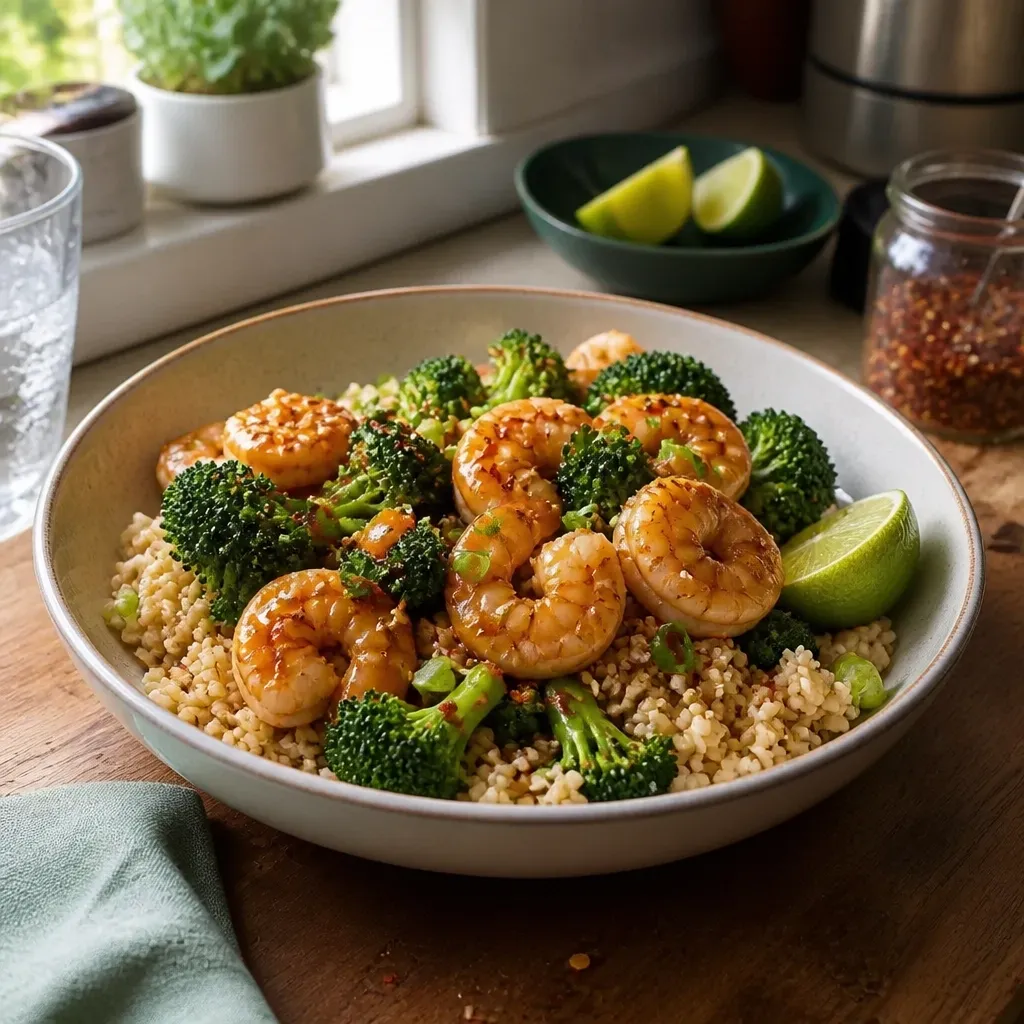
Add sriracha, chili crisp, or red pepper flakes to the sauce. Start modestly, because heat becomes more noticeable as the glaze reduces. Finish with lime juice to keep the spice lively rather than heavy.
Use brown rice or quinoa
Brown rice brings a nuttier flavor and extra chew, while quinoa makes the bowl lighter and adds a pleasantly grainy texture. Both work well with the soft sweetness of the glaze. Keep the base plain enough to let the shrimp remain the star.
Add more vegetables
Use thinly sliced bell pepper, snap peas, shredded carrot, or mushrooms alongside the broccoli. Add firmer vegetables first and delicate ones later. The goal is contrast: tender shrimp, crisp vegetables, and a sauce that ties them together.
Make it vegetarian
Replace the shrimp with cubes of pressed tofu. Brown the tofu thoroughly before glazing so its edges have enough texture to stand up to the sauce. Cookpedia’s teriyaki tofu with charred spring onions is another useful plant-based direction when you want the same savory-sweet mood.
Try cauliflower rice
For a lighter bowl, use cauliflower rice. Cook it quickly and avoid drowning it in sauce, since it releases more water than cooked grains. Spoon the glaze over the top instead of stirring in every drop.
Side Dish Pairings: Add Contrast, Not Competition
This bowl already contains protein, vegetables, and a grain, so keep side dishes fresh and sharp. A cucumber salad with rice vinegar and a pinch of salt adds cool crunch and cuts through the honey glaze. Quick-pickled carrots or radishes bring acidity and color without adding much work.
For a warmer side, serve edamame sprinkled with sesame seeds. Its mild, nutty flavor supports the bowl without competing with the shrimp. Steamed greens also work, especially if you finish them with lemon rather than another sweet sauce.
Keep portions modest. The rice bowl is the main event, and a side dish should provide contrast: not arrive wearing a tiny crown and demand its own spotlight.
FAQ: What If My Bowl Goes Sideways?
What if my shrimp turn rubbery?
You probably cooked them too long or left them in a very hot pan while the sauce thickened. Shrimp continue cooking from residual heat, especially in a hot skillet. Remove them as soon as they become opaque and gently curled, then keep the final glaze stage brief.
Next time, use medium or medium-large shrimp and cook them in a single layer. Smaller shrimp can go from tender to overdone in seconds.
What if the sauce is too thick?
Whisk in a tablespoon of warm water, broth, or lime juice. Add liquid gradually; you can always loosen a sauce, but recovering from a sweet puddle is much harder. Keep the pan over low heat while adjusting so the glaze does not continue reducing.
What if the sauce stays watery?
Give it another minute at a gentle bubble. Cornstarch needs heat to gelatinize, and a sauce that has not simmered will remain thin. If it is still loose, mix a small additional slurry separately and add it gradually. Avoid adding dry cornstarch directly to the pan.
Also check whether the broccoli or shrimp released a lot of water. Overcrowding the skillet can lower the temperature and create steam, which dilutes the sauce.
Can I use frozen shrimp?
Yes. Thaw them completely and pat them very dry before cooking. Frozen shrimp often release extra water, so skipping the drying step makes browning difficult. Do not marinate frozen shrimp; the sauce will not coat them evenly, and the center may remain icy while the outside overcooks.
Can I prepare this as one of my air fryer recipes dinner options?
You can use an air fryer for the broccoli, but cook the shrimp in a skillet so the sauce can reduce and cling properly. Air-fry the florets until browned at the edges, then toss them with the skillet-cooked shrimp and glaze. Do not pour a thin honey sauce directly into an air fryer basket; it can drip, burn, and make cleanup deeply uncharming.
Is this a healthy dinner idea?
It can fit comfortably into a balanced meal, especially when you use plenty of broccoli, a sensible rice portion, and enough shrimp for protein. Honey and soy sauce are flavor ingredients, not permission to flood the bowl. Use low-sodium soy sauce if you prefer, and add acidity, garlic, ginger, or chili for flavor without simply increasing sweetness or salt.
Can I store leftovers?
Store the shrimp, broccoli, and rice in separate airtight containers when possible. Refrigerate promptly and use within three days. Reheat gently in a skillet or microwave until steaming hot, adding a splash of water if the glaze has tightened. Avoid repeated reheating; shrimp texture declines with every extra round of heat.
If you need more practical healthy dinner ideas, keep the same formula in rotation: a fast-cooking protein, one or two vegetables, a simple sauce with acid for balance, and a ready grain. That is how a 15-minute dinner becomes a reliable habit instead of a once-in-a-blue-moon miracle.