Recipe
Servings
Servings 1×
Ingredients
- Shrimp
- Greek yogurt
- Tortillas
- Mushrooms
- Greens
- Avocado
- Garlic
- Lime
Method
- Keep raw shrimp chilled until you are ready to cook, and use a clean bowl for any toppings that will not be heated.
- Keep the lime exposure brief.
- Add more lime at the table instead of leaving the shrimp submerged for half an hour.
- Pat the shrimp dry before seasoning or marinating them.
- Add the shrimp only when the cooking surface is hot enough to make them sizzle gently on contact.
- Arrange them in a single layer with a little breathing room.
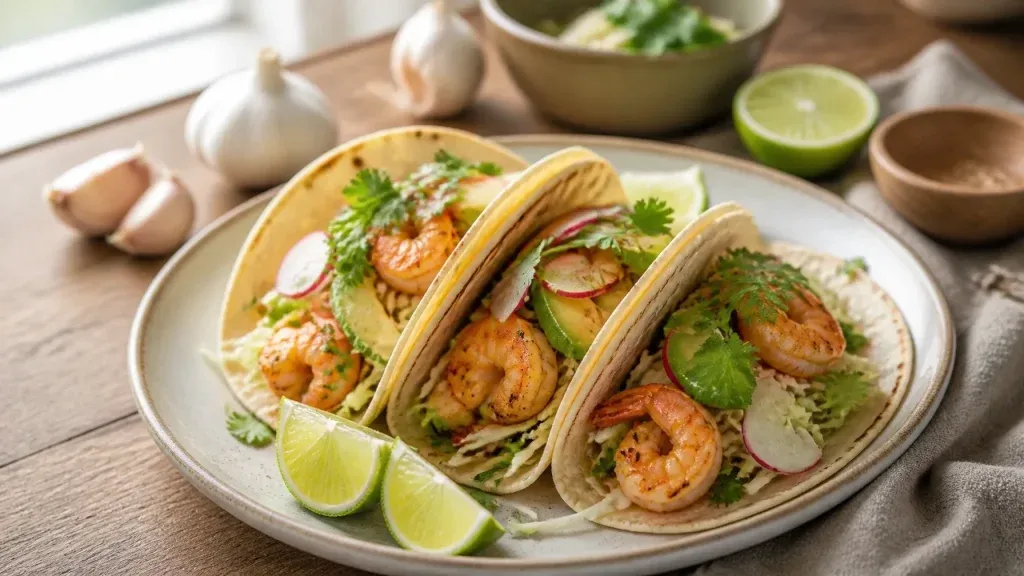
Taco night does not need a long ingredient list, three pans, or a kitchen full of dramatic sizzling. These garlic lime shrimp tacos come together quickly, taste fresh, and still feel like a proper dinner. The shrimp bring savory richness, lime keeps every bite lively, and crunchy toppings add the texture that makes tacos so much fun. Follow a few non-negotiable techniques and you will have one of the easiest quick family meals in your rotation.
Tips & Technique: The Science of Juicy Shrimp Tacos
Use acid for flavor, not food safety
Lime juice is doing important work here, but it is not cooking the shrimp in a food-safe way. Its citric acid changes the proteins on the surface, making them look firmer and slightly opaque. That is the same basic visual transformation associated with ceviche.
Enjoy the lime for brightness and texture, but still cook the shrimp with heat. Acidic marinades do not reliably eliminate foodborne pathogens in a short period. Keep raw shrimp chilled until you are ready to cook, and use a clean bowl for any toppings that will not be heated.
Keep the lime exposure brief. A short marinade gives the shrimp a fresh, fragrant flavor without allowing the acid to make the surface mealy or chalky. Add more lime at the table instead of leaving the shrimp submerged for half an hour. Your tacos want zing, not seafood ceviche by accident.
Dry the shrimp before they meet the pan
Pat the shrimp dry before seasoning or marinating them. Extra surface water must evaporate before browning can begin, and evaporation takes energy away from the pan. That is why wet shrimp often turn pale and watery instead of developing the lightly seared edges you want.
Do not obsess over making them bone-dry. Just remove the obvious moisture with a clean kitchen towel or paper towel. This small step helps the pan stay hot and gives the garlic and spices something delicious to cling to.
Give the pan enough heat and space
Preheat the skillet properly over medium-high heat. Add the shrimp only when the cooking surface is hot enough to make them sizzle gently on contact. Arrange them in a single layer with a little breathing room.
Crowd the pan and the shrimp will release water into a steamy puddle. Leave them room and the moisture evaporates more quickly, allowing the surface to brown. This is the same principle that makes well-seared mushrooms taste so much better than crowded, steamed ones. If you enjoy the science of browning, Cookpedia’s guide to the perfect mushroom taco sear explains the same pan-space problem from a plant-based angle.
Resist the urge to stir constantly. Let the first side cook undisturbed, then turn the shrimp once. Frequent movement prevents steady contact with the hot surface and can make the shrimp cook unevenly.
Watch protein change, then check the temperature
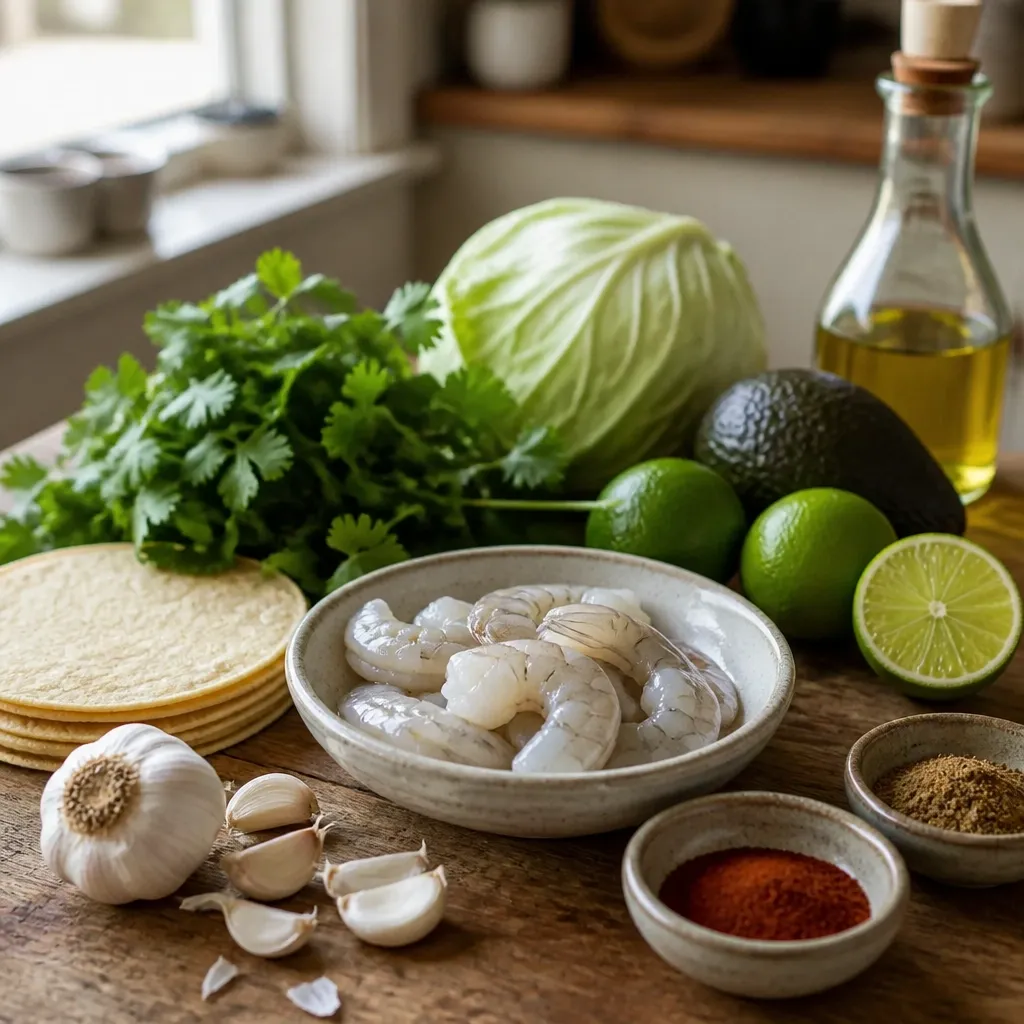
Raw shrimp are translucent and gray. As their muscle proteins tighten under heat, the flesh turns pearly, opaque, and firm. Properly cooked shrimp usually curl into a loose “C” shape. A tight, nearly closed “O” is a warning that they have spent too long in the pan.
Use appearance as a helpful guide, but make temperature the final check. The FoodSafety.gov safe-temperature chart lists 145°F (63°C) as the safe minimum internal temperature for seafood. Insert a fast-read thermometer into the thickest part of a shrimp, approaching from the side so the tip reaches the center.
Avoid cooking by the clock alone. Shrimp size, starting temperature, pan material, and heat level all change the timing. Small shrimp may be ready quickly, while very large ones need more time. Cook until the flesh is opaque and the thickest shrimp reaches the recommended temperature, then remove the pan from the heat.
Warm tortillas for flexibility and flavor
Do not skip the tortillas. Warm them briefly in a dry skillet until they become soft and pliable, with a few toasted spots. Heat loosens the starch structure, making tortillas less likely to crack when folded. It also adds a gentle toasted aroma that helps the whole taco taste more complete.
Keep warmed tortillas covered with a clean towel while you finish cooking. This traps a little steam and stops them from drying out. A taco that breaks before the first bite is not a catastrophe, but it is certainly a structural complaint.
Build contrast, not clutter
Garlic and shrimp create a rich, savory base. Lime supplies acidity. Cabbage brings crunch. Avocado or yogurt adds cool creaminess. Fresh herbs contribute a bright, green note. Think in contrasts rather than piling on every topping in the refrigerator.
Add the most delicate toppings after the shrimp come off the heat. Fresh lime juice smells brighter when it has not been cooked away, and raw cabbage stays crisp when it avoids the skillet. Finish with pan juices if you have them, but use a light hand so the tortillas do not become soggy.
For more fast dinner inspiration, browse Cookpedia’s 15-minute meals collection, where the focus stays firmly on simple food with plenty of flavor.
Variations: Change the Mood Without Losing Balance
Keep the core method the same and adjust the personality. For a smoky version, use smoked paprika and a little chipotle. The deeper flavor pairs especially well with creamy avocado and sharp pickled onions. Add heat gradually; chili is much easier to add at the table than to remove from the pan.
For a mild family version, lean into garlic, cumin, and fresh lime while leaving hot peppers out of the shrimp. Put salsa or sliced jalapeños on the table so everyone can customize their own taco. That approach makes these tacos useful for households with different heat preferences.
Turn them into a lighter bowl by skipping the tortillas and serving the shrimp over cabbage, rice, or quinoa. Add black beans for extra staying power and keep the lime generous. For a plant-based variation, replace the shrimp with firm tofu or meaty mushrooms, then use the same garlic-lime flavor direction. Cookpedia’s teriyaki tofu with charred spring onions offers another useful example of how firm tofu benefits from a hot pan and a flavorful finish.
You can also swap corn tortillas for small flour tortillas. Corn brings a toasty, earthy flavor, while flour gives you a softer, more flexible fold. Choose based on what you have, not what a taco rulebook says. There is no taco rulebook, and if there is one, it should probably be laminated.
Side Dish Pairings That Keep the Meal Balanced
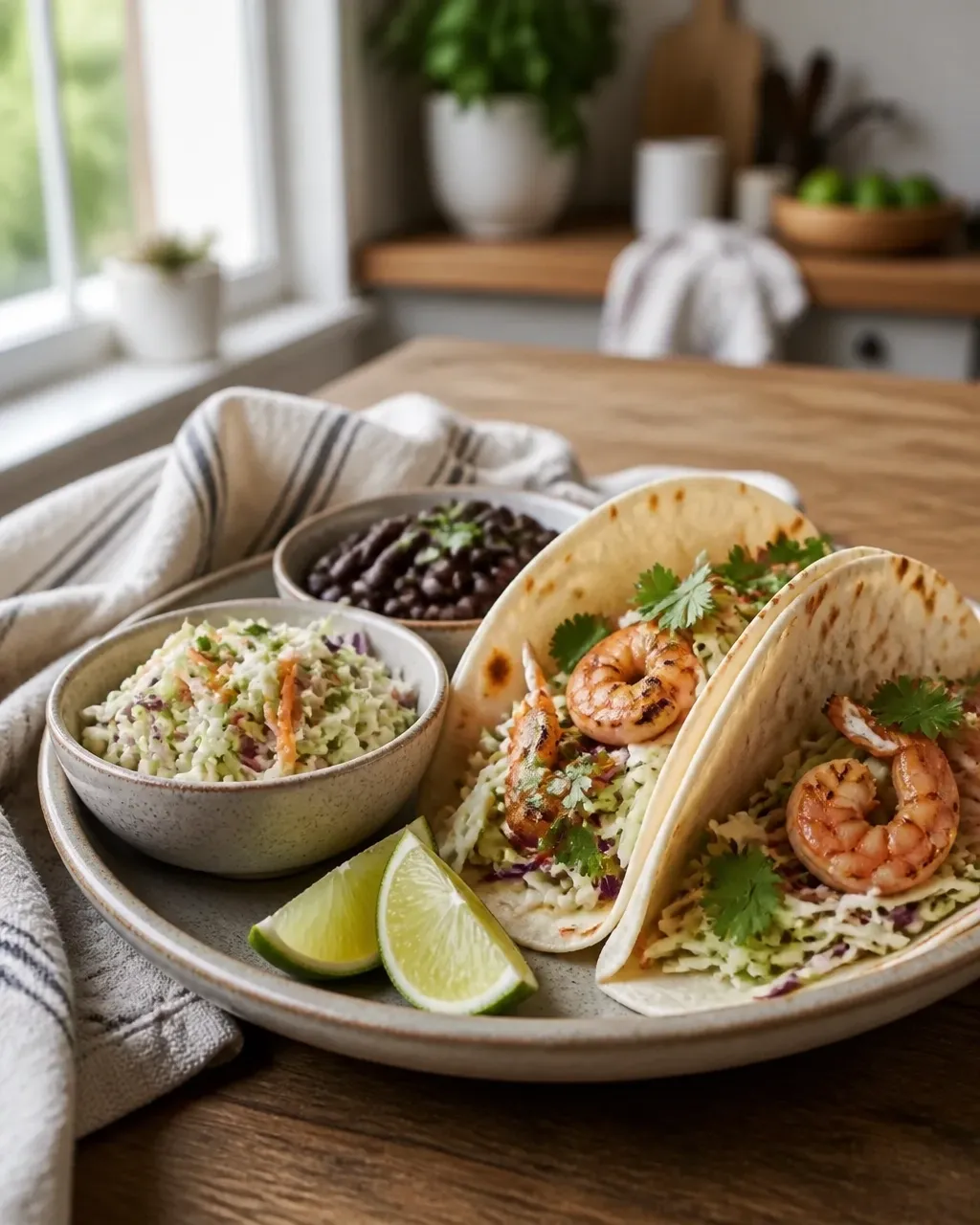
Choose sides that support the tacos instead of competing with them. A crunchy cabbage slaw with lime dressing adds freshness and doubles down on texture. Keep its dressing light because the shrimp already bring plenty of flavor.
Black beans make a practical partner, adding earthy richness and extra protein. Balance them with cilantro, lime, or a spoonful of fresh salsa rather than making them heavy and creamy. Lime rice is another easy option when you want something comforting to catch the juices from the tacos.
For a very fresh plate, serve a simple tomato, cucumber, and avocado salad. Its juicy vegetables contrast with the warm shrimp and soft tortillas. If you want crunch, add tortilla chips with salsa, but keep the portion modest so the meal stays lively rather than turning into a fried-food marathon.
FAQ: Garlic Lime Shrimp Taco Questions
Can I marinate the shrimp overnight?
Avoid it. Lime juice continues changing the surface proteins, and a long marinade can make shrimp soft, mealy, or chalky. Marinate briefly for flavor, then cook promptly. Add extra lime after cooking for a brighter finish without damaging the texture.
What if my shrimp release liquid in the pan?
The shrimp were probably wet, the pan was not hot enough, or the skillet was overcrowded. Remove excess liquid if necessary, then let the pan heat again before continuing in a single layer. Do not keep stirring and hoping the puddle will become a sauce. It usually becomes a puddle with shrimp in it.
How do I know when the shrimp are done without a thermometer?
Look for opaque, pearly flesh and a firm, springy texture. The shrimp should curl into a loose “C,” not a tight circle. These signs are useful, but a thermometer is the most reliable option, especially when shrimp vary in size. Follow the FoodSafety.gov seafood guidance and cook the thickest piece to 145°F (63°C).
What if my shrimp become rubbery?
They were likely exposed to heat for too long. Shrimp cook quickly because their muscle fibers are small and delicate. Use medium-high heat, cook them in a single layer, and turn them only once. Remove them as soon as they reach safe doneness. Do not leave them sitting in a hot skillet while you warm tortillas or search for the missing avocado.
Can I use frozen shrimp?
Yes. Thaw them safely in the refrigerator or under cold running water, then drain and pat them dry. Avoid thawing raw shrimp on the counter, where the outer surface can warm into an unsafe temperature range while the center remains frozen.
Can I prepare the toppings ahead?
Absolutely. Shred the cabbage, chop the herbs, and prepare the salsa before the pan goes on the stove. Store delicate toppings chilled and keep avocado covered to slow browning. Preparation is what makes genuinely fast dinners possible; speed should come from organization, not frantic knife work.
Which tortillas are best?
Use small corn tortillas for a toasty, earthy flavor or flour tortillas for a softer fold. Warm either type briefly before serving. If corn tortillas crack, they may be dry or underheated. A little steam from keeping them covered will help them bend without splitting.
Are these tacos a good choice for healthy dinner ideas?
They can be, especially when you balance the plate with vegetables, beans, and sensible toppings. Shrimp provide protein, while cabbage, herbs, salsa, and lime add freshness without requiring a heavy sauce. Focus on the whole meal rather than labeling one ingredient as automatically healthy or unhealthy.
Can I make these tacos ahead?
Shrimp are best freshly cooked, but you can prepare the toppings and seasoning in advance. If you have leftovers, refrigerate them promptly in a covered container and reheat gently until hot. Expect the texture to be slightly less tender than when freshly cooked. For the best result, turn leftovers into a rice bowl or salad rather than reheating them repeatedly inside tortillas.
What should I serve for a crowd?
Set out warm tortillas, cooked shrimp, cabbage, avocado, salsa, herbs, lime, and one creamy topping. Let everyone assemble their own tacos. This keeps the shrimp from sitting under wet toppings and makes dinner flexible for different appetites. It is one of those quick family meals that feels generous without creating a mountain of work.
Garlic lime shrimp tacos prove that a short dinner can still have layers: browned edges, juicy centers, sharp citrus, cool creaminess, and plenty of crunch. Keep the pan hot, avoid overcooking, warm the tortillas, and let each topping have a job. That is the whole trick behind these bright, satisfying 15-minute tacos.