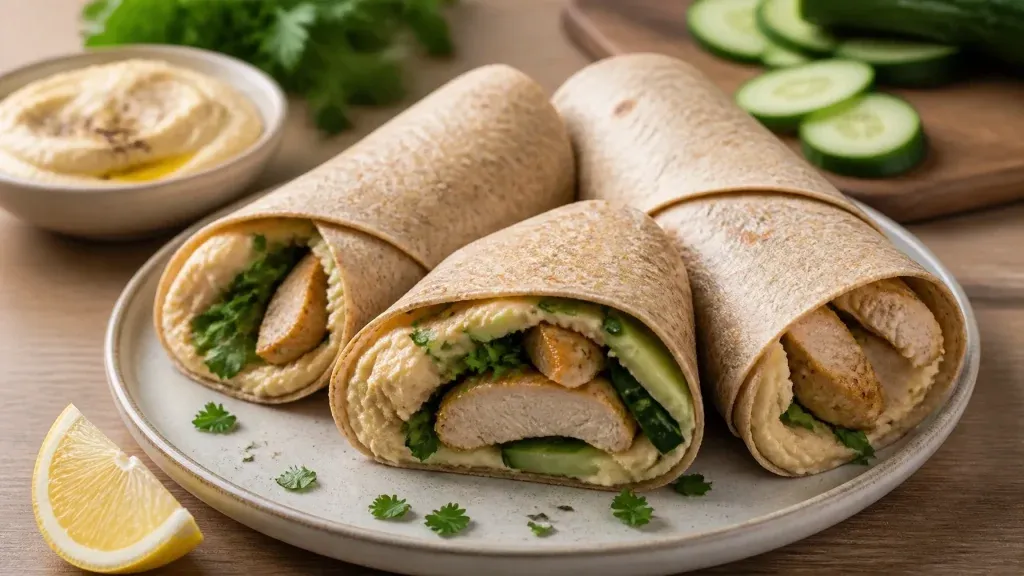
Recipe
Servings
4 wraps 1×
Serves 4 wrapsPrep 10 minCook 5 minTotal 15 min
Ingredients
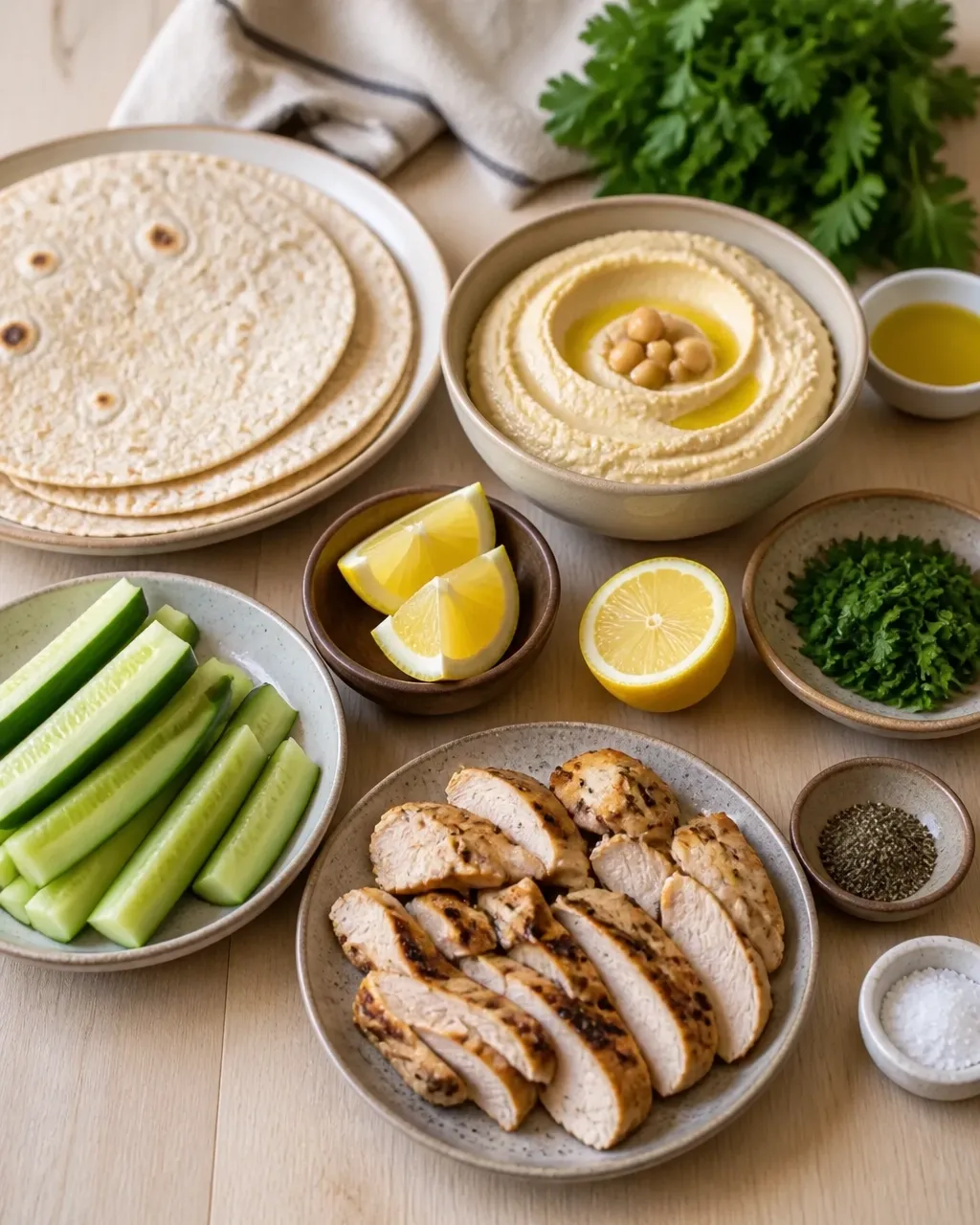
- 2 cups cooked chicken, sliced or shredded
- 4 medium flour tortillas or flatbreads
- 1 cup hummus
- 1 cucumber, thinly sliced
- 1/2 cup shredded lettuce or cabbage
- 1 tomato, sliced
- 1 lemon, cut into wedges
- 2 tablespoons chopped fresh parsley or mint
- Salt and black pepper, to taste
Method
- Warm the cooked chicken gently in a skillet or microwave until just heated through. Season lightly with salt and pepper.
- Warm the tortillas briefly so they fold without cracking. Spread each one with hummus, leaving a border around the edge.
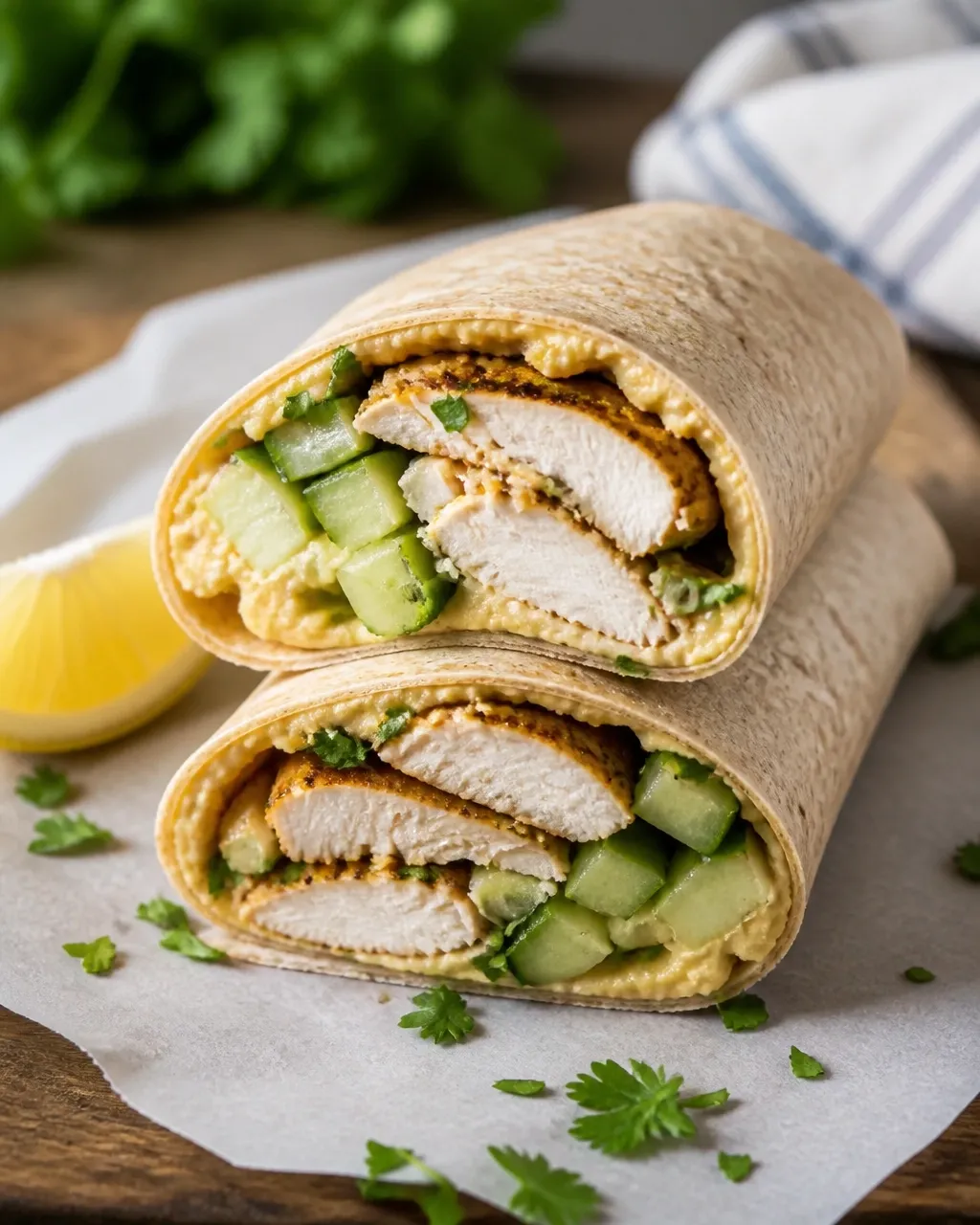
- Layer on the chicken, cucumber, lettuce, tomato, and herbs. Squeeze lemon over the filling.
- Fold the sides inward, roll each tortilla tightly, and serve immediately so the cucumber stays crisp.
Some dinners need a frying pan, three timers, and the emotional strength of a small woodland creature. These chicken hummus and cucumber wraps need none of that. They are fresh, filling, and ready in about 15 minutes, making them ideal for busy lunches, rushed evenings, and those moments when everyone is hungry right now.
The magic is in the balance: savory chicken, creamy hummus, cool cucumber, soft tortilla, and a bright squeeze of lemon. Keep the textures sharp and the wrap stays satisfying instead of soggy.
Tips & Technique: Build a Better Wrap
Start with chicken that still has moisture
Chicken breast is wonderfully lean, but it can turn dry when treated carelessly. For this wrap, use cooked chicken that is tender and slice it thinly or pull it into bite-sized pieces. Smaller pieces distribute more evenly, so every mouthful gets chicken rather than one heroic chunk at the center.
If your chicken is leftover, let it warm gently rather than blasting it until it becomes chewy. Hummus adds some moisture, but it cannot perform miracles. A dry chicken breast will remain a dry chicken breast, just wearing a nicer outfit.
For the best texture, keep the chicken warm but not piping hot when you assemble the wrap. Excess heat can make the tortilla steamy and soften the cucumber too quickly. Warm filling is welcome; trapped condensation is not.
For another simple way to prepare chicken, try Cookpedia’s Simple Lemon Herb Roasted Chicken. Leftovers are particularly useful here.
Treat hummus as both spread and seasoning
Hummus does more work than it gets credit for. Its chickpeas bring protein and fiber, while tahini and olive oil provide richness. More importantly, its creamy texture helps bind the filling together, so the wrap feels cohesive rather than like a salad that escaped.
Spread it in a thin, even layer instead of creating a thick mound. A heavy layer can overpower the chicken and make the tortilla difficult to fold. It can also introduce too much moisture, especially if the cucumber sits directly on top for several hours.
Add lemon thoughtfully. Acid does not simply make food taste “lemony”; it sharpens the perception of salt and balances richness. Hummus contains fat and earthy chickpea flavor, so a little acidity keeps the wrap tasting lively. Add enough to wake everything up, but avoid turning the tortilla into a damp envelope.
Keep cucumber crisp
Cucumber is the cooling crunch that makes this wrap more than chicken with a blanket. It is also mostly water, which means it can quietly sabotage your tortilla.
Cut cucumber into spears or slim sticks rather than shredding it. Shredded cucumber releases water quickly because more of its surface is exposed. Spears keep their structure and create a cleaner bite. If the cucumber is especially juicy, pat it dry before adding it.
Place it toward the center of the tortilla, surrounded by the chicken and hummus. This creates a little buffer between the wet cucumber and the tortilla. Do not salt the cucumber far in advance unless you want it to release even more water through osmosis. Salt pulls moisture from plant cells, which is useful for some salads but less helpful when you are trying to protect a wrap.
Choose a tortilla that bends
A tortilla that cracks is not a personal failure, but it is a structural problem. Soft flour tortillas or flexible whole-wheat tortillas work best because they can fold around the filling without splitting. If yours feels stiff, warm it briefly so the starches soften and the tortilla becomes more pliable.
Avoid overfilling. This is non-negotiable. The more filling you add, the more pressure builds at the fold, and the more likely the tortilla is to burst at the first bite. Aim for a compact line of filling rather than a mountain range.
Think of the tortilla as a wrapper, not a serving bowl. Leave enough space around the edges to fold comfortably and keep the filling contained. Roll firmly enough to hold everything together, but do not squeeze so hard that the hummus and cucumber are pushed out the other side.
Use contrast to make simple food taste complete
The wrap works because it layers contrasting sensations:
- Tender chicken brings savory depth.
- Hummus contributes creamy richness.
- Cucumber adds coolness and crunch.
- Lemon supplies acidity.
- Parsley or another fresh herb adds a green, aromatic finish.
- A little pepper or spice creates warmth.
This is the basic flavor principle behind many reliable quick family meals: combine richness with freshness, softness with crunch, and savory flavors with a bright finish. You do not need a long spice list when each element has a clear job.
For more fast inspiration, browse Cookpedia’s 15-minute meals. The goal is not to make dinner complicated; it is to make simple ingredients pull their weight.
Assemble for now, or protect it for later
These wraps are best eaten soon after assembly, while the cucumber is crisp and the tortilla is still springy. If you are preparing them ahead, keep the cucumber as dry as possible and wrap everything tightly. Store the finished wraps in the refrigerator, ideally in an airtight container.
For quality, aim to eat them within a day or two. Cooked chicken leftovers are generally safe for three to four days when refrigerated promptly at or below 40°F (4°C), according to FoodSafety.gov’s cold food storage guidance. Texture, however, is a separate matter. A wrap can remain safe while the cucumber loses its crunch and the tortilla becomes soft. Safety gets the final vote, but texture still gets a ballot.
Variations: Change the Flavor Without Losing the Balance
Keep the basic structure, protein, creamy element, crisp vegetable, and acidity, then change the personality.
For a Mediterranean version, add chopped tomato, parsley, and a pinch of dried oregano. Drain the tomato well first; watery tomato is cucumber’s mischievous cousin.
For extra heat, bring in harissa, chili flakes, or a few sliced pickled peppers. Pickled peppers are especially useful because they add both spice and acidity, cutting through the hummus’s richness.
Make it vegetarian by replacing the chicken with roasted chickpeas, grilled halloumi, or sliced baked tofu. The key is to include something with enough substance to balance the soft hummus. Plain lettuce alone will make the wrap feel more like a snack than a meal.
For a lighter, greener version, add arugula or shredded romaine. Use a modest amount so the leaves add freshness without making the wrap difficult to roll. You can also swap the tortilla for a high-fiber wrap, but check its flexibility before committing. Some “healthy” wraps behave like edible roofing materials.
If you prefer a smoky flavor, season the chicken with smoked paprika and ground cumin. These spices create depth quickly without requiring a long marinade or a complicated sauce.
Side Dish Pairings: Add Brightness, Not Heaviness
Pair the wraps with sides that bring contrast. A simple tomato and herb salad adds acidity and juiciness, while a small bowl of fruit brings a cool, naturally sweet finish. For extra crunch, serve sliced carrots, radishes, or bell peppers with a little hummus for dipping.
A lemony lentil salad also works well because it adds earthy flavor and fiber without duplicating the wrap’s creamy texture. If you want something warm, choose a light vegetable soup rather than a rich, cream-based one. The wrap already has plenty of softness and richness; the side should keep the meal moving.
For a bigger spread, serve the wraps alongside Cookpedia’s arugula power salad, using the salad as a fresh, peppery counterpoint. This is one of those healthy dinner ideas that feels complete without becoming a project.
FAQ: Your Wrap Questions, Answered
Can I use rotisserie chicken?
Yes. Rotisserie chicken is one of the fastest options for this recipe. Remove the skin if you prefer a lighter filling, then pull or slice the meat into small pieces. Dark meat will usually stay juicier than breast meat, while breast meat gives you a leaner result. Either works as long as the chicken is not dry.
Can I make the wraps ahead of time?
You can, but protect the tortilla from excess moisture. Keep cucumber dry, avoid over-spreading the hummus, and wrap each portion tightly. For the crispest result, prepare the chicken and hummus ahead, then add the cucumber and assemble shortly before eating.
If you must assemble them several hours in advance, place a layer of sturdy greens between the hummus and tortilla. The leaves create a small barrier, although they will not stop sogginess forever.
Why did my tortilla tear?
The tortilla was probably too cold, too dry, or too full. Warm it briefly to make it flexible, and leave enough room around the edges for folding. Large chunks of chicken can also create pressure points, so cut the filling smaller.
If the tortilla is already cracked, do not fight it. Wrap the whole thing in parchment or foil and call it a rustic hand-held bowl.
Can I use Greek yogurt instead of hummus?
You can, but the flavor and structure will change. Greek yogurt is tangier and usually less dense than hummus, so the wrap may taste brighter but feel less rich. Add a little olive oil, tahini, or mashed avocado if you want more body. Keep the cucumber especially dry because yogurt-based spreads can become watery when combined with fresh vegetables.
Can I toast the wrap?
Yes, but toast it gently and briefly. A hot skillet can add pleasant browning and help seal the tortilla, but too much heat will wilt the cucumber and dry the chicken. If you want a warm wrap, heat the chicken separately, assemble quickly, and toast just until the outside is lightly golden.
An air fryer can also work, especially if you are collecting air fryer recipes dinner ideas, but use a moderate temperature and watch closely. Hummus can dry at the edges before the center is warm.
How long does cooked chicken stay safe in the refrigerator?
Use cooked chicken within three to four days if it was refrigerated within two hours and kept at 40°F (4°C) or colder. If the room temperature was above 90°F (32°C), the cooling window is one hour. Discard the wrap if it smells unpleasant, feels slimy, or has been left out too long. When in doubt, throw it out, lunch is not worth a gastrointestinal plot twist.
What can I serve if I need more protein?
Add a little extra chicken, include a side of lentils, or serve the wrap with Greek yogurt. Keep the proportions sensible. Too much filling can make the tortilla collapse, and the meal should still have room for its crisp vegetables and bright flavors.
Can children eat these wraps?
Yes, provided the chicken is fully cooked and the cucumber is cut into manageable pieces. Use a mild hummus and leave out spicy additions for younger eaters. Let children choose their own extras, such as cucumber, chicken, or cheese. Customization often works better than a speech about how delicious something is.