Recipe
Servings
4 servings 1×
Serves 4Prep 15 minCook 15 minTotal 30 min
Ingredients
- 1 cup quinoa, rinsed
- 2 cups low-sodium chicken broth or water
- 1 1/2 pounds boneless, skinless chicken breasts
- 1 tablespoon olive oil
- 1 teaspoon chili powder
- 1/2 teaspoon ground cumin
- 1 ripe mango, diced
- 1/4 red onion, finely diced
- 1 avocado, diced
- Juice of 2 limes, divided
- 1 small fresh chile, minced, or a pinch of chili flakes
- 2 tablespoons chopped fresh cilantro
- Salt and black pepper, to taste
Method
- Cook the rinsed quinoa with the broth in a covered saucepan until the grains are tender and the liquid is absorbed, about 15 minutes. Remove from the heat, rest briefly, and fluff with a fork.
- Pat the chicken dry and season with chili powder, cumin, salt, and pepper. Heat the olive oil in a wide skillet over medium-high heat.
- Cook the chicken in a single layer, working in batches if needed, until browned and the thickest part reaches 165°F (74°C). Rest for a few minutes, then slice.
- Combine the mango, red onion, chile, cilantro, avocado, and the juice of one lime. Fold gently so the avocado keeps its shape.
- Divide the warm quinoa between four bowls. Top with sliced chicken and mango salsa, then finish with the remaining lime juice and serve.
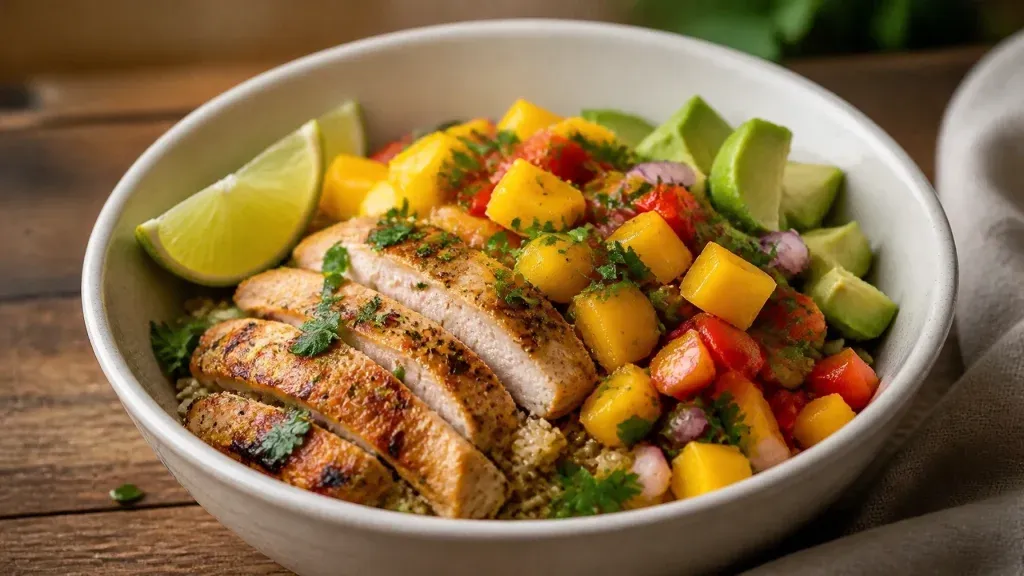
If dinner needs to be fast, colorful, and filling without turning your kitchen into a disaster zone, make these chicken and mango salsa quinoa bowls. They bring together savory, juicy chicken, fluffy quinoa, sweet mango, sharp lime, and just enough heat to keep every bite interesting. This is one of my favorite quick family meals because everyone can build a bowl to suit their appetite, and nobody has to eat a sad desk salad.
Recipe snapshot: serves 4 | about 30 minutes | high in protein and fiber
Tips & Technique: Build Better Bowls by Understanding the Science
Give quinoa room to become fluffy
Quinoa is small, but it has opinions. Cook it in too much liquid and it becomes soft and clumpy; use too little and the grains stay firm in the middle.
Aim for tender grains that still have a gentle bite. Rinse the quinoa if the package does not say it is pre-rinsed. This removes some of the natural coating that can taste bitter or soapy. It is a tiny step, but it makes the finished bowl taste cleaner.
Let cooked quinoa rest briefly before fluffing it. Resting allows the remaining moisture to distribute through the grains instead of pooling at the bottom of the pan. Then fluff with a fork rather than stirring aggressively. Treat it like a cloud, not mashed potatoes.
For extra flavor, cook the quinoa in low-sodium broth. The grains absorb that liquid, so broth seasons the base from the inside. Just keep the broth moderate in salt because the chicken seasoning and salsa will add plenty of flavor later.
Use high heat for browned, juicy chicken
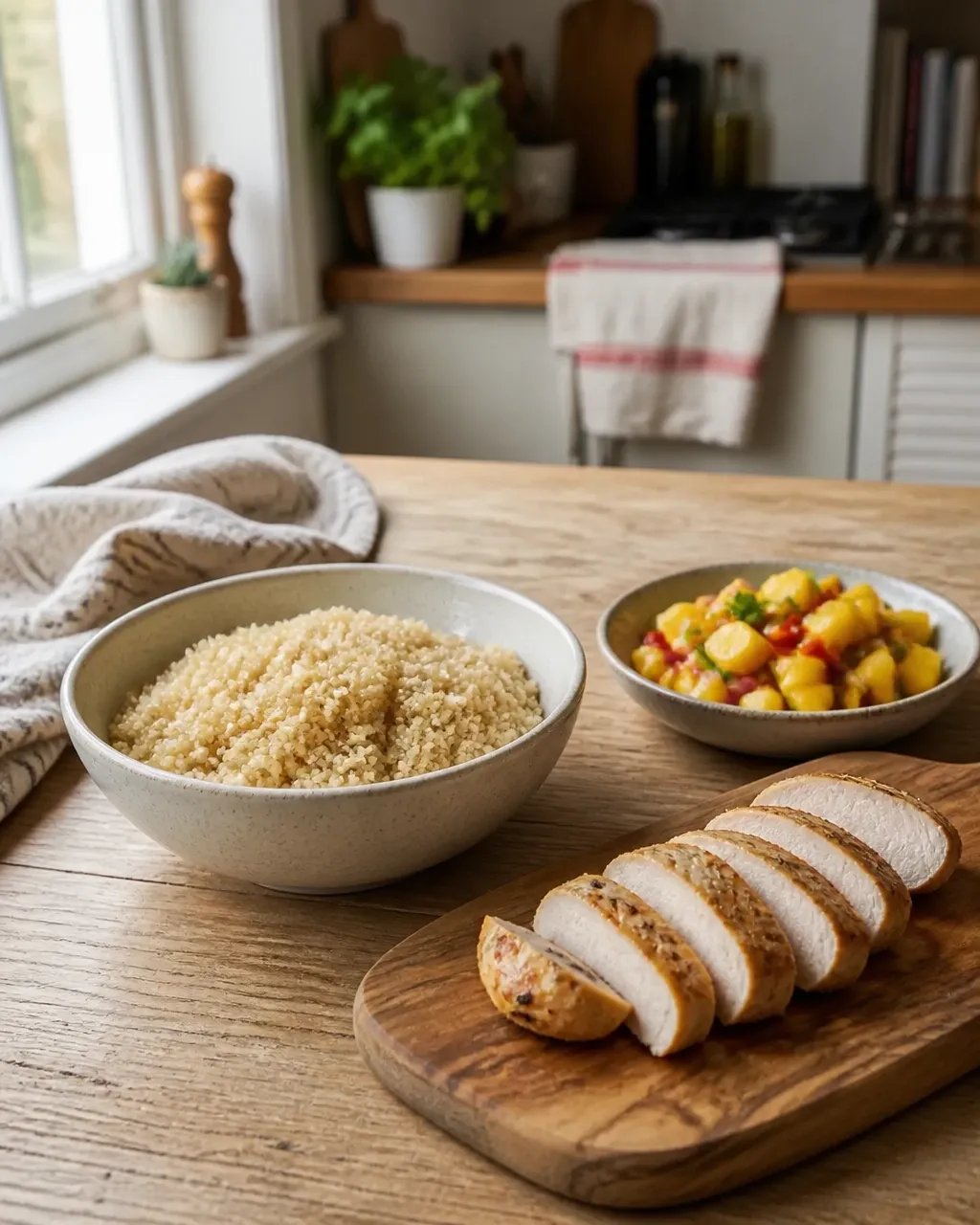
Chicken breast dries out when it spends too long in the pan. The goal is not simply to “cook chicken”; it is to develop a browned exterior before the center loses its moisture.
Pat the chicken dry before seasoning. Surface moisture creates steam, and steam prevents browning. Use a properly heated pan and avoid crowding it. When pieces are packed together, they release moisture into the pan and gently simmer instead of searing. That is useful for some dishes, but not for a chicken bowl with personality.
Flatten very thick chicken breasts so they cook more evenly. Check the thickest part with an instant-read thermometer and cook poultry to 165°F (75°C). Do not rely on color alone. Chicken can look done before it reaches a safe temperature, and it can remain slightly pink even when fully cooked.
Rest the chicken before slicing. This gives the juices time to settle back into the meat. Slice too early and those juices run onto the cutting board, leaving the chicken drier and the board suspiciously well-fed.
For another approachable poultry dinner, browse Cookpedia’s chicken recipe collection or try the flavor-building approach in our cozy one-pan chicken pot pasta.
Balance mango’s sweetness with acidity and heat
Mango brings natural sweetness, but sweetness alone can make a bowl taste flat. Balance it with lime juice, red onion, fresh herbs, and a little chile. Acidity brightens rich or savory flavors by increasing salivation and making the food taste more vivid. It is the same reason a squeeze of lemon can rescue a heavy sauce.
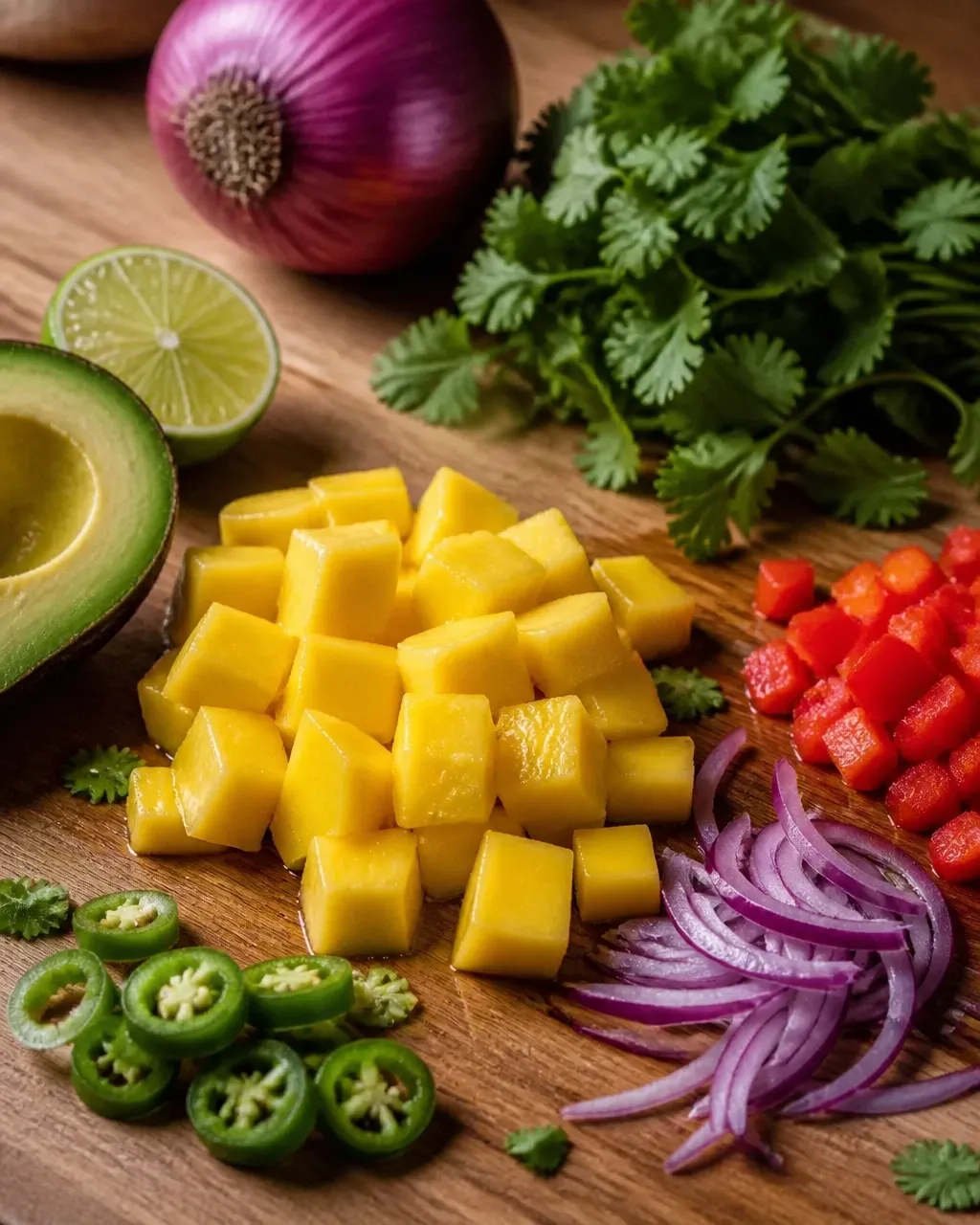
Cut the mango into small, uneven pieces rather than tiny cubes. A little variation gives the salsa a better texture, with some pieces soft and juicy and others pleasantly firm. Choose a mango that yields slightly when pressed but is not mushy. An underripe mango will taste sour and fibrous; an overripe one will collapse into a sweet paste.
Add lime close to serving if you want the freshest flavor. Citrus juice can soften onions and vegetables over time, which is helpful when you want a mellow salsa but less appealing if you prefer crunch. Letting the salsa sit for a short while is useful, but do not leave it unattended on the counter for hours. Fresh produce deserves refrigeration, especially once cut.
Assemble in layers, not in a pile
Start with warm quinoa, then add the sliced chicken and spoon the salsa over the top. This keeps the grains from becoming overwhelmed by lime juice while allowing the salsa’s juices to season the bowl naturally.
Add avocado at the end. It contributes creamy texture and healthy fat, but it bruises easily and can turn dull when exposed to air. Keep the avocado in larger pieces and fold it gently into the salsa, or add it directly to each bowl.
Do not drown the whole dish in dressing. The quinoa, chicken, and salsa each have a job. Use a modest drizzle of lime yogurt sauce or olive oil if needed, then taste. A good bowl should have contrast: warm and cool, soft and crisp, savory and sweet.
Variations for Different Appetites
Turn this into a flexible weeknight formula without losing its balance.
For more fiber and staying power, add rinsed black beans. Their earthy flavor gives the sweet mango something sturdy to work against. Corn also fits well, especially if you char it briefly in the same pan used for the chicken. The caramelized edges add depth without requiring another complicated sauce.
Make it dairy-free by skipping yogurt-based toppings and adding avocado or a spoonful of tahini-lime dressing. For a lower-carbohydrate version, replace some or all of the quinoa with cauliflower rice, shredded cabbage, or roasted vegetables. Keep a smaller portion of quinoa if you still want its nutty flavor and satisfying texture.
Use boneless chicken thighs when you want a juicier result. They contain more fat than breast meat, so they are more forgiving if dinner gets interrupted by homework, emails, or a mysteriously urgent search for one missing sock.
For a plant-based bowl, swap the chicken for roasted chickpeas, black beans, or crispy tofu. The same mango salsa works beautifully with all three. If you are planning air fryer recipes dinner options, cook seasoned tofu or chickpeas in the air fryer and serve them over the quinoa instead.
Adjust the heat with jalapeño, chili flakes, or a pinch of cayenne. Keep the lime generous when you increase the spice. Acidity helps sharpen heat while preventing the bowl from tasting merely fiery.
Side Dish Pairings That Keep the Meal Balanced
These bowls are already a complete meal, so choose sides that add contrast rather than bulk.
Serve a simple cucumber salad with rice vinegar or extra lime. Its cool, crisp texture refreshes the palate between bites of warm quinoa and chicken. A small portion of roasted broccoli also works well; its slight bitterness balances mango’s sweetness and adds another vegetable without competing for attention.
For a lighter table, offer shredded cabbage tossed with cilantro and lime. The cabbage stays crunchy and gives the bowl a slaw-like texture. If you are feeding a hungry crowd, add warmed corn tortillas or a small black bean salad, but keep the portions sensible. The quinoa and chicken already provide plenty of substance.
Skip heavy creamy sides. Rich cheese dips or thick mayonnaise-based salads can bury the bright salsa and make the meal feel heavier than intended. Save the bold supporting act for another night.
FAQ: Chicken, Quinoa, and Mango Salsa Questions
Can I use leftover chicken?
Yes. Use chilled leftover chicken when it has been refrigerated promptly and stored safely. Slice it thinly and warm it gently, or serve it cold if you enjoy a salad-style bowl. Avoid reheating chicken repeatedly because every trip through the pan removes more moisture. Add the salsa only after reheating so the fruit stays fresh and crisp.
Why is my quinoa mushy?
Mushy quinoa usually means excess liquid, insufficient draining, or too much stirring. Follow the package ratio, keep the pan covered while the grains simmer, and let the quinoa rest after cooking. If it is already soft, spread it on a plate for a few minutes so excess steam can escape. It will not become magically fluffy, but it can still make a tasty bowl.
What if my mango is not ripe?
Do not force a rock-hard mango into salsa and expect sunshine. Use it in a cooked chutney or let it ripen at room temperature for a day or two. If you need dinner immediately, replace some of the mango with pineapple, peaches, or tomatoes. Add a small amount of honey only if the fruit lacks sweetness, and keep the lime balanced.
Can I prepare these bowls ahead of time?
Prepare the quinoa and chicken ahead, then refrigerate them separately in shallow containers. Keep the mango salsa separate as well, particularly if it contains avocado. Assemble individual bowls when you are ready to eat. This prevents the quinoa from absorbing too much liquid and keeps the vegetables crisp.
Use refrigerated leftovers within 3–4 days, and reheat chicken and quinoa until steaming hot. Check the chicken’s temperature if you are reheating a large portion. Do not leave prepared bowls sitting at room temperature for an extended period.
How do I stop the chicken from drying out?
Start with evenly thick pieces, dry the surface, and use a hot pan. Cook until the thickest part reaches 165°F (75°C), then rest the chicken before slicing. Cutting the chicken into thin strips before cooking can also work, but watch it closely because smaller pieces reach doneness quickly.
If your chicken is consistently dry, the pan may be too cool, the pieces may be too thin, or you may be cooking past the safe temperature. An instant-read thermometer removes the guesswork.
Can I make this bowl without cilantro?
Absolutely. Cilantro adds a fresh, citrusy note, but it is not the structural support holding up the roof. Use chopped parsley, mint, or green onion instead. Mint is especially good with mango, while parsley gives a milder herbal finish.
Is this a good meal-prep recipe?
Yes, with one rule: store the components separately. Quinoa, chicken, and beans hold up well for meal prep. Fresh salsa is best within a day or two, while avocado should be cut just before serving. Pack lime wedges separately and squeeze them over the bowl at the last moment.
This is exactly the kind of meal that belongs in a rotation of healthy dinner ideas: colorful, filling, adaptable, and quick enough for an ordinary Tuesday. For more speedy inspiration, explore Cookpedia’s quick meals, 15-minute meals, and healthy recipes.