Recipe
Servings
4 servings 1×
Serves 4Prep 10 minCook 25 minTotal 35 min
Ingredients
- 1 tablespoon neutral oil
- 1 medium yellow onion, diced
- 3 garlic cloves, minced
- 1 tablespoon grated fresh ginger
- 1 teaspoon ground cumin
- 1 teaspoon ground coriander
- 1/2 teaspoon ground turmeric
- 1 can (14 ounces) diced tomatoes
- 2 cans (15 ounces each) chickpeas, drained and rinsed
- 1 can (13.5 ounces) full-fat coconut milk
- 2 cups baby spinach
- Juice of 1 lime or lemon
- Salt and black pepper, to taste
Method
- Heat the oil in a wide skillet over medium heat. Cook the onion until soft and translucent, then add the garlic and ginger and cook until fragrant.
- Add the cumin, coriander, and turmeric. Stir constantly for about 30 seconds, until the spices smell toasted and lively.
- Stir in the tomatoes and cook uncovered until the mixture darkens slightly and thickens, about 5 minutes.
- Add the chickpeas and coconut milk. Bring to a calm simmer and cook uncovered for 12–15 minutes, stirring occasionally, until the sauce thickens.
- Gently crush a portion of the chickpeas against the side of the pan. Stir in the spinach and cook just until wilted.
- Lower or turn off the heat. Add the citrus juice, season with salt and pepper, rest for 5 minutes, and serve with rice or warm flatbread.
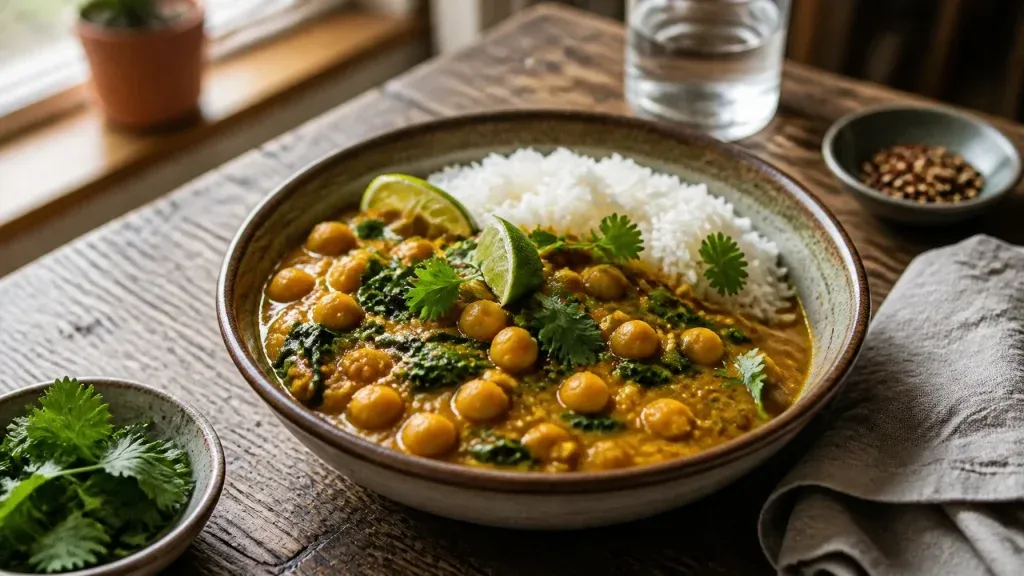
When you need a dinner that feels generous without demanding your entire evening, reach for creamy coconut chickpea curry. It is warm, filling, naturally plant-based, and flexible enough to handle whatever vegetables are waiting in the fridge. The real magic comes from a few simple techniques: bloom the spices, reduce the coconut milk, release starch from the chickpeas, and finish with acidity. Follow those non-negotiables and you get a silky curry with big flavor and very little fuss.
Tips & Technique: Build Creaminess with Heat, Starch, and Balance
Bloom the spices before adding liquid
Do not toss dry spices into a watery pan and hope for a miracle. Give them a brief turn in hot oil with the aromatics first.
Many flavorful compounds in spices are fat-soluble, which means oil helps draw them out and distribute them through the dish. Cumin becomes warmer, coriander tastes more rounded, and turmeric spreads its earthy color through the cooking fat. This short blooming step also takes the raw edge off powdered spices.
Keep the heat moderate. Spices can move from fragrant to bitter surprisingly quickly, especially in a dry pan. Stir constantly and watch for the moment when the mixture smells toasted and lively. That is your cue to add the tomato component or another source of moisture.
Cook down the tomato base
Tomatoes bring acidity, savoriness, and water. Those are all useful, but too much moisture too early can leave the curry thin and sharp.
Cook the tomato base until it darkens slightly and looks thicker. As water evaporates, the flavor concentrates and the acidity becomes less aggressive. The aromatics also have time to mingle with the spices, creating a deeper foundation before the coconut milk arrives.
Think of this stage as building the curry’s backbone. Do not rush it, but do not scorch it either. If the pan looks dry before the mixture softens, lower the heat and add a small splash of water rather than more oil.
Use full-fat coconut milk for a stable, silky sauce
Full-fat coconut milk is the firm choice here. “Lite” versions contain more water and less coconut fat, so they can produce a thinner sauce with less body. Save them for situations where you specifically want a lighter finish.
Coconut milk is an emulsion of fat and water. Gentle simmering allows some water to evaporate, concentrating the fat and making the sauce feel richer. Simmer uncovered so steam can escape. A covered pan traps moisture, which is helpful for some foods but not for a curry that needs to thicken.
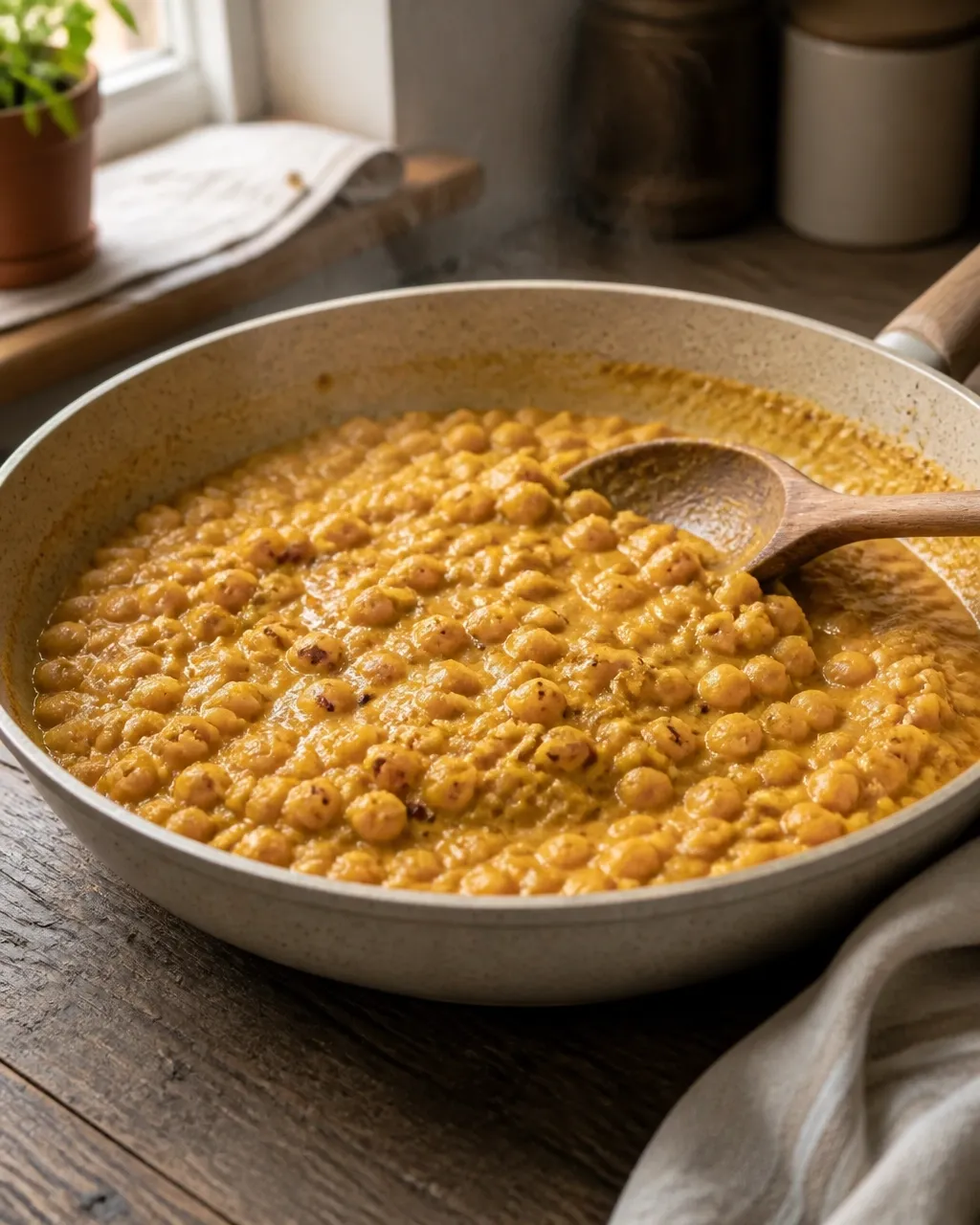
Avoid a furious boil. High heat can cause the coconut fat to separate, leaving a greasy layer rather than a creamy sauce. Keep the curry at a calm simmer, with occasional bubbles breaking the surface. Stir now and then, especially around the edges of the pan where the sauce thickens first.
Let chickpeas do some of the thickening
Chickpeas are more than the main protein. They can also help create the sauce’s texture.
As the chickpeas warm and soften, some of their starch moves into the surrounding liquid. Gently crush a portion against the side of the pan. You do not need to turn the whole curry into purée; keep plenty of chickpeas intact for contrast. Just release enough starch to make the sauce cling to them.
That starch helps connect the water and fat in the curry, giving it a thicker, more cohesive texture. It also makes the sauce feel creamy without adding dairy or a complicated thickener. This is one of those small moves that looks almost too simple to matter. It matters.
Add greens at the right moment
Tender greens need very little cooking. Stir them in near the end and give them just enough heat to wilt.
Adding them too early can make the color dull and the texture limp. Adding them late keeps the curry brighter and gives you a pleasant contrast against the soft chickpeas and rich coconut sauce. If you use a sturdier green, allow it more time to soften, but avoid cooking it until it completely disappears.
Finish with acid after the heat is low
Coconut milk can taste heavy without a bright finishing note. Lime or lemon juice cuts through the richness and makes the spices taste clearer.
Add citrus toward the end, preferably after lowering or turning off the heat. Strong acidity combined with high heat can encourage a coconut-based sauce to split. The curry will still taste good if that happens, but a smooth sauce is the goal.
Taste before adding more. Salt amplifies flavor, while acid provides lift. If the curry tastes flat, it may need a little of both. If it tastes rich but dull, reach for citrus first. If it tastes sharp, give it a few more minutes of gentle simmering and check the seasoning again.
Rest the curry before serving
Give the finished curry a short rest off the heat. The sauce will thicken slightly as the starch settles and the bubbles calm down. This also gives the flavors a moment to balance.
Use that pause to fluff your rice, warm your flatbread, or wipe the inevitable tiny splash from the stovetop. Cooking is glamorous like that.
For another pulse-based dish built around texture and spice, see Cookpedia’s Budget-Friendly Red Lentil Dahl. Its tempering technique follows the same useful principle: use fat to carry spice flavor into a starchy base.
Variations: Keep the Formula, Change the Personality
The reliable structure is simple: aromatic base, bloomed spices, cooked-down tomato, creamy coconut liquid, chickpeas, greens, and a bright finish. Change one part at a time so the curry stays balanced.
For extra heat, add fresh chili or a pinch of dried chili during the spice-blooming stage. Frying it briefly in oil spreads the heat throughout the sauce instead of leaving one fiery surprise in somebody’s bowl.
For a sweeter, earthier version, add diced sweet potato or pumpkin. These vegetables bring natural sweetness and starch, so cook them until tender and check the consistency before adding more liquid. The curry may need a little extra lime to keep that sweetness in check.
For a greener curry, fold in peas, green beans, or spinach. Use vegetables with contrasting textures rather than adding every green thing in the refrigerator. A little variety is delicious; a crowded pot can become muddy.
For more protein, add cubed tofu near the end or serve the curry with a protein-rich grain. Cookpedia’s Teriyaki Tofu with Charred Spring Onions is another useful plant-based option when you want browned edges and bold umami.
To make leftovers feel new, loosen the curry with a splash of water and serve it over a different grain the next day. You can also spoon it into a wrap with crunchy vegetables. Keep the finishing acid fresh when reheating so the flavors do not become heavy.
Side Dish Pairings: Add Contrast, Not Competition
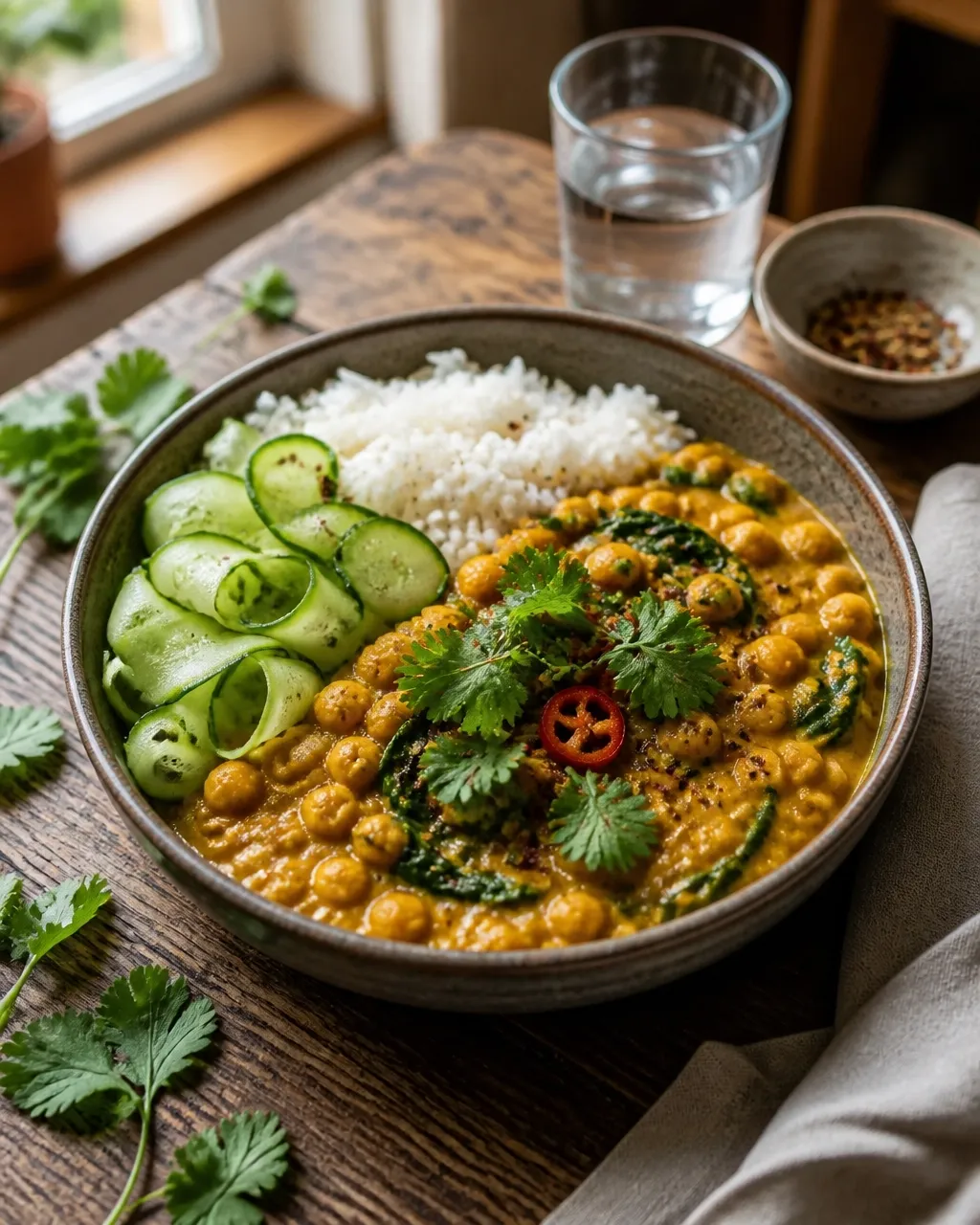
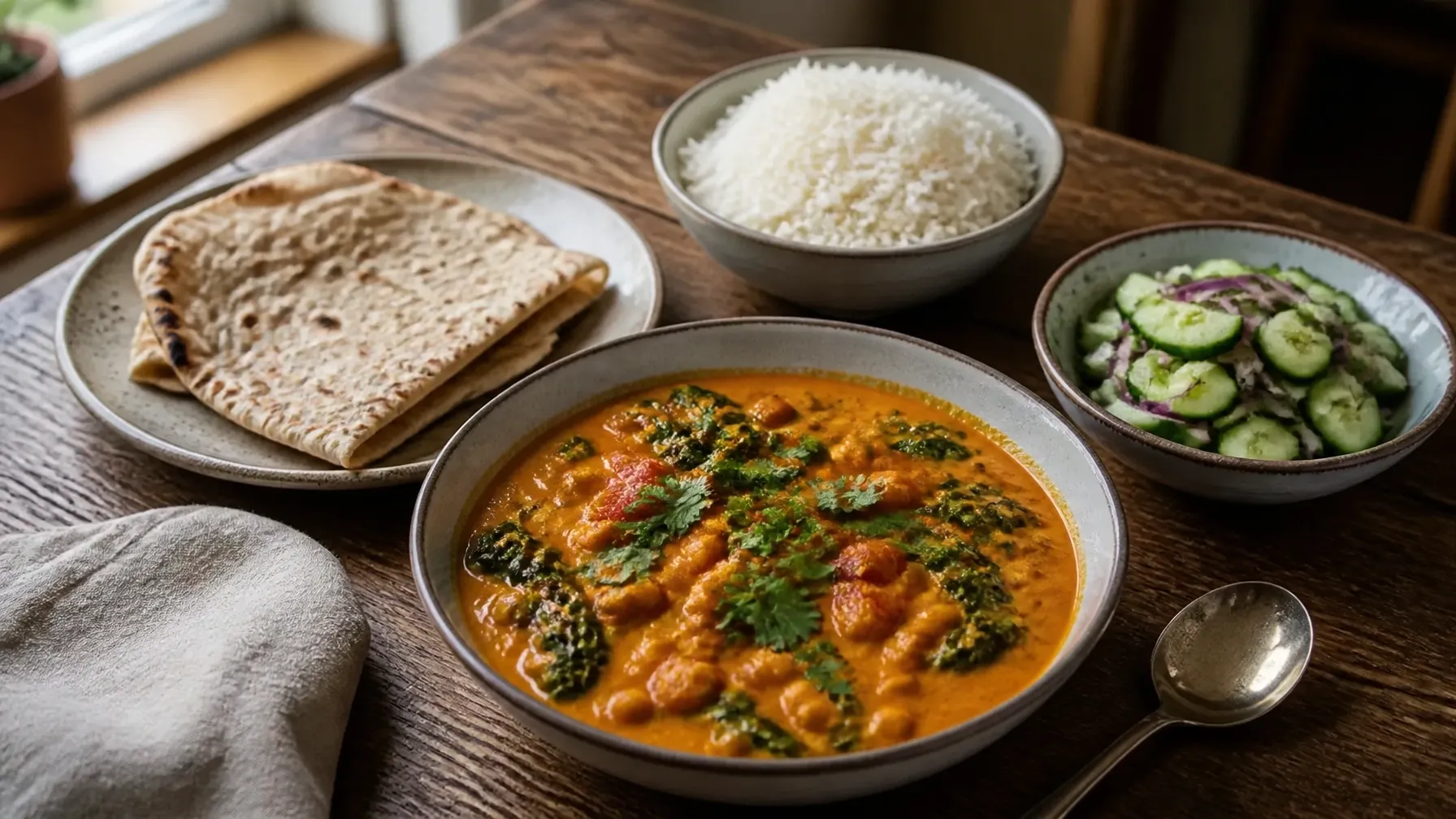
Serve the curry with something that absorbs the sauce without overwhelming it. Steamed rice is the classic choice because its neutral flavor lets the coconut, spices, and chickpeas lead. Brown rice or quinoa adds nuttiness and extra chew.
Warm flatbread works beautifully for scooping, especially when you want a relaxed meal with minimal cutlery. Keep the bread lightly warmed rather than heavily seasoned; the curry already has plenty to say.
Add a crisp cucumber salad when the sauce feels especially rich. Cool, watery vegetables provide contrast and make each bite feel lighter. A simple salad with herbs and citrus is enough.
Roasted vegetables can also work, particularly cauliflower, carrots, or broccoli. Keep their seasoning restrained and let their browned edges complement the curry’s toasted spices.
If you are planning several healthy dinner ideas for the week, serve the curry with greens and a modest portion of rice for a balanced plate. For quick family meals, set out the rice, curry, herbs, and toppings separately so everyone can build a bowl without turning dinner into a negotiation.
FAQ: Troubleshoot Your Curry with Kitchen Science
What if my curry is too thin?
Simmer it uncovered for a little longer. Evaporation removes water and concentrates the coconut milk, making the sauce thicker. Stir occasionally so the bottom does not catch.
You can also crush more chickpeas into the sauce to release starch. Avoid adding a large amount of flour or starch at once; it can make the texture pasty and hide the flavor you worked to build.
What if my coconut milk separates?
Lower the heat and stir gently. Separation usually means the fat has broken away from the watery part of the coconut milk, often because of vigorous boiling or too much acidity at high heat.
A separated curry is not ruined. Add a small splash of water or broth and whisk slowly to bring the sauce closer together. Next time, use a gentle simmer and add citrus after the heat is reduced.
What if the curry tastes bland?
Check salt first. Coconut milk softens and spreads flavor, so the curry may need more seasoning than you expect.
Then check the spice technique. If the spices went straight into liquid, they may taste muted because their fat-soluble compounds were not fully released. Finish with lime or lemon juice if the curry tastes heavy, and add fresh herbs for a sharper top note.
What if the curry tastes too spicy?
Do not try to fix it with only more water. Water can dilute the flavor without properly balancing the heat.
Add more coconut milk if the sauce can handle extra richness, or increase the chickpeas and vegetables to spread the chili through a larger volume of food. A little acidity and a touch of sweetness can also soften the perception of heat. Add them gradually and taste after each adjustment.
Can I use canned chickpeas?
Yes. Canned chickpeas are ideal for a weeknight curry because they are already cooked and ready to absorb flavor. Drain and rinse them first to remove excess liquid and surface salt.
Add them late enough that they warm through without turning completely soft. Crush only a portion so the finished curry has both a creamy sauce and recognizable chickpeas.
Can I make this curry ahead?
Absolutely. In fact, the flavor often improves after resting because the spices and aromatics continue to mingle. The sauce may thicken in the refrigerator, so loosen it gently while reheating.
Warm it over medium-low heat rather than blasting it on high. Stir regularly and add a splash of water if needed. Finish with fresh citrus or herbs just before serving to restore brightness.
Is coconut chickpea curry suitable for meal prep?
It is one of the more dependable quick family meals for meal prep because the sauce holds well and the chickpeas stay satisfying after reheating. Store the curry separately from rice or flatbread so the starch does not absorb all the sauce.
Cool leftovers promptly, refrigerate them in a sealed container, and reheat until piping hot. If you are preparing plant-based meals regularly, browse Cookpedia’s vegetarian dinner recipes for more flexible ideas.
What should I do if the curry feels too rich?
Add brightness and freshness rather than removing all the coconut milk. Stir in citrus, serve it with cucumber or leafy greens, and use plain rice to absorb some of the sauce.
Richness is not the enemy; unbalanced richness is. Keep the coconut milk creamy, the spices warm, and the finishing acid lively, and this curry becomes exactly what a weeknight dinner should be: comforting, filling, and entirely manageable.