Recipe
Servings
Servings 1×
Ingredients
- Lentils
- Tomatoes
- Onion
- Garlic
- Fresh ginger
- Lemon
- Lime
- Coconut milk
- Curry spices
- Salt
Method
- Use split red lentils when you want speed and creaminess without blending, flour, or a heroic amount of stirring.
- Rinse the lentils before cooking to remove loose surface starch and any dust from processing.
- Start with the aromatic base and give it time to soften.
- Add garlic and ginger after the onion has begun to soften.
- Keep the heat moderate and stir often.
- Warm fat helps release those compounds, spreading their flavor throughout the curry instead of leaving them dusty and disconnected on the surface.
There is a lot to love about a curry that costs little, feeds everyone, and tastes like you put in far more effort than you did. This hearty red lentil coconut curry checks every box: pantry-friendly, naturally plant-based, creamy without dairy, and ready in roughly 25 minutes. Even if you usually search for “air fryer recipes dinner,” keep this one nearby. It is a one-pot wonder with serious weeknight credentials.
For exact quantities and the core lentil technique, see Cookpedia’s Budget-Friendly Red Lentil Dahl, then use the ideas below to make the coconut curry your own.
Tips & Technique: Make the Starch Work for You
Choose red lentils for their natural collapse
Use split red lentils when you want speed and creaminess without blending, flour, or a heroic amount of stirring. Their skins and structural layers have already been removed, so they hydrate quickly and soften far faster than whole green or brown lentils.
As they simmer, their starches swell and separate into the cooking liquid. That gradual breakdown gives the curry its thick, spoon-coating texture. Think of it as the lentil doing the sauce work for you. Very polite.
Rinse the lentils before cooking to remove loose surface starch and any dust from processing. Do not soak them first; red lentils are already quick-cooking, and soaking can make the final texture softer than you want.
Build flavor before adding liquid
Start with the aromatic base and give it time to soften. Cooking onion slowly draws out moisture and concentrates its natural sweetness. If you rush this stage, the curry may still be edible, but it will taste flatter and sharper.
Add garlic and ginger after the onion has begun to soften. They contain delicate aromatic compounds that can burn if exposed to high heat for too long. Keep the heat moderate and stir often.
Bloom the curry spices in the cooking fat before adding coconut milk or broth. This matters because many of the compounds that carry spice aroma are fat-soluble. Warm fat helps release those compounds, spreading their flavor throughout the curry instead of leaving them dusty and disconnected on the surface.
Cook the spices briefly, not aggressively. Thirty seconds to a minute is usually enough. If the spices darken quickly or smell bitter, lower the heat immediately.
Control the liquid as the lentils thicken
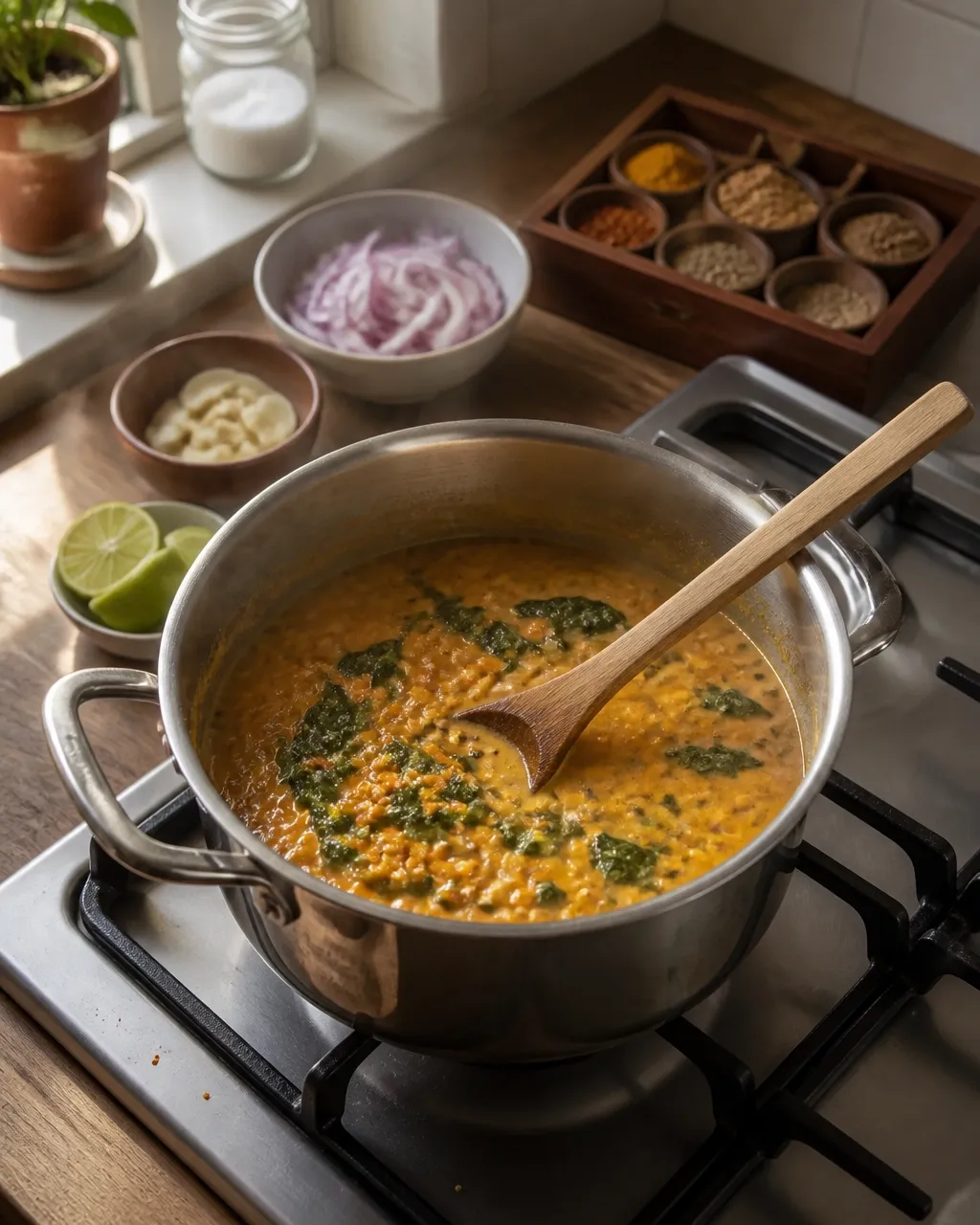
Use a gentle simmer rather than a hard boil. Rapid boiling can make the bottom catch before the lentils have fully softened, especially once the sauce becomes thick. It can also make coconut milk separate more readily.
Stir occasionally, paying attention to the base of the pot. You are not trying to whip the curry; you are simply preventing the starch from settling and sticking.
Expect the curry to thicken as it stands. Red lentils continue absorbing liquid after the heat is turned off, and they become even more substantial once chilled. Keep the curry slightly looser than your final target if you plan to serve it later.
If the pot becomes too thick, add warm water or broth a little at a time. Avoid dumping in a large amount at once, or you may turn a creamy curry into lentil soup before you notice.
Treat coconut milk as texture, not just flavor
Coconut milk contributes fat, sweetness, and body. The fat smooths out the spice profile, while its gentle sweetness balances earthy lentils and sharp aromatics.
Full-fat coconut milk produces the richest result, but light coconut milk works when you want a thinner, lighter curry. You can also use part coconut milk and part water or vegetable broth to stretch the can without losing the signature flavor.
Keep the heat gentle after adding it. Coconut milk is not dairy, so it will not curdle in quite the same way, but vigorous boiling can still cause the fat and liquid to separate. A separated curry is not ruined, but a calm simmer gives you a smoother sauce with less fuss.
Finish with contrast
Richness needs brightness. Add lime or lemon near the end, preferably after turning off the heat. The acid lifts the coconut milk and makes the spices taste clearer.
This timing also protects the lentils’ texture. Acidic ingredients can slow the softening of legumes by helping stabilize the pectin in their cell walls. Red lentils are forgiving and usually become tender even with tomatoes in the pot, but adding a final squeeze of citrus after cooking gives you brightness without asking the lentils to fight through extra acidity during the whole simmer.
Taste before serving. Check salt first, then acidity, then heat. If the curry tastes dull, it often needs salt rather than more spice. If it tastes heavy, reach for citrus. If it is too sharp, soften it with a little extra coconut milk or a tiny pinch of sugar.
Variations: Stretch the Pot Without Losing Balance
Add vegetables for color and bulk
Make the curry go further with inexpensive vegetables that suit a soft, saucy texture. Diced carrot adds sweetness, while potato contributes starch and makes the curry even thicker. Frozen spinach can be stirred in near the end, and chopped kale works when you give it a few extra minutes to soften.
Use vegetables according to their cooking time. Add firm roots early so they become tender alongside the lentils. Add quick-cooking greens later so they stay fresh-looking instead of turning into kitchen confetti.
For more plant protein, stir in cooked chickpeas near the end. They add chew, while the red lentils provide the creamy base.
Adjust the richness
Use full-fat coconut milk for a luxurious curry, or replace part of it with broth for a lighter version. You can also add more vegetables and serve the curry over rice to make a smaller amount of coconut milk cover more portions.
For extra heat, add chili flakes or fresh chili with the spices. For a gentler family version, keep the base mild and pass hot sauce or chili oil at the table. That small move prevents one pot from having to please every heat seeker in the house.
Change the finishing direction
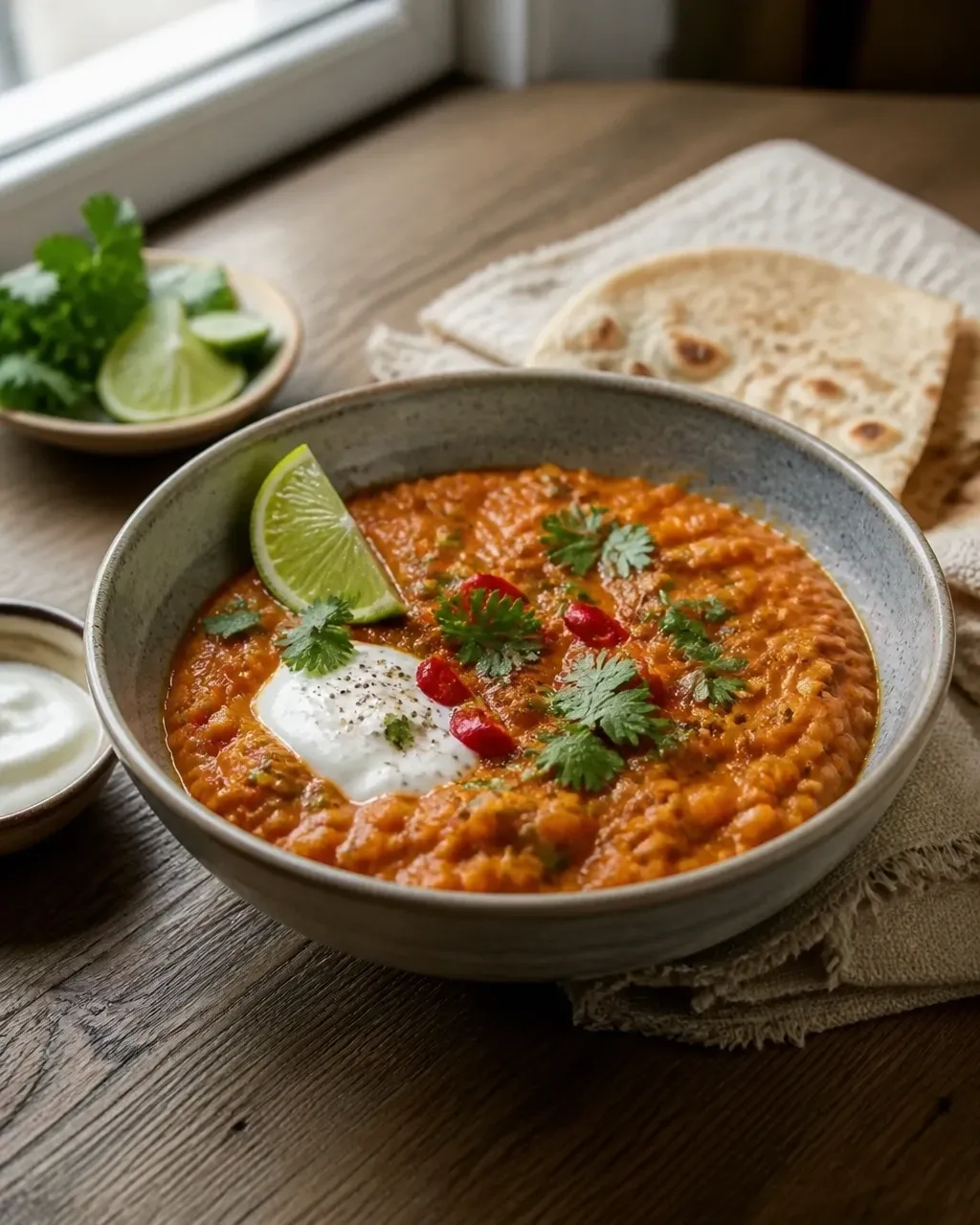
Lean in an Indian-inspired direction with cumin, coriander, and a sizzling spice tempering spooned over the top. For a brighter, Thai-inspired version, use lime, ginger, chili, and cilantro. Add tomato for tang and color, but remember that tomato makes the curry taste sharper, so balance it with enough coconut milk and salt.
Serve the curry as a thick stew, loosen it into a soup, or spoon it over grains. This flexibility is exactly why it belongs in any collection of quick meals.
Side Dish Pairings: Add Freshness and Texture
Serve the curry with plain rice when you want the most economical, filling option. Rice absorbs the sauce and stretches each serving without competing with the spices. Brown rice adds chew and fiber, while basmati rice keeps the plate light and aromatic.
Choose flatbread when you want something for scooping. Naan is comforting, but simple roti or warm pita works just as well. There is no prize for making the starch complicated.
Add something crisp or acidic alongside the curry. A cucumber salad with lemon, lime, or vinegar cuts through coconut milk’s richness. Quick-pickled onions bring sharpness and crunch, while a handful of fresh cilantro adds a clean herbal note.
For a cooling contrast, serve a small spoonful of plain yogurt or coconut yogurt on the side. Keep the portion modest; the goal is balance, not turning the curry into a dairy-based sauce.
If you are building a full weeknight spread, browse Cookpedia’s vegetarian dinner recipes and healthy recipe collection for more simple pairings.
FAQ: What If My Curry Does Not Behave?
What if the lentils are still firm after simmering?
Keep simmering gently and add a splash of water if the pot is drying out. Firm lentils usually mean the heat was too low, the liquid evaporated too quickly, or an acidic ingredient slowed softening. Check the simmer rather than turning the heat to maximum. A hard boil may scorch the base before the lentils become tender.
What if the curry is too thick?
Add warm water or broth gradually while stirring. Remember that lentils continue absorbing liquid as they cool, so loosen leftovers more than you think you need to before storing them. Reheat gently and adjust again.
What if the curry is too thin?
Simmer it uncovered for a few minutes, stirring frequently. This allows excess water to evaporate while the lentil starch continues thickening the sauce. Do not add flour or cornstarch unless you specifically want a glossy, gravy-like texture; the lentils already provide a better natural thickener.
You can also mash a small portion against the side of the pot. That releases more starch and thickens the curry without changing the flavor.
What if the coconut milk separates?
Lower the heat and stir slowly. Separation usually comes from vigorous boiling, prolonged high heat, or adding acid while the sauce is aggressively bubbling. The curry is still safe to eat, and gentle stirring often brings the texture back together. Add citrus at the end, off the heat, to reduce the chance of splitting.
What if the curry tastes bland?
Check salt before adding more curry powder. Salt helps all the existing flavors register; extra spice alone may make the curry louder without making it more delicious.
Next, add a small amount of lime or lemon juice. Acidity creates contrast against the coconut milk and can make a flat curry taste lively. If the flavor still lacks depth, add a little more bloomed spice or a spoonful of tomato paste that has been cooked briefly in fat.
Can I make this curry ahead?
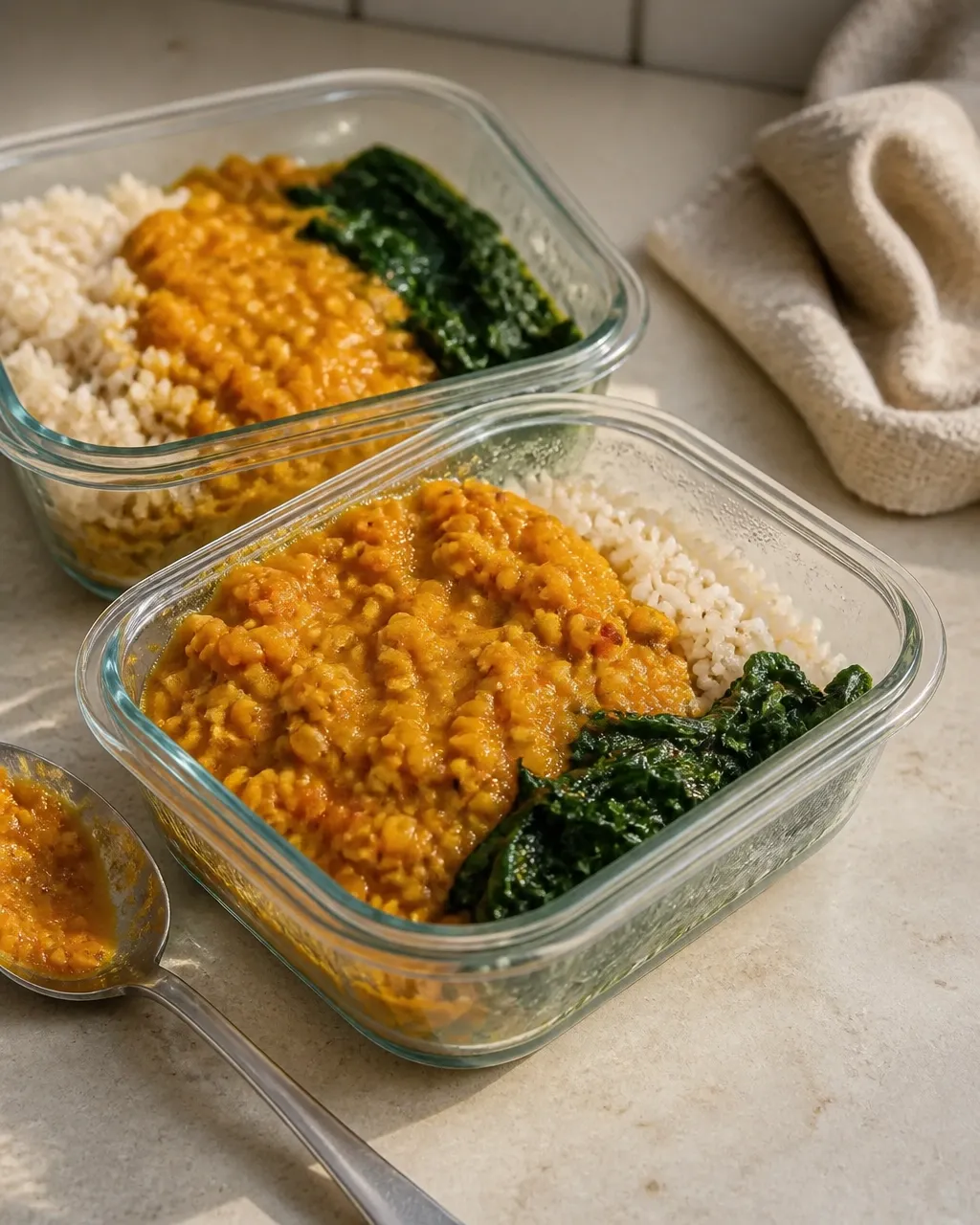
Yes. In fact, the flavor often improves after resting because the spices distribute through the thick lentil base. Cool the curry promptly and store it in shallow containers. USDA guidance recommends refrigerating cooked leftovers within two hours, or within one hour when the room temperature is above 90°F. Use refrigerated leftovers within three to four days; see the USDA leftovers guidance for the food-safety details.
Can I freeze red lentil coconut curry?
Freeze it in individual portions for convenient healthy dinner ideas on busy nights. Leave a little space in each container because the curry expands as it freezes. Thaw it in the refrigerator when possible, then reheat gently with water or broth.
The texture may become slightly thicker or softer after freezing, but that is easily corrected with liquid and a good stir.
Is this curry suitable for a family?
Absolutely. Keep the base mild, then add chili separately for anyone who wants more heat. The soft texture is friendly for younger eaters, and the lentils provide plant protein and fiber without requiring expensive specialty ingredients.
Serve it with rice, offer a cooling yogurt topping, and call it one of your dependable quick family meals. No complicated garnish ceremony required.
How do I make the meal more filling?
Serve the curry with rice, flatbread, or another grain, and add a vegetable side for volume and color. Chickpeas, potatoes, carrots, and greens can all stretch the pot while keeping the meal satisfying. This is the budget-friendly trick: build depth with technique, then build portions with affordable staples.