Recipe
Servings
Servings 1×
Ingredients
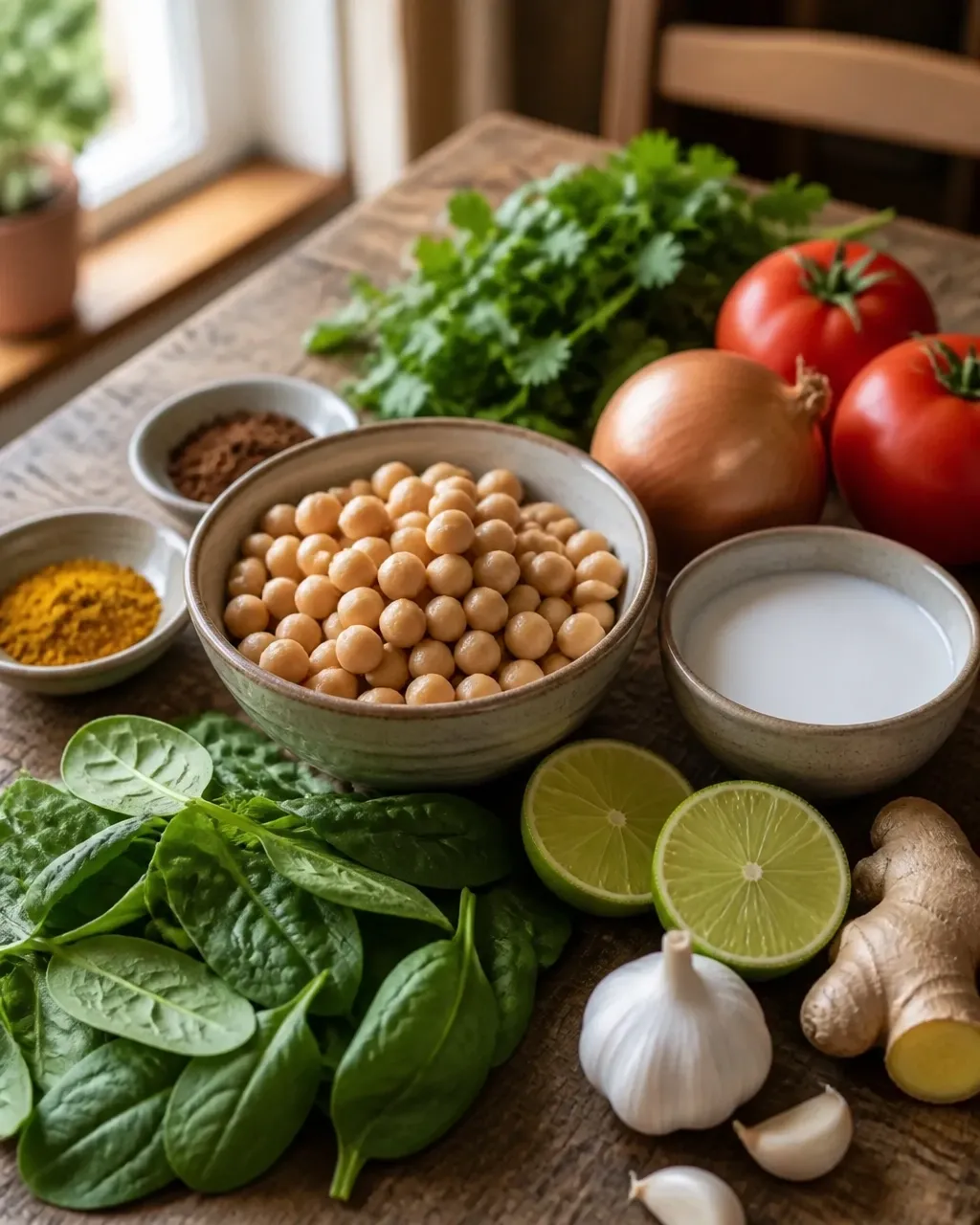
- Tofu
- Lentils
- Chickpeas
- Quinoa
- Rice
- Cauliflower
- Spinach
- Peas
- Tomatoes
- Onion
- Garlic
- Fresh ginger
- Lime
- Coconut milk
- Cooking oil
- Curry spices
- Chili seasoning
- Salt
Method
- Keep this one in your rotation of healthy dinner ideas for busy nights when takeaway is calling a little too loudly.
- Give the onion time to soften before adding the more delicate aromatics.
- Use medium heat and watch the pan rather than the clock.
- Add garlic and ginger later because their smaller pieces and higher moisture content make them quick to scorch.
- Stir constantly and keep the heat controlled.
- Keep the curry at a gentle simmer rather than a furious boil.
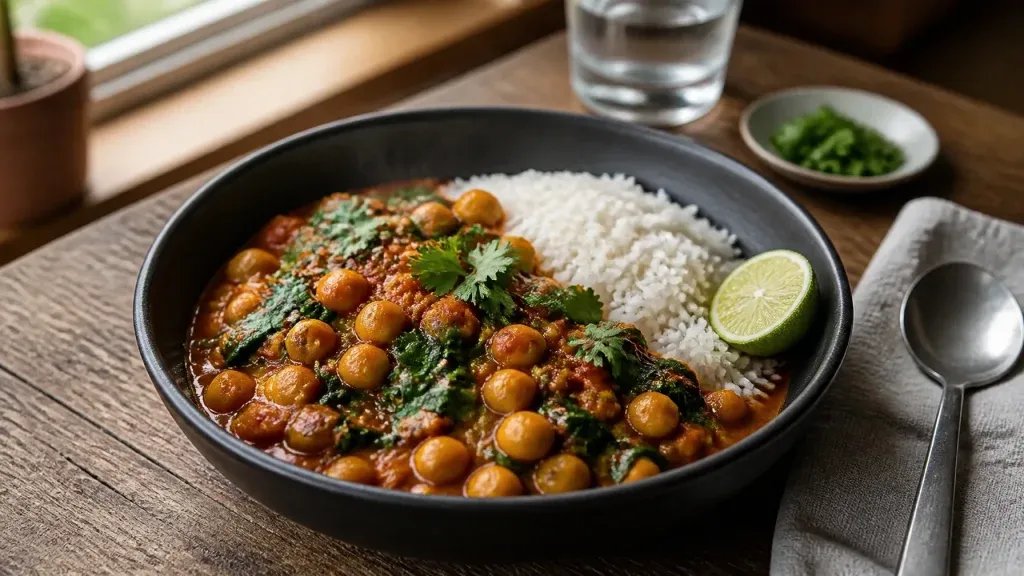
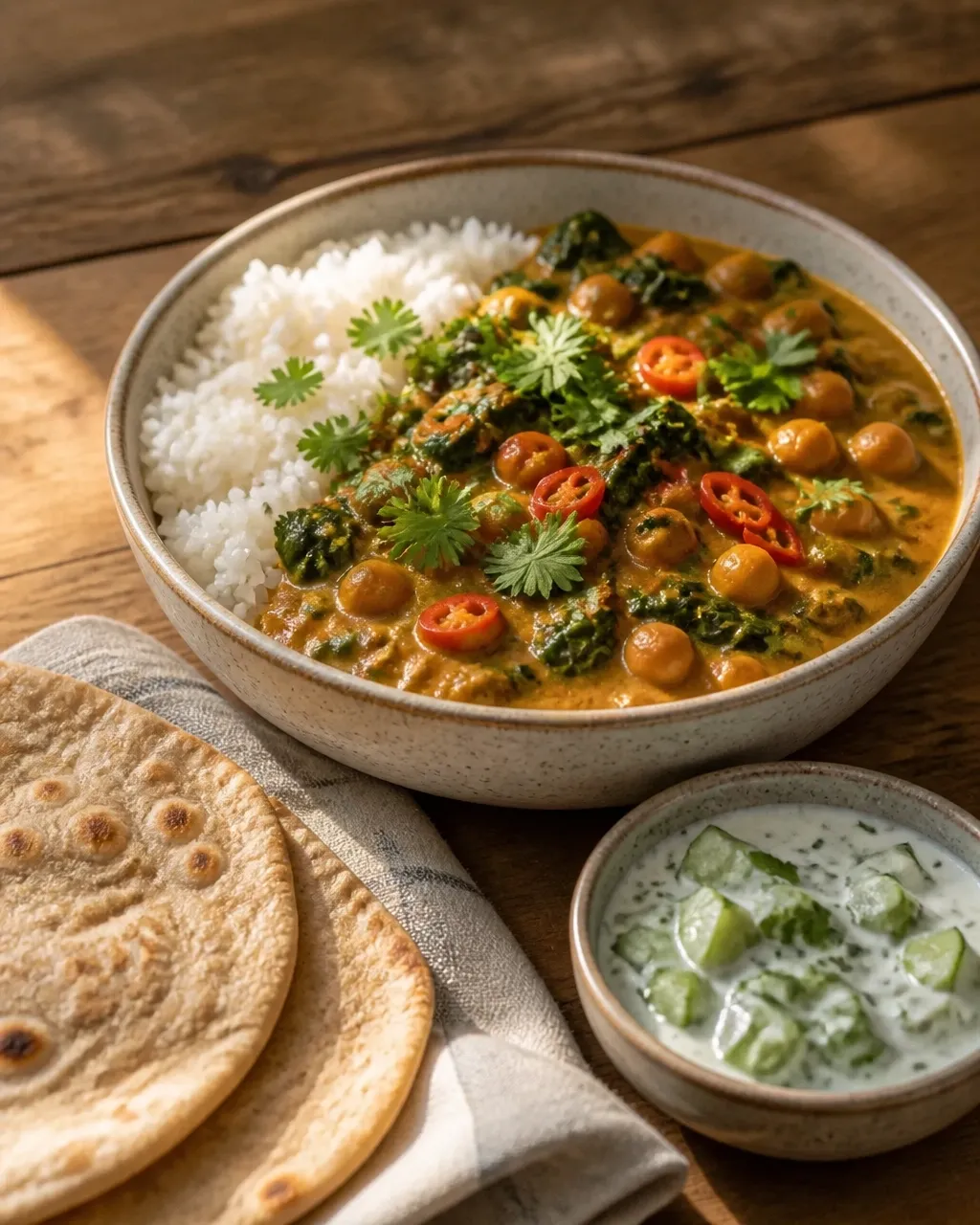
When I want a dinner that feels comforting without demanding much from me, I turn to coconut chickpea curry with spinach. It is creamy, warmly spiced, filling, and wonderfully forgiving. The chickpeas bring substance, the spinach adds freshness, and coconut milk smooths everything into a sauce that tastes far more complicated than it is. Keep this one in your rotation of healthy dinner ideas for busy nights when takeaway is calling a little too loudly.
Build Flavor in Layers, Not All at Once
Start with a soft aromatic base
Give the onion time to soften before adding the more delicate aromatics. This is not busywork; it is flavor development. As onion cooks, its water evaporates and its natural sugars become more noticeable. You are creating sweetness and depth before the curry even meets the coconut milk.
Use medium heat and watch the pan rather than the clock. The onion should become soft and lightly golden, not dark and bitter. Add garlic and ginger later because their smaller pieces and higher moisture content make them quick to scorch. Burnt garlic will not politely disappear into the sauce. It will take over the entire dinner.
Bloom the spices in fat
Treat the spices as aromatic ingredients, not colorful dust. Briefly warming them in oil helps release fat-soluble flavor compounds, allowing their fragrance to spread through the dish. This technique, often called blooming, gives the curry a rounder and more integrated taste.
Stir constantly and keep the heat controlled. Ground spices can go from fragrant to bitter in seconds, especially in a dry or overheated pan. When the mixture smells warm and vivid, move on. Do not wait for the spices to look dramatically darker.
Use tomatoes to create balance and body
Tomatoes do more than add color. Their acidity keeps coconut milk from tasting heavy, while their natural glutamates contribute savory depth. Allowing the tomato component to cook briefly before adding the liquid also softens its raw edge.
Think of the curry as a balance of rich, sweet, salty, spicy, and acidic notes. Coconut milk handles richness and gentle sweetness. Spices bring warmth. Chickpeas provide a mild, nutty base. Tomatoes and lime provide the lift that stops each bite from becoming flat.
Simmer gently for a silky sauce
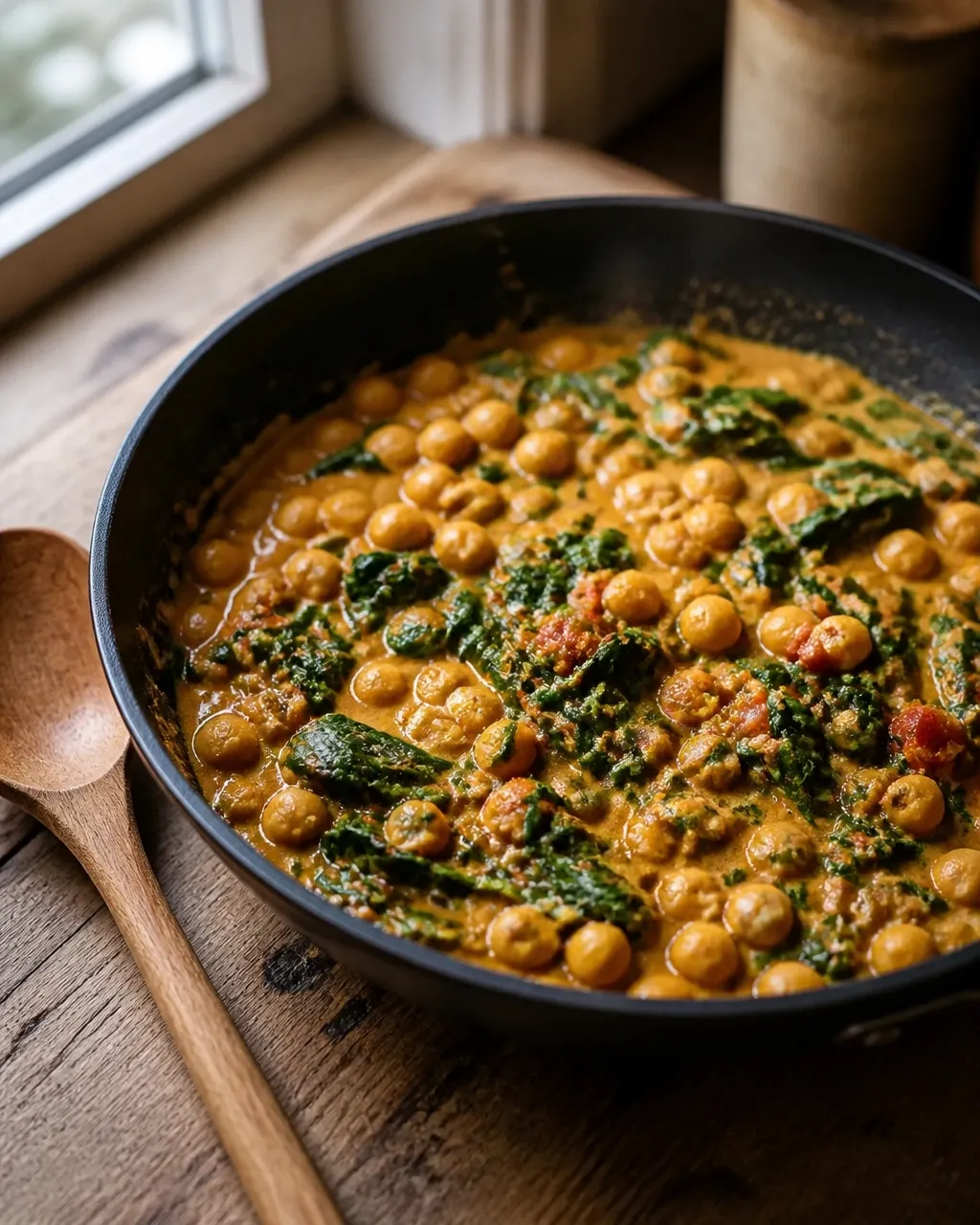
Keep the curry at a gentle simmer rather than a furious boil. Coconut milk is an emulsion of fat and water, and aggressive heat can encourage that mixture to separate. A split sauce is still edible, but it may look greasy and feel less creamy.
Leave the pan partly uncovered while the curry simmers. Evaporation concentrates flavor and helps the sauce cling to the chickpeas. If the curry remains thin, mash a small portion of the chickpeas against the side of the pan. Their starch thickens the sauce naturally without requiring flour or a blender.
Do not rush this stage, but do not wander off for half an hour either. Canned chickpeas are already cooked. They need enough time to absorb the spiced coconut sauce, not an extended punishment.
Add spinach at the finish
Stir in spinach near the end, once the curry has developed its main flavor and texture. Fresh spinach collapses quickly because its cell structure softens with heat. Frozen spinach works too, although it releases more water and may need a little extra simmering.
Keep the cooking brief to preserve the spinach’s color and fresh flavor. Add acidic ingredients after the greens have wilted rather than much earlier. Acid can dull green vegetables over prolonged cooking, and there is no reason to turn vibrant spinach olive-colored before serving.
Taste only after the spinach has cooked. Greens can dilute seasoning slightly, especially when a generous amount disappears into the sauce. Adjust salt first, then acidity, then heat. Salt wakes up muted flavors; lime or tamarind cuts through richness; chili adds energy but cannot rescue an under-seasoned curry.
Remember that texture is part of flavor
Rinse canned chickpeas well to remove excess packing liquid and reduce the chance of a muddy-tasting sauce. Pat them dry if you plan to brown them briefly before adding the liquid. That extra surface browning creates nutty notes through the Maillard reaction, though it is optional when speed matters.
For a thicker curry, mash some chickpeas. For a looser curry, add a splash of water or vegetable stock. Make the adjustment near the end so you can judge the final texture accurately. The ideal sauce should coat the chickpeas and rice without sitting like a solid mound or running across the plate.
For another pulse-based dish built around texture and spice, see Cookpedia’s budget-friendly red lentil dahl. You can also browse the wider collection of vegetarian dinner recipes when you need more meat-free inspiration.
Easy Variations That Keep the Balance
Make it hotter
Add fresh chili, chili flakes, or a little hot curry paste. Introduce heat gradually because coconut milk softens spice perception while the curry is hot, but the heat may seem stronger after the dish rests. Finish with lime so the spice tastes bright rather than blunt.
Add more vegetables
Fold in chopped bell pepper, cauliflower, peas, or sweet potato. Choose vegetables with similar cooking times, or add firmer ones earlier and tender ones later. Avoid filling the pan so densely that the curry steams without reducing. A crowded pan creates watery sauce and uneven cooking.
Increase the protein
Serve the curry with quinoa, add cubed baked tofu, or stir in cooked green lentils. These additions change the texture, so keep the sauce slightly looser than usual. The extra solids will absorb liquid as the curry sits.
Make it kid-friendly
Reduce the chili and keep the aromatic spice blend warm rather than fiery. Serve lime wedges at the table so adults can sharpen their portions without making the whole pan too tart. Mild curry does not have to mean bland curry; ginger, garlic, cumin, and toasted spices still provide plenty of character.
Lighten the sauce
Use less coconut milk and replace part of it with vegetable stock. You will lose some richness, so compensate with a little extra tomato, lime, or toasted spice. Do not remove every trace of fat, because the fat helps carry the spices and gives the sauce a satisfying finish.
Side Dish Pairings That Cut Through Richness
Serve the curry over basmati rice, brown rice, or quinoa depending on the texture and nutrition you want. Rice absorbs the sauce beautifully, while quinoa adds a slightly nutty contrast and extra protein. Keep the grain simply seasoned; the curry already has plenty to say.
Add a crisp cucumber salad with lime, herbs, and a lightly salted dressing. Cool, watery vegetables provide relief from the warm sauce and refresh the palate between bites. A quick cabbage slaw works in the same way, especially if you add a little vinegar for extra sharpness.
Warm flatbread is useful for scooping, but choose a thinner bread if the curry is especially rich. Steamed green beans or roasted cauliflower add a little bite without competing with the spinach. Finish with fresh cilantro, lime wedges, or thinly sliced chili rather than a heavy garnish. Let contrast do the decorating.
Frequently Asked Questions
Can I use light coconut milk?
Yes, but expect a thinner and less luxurious sauce. Light coconut milk contains less fat, so it provides less body and carries fewer spice aromas. Simmer the curry uncovered for a little longer, or mash some chickpeas to add natural thickness. Avoid compensating with a large amount of flour, which can make the sauce pasty.
Why does my curry taste flat?
Check salt and acidity before adding more spices. Coconut milk can soften flavors, and chickpeas need enough seasoning to taste lively. Add salt in small increments, then use lime juice or tamarind to brighten the sauce. If the curry still lacks depth, bloom a small amount of spice in oil separately and stir it in. Do not keep adding dry spices directly to the finished sauce; they may taste dusty rather than fragrant.
What if the coconut milk separates?
Lower the heat and stir gently. Separation usually happens when the emulsion is exposed to high heat, prolonged boiling, or an especially acidic mixture. The curry is not ruined. Whisk in a small splash of water or stock, then continue with a gentle simmer. The texture may not become perfectly smooth again, but the flavor will remain good.
Can I use dried chickpeas?
Use them only after cooking them until tender. Dried chickpeas will not soften properly in a short curry simmer, and adding them uncooked can leave you with hard centers and a watery sauce. Cook them separately, drain them well, and add them when the coconut sauce is ready to absorb their flavor. Canned chickpeas are the practical choice for quick family meals.
Can I use frozen spinach?
Absolutely. Add it near the end and break it apart as it warms. Frozen spinach releases more moisture than fresh, so allow the curry to simmer uncovered briefly afterward. Taste again before serving because the extra water may dilute the seasoning.
How should I store leftovers?
Cool the curry promptly, transfer it to an airtight container, and refrigerate it for three to four days. Store rice separately when possible so it does not absorb all the sauce. Reheat the curry gently until steaming hot throughout, adding water or stock if it has thickened. Freeze cooled portions with a little headspace and use them within about a month for the best texture.
Can I make it ahead?
Yes. In fact, the spices often taste more integrated after resting overnight. Keep the spinach slightly undercooked if you know you will reheat the curry, because it will soften again later. Add a fresh squeeze of lime just before serving to restore brightness.
Can I serve this with an air fryer dinner?
Certainly. If you are collecting air fryer recipes dinner ideas, use the air fryer for a separate vegetable side such as cauliflower or broccoli. Keep the side crisp and lightly seasoned so it contrasts with the curry’s soft, creamy texture. Do not air-fry the finished coconut sauce; it is better reheated gently on the stovetop.