Recipe
Servings
4 servings 1×
Serves 4Prep 10 minCook 25 minTotal 35 min
Ingredients
- 1 tablespoon olive oil
- 8 ounces mushrooms, sliced
- 1 small yellow onion, diced
- 2 garlic cloves, minced
- 1 cup dry orzo
- 3 cups low-sodium vegetable broth
- 1/2 cup heavy cream
- 1/2 cup grated Parmesan
- 2 cups baby spinach
- 1 tablespoon chopped fresh parsley
- Salt and black pepper, to taste
Method
- Heat the oil in a wide pot over medium-high heat. Add the mushrooms in a single layer and cook until their moisture evaporates and the edges turn golden. Season lightly.
- Add the onion and cook until soft. Stir in the garlic and orzo and toast for 1–2 minutes, stirring so the pasta does not scorch.
- Pour in the broth and bring it to a steady simmer. Cook for 10–12 minutes, stirring occasionally, until the orzo is tender and the liquid is thickened.
- Lower the heat and fold in the cream and Parmesan. Stir gently until smooth, then add the spinach and cook just until wilted.
- Remove from the heat, fold in the parsley, and rest for 3 minutes. Loosen with a splash of warm broth or water if needed before serving.
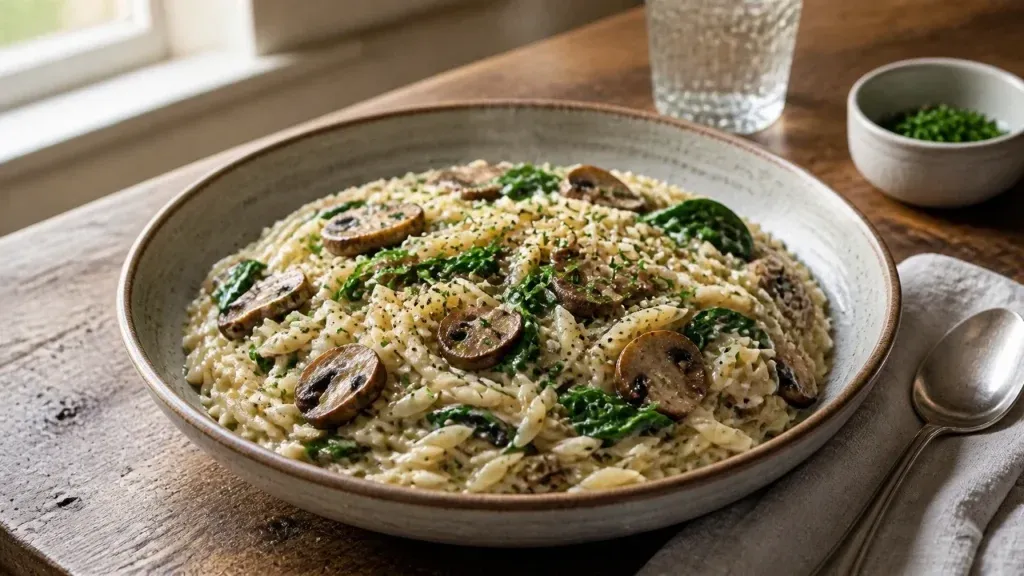
Some dinners work hard so you do not have to. This creamy mushroom and spinach orzo is one of them. It delivers the comfort of risotto, the ease of pasta, and the extremely welcome bonus of only one pot to wash. The secret is not a mountain of cream. It is smart heat, controlled liquid, and the natural starch released by the orzo. Follow those rules and dinner becomes wonderfully simple.
Tips & Technique: Build Flavor Before You Add Liquid
Give mushrooms room to brown
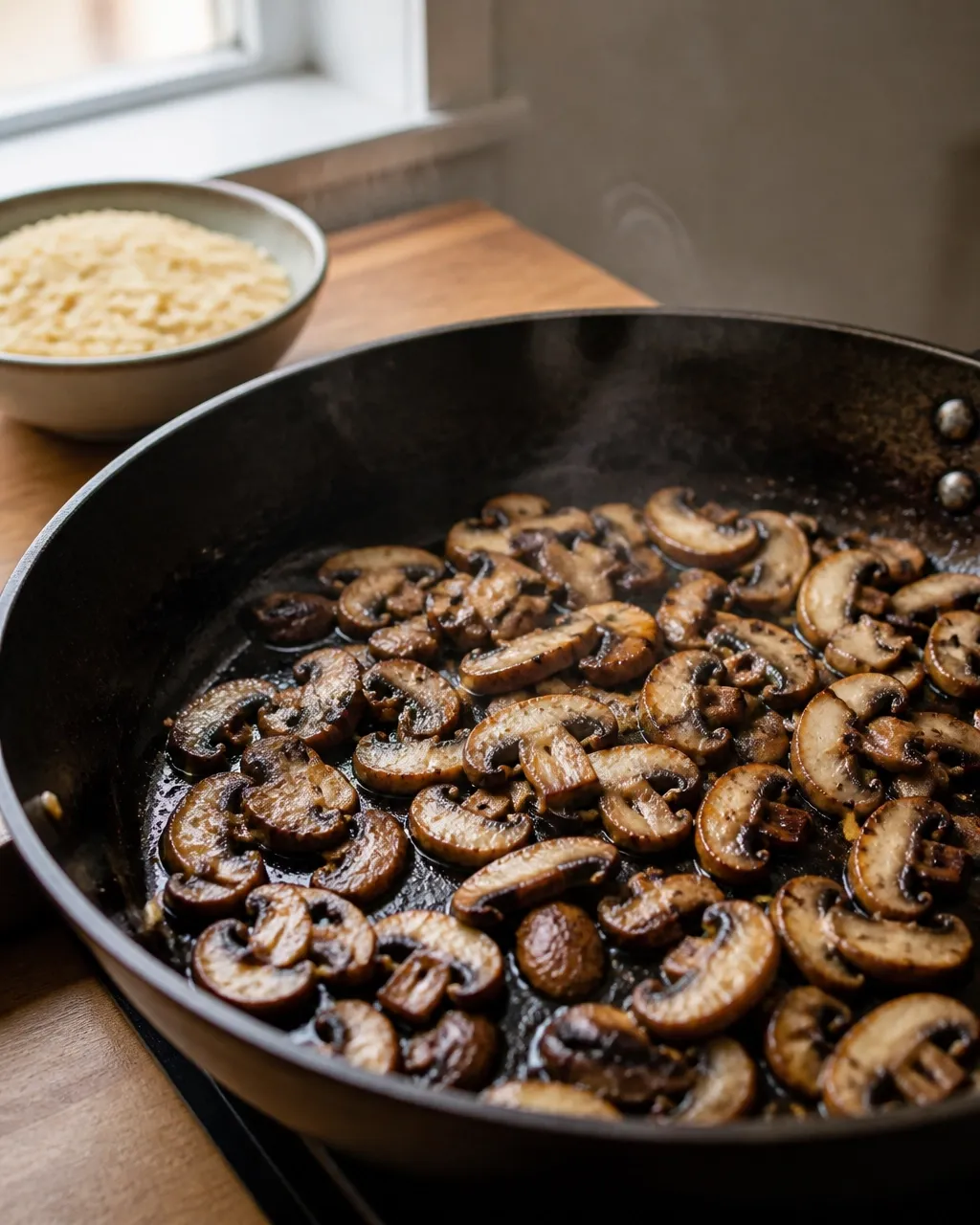
Start with the mushroom technique, because pale, watery mushrooms can derail an otherwise lovely dinner. Mushrooms contain a huge amount of water. When they hit a crowded or lukewarm pan, that moisture escapes into the cooking surface and creates steam. The mushrooms soften, but they do not brown.
Use a wide pan and give the mushrooms space to spread out. Let them sit long enough to develop golden edges before moving them around. Browning happens through the Maillard reaction, a set of chemical reactions between amino acids and sugars that creates deeper roasted, nutty, and savory flavors. In practical terms, color equals flavor here.
Avoid salting heavily at the very beginning. Salt draws out moisture, which is useful later but unhelpful when you are trying to create a dry surface for browning. Season once the mushrooms have started to take on color. If your pan is small, work in batches. That is not fussy; it is basic mushroom physics.
For more mushroom wisdom, visit Cookpedia’s guide to creamy mushroom pasta and the science of starch. The same browning principles apply beautifully to orzo.
Toast the orzo for a nuttier backbone
Orzo looks like rice, but it is pasta. That distinction matters because it releases starch quickly and cooks efficiently in a measured amount of liquid. Before the liquid goes in, toast the dry orzo briefly in the flavorful fat left behind by the mushrooms.
Toasting gives the pasta a lightly nutty flavor and creates another layer of browning. It also helps the finished dish taste more complex, even though the ingredient list remains pleasantly short. Stir continuously during this stage so the small pieces color evenly rather than scorch.
Think of this as the pasta version of toasting rice before making pilaf. You are not trying to cook the orzo yet. You are simply waking it up.
Let starch make the sauce
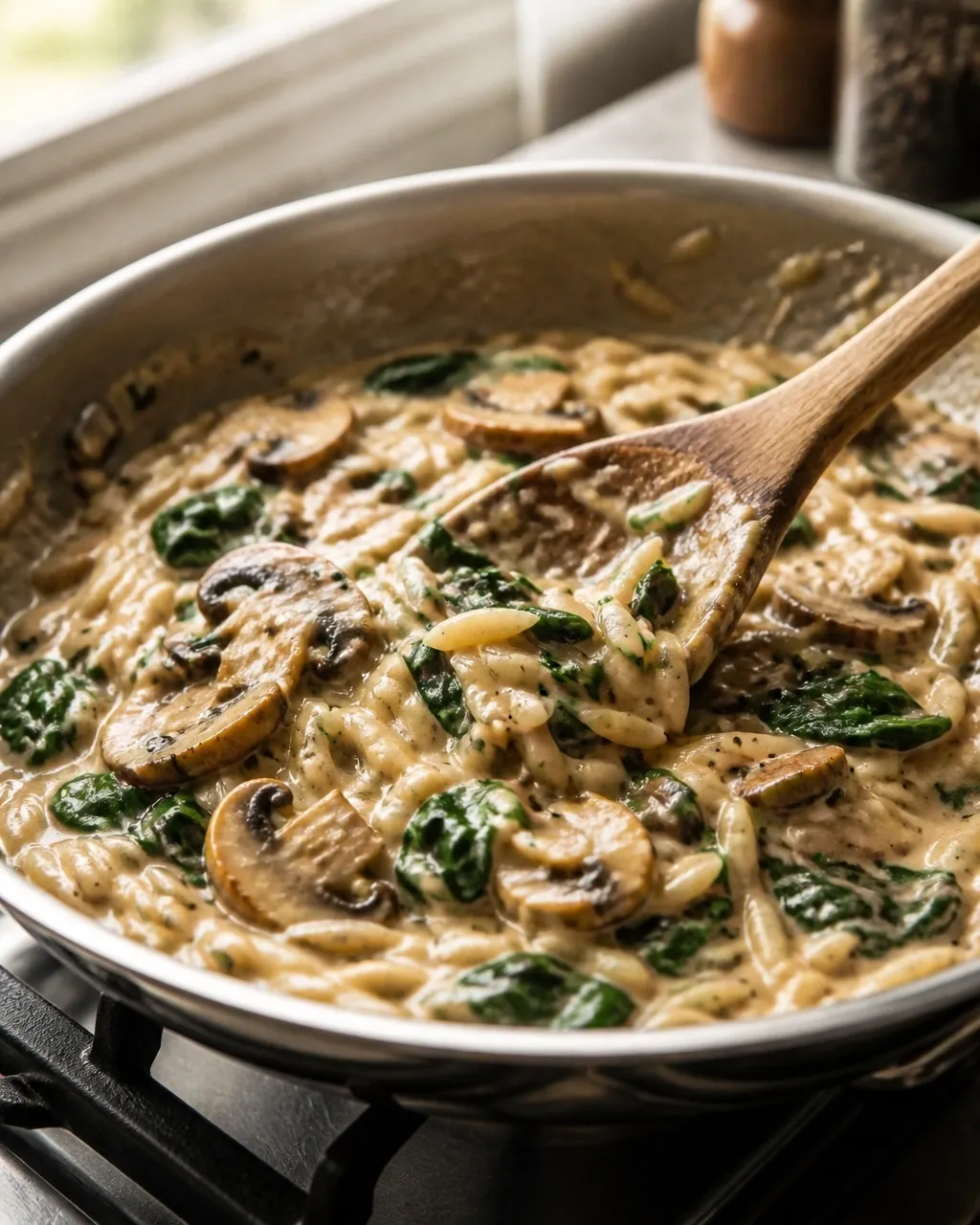
The creamy texture comes from starch management. As orzo cooks, its starch granules absorb water, swell, and release some of that starch into the surrounding liquid. In a traditional pasta method, much of that starchy water disappears down the drain. In a one-pot meal, it stays in the pan and becomes part of the sauce.
Use a controlled amount of broth or water rather than flooding the pot. Too much liquid leaves the sauce thin and dilutes the mushroom flavor. Too little liquid prevents the orzo from hydrating evenly and can leave you with a sticky layer clinging to the bottom.
Keep the heat at a steady simmer. A furious boil evaporates liquid too quickly and can cook the outside of the orzo before the center softens. Stir occasionally to prevent sticking and encourage even starch release, but do not stir constantly. Excessive agitation releases too much starch too fast and can push the texture from creamy to gluey. Orzo is generous, but it does have boundaries.
You will know the texture is close when the orzo is tender with a slight firmness at the center and the liquid looks thick enough to coat a spoon. Remember that it continues to absorb liquid as it stands, so aim for a sauce that looks a little looser than your final serving texture.
Finish gently to protect the emulsion
Creaminess is an emulsion: a stable mixture of fat and water. Dairy, butter, olive oil, and cheese all bring fat, while the broth supplies water. The orzo’s starch helps these elements stay together, creating a smooth sauce instead of a greasy puddle.
Lower the heat before adding dairy or cheese. High heat can make the fat separate, especially if you also use an acidic ingredient such as lemon juice or white wine. Fold everything together gently and give the pan a short rest before serving. That pause lets the sauce settle around the orzo.
Use a splash of warm broth or water if the mixture tightens too much. Add it gradually rather than pouring in a large amount and turning your creamy orzo into soup. If the sauce is loose, let it reduce briefly uncovered. Make small adjustments and let the starch do its job.
Add spinach at the finish line
Spinach needs very little cooking. Add it near the end and fold it through the hot orzo until just wilted. Residual heat is enough to soften the leaves while preserving their fresh color and delicate texture.
Long cooking turns spinach dull and watery. It can also add extra moisture to a sauce that you have carefully balanced. Keep the leaves vibrant and let them bring freshness to the earthy mushrooms and rich orzo.
Variations: Change the Balance, Not the Method
Use the same starch-and-heat strategy to create several different versions.
For a plant-based bowl, replace dairy with an unsweetened, full-fat alternative and add extra savory depth with nutritional yeast or a spoonful of white bean purée. Keep the cooking liquid starchy, because that is what gives the sauce body when cream and cheese are absent.
Brighten the classic version with lemon zest and a small squeeze of juice stirred in off the heat. Add the juice gradually. Mushrooms and spinach both welcome acidity, but too much lemon can overpower their earthy flavor or make a dairy sauce split.
Choose a mushroom blend for more texture. Cremini mushrooms offer reliable browning, shiitakes bring a woodsy chew, and oyster mushrooms add delicate, crisp-edged pieces. Dried porcini can add concentrated depth when rehydrated, though use them as a supporting note rather than the entire cast.
Add protein if you need a more substantial dinner. White beans keep the dish vegetarian, while cooked chicken or shrimp can be folded in near the end. Keep additions modest so they do not crowd the pan or steal the spotlight from the creamy orzo.
For crunch, finish with toasted breadcrumbs, chopped walnuts, or crisp mushroom slices. Fans of air fryer recipes dinner can use the air fryer to prepare a crunchy breadcrumb topping while the orzo cooks on the stove.
Side Dish Pairings: Bring Contrast to the Bowl
Creamy mushroom orzo is rich, soft, and deeply savory, so pair it with sides that provide brightness and crunch. A peppery arugula salad with lemon vinaigrette is an excellent choice. The acidity cuts through the sauce, while the greens keep each bite feeling fresh.
Roasted broccolini, asparagus, or green beans bring gentle bitterness and a little char. Keep their seasoning simple. You want the vegetables to balance the orzo, not launch a competing dinner campaign.
For an especially refreshing contrast, serve a cucumber salad with vinegar, herbs, and a touch of salt. Its cool, crisp texture works against the warm creaminess of the main dish.
If you are feeding hungry eaters, add a small piece of crusty bread for scooping. Otherwise, resist the urge to cover the table with extras. This is already one of those quick family meals that feels complete with very little help.
FAQ: Troubleshoot the Creamy Orzo
Why did my mushrooms turn watery?
The pan was probably too crowded, too cool, or both. Mushrooms release moisture as they heat. If that moisture cannot evaporate quickly, the mushrooms steam instead of brown. Use a wider pan, keep the heat medium-high during browning, and cook in batches when necessary.
What if the orzo becomes gummy?
Gummy orzo usually means it overcooked, lost too much liquid, or was stirred too aggressively. Remove it from the heat as soon as it reaches a tender but slightly firm texture. Stir occasionally rather than constantly, and loosen the pan with warm broth if it thickens before the pasta is ready.
What if the dish is too thick?
Add warm broth, milk, or water a little at a time. Stir gently after each addition and wait a few seconds before adding more. The sauce will loosen as the liquid hydrates the concentrated starch. Avoid adding a large splash all at once; precision beats panic.
What if the sauce is too thin?
Simmer the orzo uncovered for a short time, stirring occasionally so the bottom does not catch. Evaporation will concentrate the sauce while the starch continues to thicken it. Once the texture looks creamy, remove the pan from the heat because it will continue tightening as it rests.
Can I use brown rice instead of orzo?
Not as a direct swap. Orzo is pasta and cooks quickly while releasing starch into the sauce. Brown rice needs a different liquid ratio and a much longer cooking time. Use another small pasta shape if you want to keep the one-pot method intact.
Can I use frozen spinach?
Yes. Thaw it first and squeeze out excess water before adding it near the end. Frozen spinach releases more moisture than fresh leaves, so adding it straight from the freezer can thin the sauce and extend the cooking time.
Can I make this ahead?
You can, but the best texture is fresh. Starch continues absorbing liquid as the dish cools, so leftovers will be thicker. Reheat gently with a splash of broth or milk, stirring often. Avoid high heat, which can make the sauce split and soften the orzo too much.
How long are leftovers safe to keep?
Cool the orzo promptly and refrigerate it within two hours. Store it in a shallow container and eat it within three to four days. Reheat only the portion you plan to eat, and heat it until steaming hot. Do not leave creamy, starchy dishes sitting warm for hours.
Is this a healthy dinner idea?
It can fit comfortably into a balanced meal, especially when served with extra greens or a crisp salad. Mushrooms provide savory flavor without needing large amounts of meat, while spinach adds color and nutrients. Keep the creamy elements measured and let the starch, browned mushrooms, and acidity create most of the satisfaction.
Can I make it vegan?
Absolutely. Use vegetable broth, a plant-based creamy element, and a dairy-free savory topping. The core technique remains the same: brown the mushrooms, protect the starch, control the liquid, and finish gently. That combination gives a satisfying result without relying on dairy.
For another smart one-pot technique, try Cookpedia’s one-pot lemon asparagus spaghetti, or browse the wider collection of vegetarian dinner recipes. Both follow the same useful rule: keep the cooking process simple, but never skip the parts that build flavor.