Recipe
Servings
Servings 1×
Ingredients
- Beans
- Pasta
- Rice
- Bread
- Asparagus
- Onion
- Garlic
- Lemon
- Lime
- Cream
- Cooking oil
- Chili seasoning
- Salt
- Black pepper
Method
- Warm them briefly in cooking fat with the aromatics first.
- Keep the heat moderate during this stage.
- Warm and fragrant is the goal.
- Give the onion and pepper enough time to soften.
- Add garlic for a shorter time because its smaller pieces heat quickly.
- Toast the uncooked rice briefly in the seasoned fat before adding the cooking liquid.
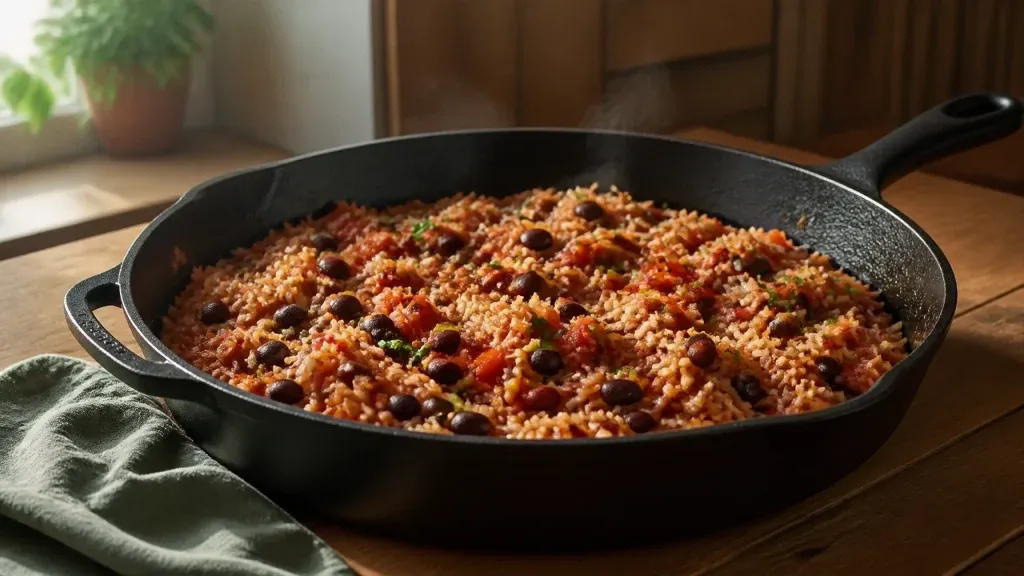
Rice, beans, and a skillet may sound humble, but humble food has a habit of becoming dinner’s greatest success story. This smoky bean and rice skillet is hearty, affordable, naturally plant-based, and generous enough for the whole table. It uses simple pantry staples, builds flavor without expensive extras, and leaves you with one pot to wash. That is the kind of kitchen arithmetic I can support.
Tips & Technique: Make the Pantry Work Harder
Bloom Spices in Fat for Deeper Flavor
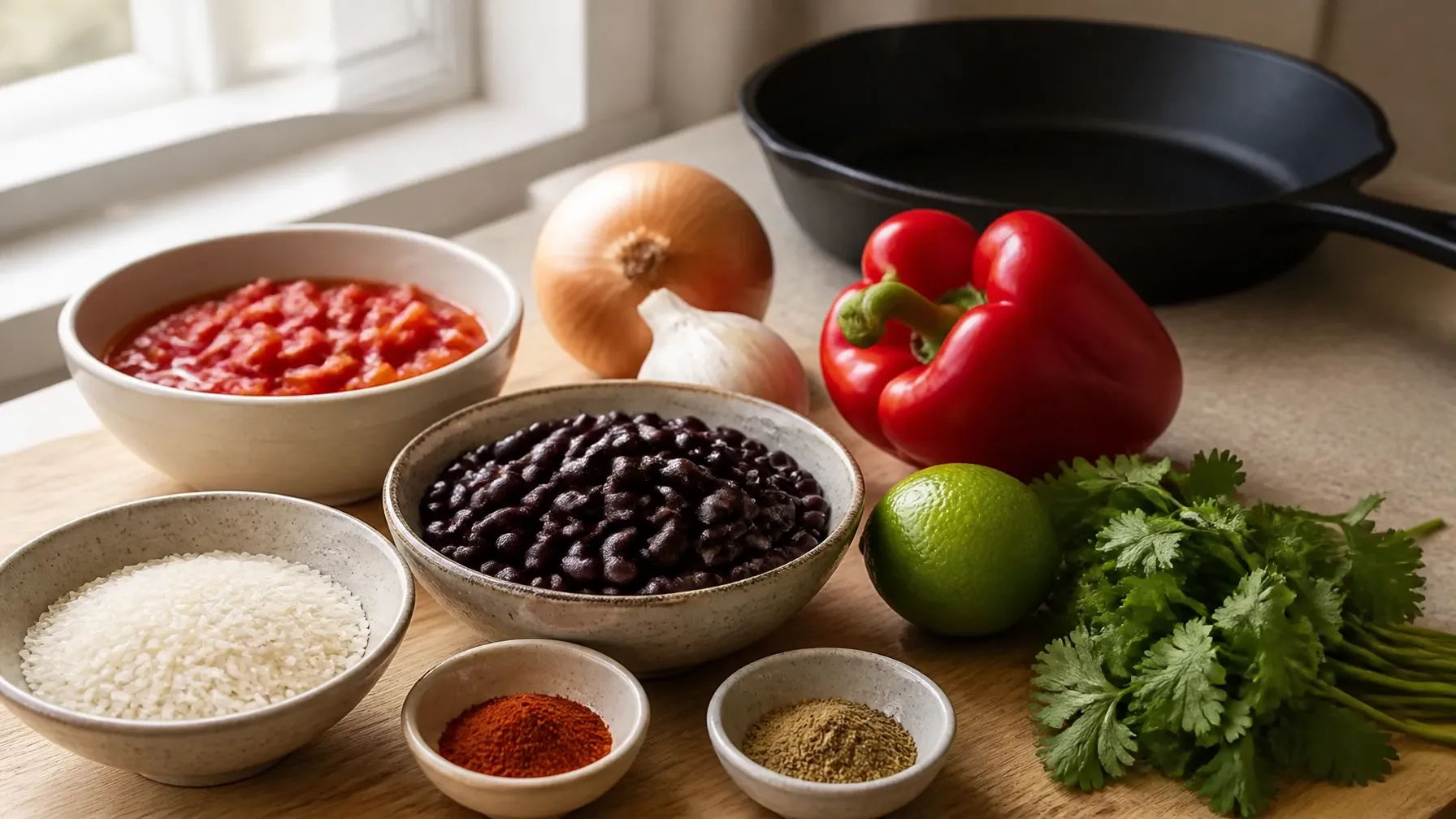
Do not tip dry spices straight into a large amount of liquid and expect them to perform miracles. Warm them briefly in cooking fat with the aromatics first. This is called blooming, and it is one of the cheapest ways to make a meal taste more developed.
Many flavor compounds in spices are fat-soluble, which means warm oil helps draw them out and distribute them through the pan. Smoked paprika becomes more fragrant, cumin develops a rounder earthy note, and chili becomes less sharp and more integrated. You are not adding more seasoning; you are getting more from the seasoning already in the cupboard.
Keep the heat moderate during this stage. Smoked paprika can scorch quickly, and burned spices taste bitter rather than smoky. Warm and fragrant is the goal. Dark and dusty is your warning sign.
Soften Aromatics Before Adding Liquid
Give the onion and pepper enough time to soften. Their flavor changes as their cell walls break down and their natural sugars become more noticeable. A rushed aromatic base can taste harsh, while a softened one creates sweetness and body beneath the beans and rice.
Add garlic for a shorter time because its smaller pieces heat quickly. Garlic contains sulfur compounds that create its familiar sharp aroma, but prolonged high heat can push those flavors toward bitterness. Watch the pan closely and keep the garlic moving.
This is where inexpensive ingredients start earning their keep. Onion, pepper, garlic, and spices create the savory foundation, so do not skip the quiet minutes that help them become flavorful.
Toast the Rice Before It Simmeres
Toast the uncooked rice briefly in the seasoned fat before adding the cooking liquid. Coating the grains helps spread the spices evenly, while gentle heating adds a faint nutty character.
Toasting also changes the surface of the rice. Some moisture is driven away, and the grains begin to develop a firmer exterior. The result is not dramatically crunchy rice; it is rice with a little more personality and a better chance of staying separate rather than becoming one large beige mass.
Use long-grain white rice when you want the most predictable timing. Brown rice can work, but it needs more cooking time and additional liquid. Do not swap rice varieties casually and then blame the skillet for refusing to read your mind.
Control Steam and Resist the Lid
Once the liquid is added, bring the skillet to a gentle simmer and cover it tightly. Rice cooks through a combination of liquid absorption and trapped steam. The grains need enough heat to soften, but aggressive boiling can make the bottom stick before the center is tender.
Keep the lid closed during the main cooking period. Every lift releases steam and lowers the temperature, which extends cooking and creates uneven texture. Trust the covered pan. It is doing more work than it appears to be doing.
Choose a wide skillet with a heavy base if possible. A broad surface spreads the rice into a thinner layer, while a heavy pan distributes heat more evenly. If the rice is piled too deeply, the bottom may soften before the top has absorbed enough moisture.
Add Canned Beans Near the End
Canned beans are already cooked, so they do not need to spend the entire simmer becoming softer. Add them after the rice is nearly tender, then warm them gently so they absorb some of the smoky tomato flavor without falling apart.
Adding them too early can produce broken skins and a thick, pasty texture. Excessive stirring creates the same problem. Fold the beans through carefully and give them enough time to heat without turning the skillet into a bean-based cement experiment.
Rinse canned beans if you want a cleaner flavor and more control over the salt. If you prefer a thicker finish, allow a few beans to break naturally as you fold them through. Their starch will add body without requiring cream or flour.
Finish with Acid and Resting Time
Smoky spices, rice, and beans create a warm, earthy flavor profile. That richness needs contrast. Finish with lime juice or another bright acidic note after the heat is off.
Acid does not merely make food taste sour. It sharpens surrounding flavors and cuts through starch, fat, and sweetness. A bright finish makes the smoky seasoning taste clearer and keeps the skillet from feeling heavy.
Let the dish rest briefly before serving. Rice continues to absorb moisture as it cools, and the flavors settle into one another. If the skillet looks slightly loose immediately after cooking, wait before adding more heat. You may simply be looking at a dish that has not finished becoming itself.
For another lesson in one-pot cooking and starch management, explore Cookpedia’s one-pot meals collection or read One-Pot Lemon Asparagus Spaghetti.
Variations: Change the Mood, Keep the Balance
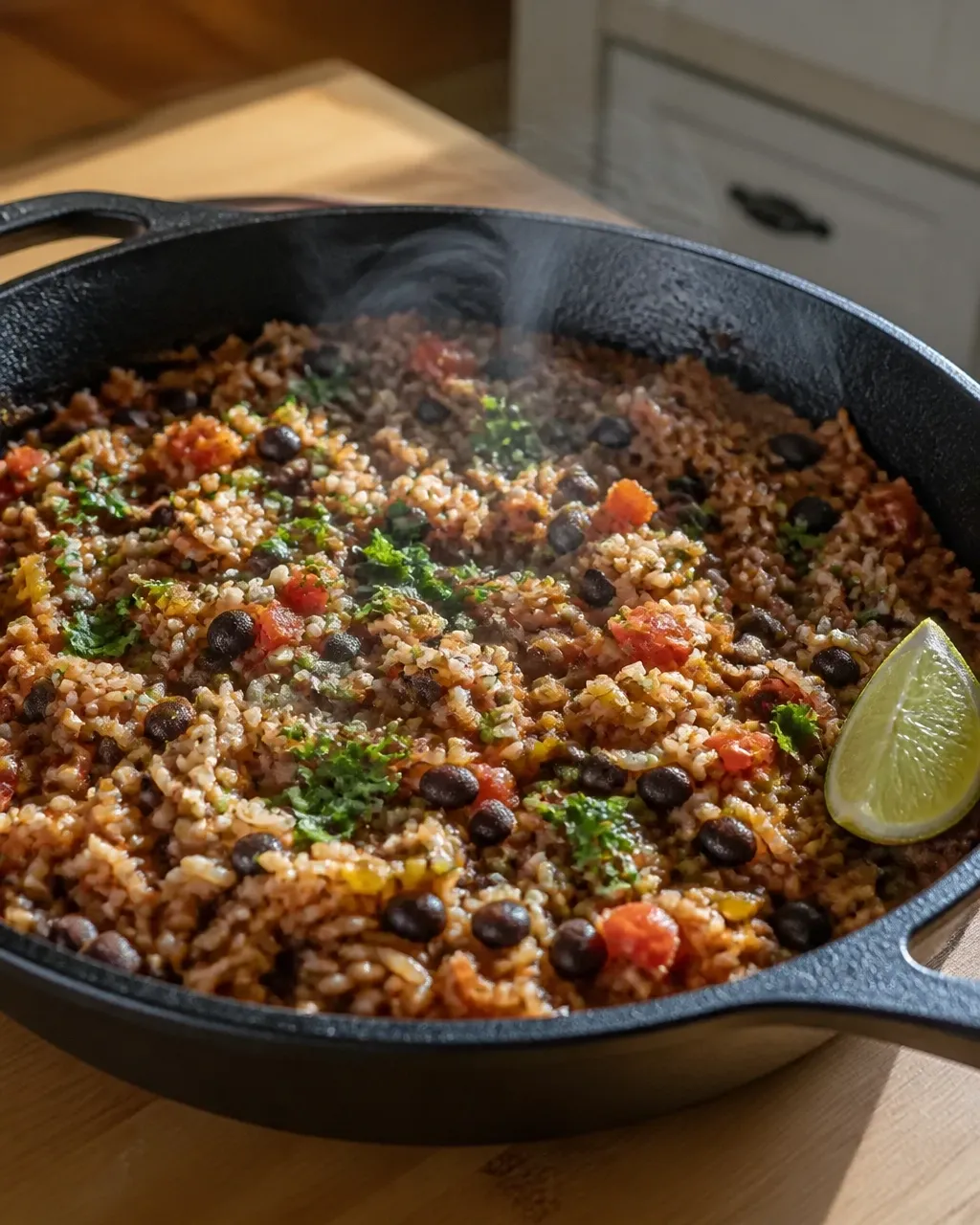
Keep the base vegetarian and add extra vegetables when you want more color and volume. Corn brings sweetness, zucchini adds tenderness, and chopped greens provide freshness. Add watery vegetables carefully so they do not flood the skillet and dilute the flavor.
Use different beans to change the texture. Pinto beans create a creamy, earthy bite, kidney beans stay pleasantly firm, and white beans offer a softer, milder result. A mixture is perfectly acceptable. Pantry cooking does not require bean uniformity.
For smoky heat, add chipotle powder or a finely chopped chipotle pepper. Increase the heat gradually and finish with extra lime to keep the flavor lively. For a gentler version, rely on smoked paprika and skip the hotter chili.
Add cooked smoked sausage if you want a meatier skillet. Brown it first so the surface develops savory flavor and the rendered fat seasons the aromatics. Keep the amount modest; the beans and rice should remain the main event.
Make it cheesy by scattering a little shredded cheese over the hot skillet after cooking. Cover briefly so it melts, then add fresh herbs or pickled peppers to prevent the finish from becoming too rich. For more plant-based inspiration, browse Cookpedia’s healthy recipes.
Side Dish Pairings: Bring Freshness to the Plate
This skillet is filling enough to serve on its own, so choose sides that add contrast rather than another heavy layer. A cucumber salad with lime or vinegar brings cool crunch and enough acidity to refresh each bite.
Serve shredded cabbage with a simple sharp dressing for extra texture. Cabbage stays crisp, holds up well beside warm rice, and adds a clean vegetable note without demanding another complicated cooking project.
A spoonful of plain yogurt or sour cream can soften the smoky heat, while pickled onions or jalapeños provide sharper contrast. Use one creamy addition and one acidic topping rather than adding every possible garnish. The skillet already has a full supporting cast.
For a roasted side, choose broccoli or peppers with browned edges. A quick vegetable option from Cookpedia’s air fryer recipes dinner collection can add crispness while the skillet rests.
FAQ: What If the Skillet Does Not Cooperate?
What if my rice is still hard but the liquid is gone?
The pan may have been uncovered, the heat may have been too high, or the rice may not have been spread evenly. Add a small amount of hot water or unsalted broth, cover the skillet again, and continue cooking gently.
Avoid pouring in a large amount of cold liquid. It can cool the pan suddenly and leave the rice cooking unevenly. Check the heat as well. A gentle simmer should create steady steam without violently boiling the liquid away.
What if the rice is mushy?
Too much liquid, excessive stirring, or overcooking is usually responsible. Rice releases starch as it cooks, and that starch thickens the surrounding liquid. Stirring aggressively releases even more starch and can damage the grains.
Remove the lid near the end of cooking so excess moisture can evaporate. Next time, measure the liquid carefully, use a wide skillet, and stir only when necessary. If the rice is already soft, fold in the beans gently and serve it as a thicker bowl rather than trying to restore separate grains.
What if the bottom is sticking or burning?
The heat is probably too high, the pan may be too thin, or the liquid was absorbed before the rice finished cooking. Lower the heat as soon as the mixture reaches a simmer and use a heavy-based pan whenever possible.
Do not scrape aggressively while the rice is still cooking. Lift the unburned portion into another dish and leave the scorched layer behind. Add a bright topping and call it a strategic recovery. The burnt bits are not invited to dinner.
What if the beans split?
Canned beans can break when they are boiled hard or stirred too frequently. Add them late, keep the heat low, and fold them through with a soft spatula.
Some broken beans are useful because they release starch and thicken the skillet. The goal is not bean perfection; it is a pleasing mixture of creamy edges and intact bites.
What if the skillet tastes flat?
Check salt first, then acidity. Rice and beans absorb seasoning generously, so the dish may need more salt than you expect. Add it gradually and taste after each adjustment.
If the flavor is still dull, use lime juice, vinegar, or a little hot sauce. Acid wakes up smoky spices and helps the dish taste more defined. Avoid adding more smoked paprika automatically. Too much smoke can make the skillet taste dusty instead of deep.
Can I use brown rice?
Yes, but expect a longer cooking time and a greater need for liquid. Brown rice retains its bran layer, which makes it chewier and slower to hydrate than white rice.
Do not add canned beans at the beginning just because the rice needs longer. Keep the beans aside and fold them in once the brown rice is tender. Otherwise, the beans may soften too much before the grains are ready.
Can I make this ahead of time?
Yes. Cool leftovers promptly and refrigerate them in a sealed container. Rice dishes should not sit at room temperature for a long stretch. Reheat the portion you plan to eat with a splash of water or broth, stirring gently until hot throughout.
The rice will absorb more liquid as it rests, so leftovers may need extra moisture. Finish with fresh lime or herbs after reheating to restore the brightness that refrigeration can mute.
Is this suitable for meal prep?
It works well for meal prep because the rice and beans hold their texture better than many delicate proteins. Store fresh toppings separately and add them after reheating. This protects crunch, acidity, and color.
Portion the skillet into shallow containers so it cools more efficiently, then refrigerate promptly. Use leftovers within three to four days and reheat them thoroughly. For dependable quick family meals, this is exactly the sort of recipe worth keeping in rotation: inexpensive, flexible, and forgiving when everyone wants dinner at a different time.
How can I make it more filling?
Increase the vegetable portion, serve it with a crisp salad, or add a little avocado or yogurt for extra richness. You can also top it with a fried egg if you want more protein and a soft, savory finish.
Keep balance in mind. The beans already provide plant protein and fiber, while the rice supplies satisfying carbohydrates. Add freshness and texture before simply adding more cheese or oil. That approach makes this one of my favorite healthy dinner ideas for a budget-conscious table.
{“@graph”:[{“@id”:”https://cookpedia.com/budget-friendly-recipes-one-pot-smoky-bean-and-rice-skillet/#article”,”@type”:”BlogPosting”,”image”:”https://cdn.marblism.com/hiyInsCmqNu.webp”,”author”:{“name”:”Penny”,”@type”:”Person”,”jobTitle”:”AI Blog Writer”,”affiliation”:{“url”:”https://cookpedia.com”,”name”:”Cookpedia”,”@type”:”Organization”}},”headline”:”Budget-Friendly Recipes: One-Pot Smoky Bean and Rice Skillet”,”keywords”:[“budget-friendly recipes”,”smoky bean and rice skillet”,”one-pot meals”,”healthy dinner ideas”],”publisher”:{“url”:”https://cookpedia.com”,”name”:”Cookpedia”,”@type”:”Organization”},”description”:”Make a hearty one-pot smoky bean and rice skillet with pantry staples, bold spices, and simple cooking science. Affordable, filling, and weeknight-friendly.”,”dateModified”:”2026-08-19T17:00:00-05:00″,”datePublished”:”2026-08-19T17:00:00-05:00″,”articleSection”:”Budget-Friendly Recipes”,”mainEntityOfPage”:”https://cookpedia.com/budget-friendly-recipes-one-pot-smoky-bean-and-rice-skillet/”},{“@id”:”https://cookpedia.com/budget-friendly-recipes-one-pot-smoky-bean-and-rice-skillet/#faq”,”@type”:”FAQPage”,”mainEntity”:[{“name”:”What if my rice is still hard but the liquid is gone?”,”@type”:”Question”,”acceptedAnswer”:{“text”:”Add a small amount of hot water or unsalted broth, cover the skillet, and continue cooking gently. Avoid cold liquid and check that the pan is producing steady steam.”,”@type”:”Answer”}},{“name”:”What if the rice is mushy?”,”@type”:”Question”,”acceptedAnswer”:{“text”:”Mushy rice usually comes from too much liquid, excessive stirring, or overcooking. Let excess moisture evaporate uncovered and stir only as needed.”,”@type”:”Answer”}},{“name”:”What if the bottom is sticking or burning?”,”@type”:”Question”,”acceptedAnswer”:{“text”:”Lower the heat, use a heavy-based pan, and ensure the rice has enough liquid. If the bottom has scorched, transfer the unburned portion to another dish without scraping up the burnt layer.”,”@type”:”Answer”}},{“name”:”What if the beans split?”,”@type”:”Question”,”acceptedAnswer”:{“text”:”Add canned beans near the end, keep the heat low, and fold them through gently. Some broken beans are helpful because they release starch and thicken the skillet.”,”@type”:”Answer”}},{“name”:”What if the skillet tastes flat?”,”@type”:”Question”,”acceptedAnswer”:{“text”:”Check salt first, then add lime juice, vinegar, or hot sauce gradually. Acid sharpens smoky flavors and helps the dish taste more defined.”,”@type”:”Answer”}},{“name”:”Can I use brown rice?”,”@type”:”Question”,”acceptedAnswer”:{“text”:”Yes, but brown rice needs more liquid and a longer cooking time than white rice. Add canned beans only after the brown rice is tender so they do not become overly soft.”,”@type”:”Answer”}},{“name”:”Can I make this ahead of time?”,”@type”:”Question”,”acceptedAnswer”:{“text”:”Yes. Cool leftovers promptly, refrigerate them in a sealed container, and reheat with a splash of water or broth. Add fresh lime or herbs after reheating.”,”@type”:”Answer”}},{“name”:”Is this suitable for meal prep?”,”@type”:”Question”,”acceptedAnswer”:{“text”:”Yes. Store fresh toppings separately, portion the skillet into shallow containers, refrigerate promptly, and use the leftovers within three to four days.”,”@type”:”Answer”}}]}],”@context”:”https://schema.org”}