Recipe
Servings
Servings 1×
Ingredients
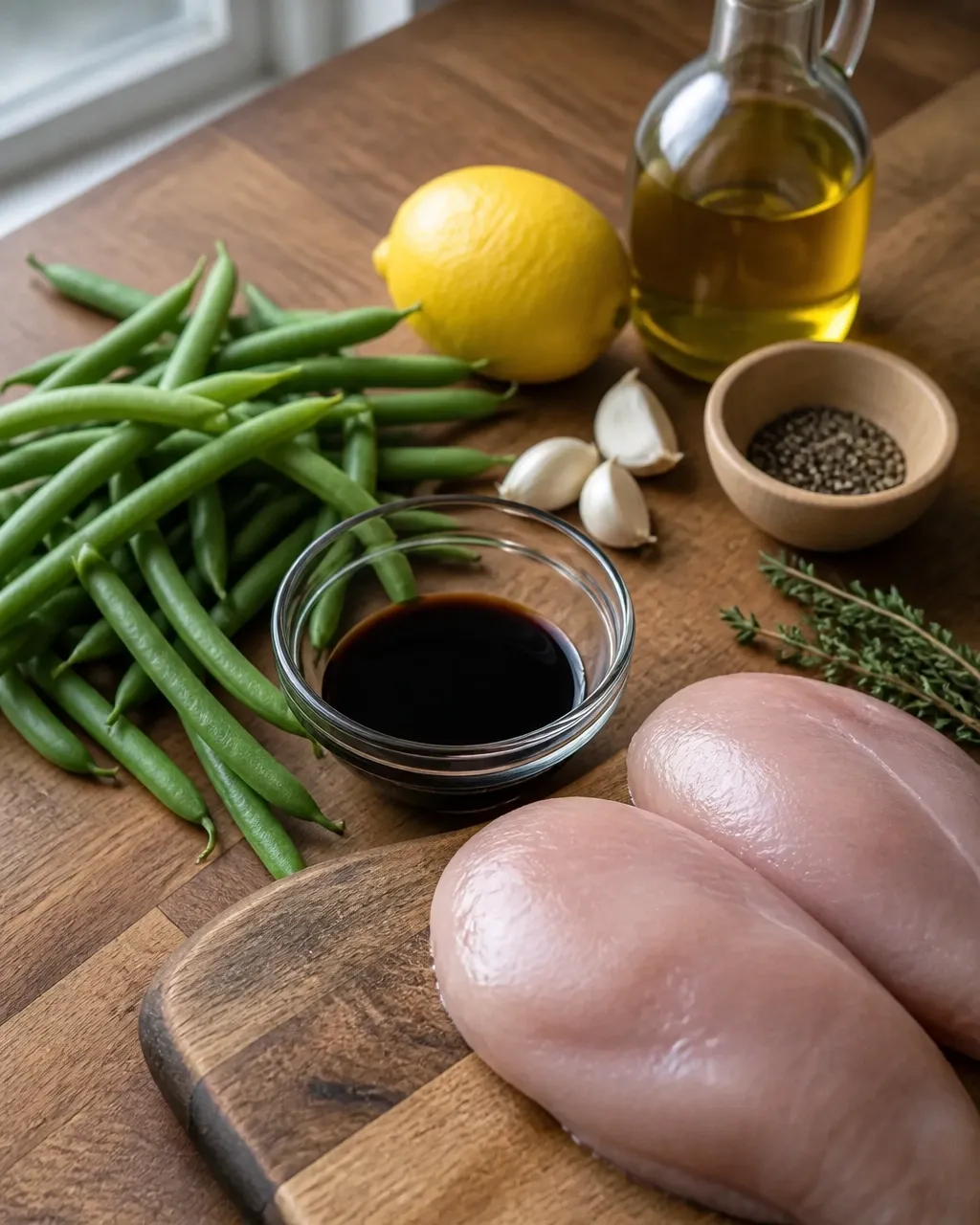
- Chicken
- Beans
- Bread
- Green beans
- Balsamic vinegar
Method
- Pat the chicken dry before cooking and give each piece enough room in the pan.
- Cook in batches if necessary.
- Let it sit against the hot pan long enough to form a proper crust, then turn it.
- Heat changes its personality.
- Lower the heat once the sauce begins to thicken.
- Simmer gently until it coats the chicken rather than trying to reduce it into candy.
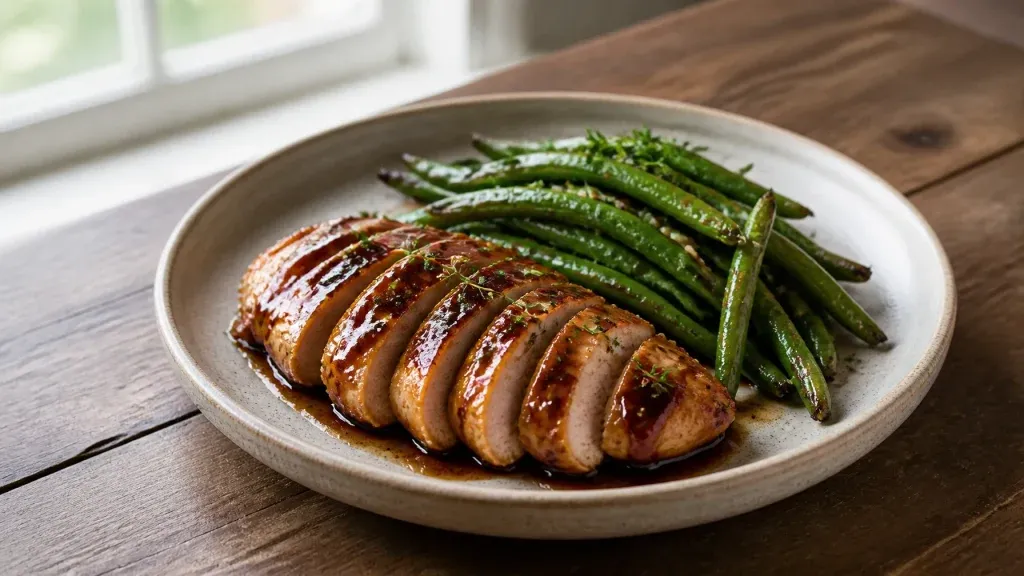
Some dinners need a little more than “throw it in a pan,” but not much more. This balsamic chicken with green beans gives you golden chicken, crisp-tender vegetables, and a tangy glaze without turning the kitchen into a science laboratory, or leaving you with a sink full of dishes. I’ll show you why the cooking order matters, how to keep the glaze from burning, and how to adjust the dish when your fridge has other plans.
Why Browning Comes Before Balsamic
The most important rule is simple: brown the chicken before adding the balsamic mixture.
Chicken develops its deepest savory flavor through the Maillard reaction, the chemical process responsible for the delicious browned crust on seared meat, toasted bread, and roasted vegetables. This reaction needs a hot surface and relatively little moisture. If you add a wet sauce too early, the liquid cools the pan and encourages the chicken to steam instead of brown.
Pat the chicken dry before cooking and give each piece enough room in the pan. Crowding traps steam, which is excellent for dumplings but not for a golden chicken crust. Cook in batches if necessary. A little patience here creates the fond, the browned bits left on the pan, that later dissolves into the sauce and gives it real depth.
Avoid constantly moving the chicken. Let it sit against the hot pan long enough to form a proper crust, then turn it. You are not trying to cook it completely at this stage. You are building flavor and color before the sauce enters the picture.
How Balsamic Vinegar Becomes a Glaze
Balsamic vinegar begins as a sharp, thin liquid. Heat changes its personality. As water evaporates, the vinegar’s acidity and natural sugars become more concentrated. The result is a thicker sauce with a sweeter aroma and a clingy texture.
Scrape the browned bits from the pan as the vinegar mixture warms. Those bits contain concentrated roasted flavors, and the liquid helps lift them from the cooking surface. This is called deglazing, but you can think of it as giving the pan a second job.
Lower the heat once the sauce begins to thicken. Balsamic contains sugar, and any added sweetener intensifies that effect. High heat can take the sauce from glossy to bitter in a remarkably short time. Simmer gently until it coats the chicken rather than trying to reduce it into candy.
Stop slightly before the sauce reaches your ideal thickness. It will continue thickening as it cools, especially once it clings to the warm chicken. If the glaze becomes too sticky, loosen it with a small splash of water or stock. If it looks thin, give it another minute or two over moderate heat.
Give Green Beans Their Own Texture
Green beans bring freshness and a clean vegetal snap to the rich, tangy glaze. Protect that texture by avoiding overcooking.
Add the beans late enough that they remain tender-crisp rather than floppy. If you prefer softer beans, cook them a little longer before the final sauce reduction. For brighter green beans, a brief blanch followed by a quick pan finish works well. The blanching softens the center while the pan adds flavor and a little browning.
Do not drown the beans in sauce from the beginning. Let their natural flavor remain noticeable, then coat them lightly at the end. That contrast is what keeps the dish from tasting heavy.
Use Temperature, Not Guesswork
Chicken is done when the thickest part reaches 165°F (74°C), according to the USDA safe temperature chart. Insert an instant-read thermometer into the thickest section and avoid touching the pan or any bone.
Do not rely on color alone. A piece can look cooked on the outside while remaining undercooked in the center, or appear slightly pink while being perfectly safe. Check the temperature, then rest the chicken briefly before serving. Resting allows the juices to settle, so they are less likely to run across the plate when you slice into it.
For more weeknight inspiration, browse Cookpedia’s chicken recipes, healthy recipes, and 30-minute meals.
Variations That Keep the Balance
Keep the central formula intact: savory chicken, bright acidity, a little sweetness, and a vegetable with bite. Then make small changes rather than rebuilding the whole dinner.
Use chicken thighs. Boneless thighs stay juicy and bring more richness. Their stronger flavor works especially well with balsamic, but they may need a little longer to reach a safe temperature.
Add a sharp finish. Stir in a small squeeze of lemon just before serving. Lemon adds a fresher, higher note than balsamic alone and helps cut through the glaze’s sweetness.
Bring in herbs. Thyme gives the dish a woodsy background, while rosemary makes it bolder. Add fresh herbs near the end for a brighter aroma. Dried herbs can handle longer cooking but taste more concentrated, so use them sparingly.
Make it spicy. Add crushed red pepper or a pinch of chili flakes to the sauce. Heat makes the sweetness feel less pronounced and gives the chicken a livelier finish.
Try the air fryer. For an air fryer recipes dinner variation, cook seasoned chicken separately until it reaches 165°F, then warm it briefly with the balsamic glaze in a skillet. Roast or steam the green beans on the side so they do not become soggy.
Go meat-free. Replace the chicken with thick slices of portobello mushroom or pressed tofu. Sear firmly to create browning, then add the glaze at the end. Tofu needs a dry surface and space in the pan even more than chicken does.
Side Dish Pairings That Add Contrast
This dish already includes protein and a green vegetable, so choose sides that fill a specific role rather than adding more of everything.
Serve it with brown rice, quinoa, or a small portion of crusty bread if you want something to catch the extra glaze. Keep the starch simply seasoned. A heavily spiced side will compete with the balsamic’s sweet-tart character.
For a lighter plate, add a lemony arugula salad. Peppery greens and sharp dressing cut through the glaze and refresh your palate between bites. Thinly sliced cucumber works too, especially with a little vinegar and fresh herbs.
Roasted baby potatoes make the meal more substantial. Season them plainly with olive oil, salt, and pepper so their crisp edges contrast with the tender chicken. If you are building a collection of quick family meals, save this combination for busy nights when everyone needs something familiar but not boring.
You can also borrow ideas from Cookpedia’s simple lemon herb roasted chicken and pair the same fresh, acidic elements with this glazed version.
Frequently Asked Questions
What if my chicken browns too quickly?
Lower the heat and move the chicken to a cooler part of the pan if possible. A dark crust is flavorful; a black crust is not. The sauce will add color later, so do not chase an extremely dark sear. Check that the chicken still reaches 165°F in the thickest part before serving.
What if the balsamic glaze tastes too sour?
Add a small amount of sweetness and let the sauce simmer briefly. Sugar or honey softens acidity, but add it gradually. Also check the balance after the sauce cools slightly, because heat can make acidity taste sharper than it will at the table.
What if the glaze tastes too sweet?
Add a little lemon juice or a splash of balsamic vinegar, then taste again. Salt can also make sweetness feel more balanced, but use it carefully. Do not simply reduce the sauce further; that concentrates the sugar and may make the problem worse.
What if the sauce burns?
Remove the pan from the heat immediately and transfer the chicken to a clean plate. Do not scrape up blackened bits. Wipe out the pan, add fresh sauce, and warm it gently before returning the chicken. Burnt sugar cannot be rescued by optimism, unfortunately.
What if my green beans are still hard?
Add a small splash of water or stock, cover the pan briefly, and let the beans steam. Uncover the pan afterward so excess moisture can evaporate. This works because steam transfers heat efficiently to the beans without requiring you to drown the glaze.
Can I marinate the chicken?
Yes, but keep the chicken refrigerated while it marinates and avoid leaving it in a strongly acidic mixture for too long. Extended exposure can make the outer surface soft or mealy. Never reuse raw-chicken marinade as a finishing sauce unless you boil it thoroughly first.
Can I make this ahead?
Cook the chicken and green beans until just done, then refrigerate them promptly in a covered container. Reheat gently in a skillet with a splash of water. High heat can tighten the chicken and turn the glaze sticky, so warm the leftovers steadily rather than aggressively.
Why does my chicken feel dry?
The usual culprits are overcooking, uneven thickness, or slicing immediately after cooking. Flatten very thick pieces so they cook more evenly, check with a thermometer, and rest the chicken before cutting. A small splash of water can loosen the glaze, but it cannot reverse overcooked meat.
{“@type”:”Article”,”about”:[“Balsamic chicken”,”Green beans”,”Weeknight dinners”,”Cooking science”],”image”:”https://cdn.marblism.com/mivugN1IHmZ.webp”,”author”:{“name”:”Penny”,”@type”:”Person”},”@context”:”https://schema.org”,”headline”:”Healthy Weeknight Dinners: Balsamic Chicken with Green Beans”,”publisher”:{“url”:”https://cookpedia.com”,”name”:”Cookpedia”,”@type”:”Organization”},”mainEntity”:[{“name”:”What if my chicken browns too quickly?”,”@type”:”Question”,”acceptedAnswer”:{“text”:”Lower the heat and move the chicken to a cooler part of the pan. Check that the thickest part reaches 165°F before serving.”,”@type”:”Answer”}},{“name”:”What if the balsamic glaze tastes too sour?”,”@type”:”Question”,”acceptedAnswer”:{“text”:”Add a small amount of sweetness and simmer briefly. Taste again after the sauce cools slightly.”,”@type”:”Answer”}},{“name”:”What if the glaze burns?”,”@type”:”Question”,”acceptedAnswer”:{“text”:”Remove the pan from the heat, transfer the chicken, discard the blackened sauce, and make a fresh glaze over gentle heat.”,”@type”:”Answer”}},{“name”:”Can I marinate the chicken?”,”@type”:”Question”,”acceptedAnswer”:{“text”:”Yes. Keep it refrigerated, avoid excessively long acidic marination, and never reuse raw-chicken marinade unless it is boiled thoroughly.”,”@type”:”Answer”}}],”description”:”Make tender balsamic chicken with crisp green beans for a fast, flavorful weeknight dinner. Learn how browning, reduction, and acidity build the perfect pan sauce.”,”dateModified”:”2026-08-19″,”datePublished”:”2026-08-19″,”mainEntityOfPage”:{“@id”:”https://cookpedia.com/”,”@type”:”WebPage”}}