Recipe
Servings
Servings 1×
Ingredients
- Chicken
- Pasta
- Greek yogurt
- Asparagus
- Onion
- Lemon
- Black pepper
Method
- Keep the technique simple, respect the couscous, and let the pan do most of the talking.
- Give the sausage enough contact with the hot pan to develop golden edges before moving it around too much.
- Use a wide pan and avoid overcrowding it.
- Cook them until they begin to soften, but do not push them all the way to collapse.
- Heat breaks down plant cell walls and softens pectin, the material that helps vegetables hold their shape.
- Season the vegetables while they cook so the flavor spreads through the pan rather than sitting only on the surface.
Some dinners ask for a sink full of cookware and a small emotional support towel. This one does not. Chicken sausage and pepper couscous brings savory sausage, sweet peppers, fluffy grains, and bright finishing flavors together in one pan. It is the sort of meal I turn to when I want something warm and satisfying without turning the kitchen into a culinary crime scene. Keep the technique simple, respect the couscous, and let the pan do most of the talking.
Tips & Technique: Build Flavor Before the Couscous Arrives
Brown the sausage for deeper flavor
Do not rush the browning stage. Give the sausage enough contact with the hot pan to develop golden edges before moving it around too much. That color comes from the Maillard reaction, a series of chemical changes between proteins and sugars that creates toasted, savory flavors.
Browning does more than make the sausage look appetizing. It gives the finished dish a richer base and leaves flavorful browned bits on the bottom of the pan. Those bits are called fond, and they are not burnt clutter. They are concentrated flavor waiting to be loosened by the cooking liquid.
Use a wide pan and avoid overcrowding it. When too many sausage pieces are packed together, moisture gets trapped and the meat steams instead of browning. Steaming is useful for vegetables. It is not the same thing as a proper sear.
If you are using raw chicken sausage, check the thickest piece with a thermometer and cook it to 165°F (74°C). The USDA safe temperature guidance applies to poultry sausage as well as other chicken products. If your sausage is already cooked, browning is mainly a flavor step, but heat it thoroughly before serving.
Let the vegetables soften without disappearing
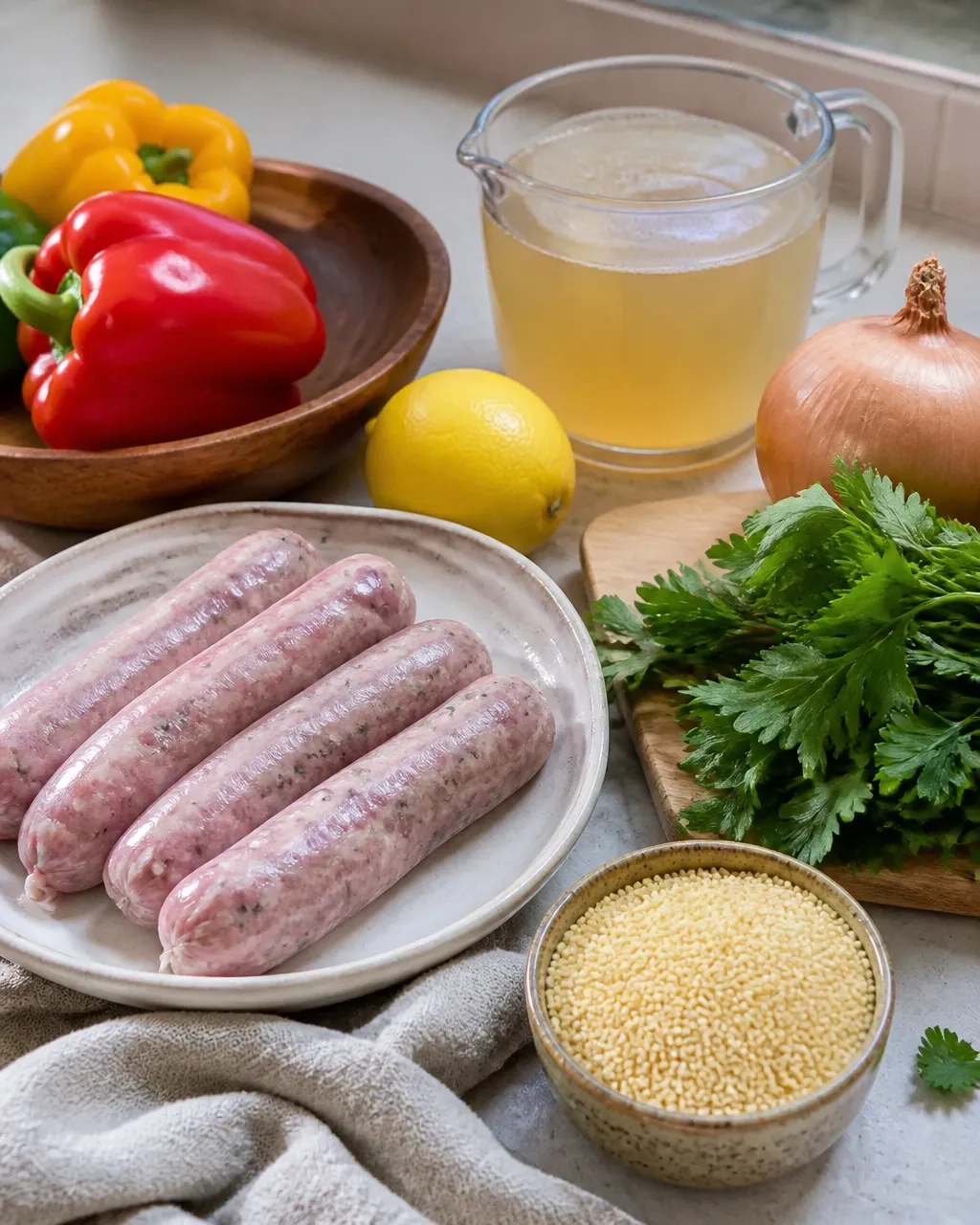
Peppers and onions bring sweetness, aroma, and useful moisture to the pan. Cook them until they begin to soften, but do not push them all the way to collapse. A little structure gives the couscous something to contrast with.
The science here is pleasantly straightforward. Heat breaks down plant cell walls and softens pectin, the material that helps vegetables hold their shape. The longer peppers cook, the more tender they become. Moderate heat gives their natural sugars time to develop without scorching their edges.
Season the vegetables while they cook so the flavor spreads through the pan rather than sitting only on the surface. Add delicate herbs and sharp finishing flavors later. Fresh herbs lose their lift when exposed to prolonged heat, while acidity can become muted if it is cooked too aggressively.
Use couscous like a sponge, not like pasta
Regular couscous is made from tiny granules of semolina. It hydrates quickly because of its small size, which is why it works so well in speedy one-pot meals. It does not need the vigorous boiling treatment that dried pasta does. It needs hot, flavorful liquid and a little quiet time.
Aim for roughly one to one and a quarter parts liquid to one part regular couscous, depending on the pan, the vegetables, and how much moisture the sausage releases. The goal is tender, separate grains rather than a soupy pan or a dry pile of crunchy beads.
Pearl couscous behaves differently. Its larger, rounder pieces need more liquid and longer simmering, closer to the behavior of small pasta. Check the package directions before swapping it into the dish, and expect the texture and cooking time to change.
Add the couscous only when the pan liquid is hot and well seasoned. The grains absorb flavor along with moisture, so bland liquid produces bland couscous. Broth, sausage drippings, softened peppers, and the browned fond should all contribute to the final taste.
Resting creates the right texture
Do not keep stirring once the couscous has hydrated. Excessive agitation can encourage the grains to clump, especially when there is a lot of surface starch in the pan. Cover the pan and let residual heat finish the job.
Resting works because the grains continue absorbing liquid after the heat is turned down or off. This gives the couscous time to swell evenly instead of drying out on the bottom while the top remains firm. Fluff gently with a fork rather than pressing it together with a spoon.
If the couscous is still firm, add a small splash of hot broth or water, cover it again, and wait a few minutes. If it is too wet, uncover the pan briefly over low heat so excess moisture can evaporate. Make small corrections. Do not panic and add a heroic amount of couscous halfway through.
Finish with contrast
Chicken sausage and couscous are savory and comforting, so the final dish benefits from brightness. Lemon juice, fresh herbs, or a spoonful of yogurt can wake up the flavors without making the meal complicated.
Acidity works by balancing richness and sharpening perception. It does not literally remove fat, but it makes a rich dish taste lighter and more focused. Add it near the end so its fresh flavor remains noticeable.
For more one-pot inspiration, browse Cookpedia’s one-pot meals collection, or compare the starch-based technique with our One-Pot Lemon Asparagus Spaghetti.
Variations: Keep the Structure, Change the Mood
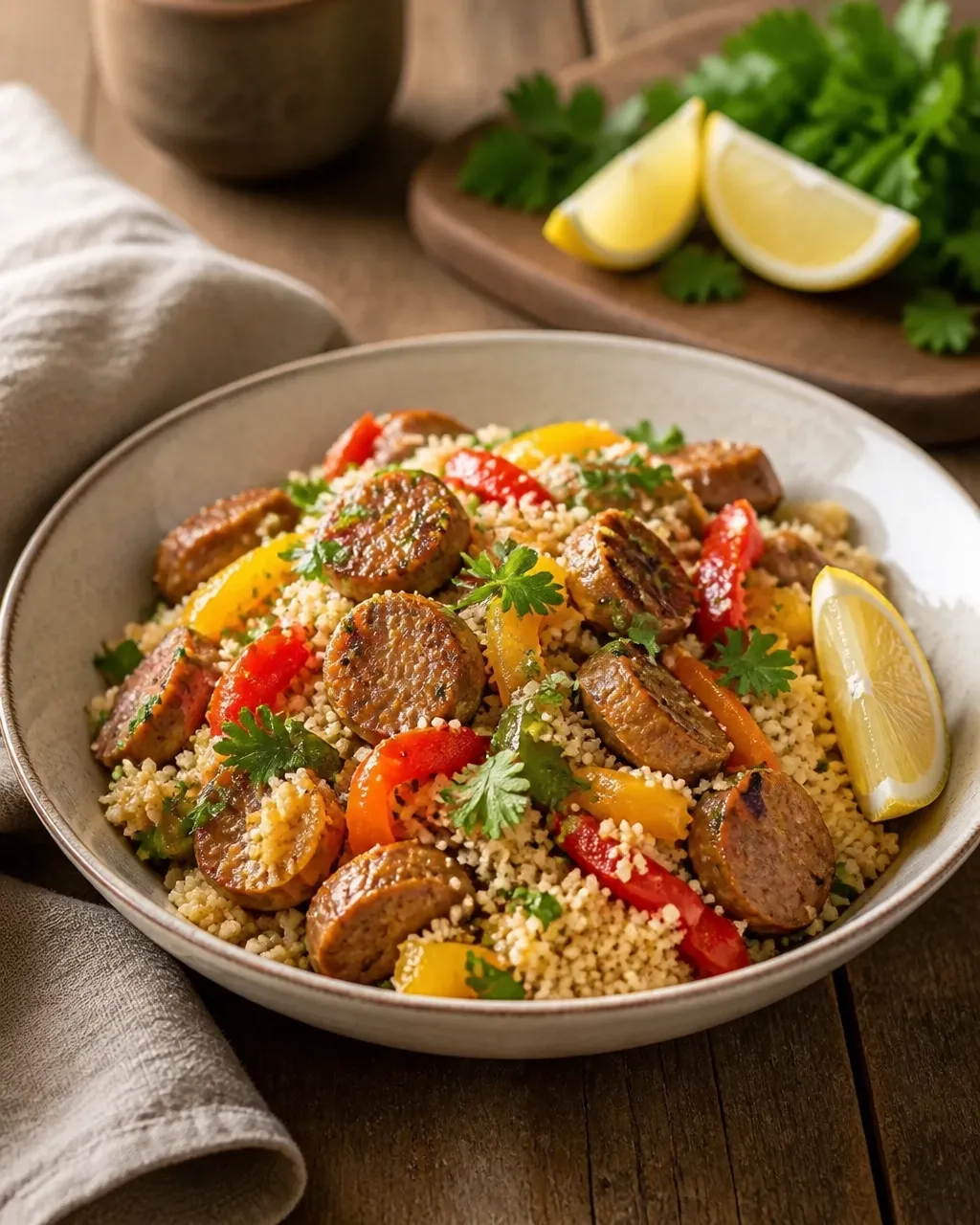
This dish is flexible because its main components each have a clear job: sausage supplies savory depth, peppers bring sweetness, couscous provides a tender base, and a bright finish keeps everything balanced.
For a Mediterranean direction, use chicken sausage with garlic, oregano, lemon, and parsley. Add crumbled feta at the table for a salty, tangy contrast. For a smoky version, choose paprika-forward sausage and add smoked paprika or a pinch of chili flakes. Keep the heat controlled so the peppers still taste sweet.
Make it more vegetable-forward with zucchini, spinach, chopped tomatoes, or green beans. Add firm vegetables early enough to soften, and save quick-cooking greens for the final minutes. This is an easy way to turn the dish into one of my favorite healthy dinner ideas without sacrificing comfort.
Use turkey sausage if you prefer a leaner option, or choose plant-based sausage for a meat-free variation. Check the package before adjusting the liquid, since different products release different amounts of moisture and fat. For gluten-free cooking, replace couscous with a suitable gluten-free grain, but treat it as a new formula rather than a guaranteed one-for-one swap.
Side Dish Pairings: Add Freshness and Crunch
This one-pot meal is substantial enough to stand alone, so choose sides that add contrast rather than more weight.
Serve a crisp green salad with a lemony vinaigrette to cut through the sausage’s richness. Peppery arugula, cucumber, or shaved fennel brings freshness and crunch, while a sharp dressing keeps the couscous from tasting too soft and uniform.
A spoonful of plain yogurt with lemon and herbs also works beautifully. Its cool, tangy texture balances the warm pan without competing with the peppers. If you want more vegetables, serve steamed green beans or lightly dressed shredded cabbage.
For a particularly busy evening, add a piece of toasted flatbread or quick garlic bread. It is not necessary, but it is excellent for collecting the last saucy bits. Save elaborate sides for another day; this belongs in the quick family meals category for a reason.
FAQ: What If the Pan Does Not Behave?
What if my couscous turns out crunchy?
Add a splash of hot broth or water, cover the pan, and let it stand for several minutes. Crunch usually means the grains did not receive enough liquid, heat, or resting time. Avoid adding cold liquid, which lowers the pan temperature and slows hydration.
Also check the type of couscous. Fine couscous hydrates quickly, while pearl couscous needs more liquid and a longer simmer. They may look similar in the cupboard, but they behave very differently once dinner begins.
What if the couscous is mushy?
Mushy couscous usually means there was too much liquid, too much stirring, or too much cooking time. Uncover the pan and let some moisture evaporate over low heat. Then stop stirring and allow the mixture to rest.
Next time, measure the liquid carefully and remember that peppers and onions release their own moisture. Start with a conservative amount; you can add more hot liquid later, but you cannot easily remove absorbed liquid from swollen grains.
Can I use pre-cooked chicken sausage?
Yes. Pre-cooked sausage only needs to brown and heat through, so it can spend less time in the pan than raw sausage. Slice it evenly so the pieces warm at the same rate.
Do not assume raw chicken sausage is safe based on color alone. Use a thermometer and confirm that it reaches 165°F in the center. Keep separate plates and utensils for raw and cooked sausage, and wash any surfaces that contact the uncooked meat.
Why does my dish taste flat?
Flat flavor usually comes from under-seasoned cooking liquid or a missing finishing contrast. Taste the pan before the couscous absorbs everything, then adjust carefully with salt and pepper. Finish with acidity and fresh herbs to sharpen the flavors.
Remember that sausage varies widely in saltiness. Start modestly, especially if the broth is already seasoned, and make the final adjustment after the grains are tender.
Can I prepare this dish ahead of time?
You can prepare it a few hours ahead, but couscous will continue absorbing moisture as it sits. Store it covered in the refrigerator once it has cooled, and reheat it gently with a splash of broth or water.
Avoid blasting it over high heat, which can dry the edges while leaving the center cold. Reheat until steaming hot throughout, then add fresh herbs or lemon just before serving. Those final touches restore the brightness that fades during storage.
Is this a good meal-prep recipe?
It works well for short-term meal prep, especially when stored in individual portions. Keep the couscous slightly loose before chilling, since it will firm up in the refrigerator.
Pack fresh toppings separately when possible. Yogurt, herbs, lemon, and crisp salad components stay fresher when added after reheating. For more practical healthy dinner ideas, explore Cookpedia’s healthy recipe collection and 30-minute meal recipes.
What should I do with leftovers?
Refrigerate leftovers promptly in a shallow container and use them within a few days. Reheat gently with a small amount of broth or water, stirring only enough to distribute the heat.
If the texture has softened overnight, add something fresh and crunchy at serving time. A handful of herbs, sliced cucumber, or a sharp salad can make yesterday’s couscous feel much less like leftovers and much more like a plan.