Recipe
Servings
Servings 1×
Ingredients
- Chicken
- Spinach
- Lemon
- Cream
Method
- Use fresh spinach by wilting it briefly, then cooling and pressing out excess moisture.
- Cut into the thickest side of the breast and create a deep cavity without slicing all the way through.
- Use softened cream cheese so it blends smoothly with the spinach and shredded cheese.
- Give the chicken room in the baking dish.
- Arrange the pieces in a single layer with space between them.
- Use a larger dish if necessary.
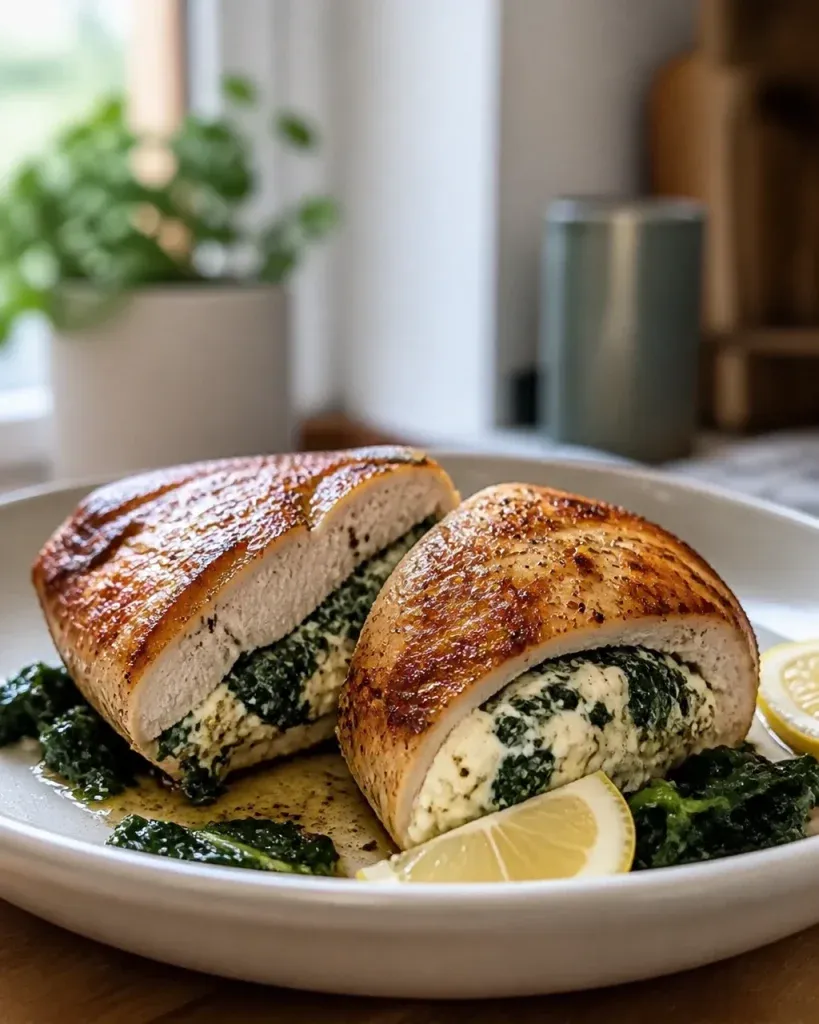
If you are new to keto cooking, start with a dinner that feels generous without demanding restaurant-level skills. These cheesy spinach stuffed chicken breasts bring together tender chicken, creamy cheese, and savory greens in one satisfying dish. The technique is simple, but a few details are non-negotiable: control moisture, avoid overfilling, and check the center with a thermometer. Do that, and dinner becomes wonderfully reliable.
Tips & Technique: Control Moisture Before You Chase Flavor
The biggest challenge with stuffed chicken is not the filling. It is moisture management.
Spinach contains a surprising amount of water, especially after heating. If that moisture stays in the filling, it can loosen the cheese mixture, leak into the pan, and create a watery pocket inside the chicken. The filling may still taste good, but the texture will be sloppy rather than creamy.
Use fresh spinach by wilting it briefly, then cooling and pressing out excess moisture. If you use frozen spinach, thaw it completely and squeeze it firmly. Treat this as a rule, not a suggestion. A damp filling is the fastest route to disappointing stuffed chicken.
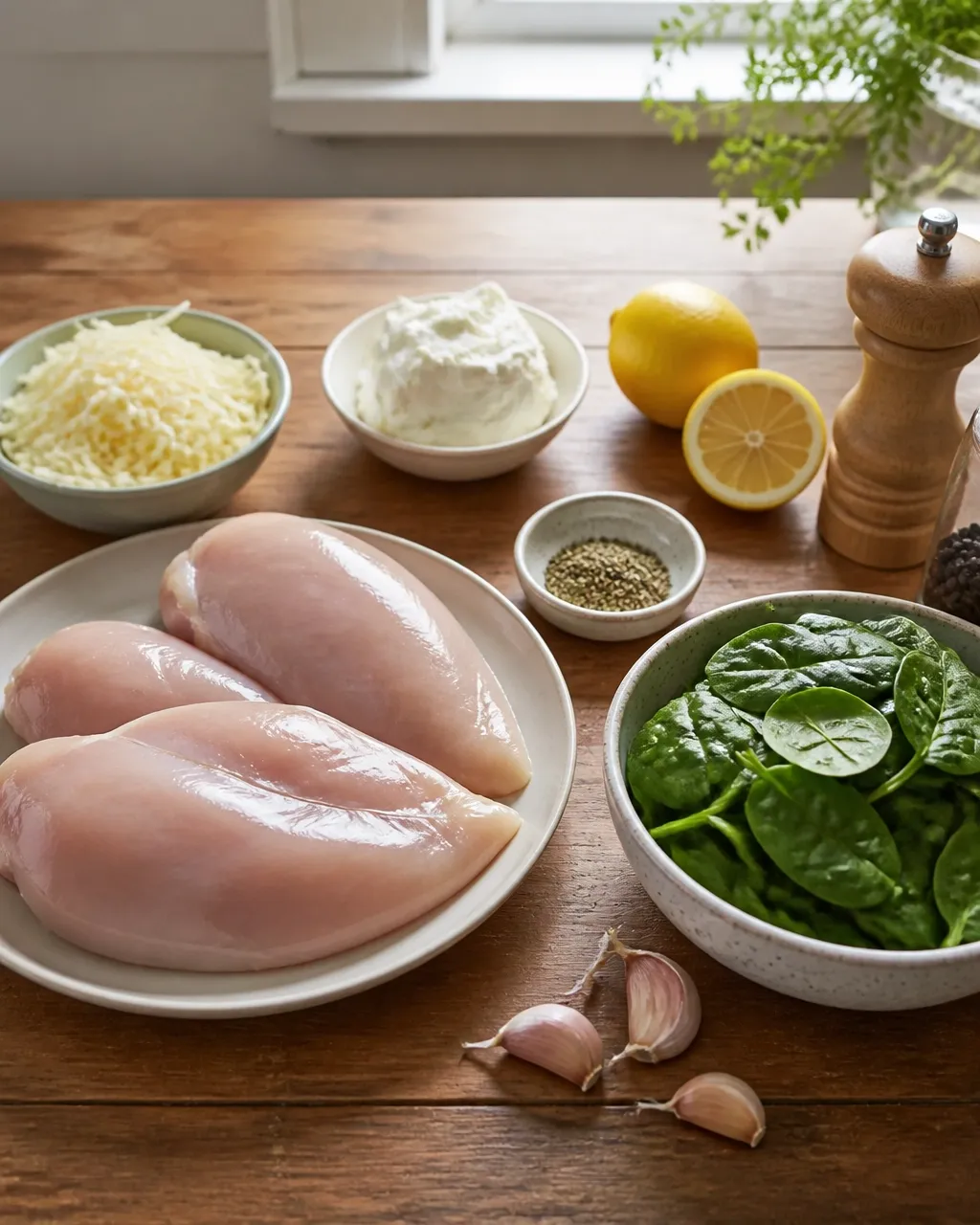
The chicken pocket matters, too. Cut into the thickest side of the breast and create a deep cavity without slicing all the way through. Think of it as making a little envelope rather than splitting the breast into two separate pieces. Leave enough structure around the edges to keep the filling contained.
Avoid overstuffing. Cheese expands and softens as it heats, while the chicken contracts slightly as its proteins tighten. If you pack the pocket too full, those two forces work against each other. The chicken can split, the filling can escape, and the center may cook unevenly. Leave a little breathing room. Generosity is lovely; structural collapse is less so.
Use softened cream cheese so it blends smoothly with the spinach and shredded cheese. Cold cream cheese tends to remain in stubborn lumps, which means the filling will heat unevenly. A smooth mixture distributes fat and moisture more consistently, giving you a creamy center instead of random pockets of melted cheese.
The cheese also helps bind the filling. As it warms, the dairy fats melt and the proteins create structure around the spinach. Do not expect the filling to become completely firm in the oven. It should remain soft and spoonable, with enough body to stay inside the chicken once rested.
Dry the outside of the chicken before seasoning it. Surface moisture must evaporate before browning can begin. If the breasts are wet, the first stage of cooking becomes steaming. Steaming is useful for vegetables, but it does not create the golden, savory flavor you want here.
Give the chicken room in the baking dish. Crowding traps steam and lowers the surrounding heat, which can leave the meat pale and encourage more liquid to collect in the pan. Arrange the pieces in a single layer with space between them. Use a larger dish if necessary. Your chicken does not need personal space emotionally, but it does need it thermally.
Browning comes from the Maillard reaction, which occurs when amino acids and sugars react under sufficient heat. This creates the deeper roasted flavors associated with golden chicken. You do not need a dramatic crust, but you should aim for visible color on the outside. Pale chicken is not automatically unsafe, but it usually means you have missed an easy opportunity for flavor.
The most important safety point is temperature. Stuffed chicken needs to reach 165°F (74°C) in the thickest part of the meat and in the center of the filling. Insert an instant-read thermometer from the side so the tip reaches the middle of the pocket. Do not rely on cooking time, surface color, or the hope that everything is probably fine. Chicken breasts vary too much in thickness for the clock to be in charge.
Rest the chicken for several minutes before slicing. Heat continues moving inward after the dish leaves the oven, while the juices redistribute through the meat. Slice immediately and those juices rush onto the plate. Wait briefly and the chicken stays more succulent. Use the resting time to prepare the salad or gather the forks everyone suddenly needs.
For another straightforward chicken method, browse Cookpedia’s chicken recipe collection or compare the moisture-control principles with our baked lemon herb chicken breasts.
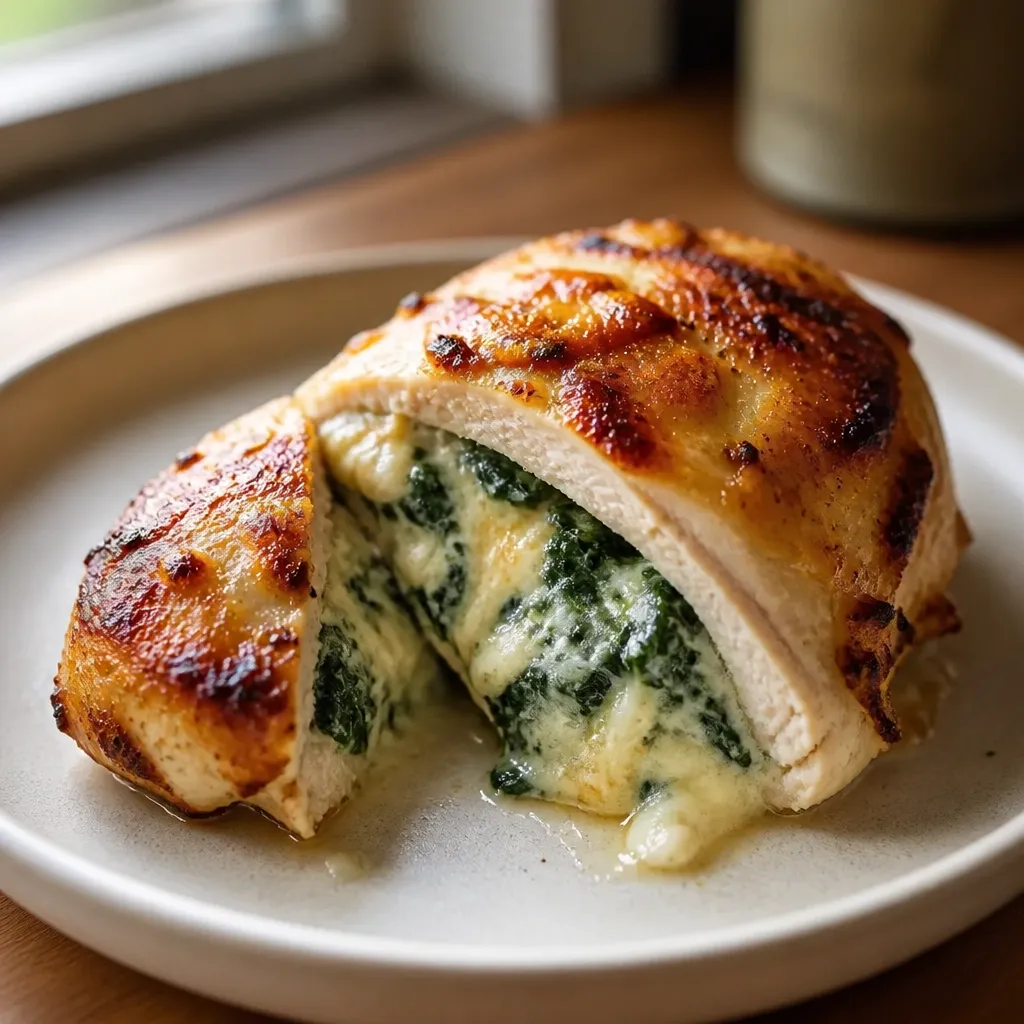
Variations: Keep the Creamy Center, Change the Personality
Use the basic spinach-and-cheese structure as your starting point, then adjust the flavor profile.
Add chopped mushrooms for a deeper, earthier filling, but cook them first until their moisture has evaporated. Raw mushrooms release water as they heat, and that liquid can make the pocket loose. The same rule applies to zucchini and other watery vegetables.
Use feta in place of some of the mozzarella for a saltier, tangier center. Feta does not melt as smoothly, so combine it with a softer cheese to keep the filling cohesive. Add lemon zest or fresh parsley to stop the mixture from tasting too heavy.
Try a spicy version with red pepper flakes, chopped jalapeño, or a little smoked paprika. Add heat carefully. Creamy cheese softens the perception of spice, so the filling may taste mild at first and much hotter once you take a proper bite.
For a more Mediterranean direction, add oregano, garlic, olives, or a small amount of sun-dried tomato. Drain oil-packed tomatoes well and chop them finely. Their concentrated sweetness and acidity balance the richness beautifully.
You can also swap chicken breast for thinner cutlets and fold them around the filling. This creates smaller portions and reduces cooking time, but the edges may need toothpicks to stay closed. Remove every toothpick before serving. Consider that your final quality check.
These variations fit neatly into a rotation of quick family meals because they use the same core method. Change the seasoning, not the science.
Side Dish Pairings: Add Brightness and Crunch
Stuffed chicken is rich and soft, so pair it with sides that bring freshness, acidity, or texture.
A crisp green salad with lemon vinaigrette is the easiest match. The acid cuts through the creamy filling, while peppery greens keep the plate lively. Add cucumber or radishes for a cool crunch.
Roasted broccoli works especially well because its browned edges echo the chicken while its slight bitterness balances the cheese. Finish it with lemon rather than more butter. You already have enough richness on the plate.
For a lighter keto option, serve the chicken with sautéed green beans, asparagus, or cauliflower rice. Keep the seasoning simple so the side supports the main dish instead of starting a small culinary argument.
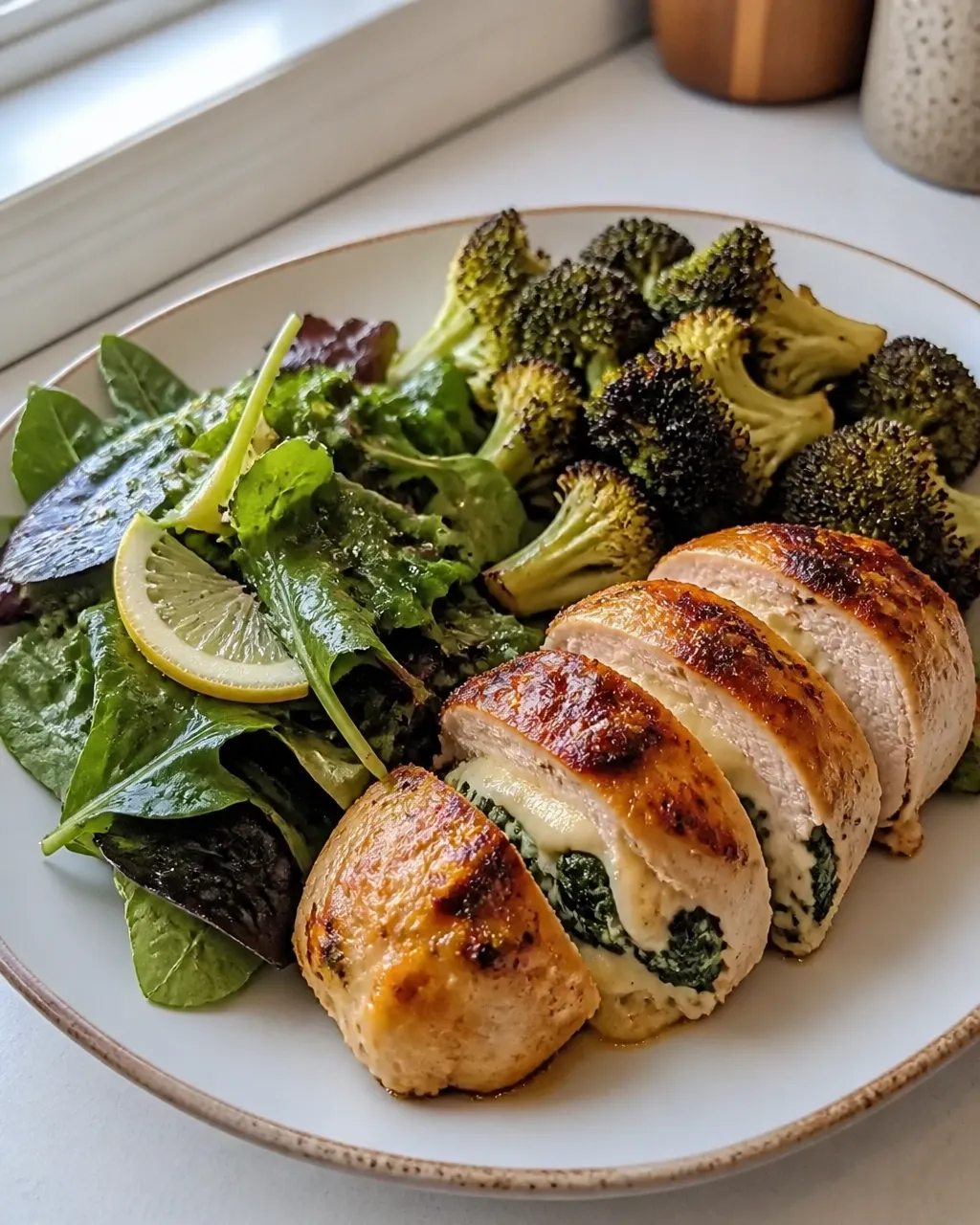
If you want an especially fast vegetable side, Cookpedia’s healthy recipes and 15-minute meals offer useful inspiration. Keep the balance in mind: creamy chicken needs something crisp, sharp, or green beside it.
FAQ: What If the Chicken Does Not Go to Plan?
What if the filling leaks out?
The pocket may be overfilled, cut too close to the edges, or left unsecured. Use less filling next time and leave a border of chicken around the opening. If the pocket still wants to spring open, secure it with a toothpick.
A little cheese escaping is not a disaster. It will brown in the pan and become an excellent bonus. The real problem is a completely open pocket that leaves the center exposed and makes the chicken cook unevenly.
What if my filling is watery?
The spinach probably retained too much moisture. Press fresh wilted spinach firmly, or squeeze thawed frozen spinach in a clean towel. Also check the other ingredients. Mushrooms, zucchini, and sun-dried tomatoes can all contribute liquid.
If the mixture is already loose, stir in a little more shredded cheese and chill it briefly before stuffing. Do not compensate with a large amount of cream cheese alone. That may make the filling heavier without solving the moisture problem.
What if the chicken is browned outside but raw inside?
The breasts are likely too thick, the oven may be running cool, or the pan may be crowded. Continue cooking until the thickest part and the center of the stuffing reach 165°F.
Do not cut into the chicken repeatedly to check. Each cut releases juices and gives you unreliable information. Use a thermometer from the side and test the largest breast.
What if the chicken is dry?
Overcooking is the usual culprit. Chicken breast contains little fat, so its proteins tighten quickly once they pass the ideal temperature. Begin checking early, especially when the breasts are small or uneven.
Resting helps retain juices, but it cannot reverse severely overcooked meat. Slice dry leftovers thinly and serve them with salad dressing, pan juices, or a creamy low-carb sauce.
Can I use frozen spinach?
Yes, and it is convenient. Thaw it fully first, then squeeze out as much water as possible. Frozen spinach is often easier to over-wet because thawing releases trapped ice crystals into the bowl.
Do not mix hot spinach directly with cream cheese. Let it cool slightly so it does not thin the cheese mixture or create an uneven filling.
Can I prepare the chicken ahead of time?
Prepare the filling and cut the pockets several hours ahead, then store everything covered in the refrigerator. Stuff the chicken shortly before baking if possible. Keep raw chicken chilled and avoid leaving it at room temperature for an extended period.
You can also season the chicken ahead, but keep the filling separate until you are ready to cook. This gives you better control over texture and reduces the chance of the spinach mixture becoming watery.
Can I cook this in an air fryer?
You can, particularly with smaller chicken breasts or cutlets. Use a suitable temperature for your appliance, avoid crowding the basket, and check the thickest part early. Fast-moving hot air encourages browning but can dry lean chicken quickly.
The same rule applies to many air fryer recipes dinner ideas: use the appliance for speed, but use the thermometer for certainty.
How should I store and reheat leftovers?
Cool the chicken promptly and refrigerate it in a sealed container. Use leftovers within three to four days for the best quality. Reheat gently in a covered skillet or moderate oven with a small splash of broth.
Avoid blasting the chicken at high microwave power. Rapid reheating pushes more moisture out of the proteins and can make the filling oily. Warm one portion at a time and stop as soon as it is heated through.
Is this a complete keto meal?
The chicken and spinach filling is generally low in carbohydrates, but exact nutrition depends on the cheese, seasonings, and sides you choose. Check labels if you track carbs closely, especially for flavored cream cheese or prepared sauces.
Serve it with non-starchy vegetables and an acidic salad for a balanced plate. These are practical healthy dinner ideas because they provide protein, satisfying fat, and vegetables without requiring complicated substitutions.
Start with the moisture control, use a thermometer, and resist the urge to overfill. Those are the non-negotiables. Once you have them down, this cheesy spinach stuffed chicken belongs among your most dependable quick family meals.