Recipe
Servings
Servings 1×
Ingredients
- Chicken
- Potatoes
- Garlic
- Lemon
- Cooking oil
Method
- Use a properly heated oven and a broad metal pan.
- Cut the potatoes into similar-sized pieces, and give them a head start when needed.
- Use both, but understand their jobs.
- Keep the final squeeze of lemon for the end if you want the brightest flavor.
- Use a thermometer and check the thickest part of the chicken.
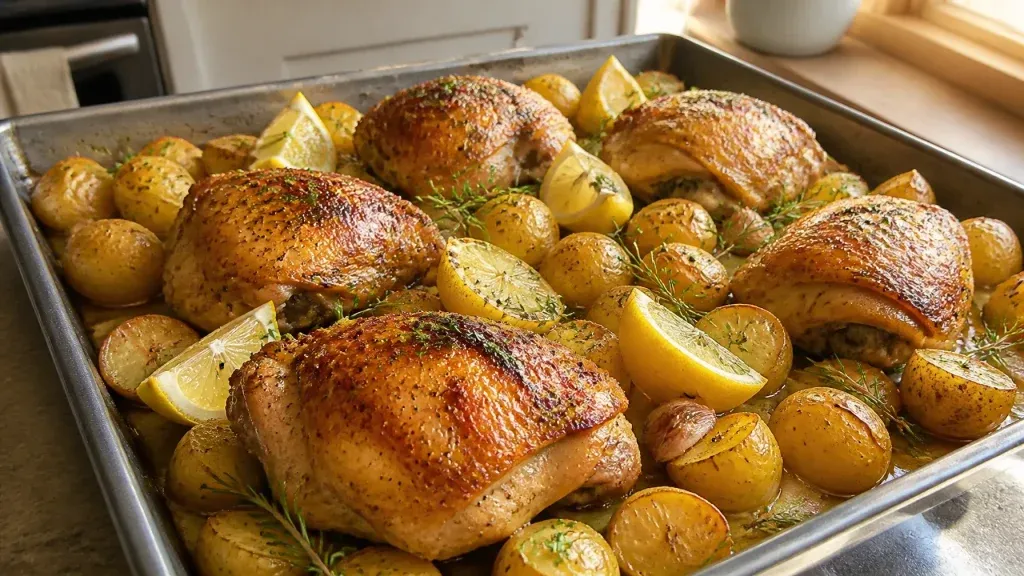
Some dinners ask for every pan in the kitchen. This one asks for one. My lemon garlic chicken with potatoes brings together crisp edges, juicy chicken, mellow roasted garlic, and bright lemon flavor without turning a weeknight into a kitchen marathon. It belongs right alongside my other easy dinner recipes, especially when you want real food with very little fuss and absolutely no mountain of washing-up.
Tips & Technique: Make One Pan Work Harder
The best one-pan meals are not simply ingredients thrown together and sent into the oven with crossed fingers. Treat the pan like a small cooking system. Manage heat, moisture, and space, and the chicken and potatoes will finish with the textures they actually deserve.
Start with high heat for better browning
Use a properly heated oven and a broad metal pan. High heat helps the surface of the chicken and potatoes dry quickly, which allows browning to begin. Browning is more than a pretty tan. It comes from the Maillard reaction, a series of chemical reactions between proteins and sugars that creates roasted, nutty, savory flavors.
Do not crowd the pan. Leave small gaps around the chicken and potatoes so hot air can circulate and moisture can escape. Pack everything tightly, and the ingredients will steam instead of roast. Steamed potatoes are soft and polite. Roasted potatoes have opinions.
Give the potatoes a timing advantage
Chicken and potatoes do not cook at the same speed. Potatoes are dense and need time for their starches to soften. Chicken, particularly boneless breast meat, can reach a safe temperature long before potatoes become tender.
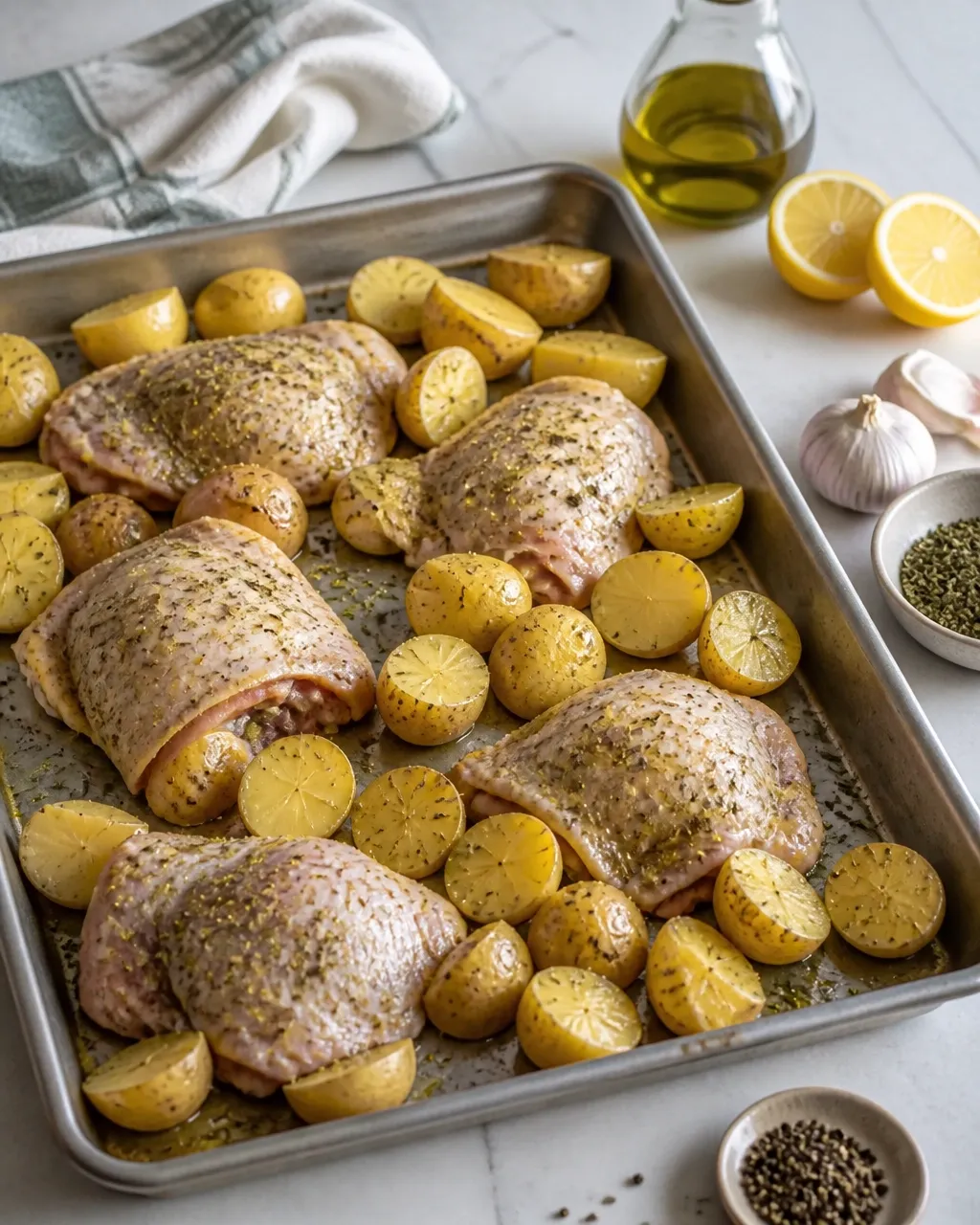
Cut the potatoes into similar-sized pieces, and give them a head start when needed. This lets their centers soften while their exposed edges begin to brown. The science is straightforward: heat must travel from the outside toward the center, and smaller, evenly sized pieces shorten that journey.
If you use bone-in thighs, the timing is more forgiving. Their extra fat and connective tissue help them stay succulent during the longer roasting period. If you use chicken breasts, watch them more closely and rely on a thermometer rather than the clock.
Use lemon in layers, not just one big splash
Lemon juice provides acidity, which cuts through the richness of chicken and olive oil. It makes the finished dish taste lighter and sharper. Lemon zest contributes a different kind of flavor: aromatic citrus oils that cling to the surface and release a stronger lemon fragrance as the dish roasts.
Use both, but understand their jobs. Juice brings brightness and moisture. Zest brings perfume. Lemon wedges or slices add visual appeal and release flavor gradually, but avoid laying them directly over the chicken skin. They can trap steam and stop the surface from crisping.
Keep the final squeeze of lemon for the end if you want the brightest flavor. Acidity becomes softer and less noticeable as it cooks, so a fresh finish wakes up the whole pan.
Protect garlic from bitter heat
Garlic becomes sweeter and more rounded as it roasts, but finely minced garlic can burn when exposed to direct, dry heat. Burnt garlic tastes bitter quickly, and it is remarkably good at taking over the entire dinner.
Coat the garlic in oil or tuck larger pieces among the potatoes. The oil and surrounding food moderate the heat and help the garlic soften instead of scorch. As it cooks, the sharp sulfur compounds mellow, creating the gentle roasted-garlic flavor that makes this dish taste more complex than its short ingredient list suggests.
Keep the chicken juicy with temperature control
Use a thermometer and check the thickest part of the chicken. The safe target is 165°F (74°C). Avoid cutting into the chicken repeatedly to check for doneness. Every incision releases juices, and the thermometer gives you a more reliable answer with less damage.
Bone-in dark meat can remain tender at a slightly higher temperature because its connective tissue breaks down during cooking. Chicken breast is leaner and less forgiving, so remove it as soon as it reaches the safe target and let it rest briefly before serving.
Resting matters. It gives the meat’s juices time to redistribute instead of running straight onto the cutting board. Do not skip this small pause, even when everyone is standing nearby asking whether dinner is ready.
Let the pan juices become part of the sauce
As the chicken roasts, its fat and juices mingle with lemon, garlic, herbs, and potato starch. That flavorful liquid is not a by-product to ignore. Spoon it over the finished meal.
If the pan looks dry early in cooking, check the oven temperature and avoid opening the door repeatedly. If it looks watery, the pan may be crowded or the ingredients may have released more moisture than expected. Continue roasting uncovered so evaporation can concentrate the flavor.
For more reliable results, use the exact quantities and timing in the recipe card. The non-negotiables are simple: preheat fully, keep the pan spacious, cut potatoes evenly, and check the chicken with a thermometer.
Variations: Keep the Balance, Change the Mood
This recipe is flexible, but make changes with balance in mind. Add vegetables that can handle roasting, such as carrots, red onion, broccoli, or green beans. Add sturdy vegetables earlier and tender ones later so everything keeps a little character instead of becoming one soft, anonymous pile.
Swap the herbs to shift the personality. Rosemary makes the dish woodsy and bold, while oregano gives it a Mediterranean feel. Thyme is softer and especially good with lemon. Use smoked paprika for warmth, or add a pinch of chili flakes when you want the garlic and lemon to come with a little spark.
For a lighter plate, replace part of the potatoes with cauliflower or extra green vegetables. You will lose some crisp starch, but the roasted edges still provide plenty of flavor. For a heartier version, use sweet potatoes, keeping the pieces slightly larger because they soften faster than many waxy potatoes.
Chicken thighs are my first choice for juicy, low-stress results. Chicken breasts work well too, but reduce their cooking time and avoid treating them like thighs. For an air fryer fan, the flavor profile can inspire your air fryer recipes dinner rotation, although the pan method is better when you want potatoes and chicken cooking together with shared juices.
Side Dish Pairings: Add Freshness and Crunch
This dinner already brings protein, starch, fat, acidity, and plenty of savory flavor. Pair it with something fresh rather than adding another rich side.
Serve a crisp green salad with a sharp lemon or vinegar dressing. The acidity cuts through the roasted chicken and keeps the potatoes from feeling heavy. Add cucumber, radish, or crunchy cabbage for contrast.
Steamed green beans, asparagus, or broccoli also work beautifully. Keep them simply seasoned so they do not compete with the lemon garlic pan juices. A spoonful of plain yogurt with lemon zest makes a cool, creamy counterpoint if you want a small sauce on the side.
For quick family meals, this combination is especially useful because the side can stay simple. Let the sheet pan do the soulful work, then add one bright vegetable and call dinner complete.
FAQ: Troubleshoot the Roast
What if the potatoes are still hard when the chicken is done?
Remove the chicken and let it rest while the potatoes continue roasting. Potatoes need more time for their starches to soften, while chicken can dry out if you keep cooking it simply to finish the side dish. Spread the potatoes out if possible and return them to the hot oven until a fork slides through easily.
What if the chicken is cooked but the skin is not crisp?
Check whether the chicken is sitting in liquid or covered by lemon slices. Moisture prevents browning, so move the chicken skin-side up to a drier part of the pan. Roast uncovered, and use a short broil at the end if needed. Watch carefully because the difference between beautifully browned and burnt can be only a minute or two.
What if the garlic tastes bitter?
The garlic probably burned. Very small pieces exposed to intense heat can darken quickly, especially around the edges of a metal pan. Use larger pieces next time, coat them in oil, or nestle them beneath the potatoes. If only a little garlic is bitter, brighten the finished dish with lemon and fresh herbs; if the whole pan tastes acrid, do not try to hide it under more seasoning.
Can I marinate the chicken overnight?
Use caution with a strongly acidic marinade. Lemon juice mostly flavors the surface, and extended exposure can make the outer texture soft or slightly chalky, especially with chicken breasts. A short marinating period is usually enough. If you want to prepare ahead, season the chicken and keep the lemon juice for closer to cooking time.
Why did everything steam instead of roast?
The pan was likely too crowded, the ingredients were wet, or the oven was not fully preheated. Dry the chicken and potatoes well, use a larger pan, and leave space between pieces. Avoid covering the pan, because trapped steam keeps surfaces moist and delays browning. These small changes make a surprisingly big difference.
Can I use frozen potatoes or frozen vegetables?
Frozen potatoes usually release extra moisture and may not develop the same crisp edges. Fresh potatoes give more dependable results. Frozen vegetables can work, but add them later so they do not waterlog the pan or become overcooked. Pat thawed vegetables dry when possible.
How should I store and reheat leftovers?
Cool leftovers promptly and refrigerate them in a covered container. Reheat the chicken and potatoes in a hot oven or air fryer so the surfaces can dry and crisp again. A microwave is convenient, but it softens the potatoes because it heats their internal water quickly. Add fresh lemon after reheating to restore brightness.
Is this a balanced dinner?
It can be. The chicken provides protein, potatoes bring satisfying carbohydrates, and the cooking method uses a modest amount of olive oil rather than a heavy sauce. Add a green vegetable or salad for more fiber and freshness. The recipe fits comfortably among practical healthy dinner ideas because it focuses on simple whole foods without asking you to sacrifice flavor.
Can I make it dairy-free or gluten-free?
Yes. The dish naturally avoids dairy and gluten as long as your seasonings and prepared stock, if used, are certified accordingly. Check labels carefully, especially with packaged broth or spice blends. The lemon, garlic, herbs, and roasting process provide enough flavor that you do not need creamy additions.
For more practical healthy dinner ideas, browse Cookpedia’s healthy recipes, chicken recipes, and one-pot meals. Keep the pan hot, give every ingredient room, and let simple food do what it does best: make dinner feel easy.
{“@graph”:[{“@type”:”Article”,”image”:”https://cdn.marblism.com/VzIPne-sRYX.webp”,”author”:{“name”:”Penny”,”@type”:”Person”},”headline”:”Healthy Weeknight Dinners: One-Pan Lemon Garlic Chicken with Potatoes”,”keywords”:[“air fryer recipes dinner”,”quick family meals”,”healthy dinner ideas”,”one-pan lemon garlic chicken”,”roasted chicken with potatoes”],”publisher”:{“url”:”https://cookpedia.com”,”name”:”Cookpedia”,”@type”:”Organization”},”description”:”Make juicy lemon garlic chicken with crisp roasted potatoes in one pan. Learn the simple science behind browning, timing, and balanced flavor.”,”dateModified”:”2026-08-19T17:00:00-05:00″,”datePublished”:”2026-08-19T17:00:00-05:00″,”articleSection”:[“Tips & Technique”,”Variations”,”Side Dish Pairings”,”FAQ”],”mainEntityOfPage”:{“@id”:”https://cookpedia.com/healthy-weeknight-dinners-one-pan-lemon-garlic-chicken-with-potatoes/”,”@type”:”WebPage”}},{“@type”:”FAQPage”,”mainEntity”:[{“name”:”What if the potatoes are still hard when the chicken is done?”,”@type”:”Question”,”acceptedAnswer”:{“text”:”Remove the chicken and let it rest while the potatoes continue roasting. Spread the potatoes out if possible and return them to the hot oven until a fork slides through easily.”,”@type”:”Answer”}},{“name”:”What if the chicken is cooked but the skin is not crisp?”,”@type”:”Question”,”acceptedAnswer”:{“text”:”Move the chicken skin-side up to a drier part of the pan, roast uncovered, and use a short broil at the end if needed. Watch carefully to prevent burning.”,”@type”:”Answer”}},{“name”:”Can I marinate the chicken overnight?”,”@type”:”Question”,”acceptedAnswer”:{“text”:”Use caution with a strongly acidic lemon marinade. A short marinating period is usually enough, while extended exposure can make the outer texture soft or chalky, especially with chicken breasts.”,”@type”:”Answer”}},{“name”:”Why did everything steam instead of roast?”,”@type”:”Question”,”acceptedAnswer”:{“text”:”The pan was likely too crowded, the ingredients were wet, or the oven was not fully preheated. Dry the ingredients, use a larger pan, leave space between pieces, and avoid covering the pan.”,”@type”:”Answer”}},{“name”:”How should I store and reheat leftovers?”,”@type”:”Question”,”acceptedAnswer”:{“text”:”Cool leftovers promptly and refrigerate them in a covered container. Reheat the chicken and potatoes in a hot oven or air fryer to help the surfaces crisp again.”,”@type”:”Answer”}},{“name”:”Is this a balanced dinner?”,”@type”:”Question”,”acceptedAnswer”:{“text”:”It can be. Chicken provides protein, potatoes provide carbohydrates, and the dish uses a modest amount of olive oil. Add a green vegetable or salad for more fiber and freshness.”,”@type”:”Answer”}}]}],”@context”:”https://schema.org”}