Recipe
Servings
Servings 1×
Ingredients
- Chicken
- Pork
- Garlic
- Lemon
- Honey
- Mustard
Method
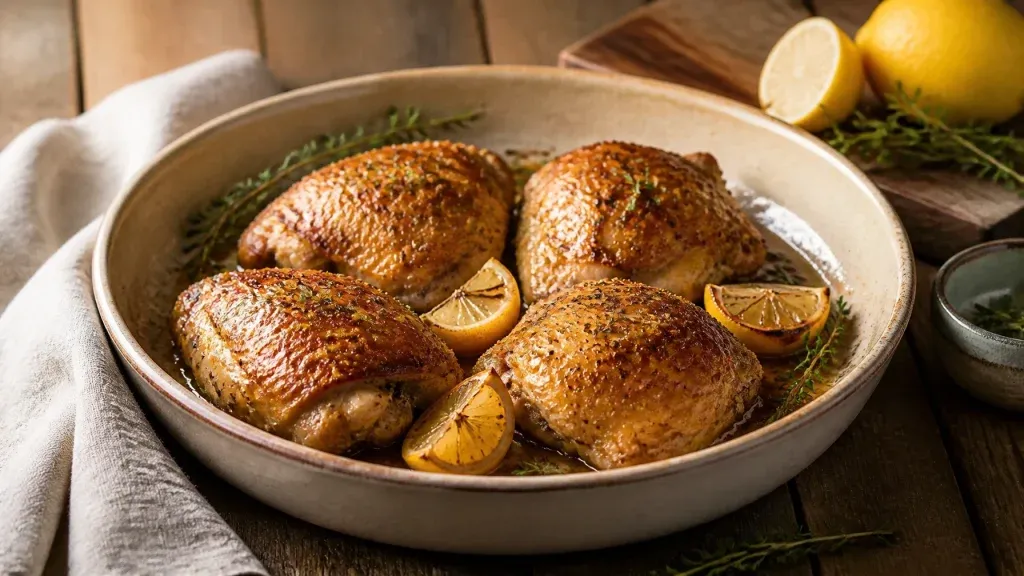
- Give them dry skin, high heat, and a honey mustard glaze added at the right moment, and you get juicy dark meat with crisp edges and a sticky, savory-sweet finish.
- Keep the technique in mind, and this recipe will become one of your most dependable chicken dinner ideas .
- Start with bone-in, skin-on thighs when crispness is the goal.
- Pat the chicken thoroughly dry before seasoning.
- Use a roasting pan or oven-safe skillet that gives each thigh breathing room.
- Let the skin render and brown first, then brush on a thinner coating toward the end.
A Sweet, Tangy Chicken Dinner That Actually Delivers
Chicken thighs are wonderfully forgiving, but forgiving does not mean careless. Give them dry skin, high heat, and a honey mustard glaze added at the right moment, and you get juicy dark meat with crisp edges and a sticky, savory-sweet finish.
This is exactly the kind of dinner I want on a busy evening: simple enough for a weeknight, flavorful enough to feel special, and built from real food rather than a cupboard full of mysterious powders. Keep the technique in mind, and this recipe will become one of your most dependable chicken dinner ideas.
Tips & Technique: The Science of Crisp Skin and Better Glaze
Dry the Skin Because Moisture Is the Enemy
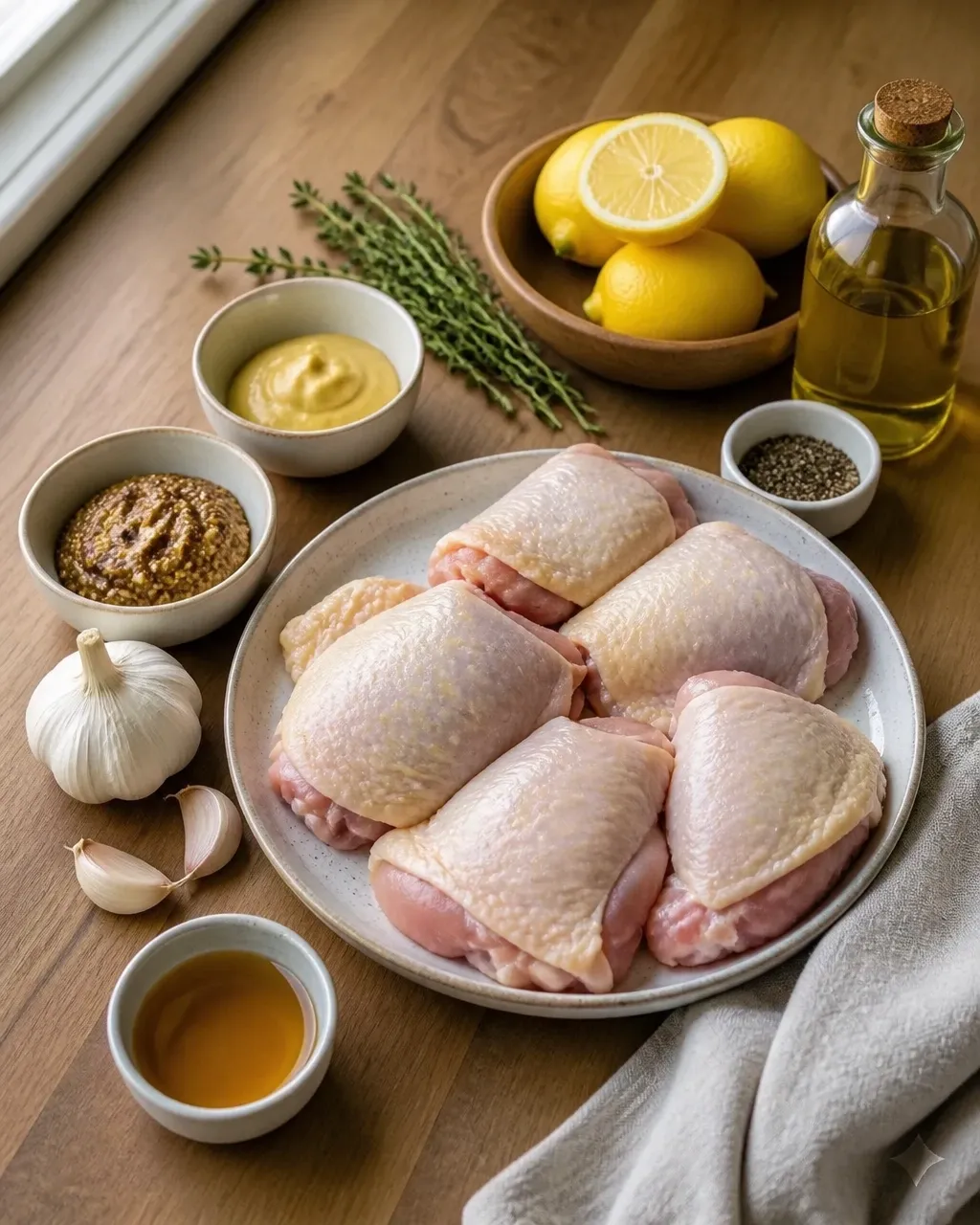
Start with bone-in, skin-on thighs when crispness is the goal. The skin contains fat and connective tissue that can render beautifully in the oven, but surface moisture gets in the way.
Pat the chicken thoroughly dry before seasoning. Water must evaporate before the skin can become hot enough to brown, and evaporation consumes energy. A damp surface spends too long steaming. A dry surface gets straight to the delicious business of rendering fat and developing color.
Do not cover the chicken while it roasts. Trapped steam softens the skin, undoing all your careful drying. If you have time, leave the seasoned thighs uncovered in the refrigerator for an hour or two. This gently dries the surface further and allows the seasoning to work its way into the outer layer.
Give the Chicken Space to Brown
Use a roasting pan or oven-safe skillet that gives each thigh breathing room. Crowding creates a humid little chicken sauna, and steam is excellent for tenderness but poor at producing crisp edges.
Space also helps heat circulate evenly. If the thighs overlap, one piece may brown while another quietly simmers in its own juices. A few unevenly browned spots are completely normal and much more believable than identical golden surfaces. Home cooking is not a factory assembly line, thankfully.
Understand the Maillard Reaction
The deep savory flavor comes largely from the Maillard reaction. This happens when amino acids and sugars react under sufficient heat, creating hundreds of new flavor compounds. It is responsible for the roasted, nutty, meaty notes you want on the chicken skin.
Honey contributes sugars, which help the surface brown faster. That is useful, but it also creates the main danger: honey can burn before the chicken is cooked through. Avoid applying a thick layer of glaze at the beginning. Let the skin render and brown first, then brush on a thinner coating toward the end.
That timing gives you color and caramelized flavor without turning the glaze bitter. Keep the glaze exposed to intense broiler heat only briefly, and watch it closely. Honey is delicious, but it has the temperament of a tiny kitchen diva.
Let Mustard Balance the Sweetness
Mustard does more than add sharp flavor. Dijon brings acidity, gentle heat, and compounds that help the glaze cling to the chicken. Whole-grain mustard adds texture and a slightly deeper, more rustic flavor.
Honey can taste heavy if it dominates the sauce. Mustard keeps it lively, while a little lemon juice or vinegar adds another layer of acidity. Acid cuts through the richness of the chicken skin and makes the glaze taste brighter rather than merely sweet.
Keep the sauce balanced before it reaches the chicken. It should taste tangy, savory, and rounded, with sweetness supporting the flavor rather than taking over the plate.
Cook Thighs Beyond the Minimum When Texture Matters
Chicken is considered safe once the thickest part reaches 165°F. Use an instant-read thermometer and check the thickest section without touching the bone, which can give a misleading reading.
Thighs often taste better around 170°F to 175°F because dark meat contains more connective tissue than lean breast meat. As the temperature rises, collagen gradually breaks down into gelatin, creating a softer, more succulent texture.
Do not use the clock as your only guide. Thighs vary in size, ovens vary in accuracy, and crowded pans cook differently from roomy ones. Check the temperature, then let the chicken rest for several minutes. Resting allows heat and juices to redistribute instead of rushing straight onto the cutting board.
Use the Glaze as a Finishing Layer
Think of honey mustard as a glaze, not a bath. A thick coating can soften the skin and burn around the edges. A thin final layer gives you a better balance of crispness and shine.
Brush the sauce over the chicken near the end of cooking, then return it to the oven just long enough for the glaze to set. If you use the broiler, stay nearby. Sugars move from golden to scorched surprisingly fast.
For another easy high-heat chicken idea, try Cookpedia’s air fryer honey garlic pork chops. The same basic rule applies: dry the surface, avoid crowding, and add sugary sauces with care.
Variations: Change the Flavor Without Losing the Balance
Keep the core method, then adjust the personality of the dish.
For a more herb-forward version, use thyme, rosemary, or oregano in the glaze and finish with chopped parsley. Woody herbs can handle roasting, while tender herbs are best added after cooking for a fresher aroma.
Make it spicy with a pinch of cayenne, chili flakes, or hot sauce. Add heat gradually. The honey will soften the spice, while mustard and lemon keep the flavor from becoming flat.
For a smoky variation, add smoked paprika and use whole-grain mustard. Serve the chicken with roasted peppers or charred corn to echo the deeper flavor.
You can also use boneless, skinless thighs when speed matters. They will cook faster, but they will not develop the same crisp skin. Reduce the cooking time and check the internal temperature early. If you prefer lighter meat, chicken breasts can work, although they require more careful timing because they dry out more quickly.
These flexible swaps make the dish useful for quick family meals, especially when everyone wants a slightly different level of sweetness or heat.
Side Dish Pairings: Add Freshness and Contrast
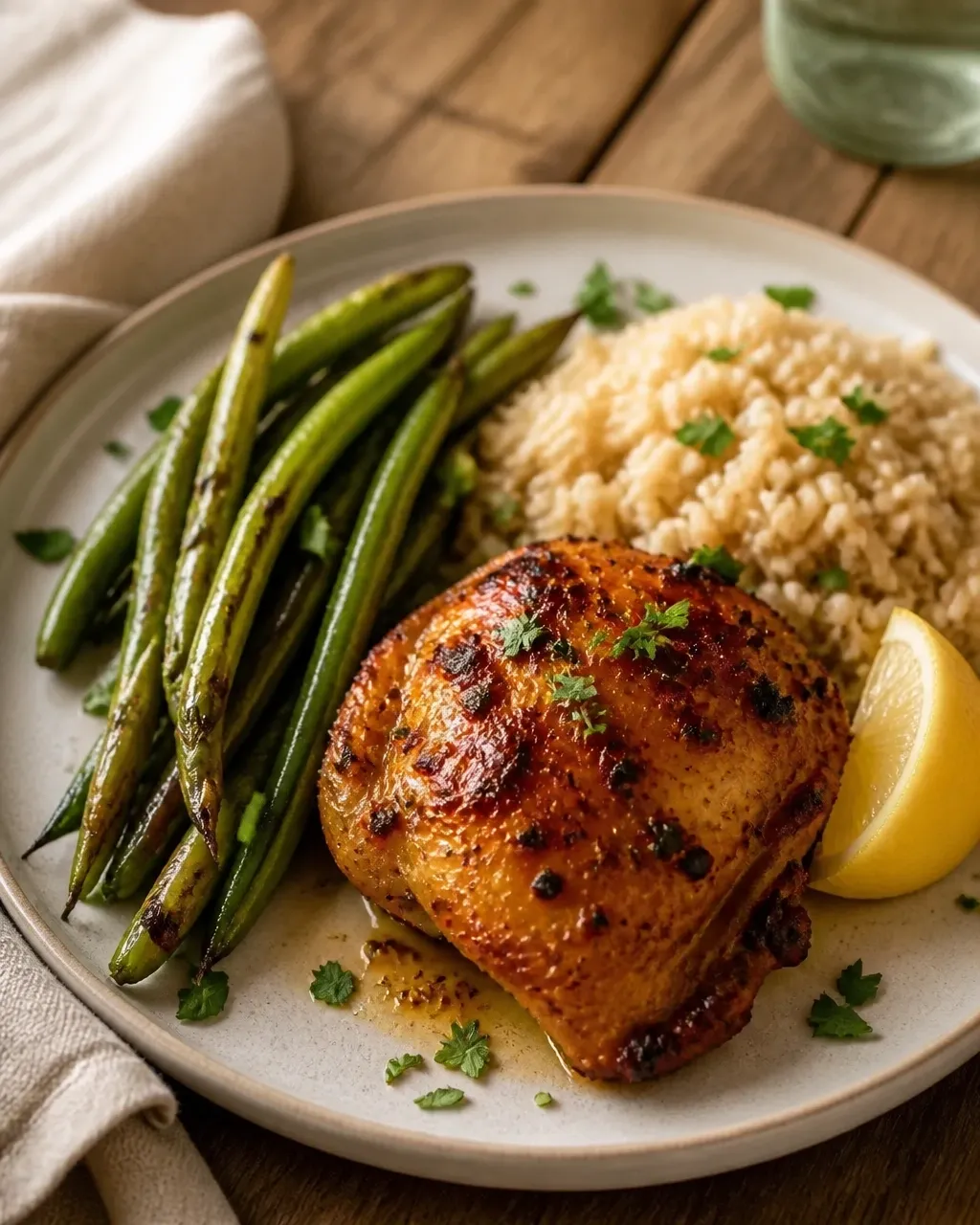
Honey mustard chicken is rich, so pair it with sides that bring acidity, crunch, or gentle bitterness.
Roasted green beans are an easy match. Their browned edges echo the chicken’s roasted flavor without adding another heavy element. A crisp cucumber salad with lemon or vinegar brings coolness and keeps the meal feeling fresh.
For a heartier plate, serve the chicken with brown rice, quinoa, or roasted potatoes. Keep the starch simply seasoned so it can catch the glaze without competing with it.
A peppery arugula salad is especially useful when you want healthy dinner ideas that still feel satisfying. Use a sharp vinaigrette rather than a creamy dressing. The goal is balance: crisp chicken, tender meat, sweet-tangy glaze, and something bright enough to keep you reaching for another bite.
FAQ: What If the Chicken Does Not Turn Out Perfectly?
What if the skin is not crispy?
Check the surface moisture first. Wet chicken steams instead of browning, and a crowded pan traps even more moisture. Pat the thighs dry, leave space between them, and roast uncovered.
Also check the glaze timing. Honey mustard applied too early can create a soft, sticky surface before the skin has rendered. Add a thinner layer near the end instead. If the chicken is already cooked but the skin needs more color, use a short burst under the broiler while watching carefully.
What if the honey mustard glaze burns?
The glaze was probably too thick, the heat was too intense, or it went on too early. Sugars brown quickly, especially under direct broiler heat.
Scrape away any severely burned areas and serve the chicken with a fresh, clean spoonful of glaze if the meat itself is fine. Next time, apply a thin finishing layer and keep the chicken farther from the broiler. Do not walk away during this stage. Honey does not respect multitasking.
What if the chicken is browned outside but raw inside?
The thighs may be unusually large, the pan may be crowded, or your oven may run cooler than its setting. Continue cooking until the thickest part reaches at least 165°F.
Do not judge doneness by skin color. Brown skin tells you the outside has developed flavor; it says nothing reliable about the center. Use a thermometer, and avoid touching the bone when checking.
What if the chicken tastes too sweet?
Add more acidity and mustard to the next batch of glaze. Lemon juice, vinegar, or extra Dijon can pull the flavor back into balance.
For the cooked chicken, serve it with a sharp salad, pickled onions, or roasted vegetables finished with lemon. Avoid trying to fix sweetness by adding lots of salt. Salt may make the flavor harsher without truly correcting the balance.
Can I use boneless, skinless chicken thighs?
Yes. Boneless thighs cook faster and are convenient for busy nights, but they will not provide crisp chicken skin. Coat them lightly with the glaze and start checking the temperature early.
Because they have less structure and no bone to slow heat movement, they can overcook more quickly than bone-in thighs. Remove them once they reach a safe temperature, then let them rest briefly.
Can I prepare the chicken ahead of time?
Season the chicken and mix the glaze several hours ahead, then keep both refrigerated. Store the glaze separately until cooking so the skin stays as dry as possible.
Cooked leftovers should be chilled promptly and stored in a sealed container. Reheat gently in a covered skillet or oven with a splash of broth. High heat can dry the meat and make the glaze sticky in an unpleasant way.
Can I make this in an air fryer?
Yes, especially with smaller boneless thighs. Air fryers circulate hot air quickly, which can help with browning, but they also cook small pieces rapidly. Check early and use a thermometer.
When exploring air fryer recipes dinner ideas, remember that sugary sauces need attention. Apply the honey mustard during the final part of cooking or use a lower temperature once the glaze is added.
What should I serve for a lighter meal?
Choose a large green salad, steamed vegetables, or a crisp cucumber and tomato salad. Add a modest portion of whole grains if you want more staying power.
The chicken already provides protein and richness, so build the rest of the plate around freshness and fiber. That approach creates healthy dinner ideas that feel like real dinners rather than punishment disguised as lunch.
Why did the chicken release so much liquid?
The pan may have been crowded, the chicken may not have been dried well, or the meat may have been frozen and thawed without being patted dry. Excess water lowers the surface temperature and prevents proper browning.
Use a larger pan, dry the thighs thoroughly, and leave room around each piece. If a little juice collects, that is normal. Too much liquid simply means the chicken is roasting in a wetter environment and may need extra time to brown.
Serve these thighs with something fresh, let the glaze stay balanced, and trust your thermometer. That is the whole formula: dry skin, controlled sweetness, enough heat, and no unnecessary kitchen drama.