Recipe
Servings
Servings 1×
Ingredients
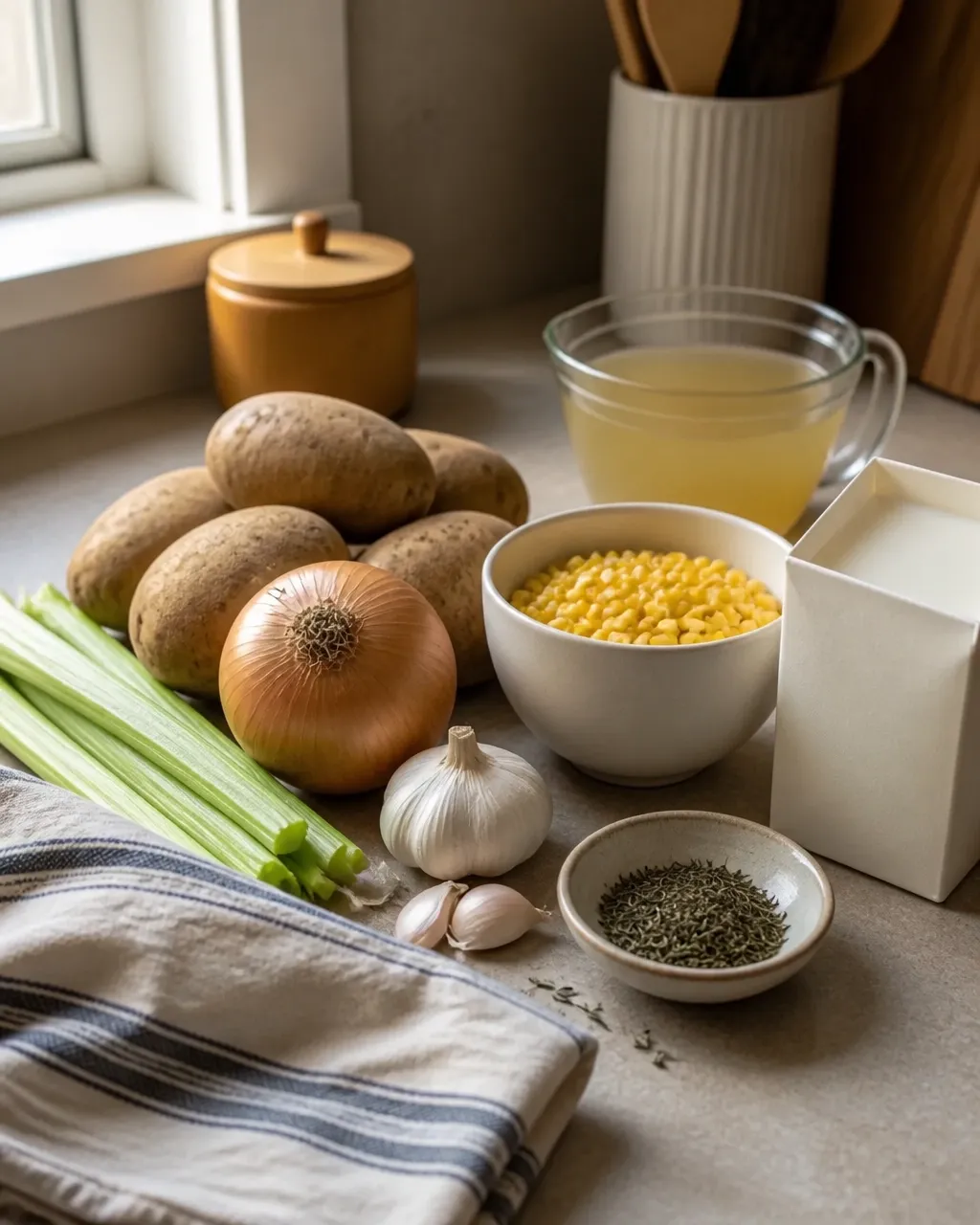
- 2 tablespoons oil or butter
- 1 medium onion, diced
- 1–2 celery stalks, diced
- 2 garlic cloves, minced
- 1 teaspoon dried thyme
- 1 pound potatoes, peeled or scrubbed and diced
- 2–3 cups frozen or canned corn
- 4 cups vegetable broth
- 1 cup milk or unsweetened plant milk
- Salt, black pepper, and optional chili flakes
- Optional: lemon juice, green onions, bacon, or grated cheese
Method
- Soften the onion and celery in the oil or butter over medium heat. Add the garlic and thyme and cook briefly until fragrant.
- Add the potatoes, corn, broth, salt, and pepper. Bring to a boil, then reduce to a gentle simmer.
- Cook until the potatoes are fork-tender. Stir in the milk and warm gently without boiling.
- Mash or blend part of the soup, then return it to the pot and stir.
- Taste and finish with pepper, optional acidity, and your preferred toppings.
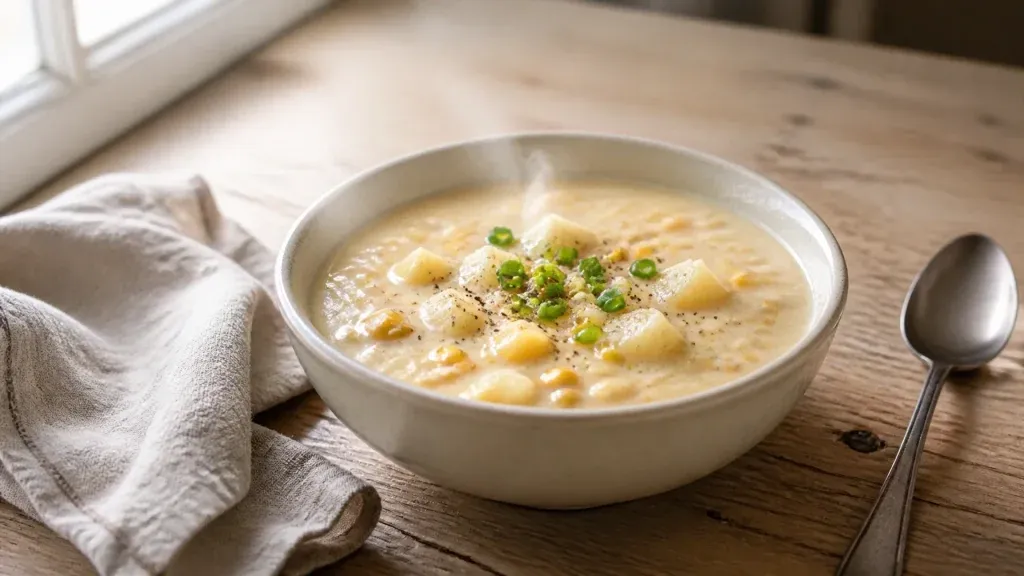
A good chowder should taste generous, even when the grocery budget is not. This creamy corn and potato chowder gets its hearty texture from potatoes, sweetness from corn, and plenty of flavor from a few everyday vegetables. No expensive seafood, fancy stock, or cream-heavy drama required. Use the simple recipe card below, then follow the technique notes to make your bowl smooth, savory, and satisfying every time.
Creamy Texture Starts with Potato Starch
The secret to an inexpensive chowder is understanding what makes soup feel creamy. You do not need a large pour of heavy cream. You need starch, controlled heat, and enough liquid for everything to work together.
Potatoes naturally contain starch. As they cook in hot broth, their starch granules absorb water, swell, and soften. This process, called gelatinization, gives the soup body. Some of that starch remains inside the potato pieces, while some escapes into the broth. The result is a thicker, more comforting base without adding another costly ingredient.
Choose potatoes that become tender and slightly fluffy when cooked, such as russets or Yukon Golds. Cut them into pieces of similar size so they finish together. Uneven chunks create the classic kitchen problem: some potatoes turn to mush while others remain stubbornly firm. Chowder is forgiving, but it is not a magician.
Build Flavor Before Adding Liquid
Start by gently cooking the onion and celery in a little fat. This is not busywork. It is where the soup’s foundation develops.
Raw onions contain sharp sulfur compounds that can taste harsh. Gentle heat breaks those compounds down and encourages the onion’s natural sugars to emerge. Celery adds a savory, green note, while garlic and dried herbs release aromatic oils when warmed in fat. Keep the heat moderate and cook until the vegetables soften. Avoid rushing this stage or browning the garlic aggressively. Burnt garlic contributes bitterness, not depth.
A small pinch of salt helps draw moisture from the vegetables, allowing them to soften more evenly. Add seasoning gradually, though. Broth can vary widely in saltiness, and the soup will become more concentrated as it cooks.
Simmer, Do Not Boil Aggressively
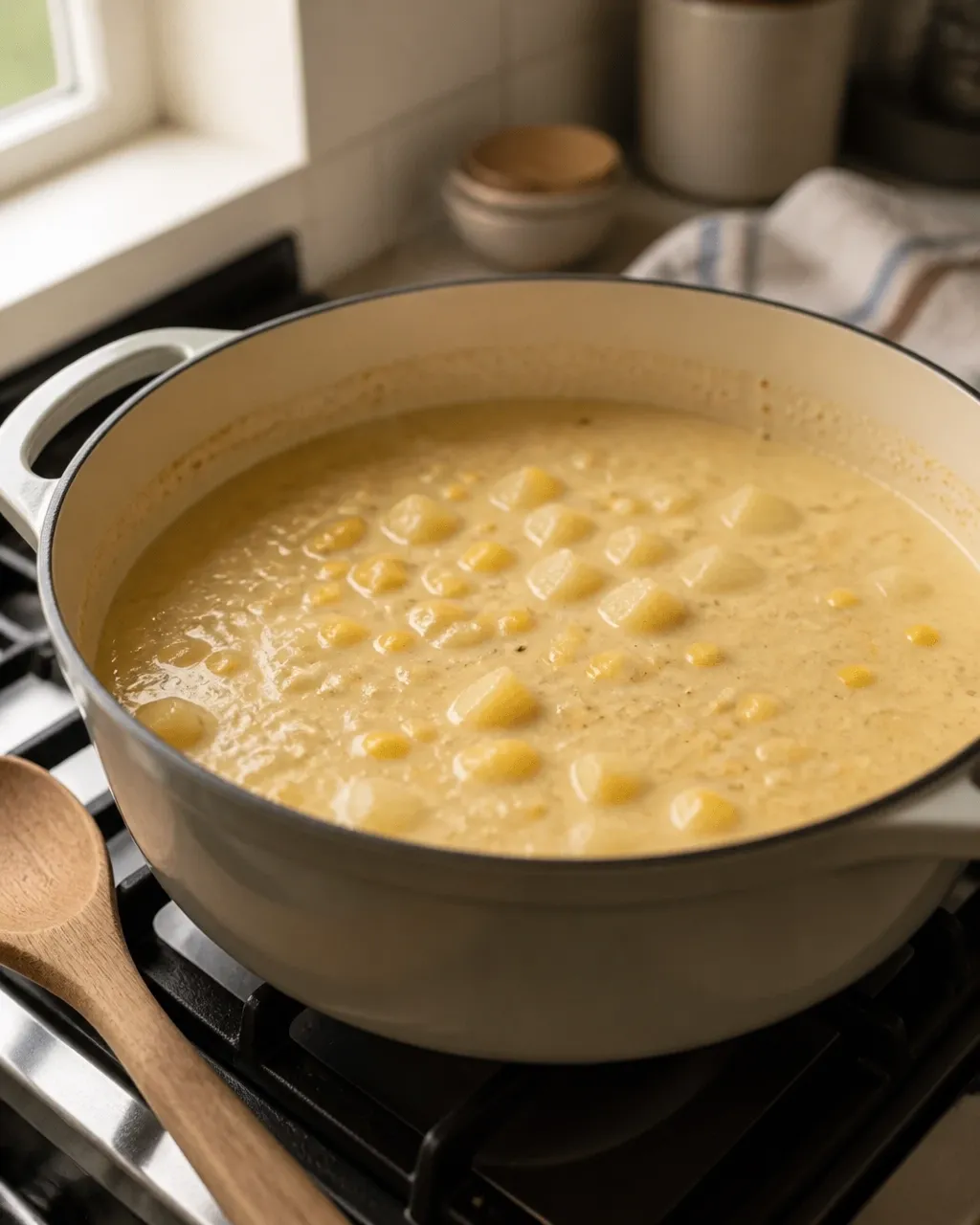
Once the broth and potatoes are in the pot, bring the mixture up to a boil, then immediately lower the heat. Aim for a gentle simmer with occasional bubbles.
A hard boil batters the potato pieces against the sides of the pot. That can cause them to break apart too quickly and release excess starch, giving the chowder a gluey or grainy texture. A calm simmer cooks the centers evenly while allowing the broth to thicken gradually.
Check the potatoes with a fork rather than relying only on the clock. They should be tender enough to pierce easily but still hold their shape. This balance gives you both chunky pieces and a naturally creamy base.
Add Milk at the Right Moment
Add milk after the potatoes are nearly tender, not at the very beginning. Milk contains proteins that can tighten, scorch, or separate when exposed to prolonged high heat. Keeping the dairy at a gentle simmer protects its smooth texture.
Do not let the chowder boil hard after adding milk. Lower the heat and stir occasionally, especially around the bottom of the pot. If you use unsweetened plant milk, choose one with a neutral flavor. Oat milk adds gentle sweetness, while unsweetened soy milk usually gives the most body.
Blend Only Part of the Soup
For the best texture, blend or mash only a portion of the chowder. This is one of the most useful tricks for quick family meals because it creates creaminess without turning every vegetable into a puree.
Scoop out a little soup and blend it until smooth, then stir it back into the pot. Alternatively, use a potato masher directly in the saucepan. The blended portion thickens the broth, while the untouched corn and potato pieces give you something to chew.
Avoid blending the whole pot unless you specifically want a smooth soup. Corn skins can leave a slightly fibrous texture, and completely pureeing the potatoes can make the chowder feel sticky. Keep a little contrast in the bowl.
Finish with Balance
Creamy foods need brightness. Taste the chowder before serving and adjust the salt first. Then add a small splash of acidity if the soup tastes flat. A little lemon juice or mild vinegar can sharpen the corn’s sweetness and keep the dairy from feeling heavy.
Finish with black pepper, green onions, fresh herbs, or a pinch of smoked paprika. Treat toppings as flavor tools rather than decoration. A crunchy topping also helps contrast the soft texture of the chowder.
Non-negotiable: Keep the heat gentle once the milk goes in, and do not skip the final taste adjustment. Those two choices make the difference between a cozy soup and a bland, separated one.
Budget-Friendly Variations for Every Kitchen
This chowder is built for substitutions, so use what you already have.
For a dairy-free version, replace the milk with unsweetened oat, soy, or almond milk. You can also blend extra corn with a little broth to create more body. The soup will be slightly lighter, but the potato starch will still provide a satisfying texture.
Add white beans for inexpensive plant-based protein. Stir them in near the end so they warm through without breaking apart. Chickpeas work too, although their firmer texture changes the character of the chowder.
Use frozen corn when fresh corn is expensive or out of season. Canned corn is perfectly practical; drain it well before adding it. If you have leftover roasted corn, stir it in at the end for a deeper, lightly smoky flavor.
Include diced carrots or bell peppers for extra color and sweetness. For heat, add chili flakes, cayenne, or a spoonful of chopped pickled jalapeños. If you eat meat, crisp bacon or sliced smoked sausage can add savory richness, but keep the amount modest. The soup should still taste like corn and potatoes, not a bacon commercial.
For more simple plant-forward inspiration, browse Cookpedia’s healthy recipe collection.
Side Dish Pairings That Keep Things Balanced
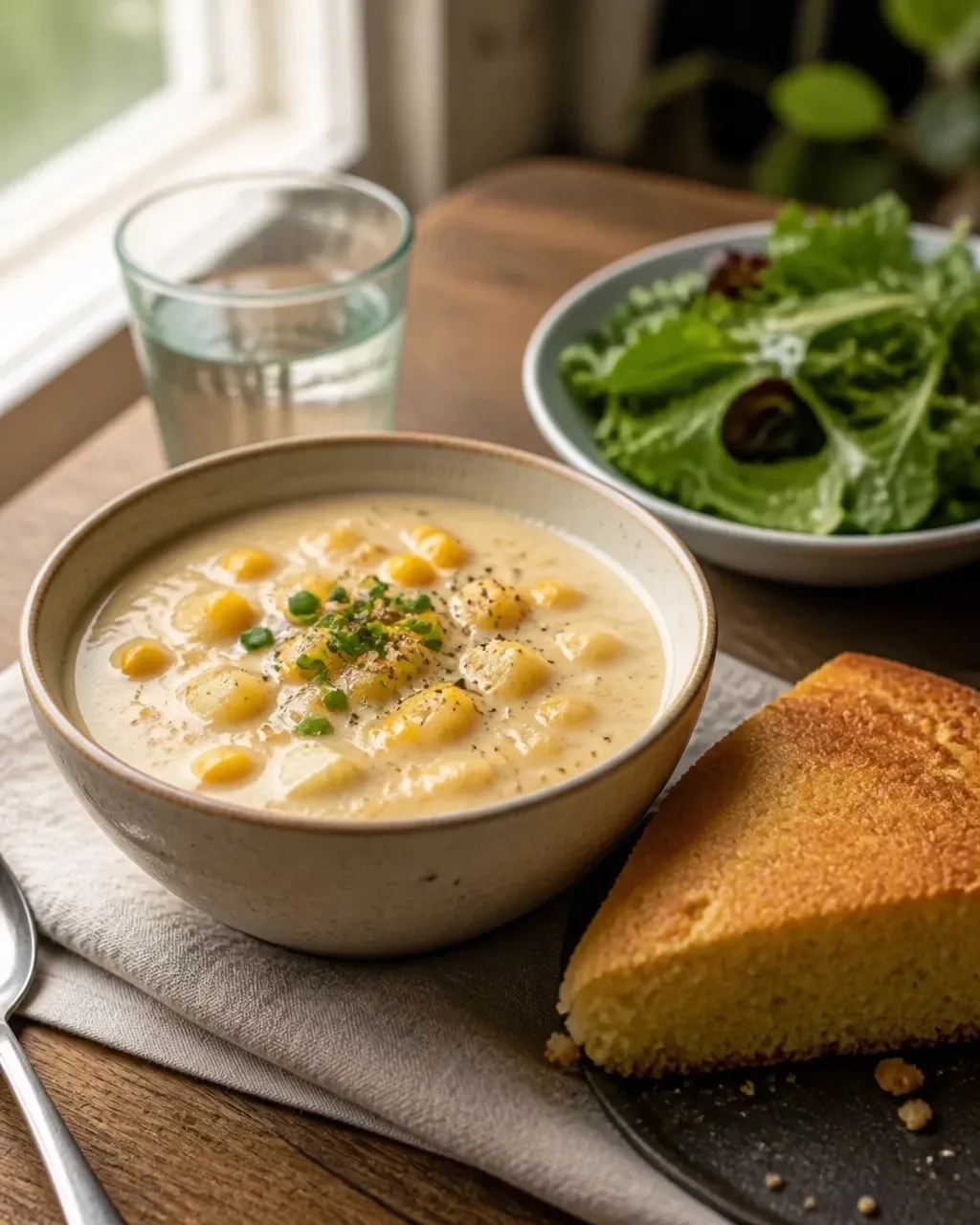
Serve the chowder with something crisp, tangy, or lightly crunchy. A simple green salad with lemon vinaigrette cuts through the creamy broth and adds freshness without competing with the main dish.
Cornbread is the classic partner. Its gentle sweetness echoes the corn, while the crumbly texture contrasts with the soft potatoes. Toasted sourdough or whole-grain bread works just as well and is a smart way to use up a loaf that is losing its freshness.
For a lighter plate, add steamed green beans, roasted broccoli, or a cucumber salad with vinegar. If you want a heartier table, serve a small grilled cheese or white-bean toast alongside the soup. Keep portions sensible: the chowder already brings plenty of starch and comfort.
This one-pot meal also fits neatly into Cookpedia’s collection of easy one-pot meals.
Chowder FAQ: What If Something Goes Wrong?
What if my chowder is too thin?
Mash more potatoes directly in the pot or blend another cup of soup and stir it back in. Give the chowder a few minutes to sit over low heat so the released starch can thicken the broth. Avoid adding flour straight into the liquid, which can create lumps. If you need a faster fix, whisk cornstarch with cold water first, then stir the slurry into the gently simmering soup.
What if my chowder becomes too thick?
Stir in warm broth, milk, or water a little at a time. Chilled chowder often thickens in the refrigerator because the starch firms as it cools. Loosen it before reheating rather than waiting for the soup to become hot and then trying to correct the texture.
Why did the milk separate?
The most likely cause is excessive heat. Milk proteins can tighten when boiled, especially in an acidic or salty environment. Keep the soup below a strong boil after adding dairy. If it has only slightly separated, whisk it gently and blend a small portion to bring the texture back together. It may not look perfect, but it can still taste good.
Can I use canned potatoes?
Yes. Canned potatoes are already cooked, so add them much later than raw potatoes. Use them for convenience, but handle them gently because they can break apart quickly. Reduce the simmering time and rely on blending a small portion to thicken the chowder.
How do I make it more filling?
Add white beans, shredded chicken, leftover ham, or a small amount of cooked sausage. Stir in cooked protein near the end so it warms without becoming tough. Serve the chowder with whole-grain bread if you want extra staying power without significantly increasing the cost.
Can I freeze creamy corn and potato chowder?
You can, but expect a slight texture change. Milk-based soups may separate after freezing and thawing, while potatoes can become a little grainy. For the best result, freeze the chowder before adding the milk. Thaw it gently, stir in fresh milk while reheating, and avoid boiling. If you already froze the finished soup, blend part of it after reheating to smooth the texture.
How long will leftovers keep?
Store cooled chowder in a covered container in the refrigerator and use it within three to four days. Reheat it gently on the stovetop, stirring often, and add a splash of broth or milk if needed. These leftovers make excellent quick family meals because the flavor deepens overnight.
For another science-led comfort dish, try Cookpedia’s one-pot lemon asparagus spaghetti. And when you need more healthy dinner ideas, let potatoes, beans, corn, and a little thoughtful technique do the heavy lifting.