Recipe
Servings
Servings 1×
Ingredients
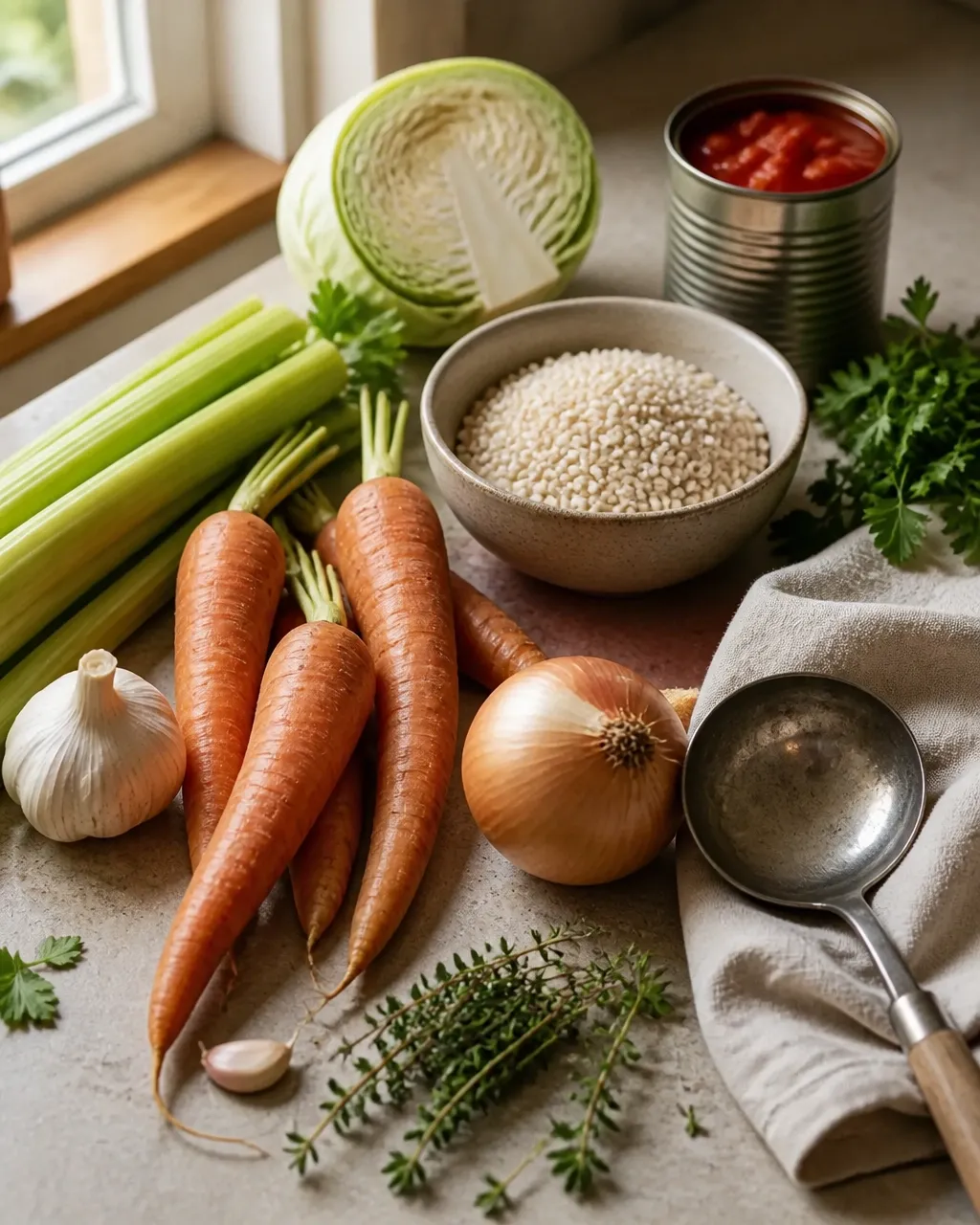
- Beans
- Pearled barley
- Potatoes
- Green beans
- Carrots
- Zucchini
- Spinach
- Peas
- Onion
- Garlic
- Lemon
- Salt
- Black pepper
Method
- Use pearled barley when you want a practical weeknight option.
- Cook garlic later in the aromatic stage rather than letting it sit in a hot pot for ages.
- Give firm vegetables a little time to soften before the broth takes over.
- Keep the surface moving calmly.
- Add quick-cooking vegetables toward the end.
- Keep the seasoning firm but measured.
A Big Pot of Comfort That Keeps Costs Sensible
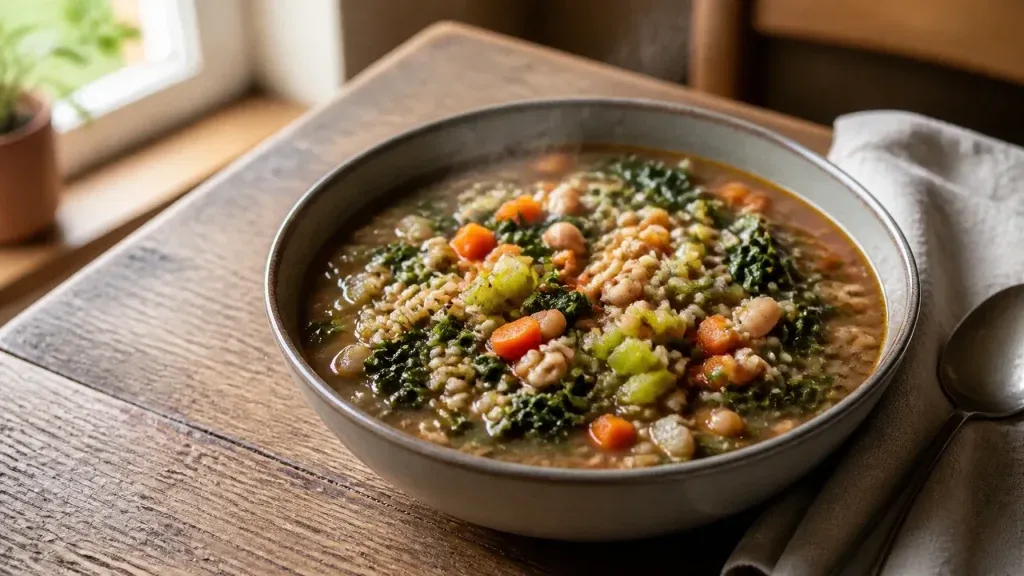
Some soups ask for a long shopping list and a small mortgage. This one does not. Hearty vegetable and barley soup is built around humble staples, flexible produce, and the quiet magic of a grain that makes broth feel substantial.
I love it because it delivers the best kind of kitchen arithmetic: one pot, several generous servings, and leftovers that often taste even better the next day. If you are collecting reliable budget friendly recipes, keep this one close. It is cozy, nourishing, and wonderfully difficult to mess up.
The Science of a Soup That Feels Hearty
Let barley do the heavy lifting
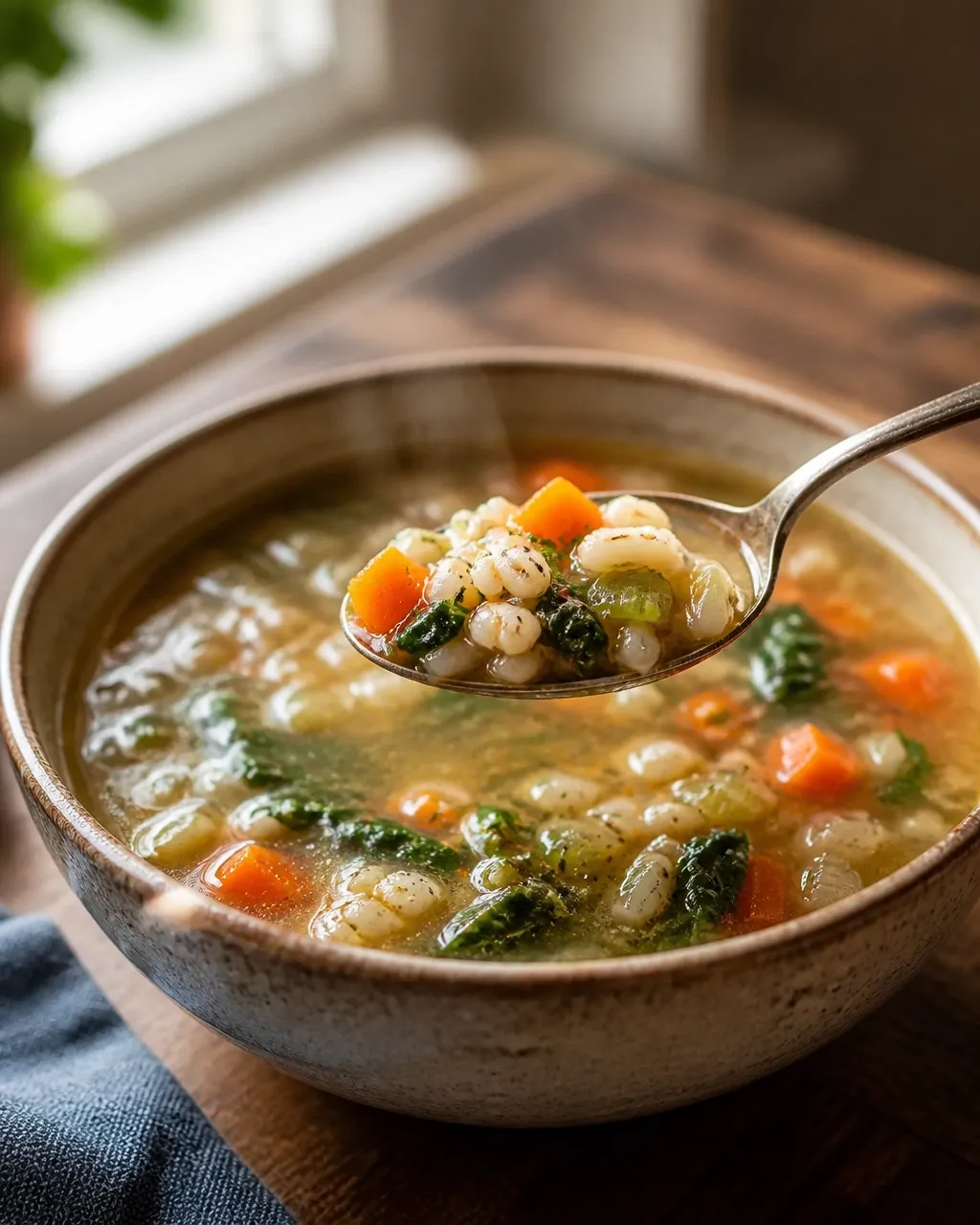
Barley is the reason this soup feels like dinner rather than a bowl of flavored water. As it simmers, the grain absorbs broth, swells, and releases starch. That starch gently thickens the liquid while leaving the barley with a pleasant, chewy center.
Use pearled barley when you want a practical weeknight option. It cooks more quickly than hulled barley because some of the outer layer has been removed. You do not need to soak it for this soup, although rinsing it can remove loose surface starch and keep the broth a little cleaner.
Pay attention to the barley-to-liquid balance. Barley continues absorbing broth as the soup rests, so a pot that looks perfectly brothy at lunchtime may look much thicker by dinner. That is not a failure. It is simply barley being barley. Loosen leftovers with a splash of water or stock when reheating.
Build flavor before adding plenty of liquid
Do not rush the flavor base. Gently cooking onion, celery, carrots, or similar aromatic vegetables gives their natural sugars time to concentrate. The vegetables soften, their sharp edges mellow, and the finished broth gains sweetness without needing much added fat.
Cook garlic later in the aromatic stage rather than letting it sit in a hot pot for ages. Garlic contains delicate sulfur compounds that turn harsh and bitter when scorched. Fragrant is the goal; brown and crispy is a different project.
Treat dried herbs with a little respect, too. Briefly warming them in the cooking fat helps release their flavor compounds into the soup. You do not need a spice cabinet audition. A few dependable herbs, black pepper, and a savory broth can carry the whole pot.
Sweat vegetables, then simmer gently
Give firm vegetables a little time to soften before the broth takes over. This “sweating” stage drives off some moisture and concentrates flavor. It also helps the vegetables hold their shape instead of tasting like they have simply been boiled into submission.
Once the liquid goes in, choose a gentle simmer. A furious boil can break down tender vegetables, cloud the broth, and make barley split before the rest of the soup is ready. Keep the surface moving calmly. Soup should look relaxed, not as though it has received alarming news.
Add quick-cooking vegetables toward the end. Frozen peas, green beans, spinach, and zucchini need far less time than barley or potatoes. Late additions help them retain brighter color, fresher flavor, and a little texture. This is one of the easiest upgrades for a soup that tastes homemade rather than tired.
Finish with contrast
A final touch of acidity is not optional if the soup tastes flat. Lemon juice or a small splash of vinegar can brighten the entire pot and balance the sweetness of carrots, onions, and barley. Acidity does not make the soup sour when used carefully; it makes the other flavors easier to notice.
Taste after adding the acid, then adjust seasoning. Check salt gradually, especially if your broth or bouillon is already salty. Sodium can hide behind vegetables and grains, then arrive all at once in the finished bowl. Keep the seasoning firm but measured.
For more practical weeknight inspiration, browse Cookpedia’s one-pot meals collection. The same principle applies here: concentrate flavor in one vessel and keep cleanup pleasantly boring.
Variations That Keep the Pot Interesting
Use the vegetables you already have
Make this soup a home for the vegetables sitting in the refrigerator looking slightly worried. Cabbage, mushrooms, leeks, turnips, squash, and leftover roasted vegetables can all find a place here. Change the vegetables according to season, supermarket specials, or the contents of your crisper drawer.
Choose sturdy vegetables for the longer simmer and delicate ones for the final minutes. That simple timing rule matters more than following a rigid vegetable list.
Add beans for extra staying power
Stir in canned chickpeas, white beans, kidney beans, or lentils when you want more plant protein and an even fuller bowl. Beans also make the soup useful for meal prep because they add substance without requiring meat.
If you add cooked beans, warm them gently rather than boiling them for half an hour. Overcooked beans can collapse and turn the broth cloudy. Delicious? Perhaps. Texturally elegant? Not always.
Change the grain
Barley gives this soup its signature chew, but farro, brown rice, or small pasta can work when that is what you have. Adjust your expectations because every grain absorbs liquid differently. Rice tends to soften more dramatically, while farro usually stays firmer.
For a gluten-free version, replace the barley with rice, quinoa, or a certified gluten-free grain. Check the broth and bouillon labels as well; the grain is not the only place gluten can sneak in.
Make it smoky, spicy, or creamy
Add smoked paprika or a pinch of chili flakes for warmth. Stir in leafy greens for a fresher finish, or blend a small portion of the soup to create body without cream. You can also finish individual bowls with yogurt, grated cheese, pesto, or a drizzle of olive oil. Keep the base simple and let toppings provide the personality.
Side Dish Pairings for Balance
Serve this soup with something crisp, chewy, or pleasantly sharp. A slice of whole-grain toast or rustic bread is the obvious companion because it gives you something sturdy for broth-catching. Cornbread works beautifully when you want a slightly sweet contrast.
Add a simple green salad with a lively vinaigrette for freshness. The acidity cuts through the soup’s soft, starchy texture and keeps the meal from feeling too heavy. Shaved cabbage with lemon, cucumber with herbs, or a handful of dressed arugula all work without turning dinner into a second cooking assignment.
For extra protein, pair the soup with a boiled egg, a spoonful of cottage cheese, or a small white-bean salad. Keep the side modest. The barley is already bringing serious staying power to the bowl.
Explore Cookpedia’s vegetarian dinner recipes when you want more simple combinations built around vegetables, grains, and satisfying pantry staples.
Frequently Asked Questions
Can I make this soup ahead of time?
Yes. In fact, this is one of the reasons I consider it one of my favorite one pot meals. The flavors mingle as the soup rests, and the broth often tastes rounder the following day.
Expect the barley to absorb more liquid overnight. Store the soup in airtight containers and add water or stock when reheating. Warm it gently rather than boiling it aggressively, especially if the vegetables are already tender.
Why did my soup become too thick?
Barley continues to hydrate after cooking. If the soup resembles stew the next day, it has not gone wrong; it has simply kept drinking. Stir in extra broth or water a little at a time until the texture returns to something spoonable.
Avoid adding a large amount of liquid at once. You can always thin soup further, but rescuing a watery pot usually requires more simmering and more seasoning.
Can I freeze vegetable and barley soup?
You can freeze it, although the texture may soften slightly after thawing. Cool the soup promptly, portion it into freezer-safe containers, and leave room for expansion. Thaw it in the refrigerator when possible, then reheat until hot throughout.
For the best barley texture, freeze the broth and solids separately or cook the barley on the side. That extra effort is useful if you are particular about chewiness. If not, freeze the complete soup and enjoy the convenience.
What if I only have water instead of vegetable stock?
Use water, but build more flavor in the pot. Spend time softening the aromatics, season gradually, and include savory elements such as tomato, mushrooms, herbs, or beans. A small amount of miso can add depth, provided you account for its saltiness.
Stock adds a head start, not a guarantee. Poorly seasoned stock will still produce a dull soup, so taste before serving.
Is barley a healthy choice?
Barley is a whole grain that contributes fiber and a satisfying chewy texture. Combined with a variety of vegetables and beans, it can make a filling, plant-forward meal. Keep in mind that “healthy” depends on the whole bowl, including sodium levels and toppings.
Use a lower-sodium broth when appropriate, add salt carefully, and rely on herbs, garlic, pepper, and acidity for flavor. This approach makes the soup fit comfortably among practical healthy dinner ideas without turning it into a lecture.
Can I make this soup gluten-free?
Yes, but replace barley with a gluten-free grain such as rice or quinoa. Check every packaged ingredient, especially broth, bouillon, canned soup bases, and spice blends. Cross-contact can also matter if you are cooking for someone with celiac disease.
How can I make it more filling for a family?
Add beans, lentils, potatoes, or extra barley according to the texture you want. Serve generous bowls with bread and a simple salad. For younger eaters, keep the seasoning mild and offer sharper toppings separately.
Think of this soup as a flexible framework rather than a fragile formula. That is the beauty of budget friendly recipes: they should help you cook what you have, not send you back to the store for one very specific carrot.
Can I make it in a slow cooker?
You can, but sautéing the aromatics first will give you a deeper flavor. Add quick-cooking vegetables and greens near the end so they do not disappear into the broth. Check the barley early because cooking times vary between slow cookers.
For the easiest results, use the stovetop when you have about an hour and the slow cooker when hands-off cooking matters more. Either way, keep a little extra broth nearby for reheating.
When you need more reliable healthy dinner ideas, start with a pot of soup, a handful of vegetables, and one grain that knows how to make dinner feel generous. This barley soup does the rest.