Recipe
Servings
Servings 1×
Ingredients
- Chickpeas
- Rice
- Bread
- Potatoes
- Sweet potatoes
- Spinach
- Kale
- Tomatoes
- Onion
- Garlic
- Fresh ginger
- Lemon
- Cream
- Cooking oil
- Turmeric
- Salt
Method
- Give them a brief moment in oil first.
- Stir constantly and stop as soon as the kitchen smells warm, earthy, and inviting.
- Let the onion become tender before building the rest of the stew.
- Use a gentle simmer instead.
- Keep strong acidic finishes toward the end, especially if you want the sweet potatoes and chickpeas to soften efficiently.
- Finish with lemon once the texture is where you want it.
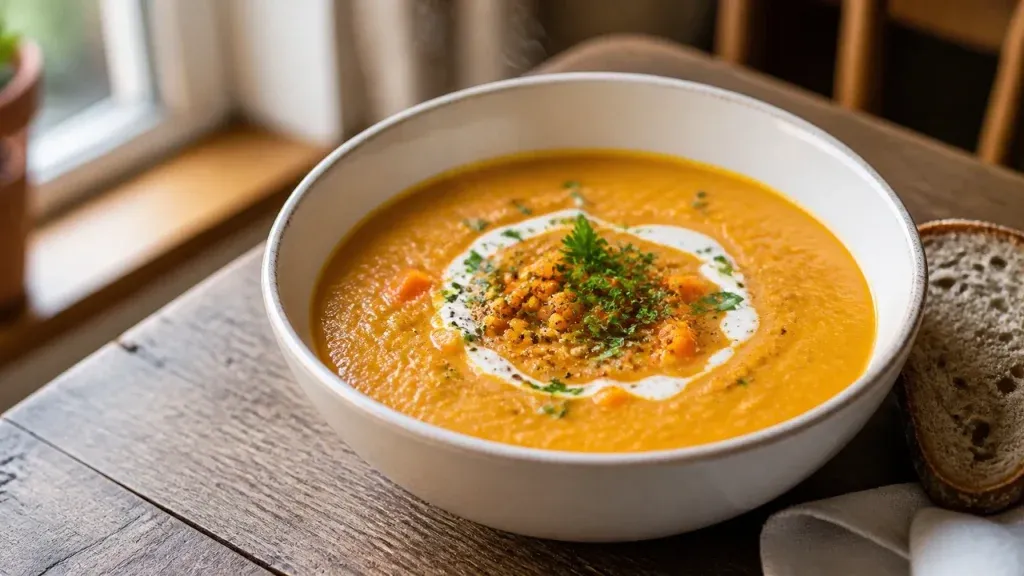
Some dinners work hard without making you work hard. This Moroccan-inspired chickpea and sweet potato stew is one of them: hearty, colorful, naturally plant-based, and built from ingredients that know how to behave in a busy kitchen. The sweet potatoes bring gentle sweetness, the chickpeas add satisfying substance, and warm spices make the whole pot taste as if you planned ahead. You did not need to tell anyone that it came together on a weeknight.
Tips & Technique: Build Flavor Before You Add the Broth
Bloom the spices in fat
Do not toss dry spices into a pot of watery broth and hope for a miracle. Give them a brief moment in oil first.
Cumin, coriander, paprika, turmeric, ginger, and cinnamon contain aromatic compounds that dissolve more effectively in fat than in water. Warming them in oil helps distribute those aromas throughout the stew, creating a rounder and more noticeable flavor. This is called blooming, and it is one of the easiest ways to make a simple pantry meal taste far more intentional.
Keep the heat moderate. Spices should become fragrant, not dark and bitter. Stir constantly and stop as soon as the kitchen smells warm, earthy, and inviting. If the spices catch on the bottom of the pot, start again rather than carrying that burnt flavor forward. This is a non-negotiable.
Soften the aromatics without rushing them
Let the onion become tender before building the rest of the stew. Softened onion contributes sweetness and body, while raw onion can leave the broth sharp and unfinished. Garlic needs less time, so add it after the onion has started to soften.
This gentle cooking stage also creates a flavorful layer on the bottom of the pot. When the tomato and broth arrive, they loosen those browned bits and carry them into the stew. You are not just cooking vegetables; you are collecting flavor.
Avoid blasting the heat to save two minutes. High heat can brown the outside of the onion while leaving the center firm, and it can scorch garlic before the rest of the pot is ready. A calm sauté gives you a sweeter, more balanced base.
Cut sweet potatoes for even cooking
Sweet potatoes are generous, but they are not magical. Large chunks take longer to soften, while tiny pieces can collapse before the chickpeas have absorbed much flavor.
Aim for pieces that are similar in size. Consistency matters more than exact measurements because evenly sized pieces finish at roughly the same time. The outer edges soften first as heat moves inward, so wildly different sizes guarantee a mixed result: some pieces turn creamy, while others remain stubbornly firm.
Sweet potato starches swell and gelatinize as they heat in liquid. That process creates the stew’s pleasant creamy texture, but aggressive boiling can break the edges apart before the centers are tender. Use a gentle simmer instead. Look for small, steady bubbles rather than a rolling boil.
Add acidity at the right moment
Tomatoes contribute acidity, sweetness, color, and savory depth. Lemon juice adds a brighter, sharper kind of acidity. Both are useful, but they do different jobs.
Keep strong acidic finishes toward the end, especially if you want the sweet potatoes and chickpeas to soften efficiently. Acid can strengthen plant cell walls and slow softening, which is helpful when you want vegetables to hold their shape but inconvenient when dinner is waiting.
Finish with lemon once the texture is where you want it. Taste after adding it, then adjust salt. Acid and salt work as a team: lemon wakes up dull flavors, while salt helps your palate notice them. Add either one gradually. A stew should taste lively, not like a citrus experiment gone rogue.
Control thickness with starch
A good stew should cling lightly to a spoon. It should not resemble soup, but it should still have enough broth to welcome couscous, rice, or crusty bread.
Sweet potatoes naturally release starch as they cook. Chickpeas contribute too, especially if you crush a small portion against the side of the pot. That simple action releases starch into the liquid and thickens the stew without flour, cream, or complicated tricks.
Use reduction when the stew is too thin: simmer it uncovered so excess water can evaporate. Add a little broth if it becomes too thick. Make adjustments near the end because the stew will continue to thicken slightly as it cools.
Protect the greens and the final color
Add spinach or tender greens late. They need only enough heat to wilt, not a long bath in boiling broth. Brief cooking helps them retain a fresher color and a little texture.
Kale can handle more time than spinach, but even kale benefits from restraint. Overcooked greens turn dull and can make the stew taste heavier. Stir them through near the finish, then let residual heat do some of the work.
For a final lift, use fresh parsley or cilantro, lemon zest, or a small drizzle of olive oil. These finishing touches add contrast to the soft stew. Texture matters too: a tender dish becomes more interesting when something fresh and crisp appears on top.
For another fast, pantry-friendly approach, compare the technique with Cookpedia’s Quick Chickpea and Spinach Stew, which uses crushed chickpeas to create a silky broth. You can also browse the vegetarian dinner recipes collection for more meat-free options.
Variations: Keep the Balance, Change the Personality
Make the stew smokier with extra paprika or a little harissa. Add heat carefully; too much chili can hide the sweet potato’s natural flavor and make the dish feel one-dimensional. Let warmth support the other spices rather than take over the pot.
Add carrots, bell peppers, eggplant, or chopped fennel when you want more vegetables. Choose additions with similar cooking times, or add firmer vegetables earlier and delicate ones later. The goal is contrast, not a vegetable traffic jam.
Swap spinach for kale, Swiss chard, or frozen greens. Frozen spinach works well when convenience matters, but squeeze out excess water so it does not thin the broth. Chopped kale creates a more substantial, chewy texture.
Use white beans instead of some or all of the chickpeas for a softer, creamier result. Lentils also work, although they change the stew’s texture and may require different cooking timing. For extra richness, stir in a spoonful of tahini at the end, then balance it with lemon. Fatty, nutty tahini needs acidity to keep the stew from tasting flat.
If your weekly search history includes “air fryer recipes dinner,” make the stew your soft centerpiece and add crisp air-fried chickpeas or roasted cauliflower on top. The contrast between creamy broth and crunchy garnish is excellent.
Side Dish Pairings: Add Contrast, Not Competition
Serve the stew with couscous when you want the quickest, fluffiest partner. Its mild flavor lets the spices lead, while the grains soak up the broth. Quinoa adds a nuttier taste and a little more bite; rice gives you a softer, more familiar base.
Pair the warm stew with something cool and crisp. A cucumber, tomato, and herb salad brings freshness, while a simple cabbage slaw adds crunch. Dress either lightly with lemon or vinegar so the acidity cuts through the stew’s sweetness and starch.
Warm flatbread is another practical choice. Use it to scoop up chickpeas and sweet potatoes, but skip an overly rich side dish. Creamy pasta, heavy cheese, or a buttery casserole can overwhelm the clean spice profile.
For more one-pot inspiration, explore Cookpedia’s one-pot meals and quick meals. They are useful places to look when you need quick family meals without a sink full of cookware.
FAQ: Troubleshoot the Pot Before You Panic
What if the sweet potatoes are still firm but the stew is already thick?
Add a small amount of broth or water, cover the pot partially, and continue simmering gently. The extra moisture creates steam and gives the sweet potatoes more time to soften without reducing the stew too aggressively. Avoid adding more lemon or vinegar at this stage because additional acid can slow softening.
What if the sweet potatoes have turned mushy?
Treat it as a texture issue, not a dinner emergency. Stir gently so the pieces do not break apart further, then add a fresh contrast such as chopped herbs, toasted seeds, or a crisp salad. Next time, cut the pieces larger, use a gentler simmer, or add them later in the cooking process.
What if the chickpeas taste bland?
Check salt first. Chickpeas often need more seasoning than expected because their mild flavor absorbs surrounding spices and broth. Add salt in small increments, then finish with lemon. The acid will make the chickpeas taste brighter without requiring an excessive amount of seasoning.
What if the stew tastes too sweet?
Sweet potatoes and cooked tomatoes can create a naturally sweet base. Balance it with lemon juice, a splash of vinegar, extra cumin, or a little heat. Add one adjustment at a time and taste after each addition. More salt may also help, but do not use salt to solve every flavor problem.
What if the stew tastes bitter?
Bitterness usually comes from scorched garlic, burnt spices, or too much turmeric. If the bitterness is mild, dilute the stew with broth and add a little tomato or lemon for balance. If you can clearly taste burnt spices, transferring the unburnt portion to a clean pot may help. Do not scrape aggressively at a scorched bottom; those browned bits are not the flavor prize you hoped they were.
Can I make this stew ahead?
Yes. The flavor often improves after resting because the spices continue to move through the broth. Cool it promptly, refrigerate it in a covered container, and reheat gently. Add a splash of broth if it thickens in the refrigerator. Finish with fresh lemon or herbs after reheating to restore brightness.
Can I freeze it?
You can, although the sweet potatoes may become softer after thawing. Freeze the stew in practical portions and leave room for expansion. Thaw it in the refrigerator when possible, then reheat slowly. Add fresh greens and herbs after reheating if you want a brighter finish.
Is this a complete dinner?
It can be. Chickpeas provide plant-based protein and fiber, sweet potatoes contribute carbohydrates and satisfying texture, and greens add color and nutrients. Serve it with a grain or bread if you need a larger meal. For more healthy dinner ideas, keep the same formula in mind: combine a protein-rich plant food, a substantial carbohydrate, vegetables, and an acidic or fresh finishing element. That is balance, not punishment.
How do I keep the stew from becoming watery?
Use a gentle uncovered simmer near the end, or mash a small portion of the chickpeas and sweet potatoes into the broth. Avoid adding large amounts of liquid all at once. Remember that the stew thickens as it cools, so stop reducing when it looks just slightly looser than your ideal serving texture.
Make this stew when you want dinner to feel generous without becoming complicated. Bloom the spices, protect the texture, finish with acidity, and let the humble chickpea do its quietly excellent work.