Recipe
Servings
Servings 1×
Ingredients
- Salmon
- Quinoa
- Rice
- Potatoes
- Cauliflower
- Garlic
- Fresh ginger
- Lemon
- Lime
- Balsamic vinegar
- Honey
- Tahini
- Butter
Method
- Start by choosing a heavy-duty, rimmed baking sheet.
- Use a pan with high thermal mass to ensure a consistent temperature across the entire surface.
- Use a staggered roasting technique.
- Give the sprouts a head start in the 425°F oven.
- Whisk together white miso paste, grated ginger, and a splash of rice vinegar.
- Use one half for a spicy sriracha-lime salmon for the adults and the other half with a simple garlic-butter seasoning for the kids.
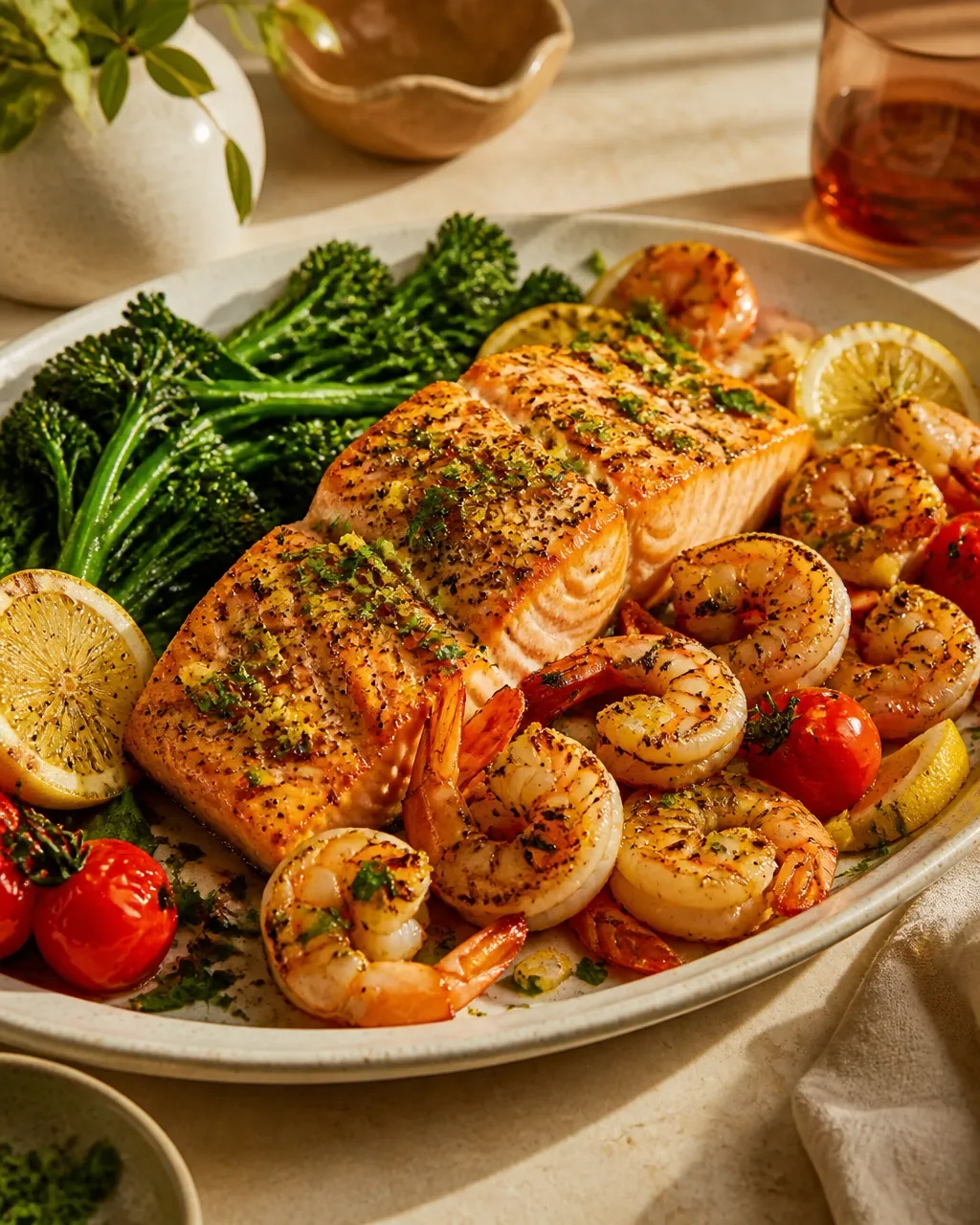
If you have ever stared into the abyss of your refrigerator on a Tuesday night wondering how to balance your desire for a nutritious meal with your utter lack of energy, you are in the right place. Sheet pan cooking is the ultimate "work smarter, not harder" strategy for the modern kitchen. My latest obsession is this pairing of flaky salmon and deeply charred Brussels sprouts. It is one of those easy dinner recipes that looks like you spent hours over a stove, when in reality, the oven did all the heavy lifting while you caught up on your favorite podcast.
The Science of the Sizzle: Why Sheet Pans Rule
To master this dish, you need to understand the physics of the sheet pan. We aren't just heating food; we are engineering a specific set of chemical reactions. The most important of these is the Maillard reaction. This is the magical process where proteins and sugars react under high heat to create that savory, brown crust we all crave. For your salmon, this means a crisp exterior that seals in the moisture; for your Brussels sprouts, it means turning a bitter vegetable into a sweet, nutty treat.
Start by choosing a heavy-duty, rimmed baking sheet. Thin, flimsy pans warp under high heat and distribute energy unevenly, leading to "hot spots" that burn your sprouts while leaving your fish undercooked. Use a pan with high thermal mass to ensure a consistent temperature across the entire surface.
Moisture is the enemy of the Maillard reaction. If your salmon fillets or sprouts are damp, the oven's energy will be spent evaporating that water (steaming) rather than browning the surface (roasting). Always pat your salmon bone-dry with paper towels before it touches the pan. This is a non-negotiable rule in my kitchen. Similarly, ensure your sprouts are dry after washing. Steam creates a mushy texture that is the opposite of the crispy, charred goal we are aiming for in our healthy dinner ideas.
Timing is the final piece of the scientific puzzle. Salmon and Brussels sprouts have different "done" points. If you throw them in at the same time, you’ll end up with perfect fish and raw sprouts, or perfect sprouts and salmon that has the texture of a pencil eraser. Use a staggered roasting technique. Give the sprouts a head start in the 425°F oven. This allows their dense cellular structure to break down and their natural sugars to caramelize before the delicate salmon fillets join the party.
When you finally add the fish, place the fillets skin-side down. The skin acts as a heat shield, protecting the tender flesh from the direct heat of the metal pan, while the fat rendered from the skin helps fry the bottom to a delicious crisp. This efficiency is exactly why we love quick family meals that don't sacrifice quality for speed.
Flavor Variations: Balancing Fat and Acid
Salmon is a fatty, oily fish (the good kind of fat!), which means it needs a punch of acidity to keep the dish from feeling too heavy. My go-to is a simple lemon and caper finish. The sharp, briny kick of the capers cuts right through the richness of the fish.
If you want something with more of an umami profile, try a Miso-Ginger glaze. Whisk together white miso paste, grated ginger, and a splash of rice vinegar. The sugars in the miso will accelerate the browning process, creating a dark, flavorful crust that is purely addictive.
For those who prefer a bit of sweetness, a Honey-Balsamic drizzle works wonders. The balsamic vinegar provides the necessary acid, while the honey helps the Brussels sprouts reach peak caramelization. Just be careful with the sugar content, apply these glazes in the last few minutes of roasting to prevent them from burning before the fish is cooked through.
If you are looking for quick family meals that cater to different palates, consider "partitioning" your sheet pan. Use one half for a spicy sriracha-lime salmon for the adults and the other half with a simple garlic-butter seasoning for the kids. It’s the same pan, but two entirely different flavor profiles.
Elevate the Plate: Side Dish Pairings
While salmon and sprouts are a powerhouse duo on their own, sometimes you need a little something extra to round out the plate. Balance is key here. Since the main dish is roasted and savory, look for sides that offer a different texture or a refreshing contrast.
A light, citrus-forward grain salad is a fantastic companion. Think quinoa or farro tossed with plenty of fresh parsley, mint, and a lemon-tahini dressing. The grains soak up any stray juices from the salmon, ensuring not a drop of flavor is wasted. If you’re keeping things low-carb, a bright arugula salad is my favorite shortcut. The peppery bite of arugula provides a sharp contrast to the earthy, roasted sprouts. You can find inspiration for a great green base in the Cookpedia arugula power salad.
For a heartier meal, you can’t go wrong with garlic-infused mashed cauliflower or a small side of roasted fingerling potatoes. If you go the potato route, start them on a separate pan even earlier than the sprouts, as they require the most time to reach that elusive "crispy-outside, fluffy-inside" state.
FAQ: Mastering the Sheet Pan
Can I use frozen salmon for this?
Yes, but with a caveat. Thaw it completely in the refrigerator overnight. Frozen salmon contains significantly more surface moisture than fresh. If you don't thaw and dry it thoroughly, you will end up steaming your fish instead of roasting it. For the best results in your easy dinner recipes, fresh is always king, but high-quality frozen fillets are a great backup for busy weeknights.
Why are my Brussels sprouts mushy instead of crispy?
You likely overcrowded the pan. When sprouts are packed too tightly, the moisture they release has nowhere to go, creating a localized steam sauna. Give them space! Use two sheet pans if you have to. If you want that deep char, each sprout needs its own little "personal space" on the metal surface.
Can I make this in an air fryer?
Absolutely. If you are a fan of air fryer recipes dinner enthusiasts often prefer, you can achieve an even crispier result on the sprouts. However, space is usually the limiting factor. You may need to cook the sprouts and the salmon in batches. Air fry the sprouts at 400°F until they start to brown, then add the salmon and finish together. It’s a great way to get that convection-oven effect in a fraction of the time.
Should I leave the skin on the salmon?
Keep it on. Even if you don't plan on eating the skin, it provides a crucial barrier between the delicate flesh and the hot pan. It keeps the fish moist and prevents it from sticking. If you want truly crispy skin, ensure the skin side is thoroughly dried and oiled before it hits the pan.
What is the best way to tell if the salmon is done?
Forget the timer; use your eyes and a fork. Salmon is done when it changes from translucent to opaque and flakes easily when pressed with a fork. If you have an instant-read thermometer, aim for 145°F, but remember that carry-over cooking will continue to raise the temperature after you pull it out of the oven.
Experiment with these techniques and don't be afraid to let those sprouts get a little darker than you think they should: that's where the flavor lives! For more inspiration on incorporating seafood into your weekly rotation, check out our creamy salmon pasta guide on Cookpedia.