Recipe
Servings
Servings 1×
Ingredients
- Black beans
- Beans
- Quinoa
- Bread
- Corn
- Avocado
- Lime
- Cooking oil
- Salt
Method
- Use a gentle simmer and avoid stirring constantly while the quinoa cooks.
- Let the cooked quinoa rest, covered, after it leaves the heat.
- Warm grains can wilt crisp produce, soften herbs, and make the dressing disappear too quickly.
- Spread the cooked quinoa in a broad bowl or shallow dish if you need it to cool faster.
- Drain and rinse them well, then let them dry for a moment.
- Cut vegetables into pieces that are reasonably similar in size to the beans.
Intro
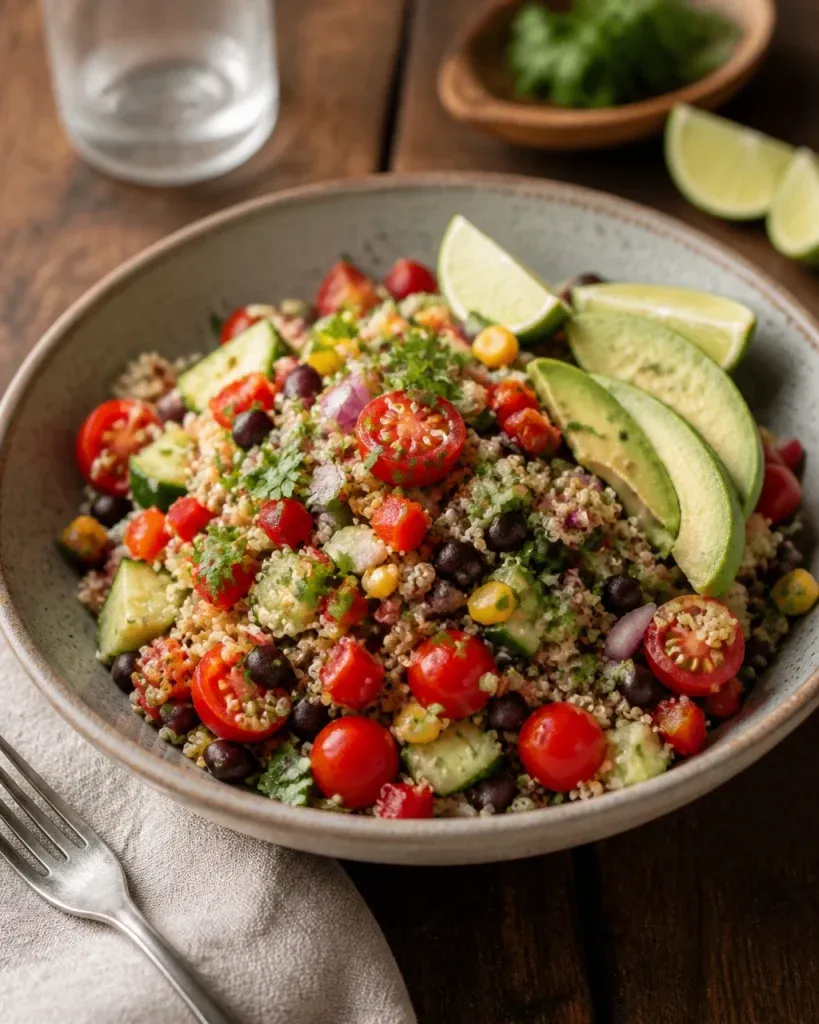
This quinoa and black bean power salad is the kind of lunch or dinner that makes a busy day feel slightly more organized. It is filling without being heavy, bright without being fussy, and sturdy enough for tomorrow’s leftovers. I build it around fluffy quinoa, creamy black beans, crisp vegetables, and a lively lime dressing. If you enjoy quick meals from Cookpedia, keep this one close. It belongs in the regular rotation of healthy dinner ideas and genuinely useful quick family meals.
Tips & Technique: Build Texture Before You Build Flavor
Rinse quinoa for a cleaner, nuttier taste
Do not skip the rinse. Quinoa naturally carries a coating of saponins, bitter, soap-like compounds that can make the cooked grain taste harsh. Most packaged quinoa has already been processed to reduce them, but a thorough rinse still improves the final flavor.
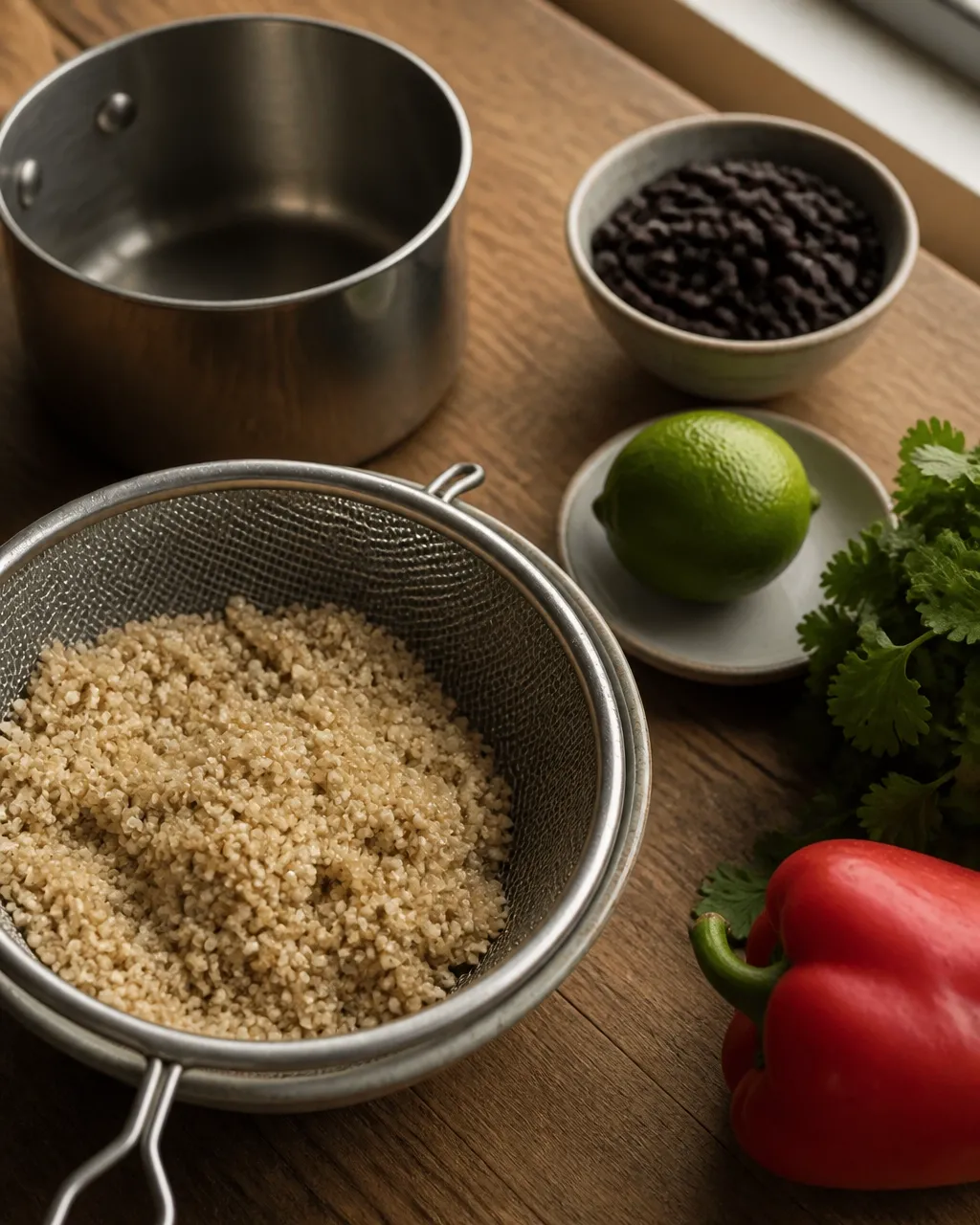
Run the quinoa under cold water in a fine-mesh sieve and rub the grains gently with your fingers. This removes the lingering coating and also helps wash away loose starch. The result tastes more delicate and less muddy, which matters in a salad where every component is exposed.
For extra flavor, toast the rinsed quinoa briefly in the cooking pot before adding the liquid. This drives off surface moisture and encourages a light browning of the grain. You are not trying to turn it dark; just give it enough heat to bring out a subtle, nutty aroma.
Protect the grains from the dreaded salad slump
A power salad should have separate, fluffy grains: not a damp quinoa blanket. Use a gentle simmer and avoid stirring constantly while the quinoa cooks. Excess agitation releases starch and can push the texture toward sticky.
Let the cooked quinoa rest, covered, after it leaves the heat. That short pause allows steam to distribute through the grains and finishes the cooking evenly. Fluff it with a fork rather than a spoon. A fork lifts and separates; a spoon compacts. Quinoa remembers.
Cool the quinoa before combining it with the vegetables. Warm grains can wilt crisp produce, soften herbs, and make the dressing disappear too quickly. Spread the cooked quinoa in a broad bowl or shallow dish if you need it to cool faster. More surface area means more heat can escape.
Rinse black beans to control flavor and texture
Canned black beans are wonderfully convenient, but the liquid in the can can be salty, starchy, and slightly metallic. Drain and rinse them well, then let them dry for a moment. This keeps the salad from becoming watery and gives the dressing a cleaner canvas.
Handle the beans gently when you fold them into the quinoa. Split beans release starch, which can thicken the dressing and make the salad feel pasty. A few broken beans are no disaster: this is home cooking, not a bean inspection: but avoid vigorous mixing.
Use contrast to make the salad satisfying
The best salads are built on contrast. Quinoa brings a soft, faintly nutty chew. Black beans add creaminess and earthy depth. Crisp vegetables provide snap. Fresh herbs supply aroma, while lime brings the acidity that keeps everything lively.
Cut vegetables into pieces that are reasonably similar in size to the beans. This is not just a matter of neat presentation. Consistent pieces distribute flavor more evenly, so you do not end up with one forkful of tomato and another that tastes like nothing but quinoa.
Add the dressing gradually and toss with a light hand. The goal is to coat the salad, not drown it. Quinoa absorbs liquid quickly, and a dressing that seems perfect at first may feel heavy after ten minutes. Taste again after the salad rests and adjust the acidity before adding more oil.
Understand why acid matters
Lime juice does more than make the salad taste fresh. Acidity sharpens perception, balances the mild sweetness of corn or peppers, and cuts through the richness of olive oil and avocado. It gives the beans and quinoa definition.
Add the lime near the end of mixing rather than soaking everything for hours. Acid can soften delicate vegetables over time, especially watery ones. If you are preparing the salad ahead, keep a little dressing aside for refreshing it just before serving.
Salt works with the acid, too. It reduces the perception of bitterness and helps individual flavors stand out. Season in stages, especially if your beans, broth, or other toppings already contain salt. Check the salad after it has rested because the grains will continue absorbing seasoning.
Let the salad rest: but not forever
A short rest allows the dressing to move into the quinoa and beans, creating a more unified flavor. Thirty minutes is often enough for the salad to taste less like separate ingredients and more like dinner with a plan.
Do not leave it sitting warm for long periods. Cool leftovers promptly and refrigerate them in a covered container. The salad is at its freshest when the vegetables still have a little crunch and the herbs retain their green, fragrant character.
This balance of fiber, plant protein, complex carbohydrates, and fresh produce is why the dish feels substantial without relying on a heavy sauce. For a helpful nutrition reference, compare the general structure with this Quinoa and Black Bean Salad from Nutrition.gov.
Variations: Keep the Structure, Change the Mood
Treat this salad as a flexible formula rather than a fragile one-recipe wonder. Keep the basic balance: grain, legume, vegetables, acidity, and fat: then change the personality.
For a smoky version, add roasted peppers, charred corn, or a little smoked paprika. The deeper roasted notes pair especially well with black beans. For more heat, use jalapeño, chilli flakes, or a sharp hot sauce. Add heat gradually; you can always increase it, but you cannot politely remove it once the salad is fiery.
Make it more Mediterranean with cucumber, parsley, lemon, and a salty crumble of feta. Swap the lime for red wine vinegar if you want a sharper, less tropical finish. For a creamy variation, fold in avocado just before serving so it stays in recognizable pieces instead of becoming green dressing.
Turn it into a meal-prep bowl by keeping crunchy vegetables and dressing separate until lunchtime. Add toasted seeds or nuts for extra texture. If you are after another plant-based option, Cookpedia’s teriyaki tofu with charred spring onions uses the same useful principle: combine a satisfying protein with bold flavor and plenty of textural contrast.
These are healthy dinner ideas that stay interesting because the technique remains dependable while the flavor direction changes.
Side Dish Pairings: Add Freshness, Not Competition
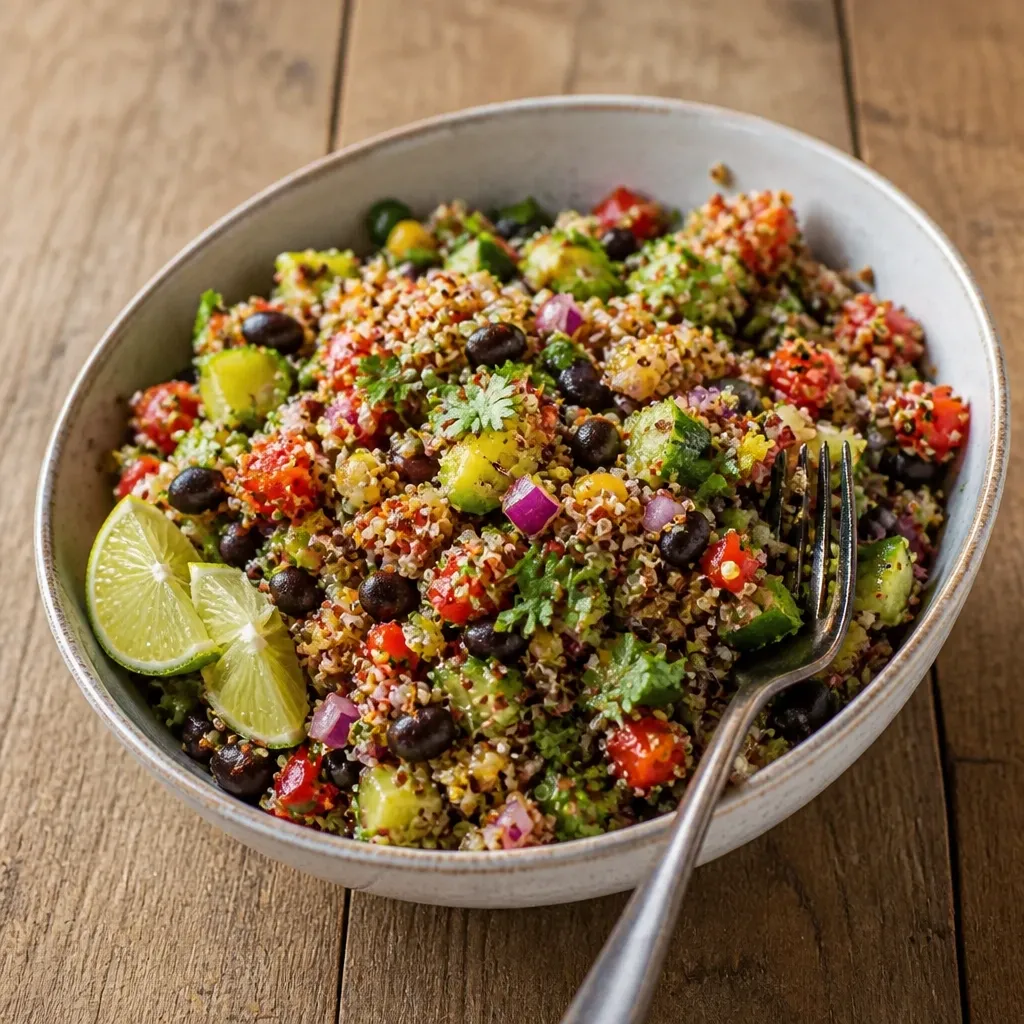
This salad already carries protein, fiber, and plenty of color, so choose sides that add contrast rather than bulk.
Pair it with cool cucumber slices dressed lightly with yogurt, lime, or vinegar. The crisp, watery texture refreshes the palate and balances the earthy beans. A simple green salad works for the same reason, especially when it has a sharp vinaigrette instead of a creamy dressing.
For a warmer plate, serve the salad beside roasted vegetables. Cookpedia’s 15-minute air fryer roasted vegetables bring caramelized edges and a little heat. If you are collecting air fryer recipes dinner options, use those vegetables as a companion rather than piling them into the salad; keeping them separate protects their crisp edges.
Warm corn tortillas or toasted whole-grain pita also work well for scooping. Keep the bread portion modest so it supports the meal instead of turning a light bowl into a carb-heavy mountain.
FAQ
Can I make this salad ahead of time?
Yes. Prepare the quinoa and beans ahead, then refrigerate them in a covered container. For the best texture, keep the dressing and delicate vegetables separate until you are ready to eat. If everything is already mixed, the salad will still be good the next day, but cucumbers and herbs may soften.
Refresh leftovers with a small splash of lime juice or vinegar. Taste before adding salt because the flavors concentrate as the salad rests.
Why did my quinoa turn mushy?
Mushy quinoa usually comes from too much liquid, overly vigorous stirring, or skipping the covered rest. Measure the cooking liquid carefully and let the grains simmer gently. Once the liquid has been absorbed, remove the pot from the heat and leave it covered so the steam can finish the job.
Cool the quinoa in a wide dish before mixing. A hot, crowded bowl traps steam and creates the exact softness you were trying to avoid.
What if my salad tastes bitter?
First, check whether the quinoa was rinsed thoroughly. Residual saponins are the most likely culprit. If the salad is already assembled, increase brightness with a little lime juice, then add a small amount of salt. A touch of sweetness can help balance bitterness, but use it carefully so the salad does not become sugary.
Also check your herbs and greens. Older herbs or strongly bitter vegetables can throw off the whole bowl.
What if the salad tastes bland?
Do not immediately add more oil. Blandness is often a seasoning or acidity problem, not a richness problem. Add lime juice or vinegar first, then taste. Follow with salt, black pepper, cumin, chilli, or another savory seasoning that matches the direction you want.
Give the salad time to rest before making major adjustments. Quinoa absorbs dressing, so the flavor can change noticeably after a short pause.
Can I use frozen vegetables?
Yes, particularly for corn or shelled edamame. Thaw them and drain them well before adding them. Excess water will dilute the dressing and make the salad soggy. For vegetables such as peppers, fresh versions usually provide a better crisp texture, but frozen produce is perfectly practical when speed matters.
Is quinoa a complete protein?
Quinoa contains all nine essential amino acids, which is why it is commonly described as a complete protein. Black beans add more plant protein and fiber, making the combination especially satisfying. You do not need to obsess over matching proteins in one exact bite; eating a varied diet across the day matters more.
How long will leftovers keep?
Store the salad in the refrigerator and use it within several days for the best quality. Keep avocado, delicate herbs, and crunchy toppings separate when possible. Check the texture and aroma before serving, and discard anything that looks or smells questionable.
Can I serve it warm?
Absolutely. Serve the quinoa and beans slightly warm with the vegetables folded in at the last moment. The texture will be softer and the herbs less crisp, but the bowl will feel comforting. Keep the dressing bright and acidic so the warmth does not make the flavors seem heavy.
When you need reliable quick family meals, this salad gives you a sturdy starting point, plenty of room to improvise, and no requirement to make dinner complicated.