Recipe
Servings
Servings 1×
Ingredients
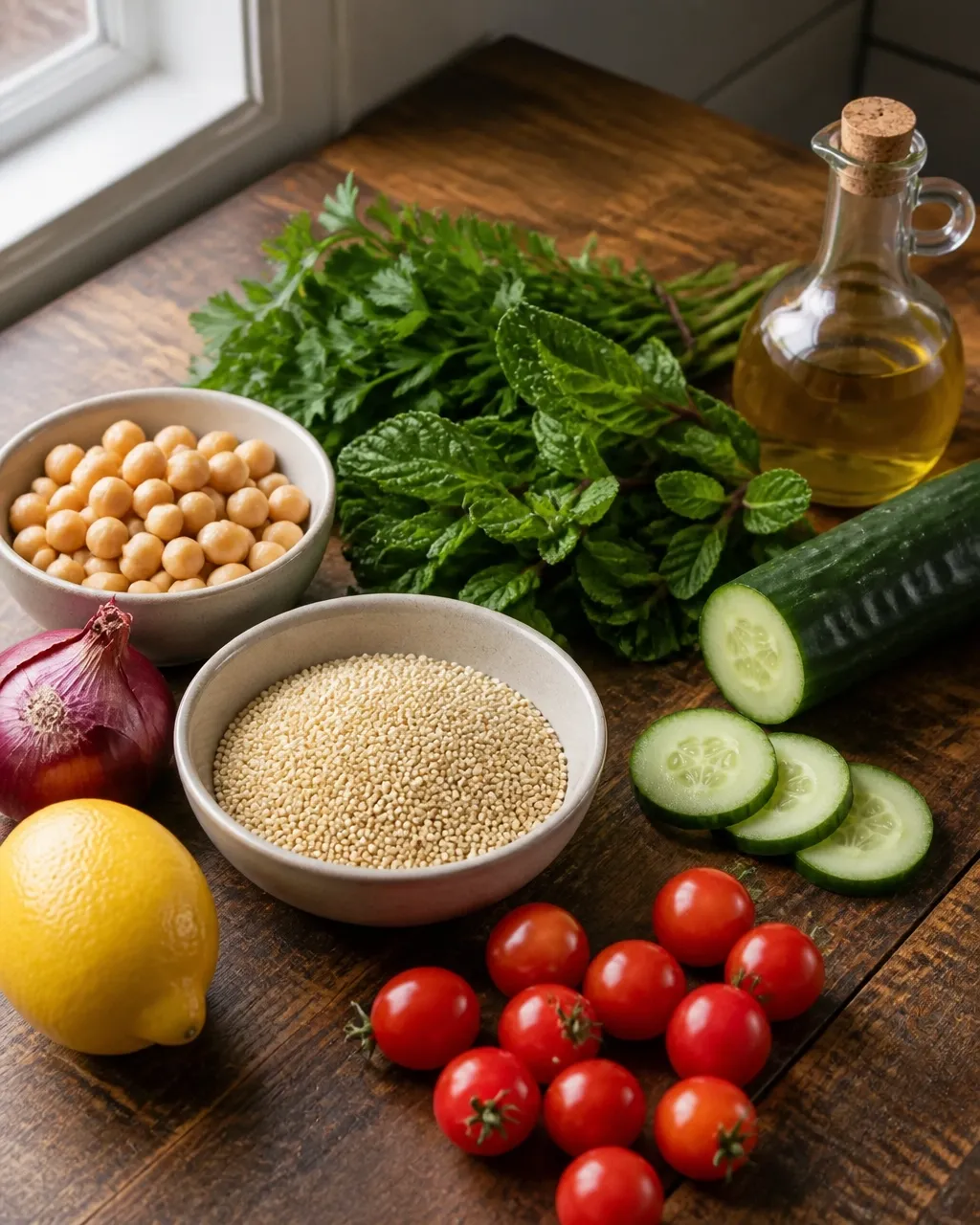
- Chickpeas
- Quinoa
- Cucumber
- Tomatoes
- Lemon
- Tahini
- Feta
- Cooking oil
- Salt
Method
- Make it for a busy weeknight, pack it for lunch, or serve it beside something hot from the oven.
- Start with the quinoa, because texture is the foundation of this bowl.
- Rinse it thoroughly under cool water before cooking.
- Cook quinoa gently rather than aggressively.
- Keep the heat low once the liquid begins bubbling, cover the pot, and let the seeds absorb the moisture steadily.
- Let the grains cool until they are warm or room temperature, then combine them with the fresh vegetables.
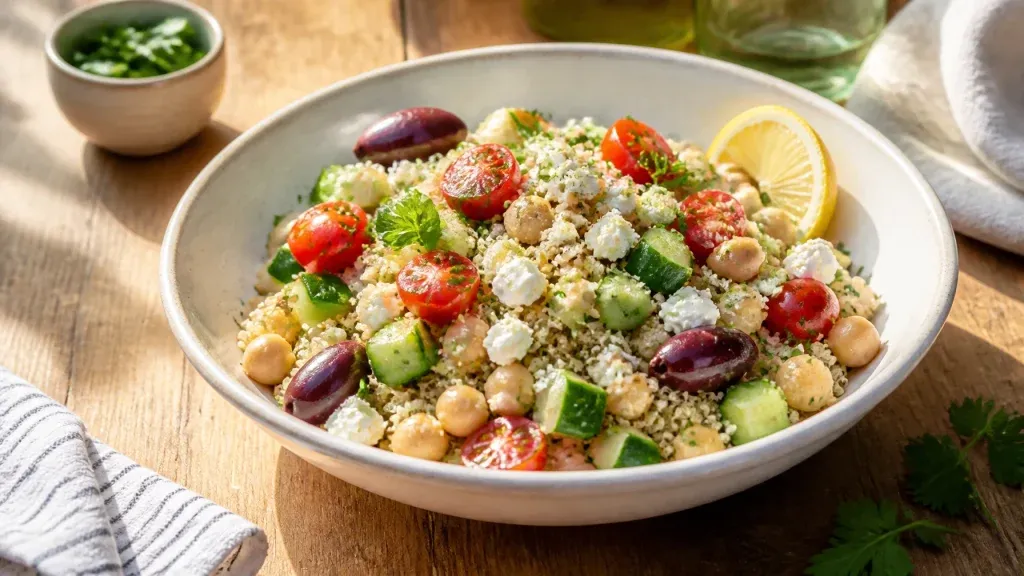
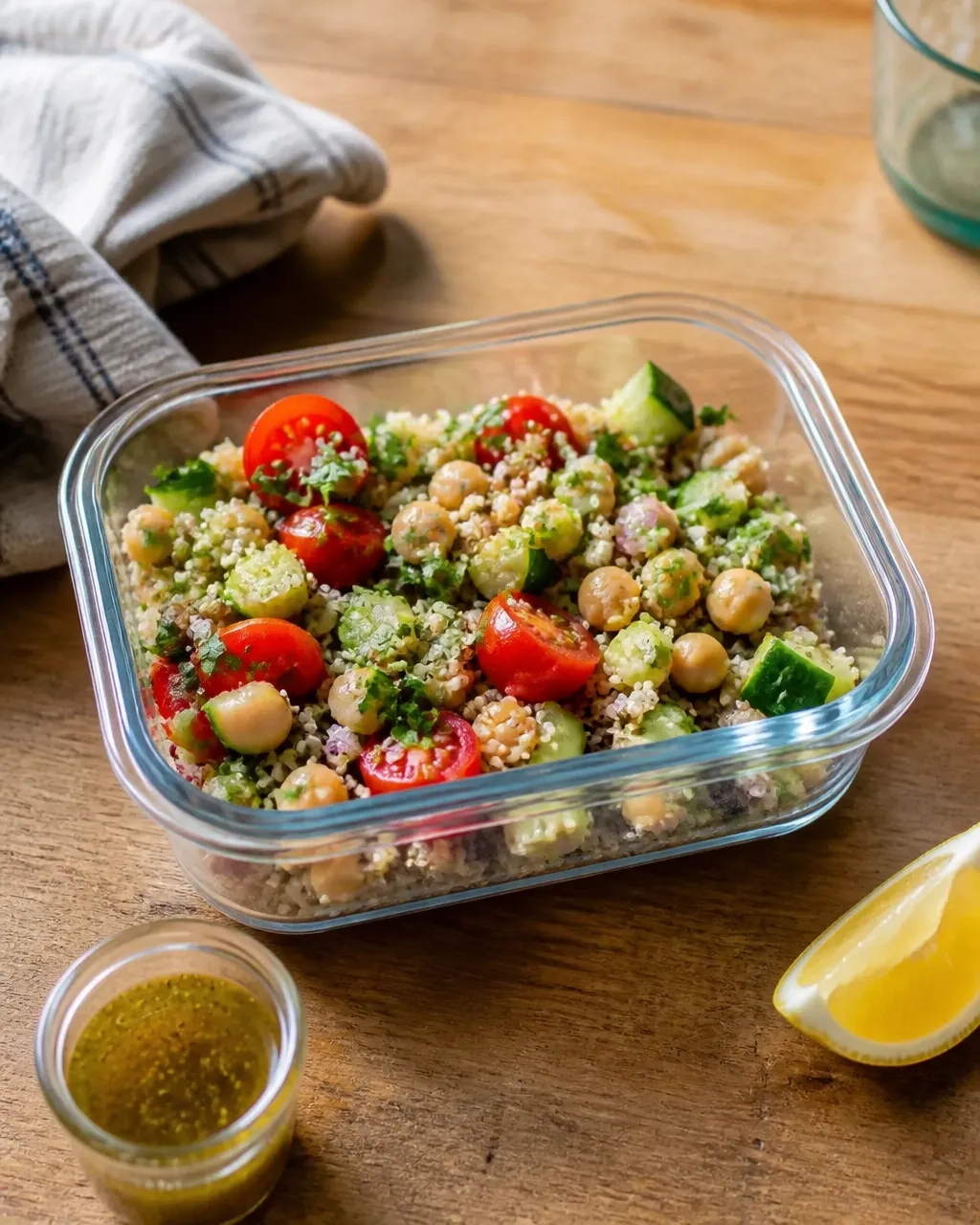
A good grain bowl should do more than fill a bowl. It should give you contrast: fluffy quinoa, cool cucumber, juicy tomatoes, creamy feta, briny olives, and a bright lemony dressing that keeps everything lively. This Mediterranean quinoa and cucumber bowl is one of my favorite quick healthy meals because it feels fresh but still eats like dinner. Make it for a busy weeknight, pack it for lunch, or serve it beside something hot from the oven.
Fluffy Quinoa, Crisp Cucumbers, and the Science of Good Texture
Start with the quinoa, because texture is the foundation of this bowl. Rinse it thoroughly under cool water before cooking. Quinoa naturally carries saponins on its outer coating, and those compounds can taste bitter or soapy. A quick rinse removes much of that problem before it reaches your plate.
Cook quinoa gently rather than aggressively. A rolling boil can make the outside of the seed soften before the center finishes absorbing water, leaving you with a pot of tiny, overworked grains. Keep the heat low once the liquid begins bubbling, cover the pot, and let the seeds absorb the moisture steadily.
Do not skip the covered rest after cooking. The residual steam continues moving through the quinoa and evens out the moisture. That short pause is what helps the grains become fluffy instead of wet and clumpy. Fluff with a fork, not a spoon. A fork separates the grains without pressing them into a soft mass.
Cool the quinoa before adding the cucumber and tomatoes. This is non-negotiable if you want crunch. Hot quinoa creates steam, and steam is excellent for cooking vegetables but terrible for preserving the crisp bite of cucumber. Let the grains cool until they are warm or room temperature, then combine them with the fresh vegetables.
Pay attention to cucumber water, too. Cucumbers are mostly water, which is why they taste so refreshing, and why they can quietly turn a grain bowl soggy. If you are serving the bowl immediately, simply chop the cucumber and dress it near the end. For meal prep, lightly salt the chopped cucumber, let it sit briefly, then drain away the liquid before assembling.
That little salting step uses osmosis. Salt draws some water from the cucumber’s cells, concentrating its flavor and reducing the amount of liquid it releases later. You are not trying to make cucumber jerky. Drain it as soon as it looks lightly glistening, then continue.
Build the dressing around contrast. Lemon juice or red wine vinegar supplies acidity, while olive oil brings roundness and carries aromatic compounds from herbs and spices across the palate. Acid cuts through the richness of feta, hummus, or tahini. Without it, the bowl can taste flat even when every component is technically seasoned.
Add the dressing to the warm quinoa before adding the vegetables. Quinoa absorbs flavor as it cools, so this gives the grains a head start. Once the cucumber and tomatoes go in, use a gentle folding motion. Stir too forcefully and you will crush the tomatoes, bruise the herbs, and create a salad that looks more like a small kitchen accident.
Keep herbs fresh and add them at the right time. Parsley and mint bring bright, green aromas, while oregano contributes a warmer, more concentrated Mediterranean character. Fat helps carry many of the aromatic compounds in herbs, which is why the olive oil makes the herbs taste more noticeable rather than simply oily.
For a meal-size bowl, combine quinoa with chickpeas or another protein-rich topping. Quinoa contributes plant-based protein and fiber, while chickpeas make the bowl more satisfying. With moderate olive oil and a modest amount of feta, a typical serving often falls somewhere around 400–500 calories, with roughly 14–18 grams of protein and a generous amount of fiber. Treat those numbers as a guide, not a mathematical prophecy; portions and brands matter.
Variations That Keep the Bowl Interesting
Treat this recipe as a template rather than a strict rulebook. Mediterranean cooking is wonderfully flexible, and the bowl can change with the season, your pantry, or the contents of your refrigerator.
For extra plant-based protein, add more chickpeas and finish with hummus or a tahini-lemon drizzle. The creamy topping balances the crisp vegetables, but use it with a light hand. Too much richness can bury the fresh flavors that make this bowl work.
Skip the feta for a vegan version, or replace it with toasted seeds for salty crunch. Add grilled chicken, canned tuna, or leftover salmon if you want a higher-protein dinner. Cooked lentils also fit beautifully and bring an earthier flavor.
Change the herbs to suit the mood. Use basil for a softer, sweeter profile, dill for a cool and grassy note, or extra parsley for a clean finish. Add roasted red peppers or artichoke hearts when you want more savory depth.
For a lower-carbohydrate variation, reduce the quinoa and increase the cucumber, leafy greens, and protein. It will no longer be quite as grain-forward, but the lemon-herb dressing will still tie everything together.
Side Dishes That Balance Every Bite
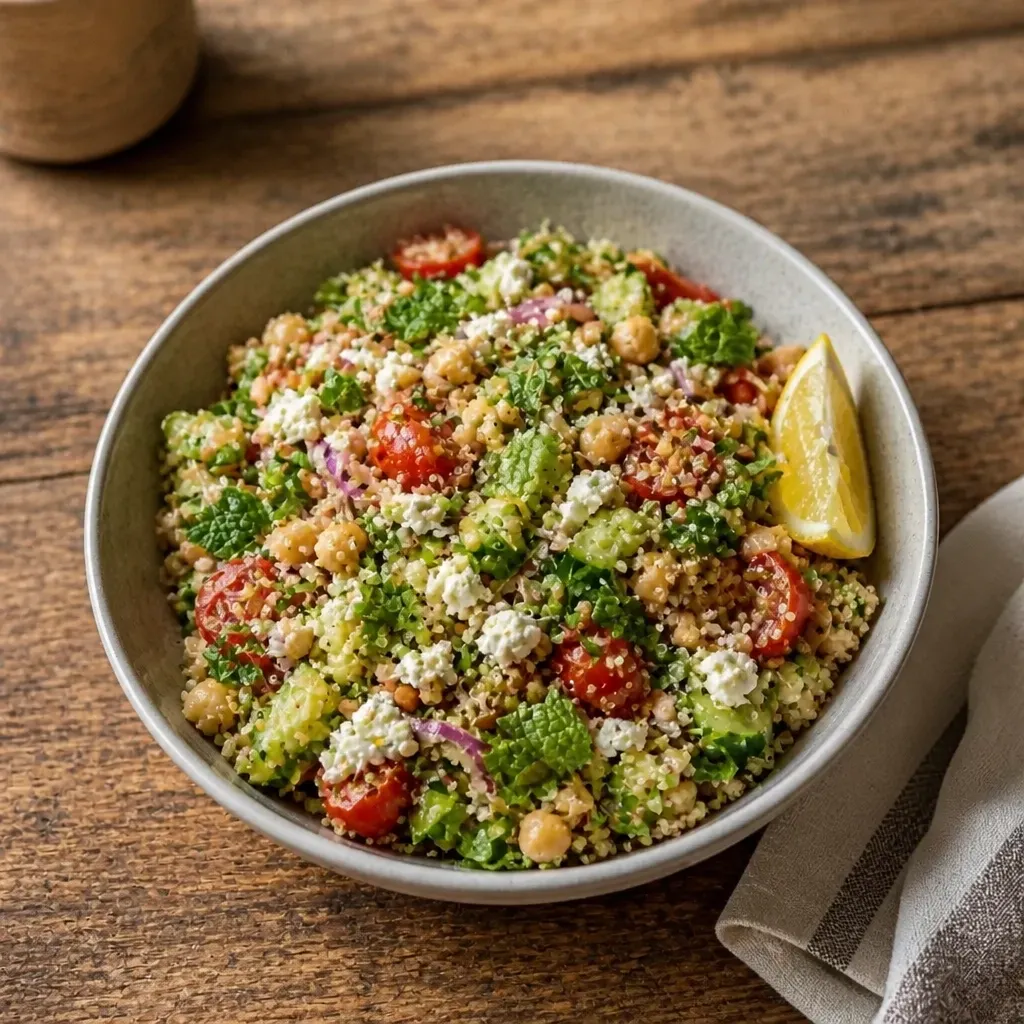
This bowl is substantial enough to serve on its own, but the right side can turn it into a more generous spread. Pair it with grilled chicken, fish, or simple roasted vegetables when you want a larger dinner without adding a complicated second recipe.
Choose sides that bring a different temperature or texture. Warm pita offers chew and makes the meal feel communal, while a bowl of hummus adds creamy richness. If the main bowl already contains feta or tahini, balance it with something sharper, such as a tomato salad dressed with extra lemon.
For a lighter plate, serve the quinoa bowl with a simple green salad or steamed vegetables. Keep the seasoning restrained so the side does not compete with the herbs and acidity in the quinoa.
You can also browse Cookpedia’s quick meals collection, vegetarian dinner recipes, or 15-minute meals when you need more weeknight inspiration.
Frequently Asked Questions
Can I make this bowl ahead of time?
Yes, but separate texture-sensitive components when possible. Cooked quinoa keeps well in the refrigerator, and the dressing can be mixed ahead. Store cucumber, tomatoes, and fresh herbs separately if you are preparing several lunches. Combine everything shortly before eating for the best crunch.
If you have already assembled the bowl, do not panic. It will still taste good the next day, but the cucumber will be softer and the quinoa may absorb more dressing. Think of it as marinated rather than ruined.
Why does my quinoa taste bitter?
The most common reason is leftover saponins on the seed’s outer surface. Rinse the quinoa in a fine-mesh sieve, rubbing it gently under running water. Also check the cooking liquid and seasoning. A bitter dressing, old olive oil, or too much dried oregano can create a similar impression.
Use fresh lemon and taste the dressing before combining it with the bowl. Add acidity gradually; bright is good, but aggressively sour is not a personality trait.
How do I stop the bowl from becoming watery?
Manage moisture at three points. First, avoid overcooking the quinoa, because excess water makes it soft and sticky. Second, drain chickpeas and tomatoes well. Third, dress the cucumber close to serving time or salt and drain it in advance.
Store the dressing separately for packed lunches. This preserves the cucumber’s structure and lets you adjust the amount at mealtime. If the finished bowl is already watery, drain a little liquid and refresh it with herbs, lemon zest, and a small spoonful of quinoa.
Can I use leftover quinoa?
Absolutely. Leftover quinoa is ideal for this kind of bowl because it is already cool and ready to absorb dressing. Break up any compacted areas with a fork before mixing. If it feels dry from refrigeration, let the dressing sit with it for a few minutes before adding the vegetables.
Use refrigerated quinoa within a safe storage window and keep it chilled until serving. Do not leave a prepared bowl sitting at room temperature for hours.
Is this a complete dinner?
It can be, especially when the bowl includes quinoa, chickpeas, vegetables, olive oil, and a small amount of feta or another protein topping. Quinoa and chickpeas provide carbohydrates, fiber, and plant-based protein, while olive oil contributes mostly unsaturated fat.
For a more filling meal, increase the protein component rather than simply adding more dressing. Add grilled chicken, fish, tofu, lentils, or extra chickpeas. For lighter healthy dinner ideas, keep the quinoa portion moderate and make the vegetables the visual star.
What if I do not like cucumber?
Use another crisp vegetable with a similar refreshing role. Radishes, chopped bell peppers, celery, or lightly blanched green beans can all work. Keep the vegetable bright and crunchy so the bowl still has contrast.
Avoid replacing cucumber with a very soft vegetable unless you also add a crisp element. The charm of this dish comes from the conversation between fluffy grains, juicy vegetables, creamy toppings, and sharp dressing.
Can children enjoy this bowl?
Yes. Serve the components separately if your family prefers a build-your-own dinner. Keep olives and feta on the side, and offer the dressing for dipping or drizzling. This approach works especially well for quick family meals because everyone can assemble a bowl without asking you to rebuild dinner four different ways.
Start with familiar flavors, then introduce stronger ingredients gradually. A little lemon, parsley, and olive oil may be all you need at first. Save the bolder oregano and olives for adventurous eaters.
Can I turn it into an air fryer meal?
Certainly. Add air-fried chickpeas, tofu, or vegetables for a crisp contrast. If you are collecting air fryer recipes dinner options, use the appliance for one hot component while the quinoa and cucumber mixture stays cool. That hot-cold contrast makes the bowl feel more substantial without creating extra work.
Season the air-fried topping separately and add it just before serving. Keeping it away from the dressing protects its crisp edges: the small but important difference between crunch and dampness.