Recipe
Servings
Servings 1×
Ingredients
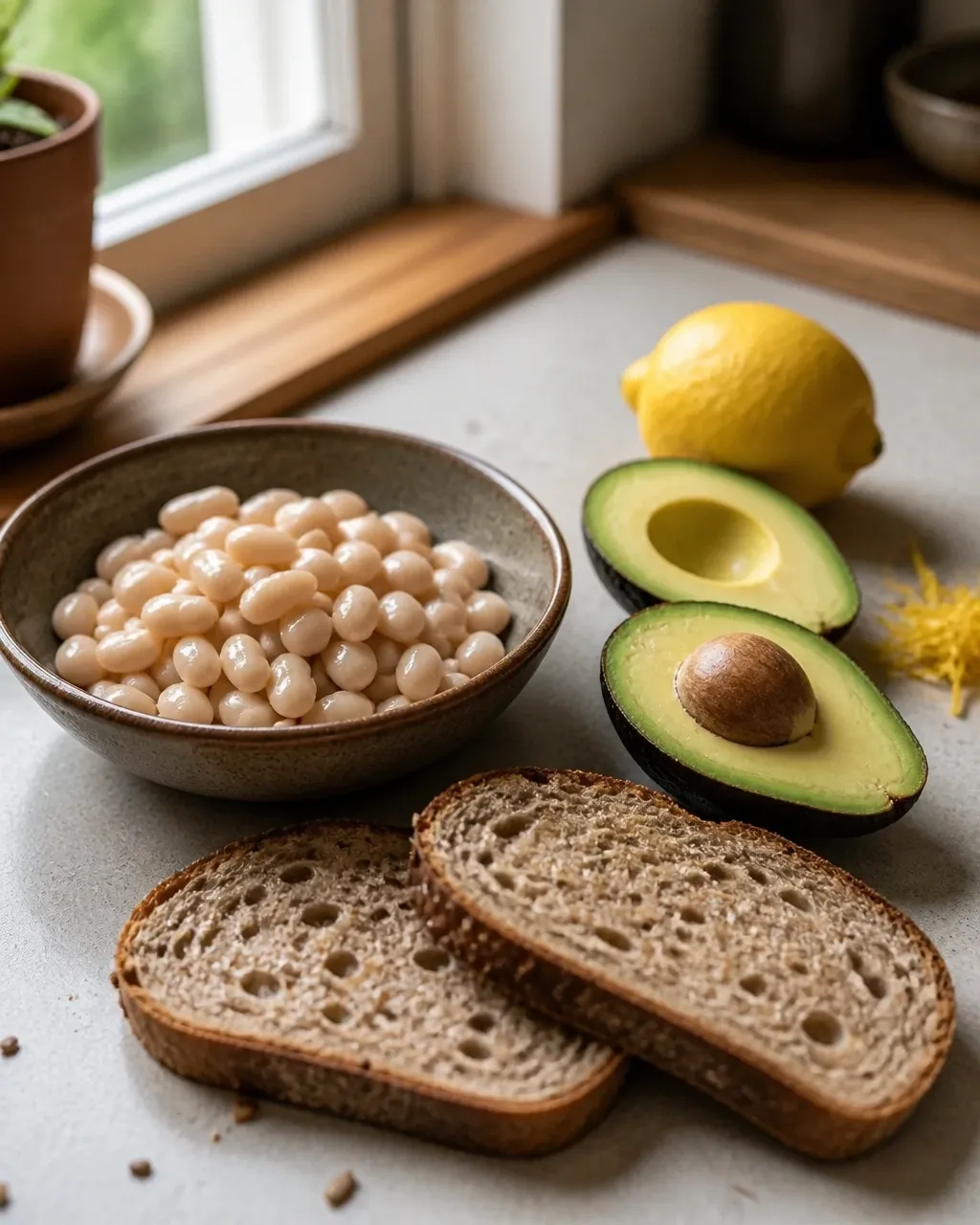
- White beans
- Beans
- Bread
- Avocado
- Lemon
- Butter
- Cooking oil
- Chili seasoning
- Salt
- Black pepper
Method
- Use sturdy whole-grain or seeded bread with a crisp crust and a little chew.
- Toast the bread until it is properly crisp, not merely warm.
- Drain and rinse canned beans well.
- Pat them dry if they look particularly wet.
- Season the beans before they reach the bread.
- Add lemon zest for fragrance, but remember that zest is not a substitute for juice.
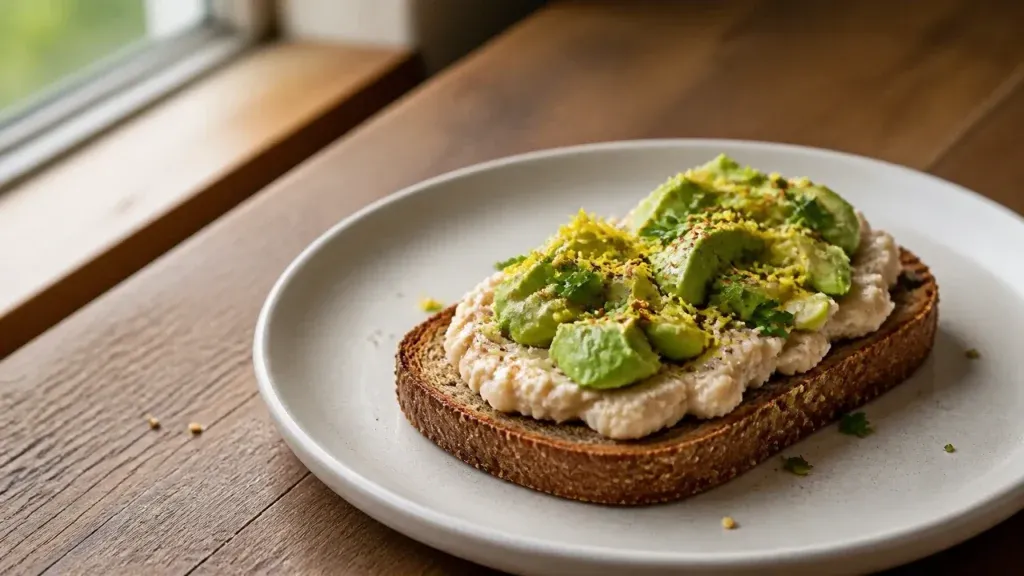
When toast needs to do more than hold butter, make it a meal. This avocado and white bean toast combines creamy texture, crisp bread, plant-based protein, and a bright hit of lemon in minutes. It is simple enough for a rushed morning but satisfying enough for lunch or a light dinner. The trick is not piling on toppings: it is balancing texture, acidity, and seasoning so every bite tastes fresh rather than flat.
Tips & Technique: Make Every Layer Work Harder
Start with toast that can carry the weight
Use sturdy whole-grain or seeded bread with a crisp crust and a little chew. Soft sandwich bread may toast quickly, but it can collapse under moist beans and avocado. A firm slice gives you contrast: crunchy at the edges, tender underneath, and strong enough to support a generous topping.
Toast the bread until it is properly crisp, not merely warm. Moisture from the bean spread will soften the surface within minutes, so a darker golden finish buys you extra time. If you are using a very dense loaf, toast it slightly longer at a moderate setting rather than scorching the outside. Burnt bread brings bitterness, and lemon cannot negotiate with burnt bread.
For more fast meal inspiration, browse Cookpedia’s quick-meals collection, where the focus stays firmly on practical cooking.
Keep the beans textured
White beans are the quiet powerhouse here. They contribute fiber, plant protein, and a creamy body without making the toast feel heavy. They also provide something avocado alone cannot: structure.
Mash the beans lightly instead of turning them into a perfectly smooth purée. Leave a few beans partly intact. Those small pieces create texture and make the topping feel substantial. A completely smooth spread can taste like baby food if it is not balanced with something crisp or sharp.
Drain and rinse canned beans well. Excess liquid makes the spread loose and can leave the toast soggy. Pat them dry if they look particularly wet. This is a small move, but it gives you control over the final texture.
Season the beans before they reach the bread. Salt helps the flavor move through the mixture, while lemon juice wakes up the beans’ mild, earthy taste. Add lemon zest for fragrance, but remember that zest is not a substitute for juice. The zest carries aromatic citrus oils; the juice brings acidity.
Use lemon juice to slow browning
Avocado darkens when its cut surface reacts with oxygen. This is enzymatic oxidation, not a sign that the avocado has suddenly become dangerous. It is still worth slowing because bright green avocado looks fresher and tastes more appealing.
Apply lemon juice directly to the avocado soon after cutting or mashing it. The citric acid lowers the surface pH and helps slow the browning reaction. Lemon juice also contributes vitamin C, which offers another small layer of protection. Mix some juice into the avocado rather than relying only on lemon underneath the topping.
Use lemon zest strategically. Scrape only the yellow outer skin and stop before the white pith, which can taste bitter. Add zest to the beans for a gentle citrus aroma, then finish the toast with a little more over the avocado. Your nose will notice the zest before your tongue notices the juice, which makes the toast taste brighter without requiring a flood of acid.
Balance richness with acid and heat
Avocado brings soft, fatty richness. That is exactly why lemon matters. Acid cuts through richness by making your mouth water and sharpening the flavors around it. Without enough acidity, avocado and beans can blur into one mild, creamy note.
Taste the topping before spreading it. If it seems dull, add acidity first. If it tastes sharp but still boring, add salt. If it is balanced but lacks personality, use black pepper, chili flakes, or a small amount of fresh herbs. Add heat gradually; chili should provide a gentle spark, not hijack the toast.
Do not automatically add more olive oil. Avocado already supplies plenty of creamy richness, and excess oil can make the topping slide around. Add only enough to round out the flavor if the beans taste dry.
Protect the contrast
Assemble the toast shortly before eating. The longer the topping sits, the more moisture migrates into the bread. This is basic diffusion: water moves from the wetter topping into the drier toast, and crispness declines.
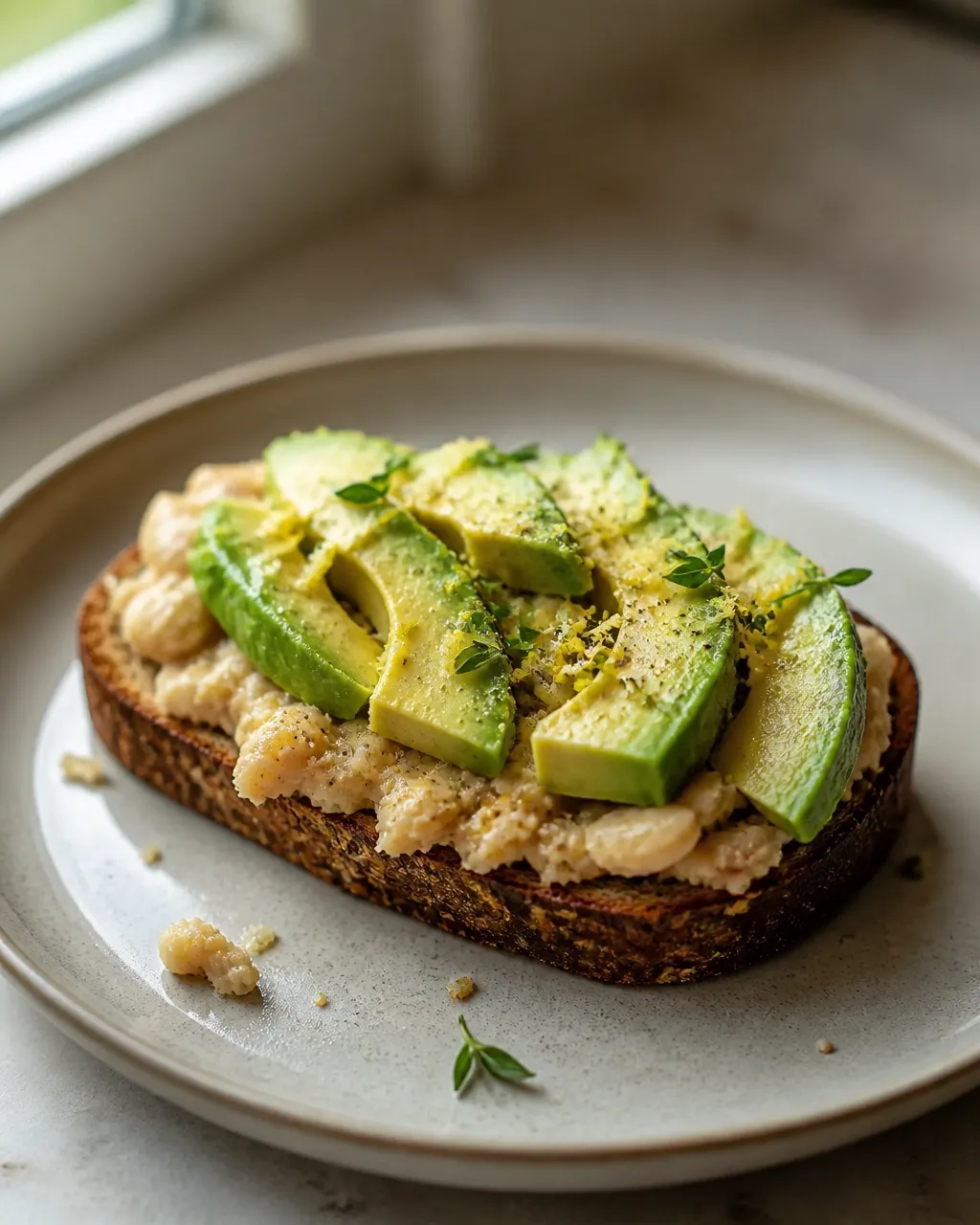
Keep the bean spread slightly thicker than you think you need. Spread it all the way to the edges so each bite has coverage, but avoid an overly deep layer. Add the avocado in uneven pieces or a rustic mash rather than a perfectly smooth blanket. The goal is contrast between crisp, creamy, chunky, and bright.
For a rough nutritional frame, similar bean-and-avocado toast recipes commonly provide a useful combination of fiber and plant protein, depending on the bread and portion size. See this avocado white bean toast recipe for a comparable example. Treat nutrition estimates as a guide, not a kitchen commandment: your slice of bread is allowed to have a personality.
Variations: Change the Mood, Keep the Balance
Make it Mediterranean
Add chopped tomatoes, parsley, and a few briny olives. The tomatoes bring juicy acidity, while olives add salt and a savory edge. Go easy on additional salt until you taste everything together. Finish with oregano or basil for a fresh herbal note.
Turn up the crunch
Top the toast with sliced radishes, toasted seeds, or finely chopped cucumber. Crunch is especially useful when the bean-and-avocado base feels very soft. Choose one or two crisp toppings rather than building a vegetable pile that makes the toast difficult to eat.
Add smoky heat
Use smoked paprika, chili flakes, or a little chopped pickled jalapeño. Pickled peppers are particularly effective because they bring both heat and acidity. Keep the lemon present; smoky flavors need brightness to avoid tasting heavy.
Make it breakfast-friendly
Add a soft-boiled or fried egg if you want more protein and a richer finish. Let the yolk act as a sauce, but keep the lemon and pepper so the result does not become too rich. A few greens underneath the egg can add freshness without changing the basic character of the toast.
Make it dinner-worthy
Serve two smaller slices with a sharp salad or warm vegetables. This keeps the portion flexible and turns the toast into one of those healthy dinner ideas that does not require a separate cooking project.
Side Dish Pairings: Add Contrast, Not Competition
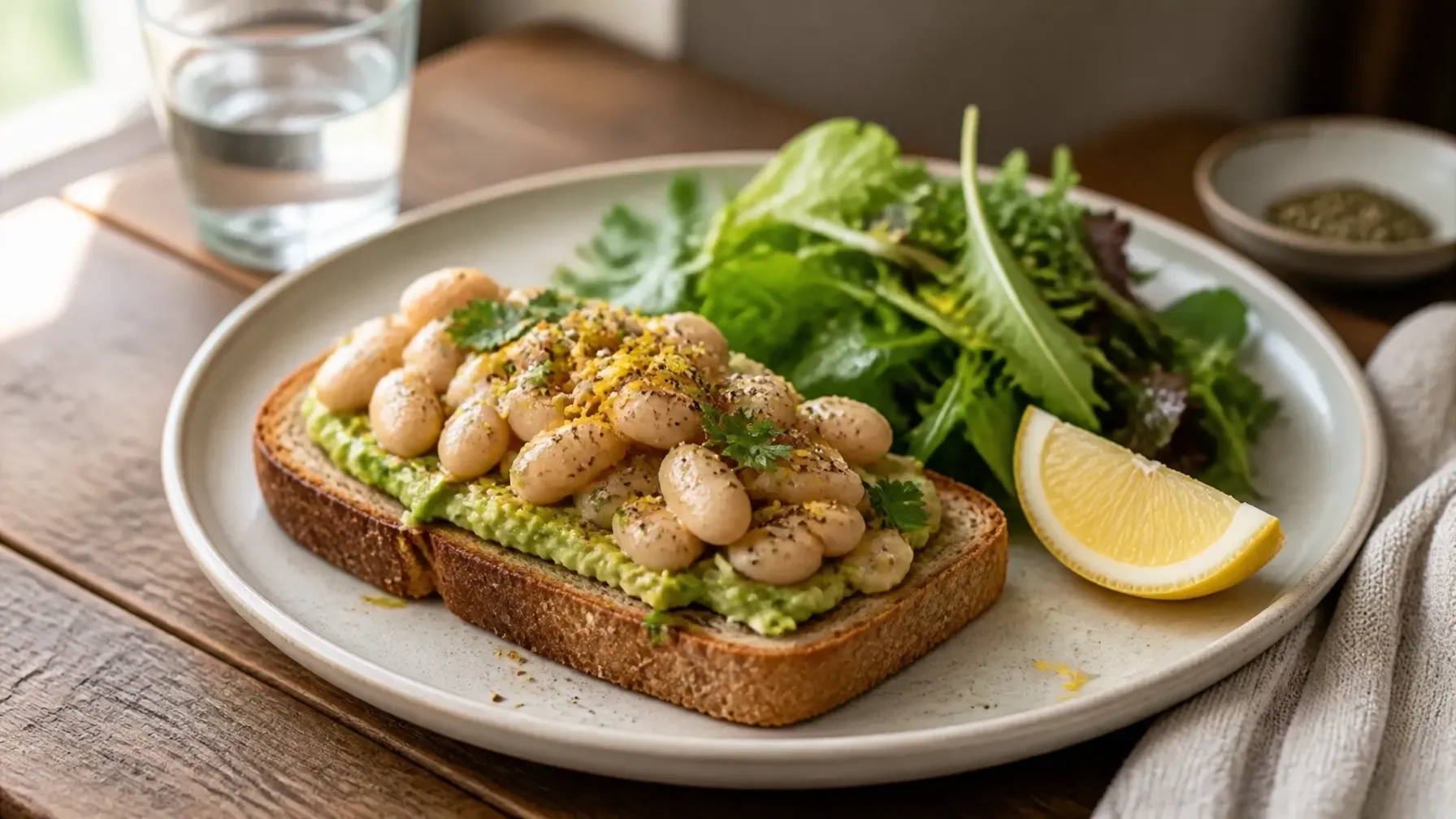
Pair this toast with something crisp, juicy, or lightly acidic. A green salad dressed with lemon or vinegar cuts through the creamy topping and adds freshness. A tomato-cucumber salad works for the same reason: its water content and acidity keep the meal lively.
For a warmer plate, serve the toast with roasted vegetables such as broccoli, peppers, or carrots. Their caramelized edges add sweetness and a little chew. Cookpedia’s air fryer recipes dinner collection is useful when you want that vegetable side with minimal hands-on time.
Keep heavier sides to a minimum. Creamy soup, cheesy potatoes, or a rich pasta dish can overwhelm the avocado and beans. Choose one creamy element and let the rest of the plate provide contrast.
FAQ: What If the Toast Goes Wrong?
What if my avocado turns brown?
Use lemon juice directly on the cut avocado and assemble the toast close to serving time. Browning happens when avocado enzymes react with oxygen, so reducing air exposure helps. Pressing wrap directly against leftover avocado spread can slow surface browning in the refrigerator, but it will not stop it forever.
If the avocado is only slightly brown but smells fresh and tastes normal, the issue is mainly appearance. Scrape off the darkened surface if you prefer. Discard it if it smells sour or fermented, feels slimy, or tastes unpleasant. Citrus slows oxidation; it does not make spoiled food safe.
What if the topping is watery?
Drain and rinse the beans thoroughly, then let them sit for a moment so excess water can run off. Avoid adding too much lemon juice or oil at once. Both add flavor, but too much liquid loosens the spread and travels quickly into the toast.
If the mixture is already loose, mash in a few more beans or add a little avocado. Do not try to rescue it with a mountain of seasoning. Seasoning cannot fix a texture problem.
What if the toast becomes soggy?
Toast the bread more firmly next time and assemble just before eating. Also check the moisture in your toppings. Wet beans, juicy tomatoes, and a generous squeeze of lemon can all soften bread through moisture migration.
For packed lunches, keep the toast and topping separate until you are ready to eat. Store the bean mixture and avocado in airtight containers in the refrigerator, and use them promptly. Expect some texture loss after storage; crisp toast and creamy toppings are naturally better as a fresh partnership.
What if the beans taste bland?
Salt them before spreading, then add acidity. Beans need enough seasoning to taste savory, but salt alone may leave them flat. Lemon juice provides contrast, while zest adds aroma. Black pepper, chili, herbs, garlic, or smoked paprika can add depth without turning the topping into a complicated sauce.
Taste after each adjustment. The mixture should taste lively on its own because the bread will soften and dilute its intensity slightly.
Can I use a different type of bean?
Yes. Cannellini beans are creamy, great northern beans are mild, and navy beans mash smoothly. Chickpeas work too, although they create a firmer, nuttier spread. Choose beans that are fully cooked and tender.
The key is to adjust the texture. Firmer beans may need more mashing, while softer beans may need careful draining. Keep enough variation in the mixture to avoid a completely uniform paste.
Is this toast suitable for quick family meals?
It can be, especially when you serve the components separately and let everyone build a slice. Offer toasted bread, the bean spread, avocado, lemon, and a few toppings such as tomatoes or chili. That approach keeps picky eaters involved without forcing you to prepare several separate meals.
For younger children, skip or reduce spicy toppings and cut the toast into manageable pieces. Keep the lemon balanced rather than aggressively sour. The best family meal is one that gets eaten, not one that wins a plating competition.