Recipe
Servings
4 servings 1×
Serves 4Prep 20 minCook 15 minTotal 35 min
Ingredients
- 1 1/2 cups cooked brown or green lentils, drained well
- 1 cup cooked quinoa, cooled
- 1/2 cup chickpea flour or cornmeal, plus more if needed
- 1/4 red onion, finely diced
- 2 garlic cloves, minced
- 1 teaspoon ground cumin
- 1/2 teaspoon smoked paprika
- 2 tablespoons chopped fresh parsley
- 1 tablespoon olive oil, plus more for brushing
- 1/3 cup tahini
- Juice of 1 lemon, divided
- 2–4 tablespoons cold water
- Salt and black pepper, to taste
Method
- Let the cooked lentils and quinoa cool. Mash about one-third of the lentils in a bowl, leaving the rest whole for texture.
- Mix in the quinoa, chickpea flour, onion, garlic, cumin, paprika, parsley, salt, pepper, and olive oil. Add a little more flour if the mixture does not hold when pressed.
- Form the mixture into eight thin patties, about 1/2 inch thick. Chill them briefly if they feel fragile.
- Heat a lightly oiled skillet over medium heat, or heat an oven or air fryer to 400°F (200°C). Cook the patties in a single layer until firm and golden, about 4–5 minutes per side in a skillet or 12–15 minutes in the oven, turning once.
- Whisk the tahini with half the lemon juice and cold water until smooth and pourable. Serve the patties with the tahini sauce and the remaining lemon juice.
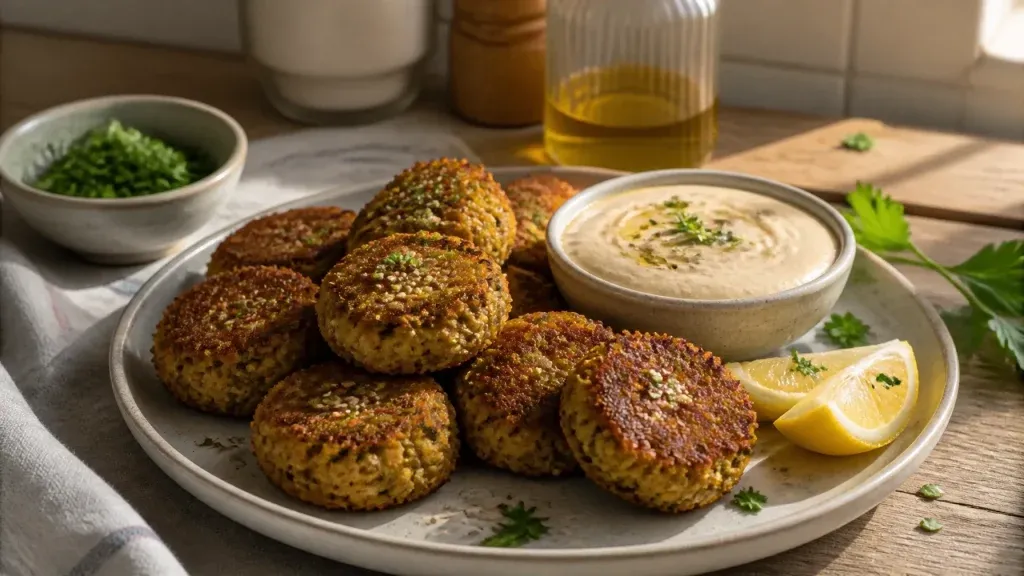
If you want a plant-based dinner that feels properly satisfying, not like a polite pile of leaves, make these crispy lentil and quinoa patties. They have a golden, lightly crunchy outside, a tender center, and enough savory flavor to keep everyone interested until the last crumb.
Serve them with creamy tahini, something fresh and sharp, and a few roasted vegetables. The patties are also excellent tucked into pita, piled onto a salad, or eaten directly from the plate while pretending you are “just checking the seasoning.”
The Science of a Patty That Stays Together
The secret to sturdy lentil and quinoa patties is moisture control. Cooked lentils and quinoa are wonderfully nutritious, but they bring plenty of water to the party. Too much moisture creates a mixture that slumps in the pan, cracks when flipped, or refuses to crisp. Delicious? Possibly. Cooperative? Absolutely not.
Drain cooked lentils thoroughly, and let the cooked grains cool before forming the patties. Cooling allows the starches in the quinoa to firm up, while the lentils become easier to mash and bind. Think of the mixture as needing a short rest after cooking, like a tiny spa treatment for legumes.
Aim for a texture that is soft and slightly sticky but not wet. Lightly mash some of the lentils while leaving plenty whole. The mashed portion acts like glue, while the whole lentils and quinoa provide texture. Avoid blending everything into a smooth paste. Smooth mixtures can turn dense, and nobody invited a bean hockey puck to dinner.
Use a dry binder such as chickpea flour or cornmeal to absorb excess moisture and strengthen the structure. Add it gradually rather than dumping in a large amount at once. The goal is a mixture that holds its shape when pressed, not one that feels dry or crumbly.
Keep the patties fairly thin, around half an inch is a useful guide. Thick patties can brown before the middle firms up, leaving you with a crisp shell and a soft center that collapses under pressure. A thinner shape gives heat more access to the middle and creates more surface area for browning. More surface area means more of the nutty, toasted flavor you actually want.
This moisture-and-starch approach is also why similar recipes, such as The Plant-Based School’s lentil and quinoa patties and Veggie Inspired’s baked red lentil-quinoa fritters, emphasize cooling and firm binding before cooking.
Crispness Comes From Contact, Not Hope
Crisp patties need a hot cooking surface and enough space to breathe. Crowding the baking sheet or air-fryer basket traps steam between the patties, and steam is the sworn enemy of crunch.
Arrange the patties in a single layer with a little room around each one. Brush or spray them lightly with oil. You do not need to drown them; a thin coating helps heat transfer into the surface and encourages even browning.
For oven baking, use a fully preheated oven and a sturdy baking sheet. Parchment helps prevent sticking, but a bare, lightly oiled metal tray can produce especially good browning underneath. Flip the patties once the first side is firm and golden. Turning too early is a common cause of breakage, so wait until the crust has done some actual structural work.
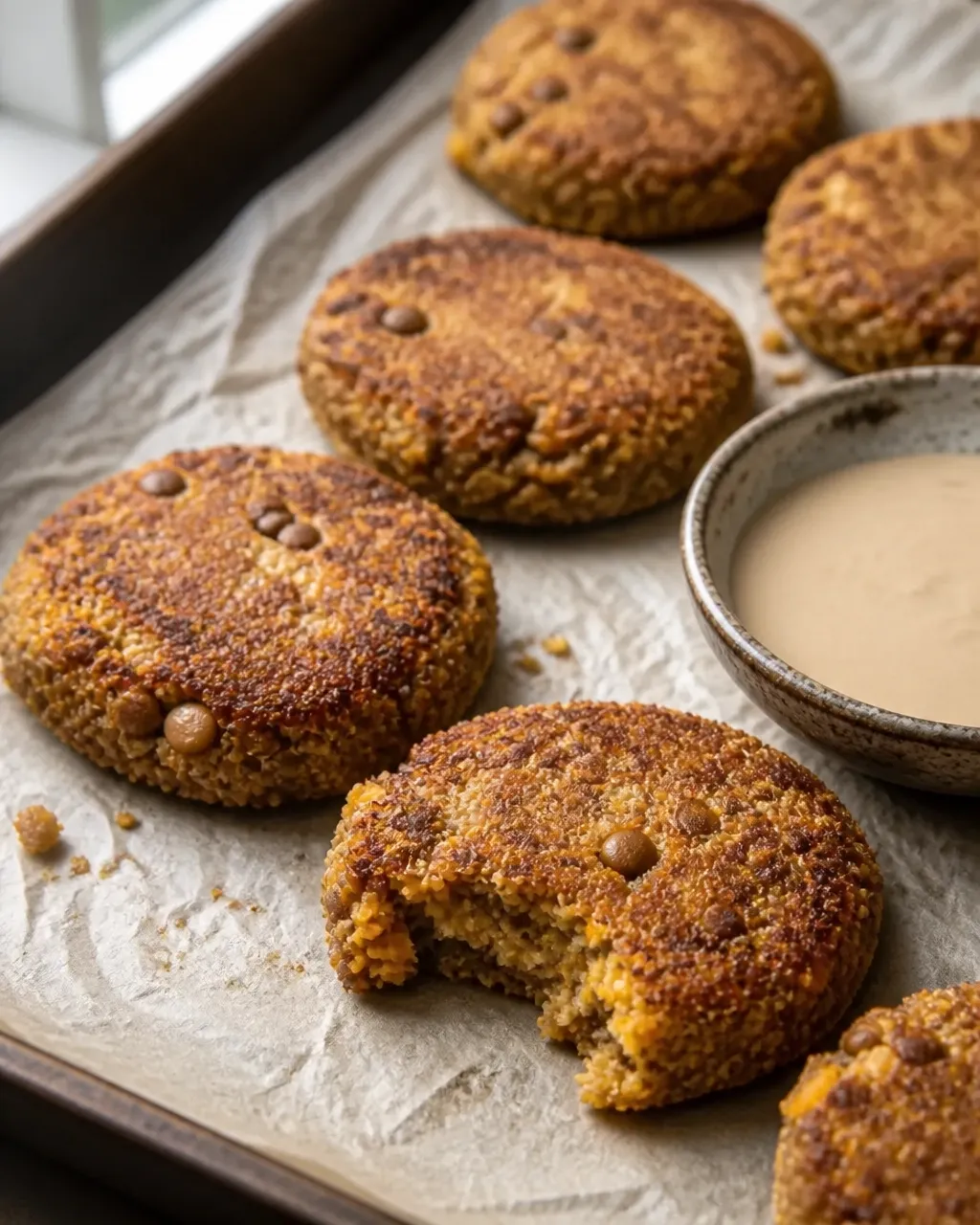
An air fryer is useful when you want a crisp finish with less oil. Keep the basket uncrowded and turn the patties halfway through. If they seem fragile, chill them briefly before cooking. Cold patties are less likely to fall apart when moved, and the hot circulating air will still crisp the outside quickly.
Pan-frying gives the deepest browning because the patties stay in direct contact with the oil and skillet. Use medium heat rather than turning the burner all the way up. Excessive heat darkens the outside before the center has time to firm, which is a very efficient way to create dinner-shaped charcoal.
Let cooked patties rest for a few minutes before serving. The center continues to set as it cools slightly, and the crust becomes less fragile. Resist the urge to poke them repeatedly. Patties, like soufflés and tired cooks, do better when left alone.
Tahini Is the Creamy Counterweight
Tahini sauce brings richness, but lemon and garlic keep that richness from becoming heavy. The sauce works because it balances the patties rather than simply adding more of the same flavor.
Whisk tahini with lemon juice and a little cold water until it turns smooth and pourable. At first, the mixture may seize and thicken. That is normal. Keep whisking and add water gradually. Tahini contains sesame proteins and fats that react to liquid, creating a temporary thick paste before loosening into a creamy emulsion.
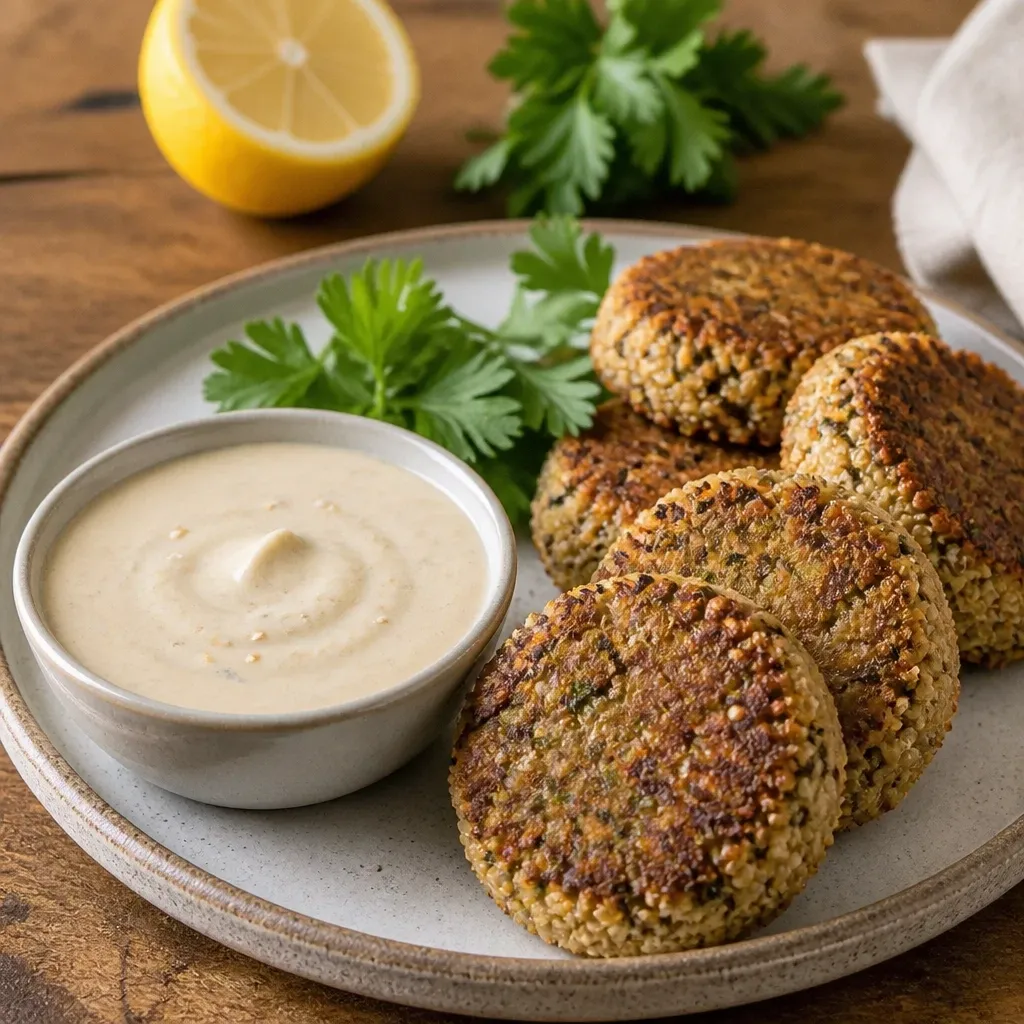
Use salt carefully, then taste for brightness. If the sauce tastes flat, add more lemon before adding more salt. Acidity wakes up earthy lentils, cuts through the sesame’s richness, and makes the entire plate taste lighter.
Drizzle the tahini over the patties just before serving, or keep it on the side so the crust stays crisp. A little sauce on the plate and a little for dipping is the sensible compromise.
Variations for Different Dinner Moods
Keep the base method the same, then change the personality of the patties.
For a Mediterranean direction, add parsley, oregano, lemon zest, and a little ground cumin. Serve with chopped cucumber and tomato, olives, and warm pita. The fresh vegetables provide crunch and acidity against the earthy patties.
For a spicier version, add smoked paprika, chili flakes, coriander, and a spoonful of harissa to the mixture. Pair it with cooling tahini yogurt-style sauce made with a plant-based alternative, or simply increase the lemon in the tahini.
For a burger-style dinner, make the patties slightly larger and use them in a bun with shredded lettuce, pickled onions, and tomato. Keep the sauce thick enough to spread rather than pour. Nobody wants a burger that requires both hands and a towel.
For a gluten-free option, choose certified gluten-free chickpea flour or cornmeal and check the labels on any packaged sauces or toppings. The patties themselves are naturally centered around lentils and quinoa, but small additions can still affect the final dish.
If you are planning quick family meals, shape the patties ahead of time and refrigerate them until cooking. For the fastest finish, use an air fryer; this is one of those air fryer recipes dinner can handle particularly well because the patties need dry, circulating heat more than they need constant attention.
Side Dish Pairings That Keep the Plate Balanced
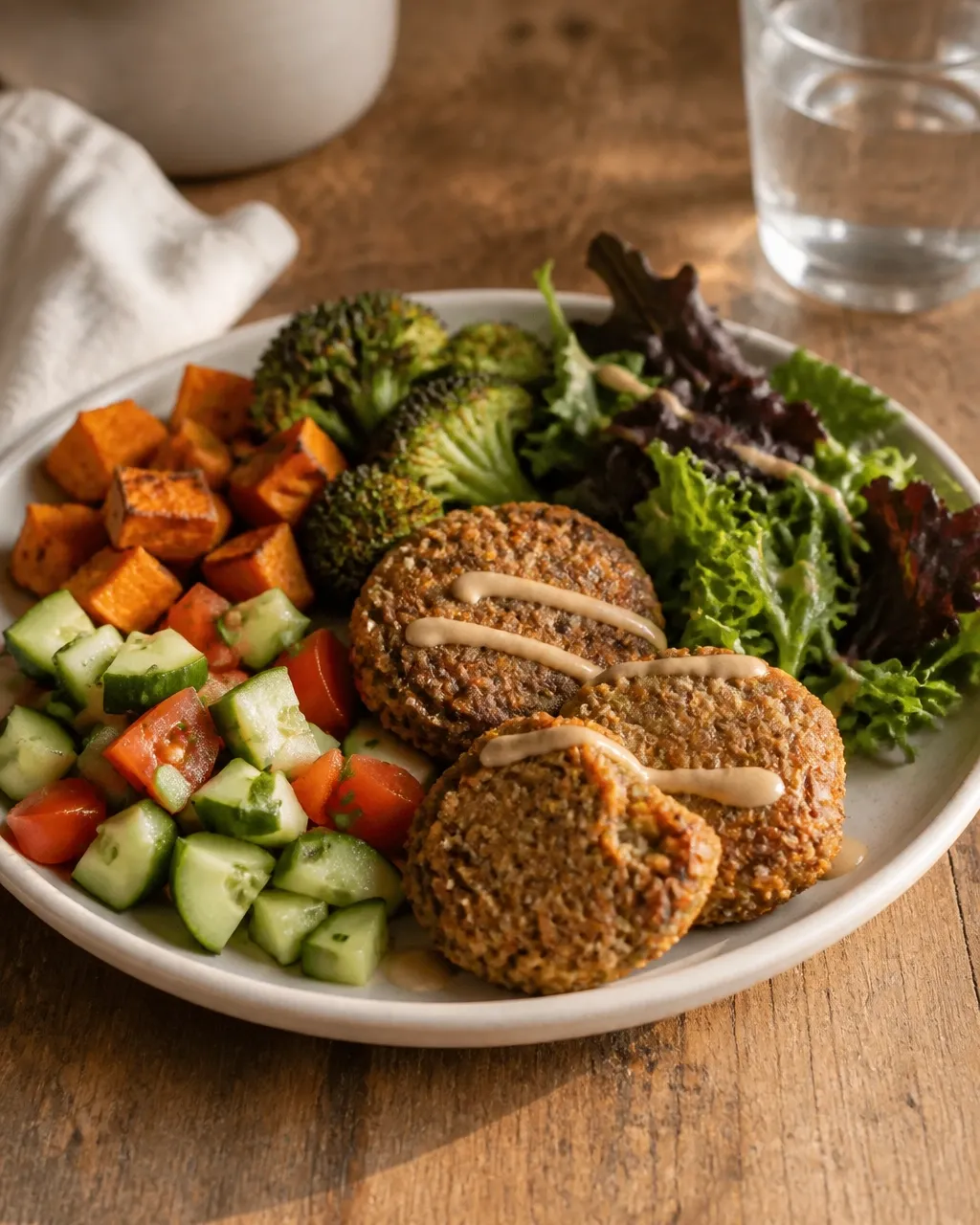
Pair these patties with sides that bring contrast. A cucumber, tomato, and herb salad is ideal because its cool crunch and acidity cut through the tahini. Add lemon juice or vinegar generously enough for the salad to taste lively.
Roasted vegetables work well too. Choose carrots, cauliflower, zucchini, or peppers and let their edges caramelize. Their natural sweetness balances the savory lentils without competing with them.
Serve leafy greens with a sharp dressing rather than a creamy one. Arugula, parsley, or shredded cabbage adds freshness and texture, while lemon, vinegar, or sumac keeps the meal from feeling dense.
For a heartier dinner, add pita, brown rice, or a small portion of roasted potatoes. You already have protein and fiber from the lentils and quinoa, so let the extra starch remain a supporting actor.
Frequently Asked Questions
Why are my patties falling apart?
The mixture is probably too wet, too warm, or too lightly compacted. Cool the cooked lentils and quinoa fully before shaping, and drain away excess water. If the mixture still feels loose, add a small amount of chickpea flour or cornmeal and let it sit briefly so the binder can absorb moisture.
Do not make the patties too thick, and avoid flipping them before the first side has formed a firm crust. Early flipping is less “gentle cooking” and more “organized patty destruction.”
Can I use canned lentils?
Yes, but drain and rinse them very well. Spread them on a clean towel or paper towel for a few minutes to remove surface moisture. Canned lentils are softer than some home-cooked varieties, so mash only part of the mixture and use enough dry binder to make it shapeable.
Choose lentils that are tender but not mushy. Very soft lentils can still taste good, but they will need more help from cooling and binding.
Can I make the patties ahead of time?
You can shape them ahead and refrigerate them until cooking. Chilling is helpful because it firms the fats and starches, making the patties easier to handle. Store them covered and cook them within a day for the best texture.
You can also cook them ahead, then reheat them in an oven or air fryer. Avoid microwaving if crispness matters. The microwave heats water quickly and softens the crust, turning your carefully earned crunch into a memory.
Why did the outside brown too quickly?
The heat was likely too high, or the patties were too thick. Lower the cooking temperature slightly and give the centers more time to firm. In a skillet, medium heat is the non-negotiable middle ground: hot enough to brown, gentle enough to cook through.
Also check the oil. A thin layer is useful, but oil that is smoking hot will scorch the exterior before the interior catches up.
Is quinoa necessary?
Quinoa gives the patties a light, slightly springy texture and adds useful structure, but you can replace it with cooked brown rice, millet, or another firm grain. Adjust the binder because different grains hold different amounts of water.
Keep the replacement grain relatively dry and cooled. A wet grain will make the mixture softer, while a very dry one may require a little extra moisture from tahini or lemon.
How can I make the meal more filling?
Serve the patties with vegetables, a whole-grain side, and tahini sauce. Lentils provide plant protein and fiber, while quinoa adds grain texture and additional protein. The result is satisfying without relying on a heavy coating or oversized portion.
For more simple ideas, browse Cookpedia’s vegetarian dinner recipes, healthy recipes, or try the warming flavors in our budget-friendly red lentil dahl. This is exactly the sort of meal that belongs in your collection of healthy dinner ideas: practical, colorful, and sturdy enough to survive a busy evening.