Recipe
Servings
Servings 1×
Ingredients
- Eggs
- Greek yogurt
- Bread
- Berries
- Lemon
- Cream
- Butter
- Salt
Method
- Use baking soda only when you have a strong acid like buttermilk, lemon juice, or yogurt in the mix.
- Use a "hack" of one tablespoon of lemon juice or white vinegar per cup of milk, and let it sit for five minutes.
- Lower the heat and give them more time.
If you have ever stared at a plate of flat, rubbery discs and wondered where your breakfast dreams went to die, you are not alone. We have all been there, standing over a griddle, flipping hope only to receive disappointment. But here is the secret: fluffy pancakes are not a result of luck or a special family heirloom spatula. They are a result of chemistry. Specifically, the delicate dance between acids, bases, and protein structures.
My blog is all about taking the mystery out of the kitchen. Today, we are diving deep into the microscopic world of leavening agents. We are going to look at why your choice of milk matters and how a simple chemical reaction can turn a heavy batter into a cloud-like masterpiece. Whether you are looking for quick family meals or just want to master the Saturday morning staple, understanding the "why" behind the bubble is your first step to breakfast glory.
The Chemistry of the Rise: Acids, Bases, and Bubbles
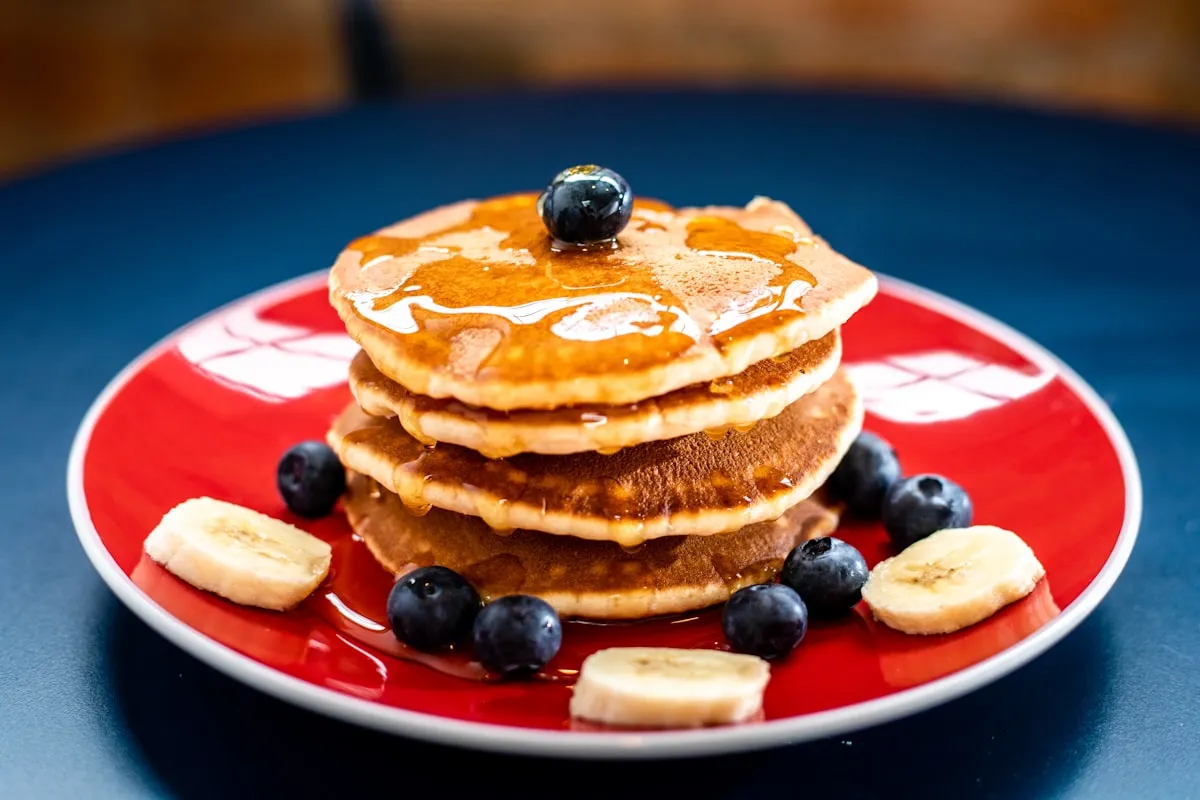
To get that skyscraper-tall stack, you need to master the two heavy hitters of the pantry: baking soda and baking powder. While they look identical, they behave like entirely different beasts once they hit your mixing bowl.
Baking soda, or sodium bicarbonate, is a base. It is essentially waiting for a "go" signal to start working. That signal is an acid. In our kitchen lab, that acid is provided by buttermilk. When you combine the two, a chemical reaction occurs almost instantly, producing carbon dioxide (CO2) gas. These gas bubbles get trapped in the batter, expanding as they heat up on the griddle. Use baking soda only when you have a strong acid like buttermilk, lemon juice, or yogurt in the mix. Without the acid, the soda won't react, and you will be left with a metallic, soapy aftertaste.
Baking powder is a bit more sophisticated. It is actually a mixture of baking soda and a dry acid (like cream of tartar). Most modern versions are "double-acting," meaning they react twice: once when they get wet and again when they get hot. This is your insurance policy. It ensures that even if you take a few minutes to get the batter onto the pan, you still have some gas left in the tank for the final rise. For the perfect ratio, use a combination of both. The baking soda neutralizes the buttermilk’s tang and encourages the Maillard reaction, that beautiful browning on the surface, while the baking powder provides the heavy lifting.
Now, let's talk about the silent enemy of fluffiness: gluten. Gluten is a protein network that forms when flour meets liquid. It is great for chewy bread, but it is the arch-nemesis of a tender pancake. Avoid over-mixing at all costs. When you stir the batter until it is perfectly smooth, you are developing a tight gluten web that will trap those precious CO2 bubbles so tightly they can't expand. Stop stirring while there are still lumps. Those lumps will hydrate and disappear on the heat, leaving you with a delicate crumb rather than a rubbery texture. Check the consistency; it should be thick but pourable. If it is too thin, the bubbles will simply float to the top and pop before the heat can set the structure.
Scientific Variations: Tweaking the Formula
Once you understand the basic mechanics, you can start experimenting with variations that maintain the structural integrity of your meal. If you are leaning toward healthy dinner ideas that lean into the breakfast-for-dinner category, consider swapping in whole wheat pastry flour. It has a lower protein content than regular whole wheat, which helps keep the gluten development in check while adding a nutty, complex flavor.
If you find yourself without buttermilk, you can't just swap in regular milk and expect the same results. You need that acidity. Use a "hack" of one tablespoon of lemon juice or white vinegar per cup of milk, and let it sit for five minutes. This creates a curdled, acidic liquid that mimics buttermilk's pH level. For those chasing a richer profile, fold in a tablespoon of melted butter or a dollop of full-fat Greek yogurt. The fat coats the flour proteins, further inhibiting gluten formation and ensuring a "melt-in-your-mouth" experience.
For a fruit-forward variation, add blueberries or lemon zest. The natural acidity in the fruit actually helps provide a tiny extra boost to the leavening agents. Just be careful with heavy mix-ins like chocolate chips; if the batter isn't thick enough, they will sink to the bottom and scorch against the pan, ruining the thermal distribution of your pancake.
The Art of the Pairing: Balancing the Plate
A perfect pancake is a study in richness, which means your side dishes need to provide a high-contrast balance. Think about acidity and salt. A side of fresh, tart berries or a citrus salad works wonders to cut through the buttery density of the stack. The vitamin C and natural acids cleanse the palate, making every bite of pancake taste as fresh as the first.
If you are serving these as part of your quick family meals, don't forget the protein. A side of crispy bacon or a perfectly poached egg provides the salty counterpoint to the maple syrup. From a sensory perspective, the "crunch" of bacon against the "cloud" of the pancake creates a satisfying textural experience. Avoid serving anything too syrupy or heavy as a side; you want the pancakes to be the star, supported by bright, vibrant flavors that wake up your taste buds.
The "What-If" Science: Troubleshooting Your Stack
What if my pancakes are cooked on the outside but raw in the middle?
This is a classic thermal conductivity issue. Your pan is too hot. The exterior is undergoing the Maillard reaction (browning) too quickly, before the heat has time to travel to the center and coagulate the proteins. Lower the heat and give them more time. The first pancake is usually a "sacrificial" one used to calibrate the temperature of the griddle.
What if my batter doesn't have any bubbles?
Check the expiration date on your leavening agents. Baking powder loses its potency over time, especially in humid environments. To test it, drop a teaspoon into some hot water; if it doesn't fizz aggressively, toss it. Also, remember that the clock starts ticking the moment the wet meets the dry. If you let your batter sit for an hour, most of the CO2 will have escaped.
What if they aren't browning properly?
This usually points to a pH imbalance. The Maillard reaction thrives in a slightly alkaline environment. If your batter is too acidic (perhaps you used too much lemon juice or extra-tart buttermilk), the pancakes will stay pale. A tiny pinch of extra baking soda can raise the pH and give you that deep, golden-brown hue you're looking for.
Can I make the batter ahead of time?
Generally, no. Because the chemical reaction between the acid and the base begins immediately, the batter will lose its "lift" if it sits overnight. However, you can mix the dry ingredients and the wet ingredients separately and combine them right before you're ready to cook. If you're looking for more hands-off morning solutions, some of our air fryer recipes dinner favorites can be adapted for breakfast proteins like sausages to save you time at the stove.
Why are my pancakes tough?
You over-mixed. I cannot stress this enough. Every stir after the flour is moistened is building a tougher network. Aim for "just combined." Those small lumps of flour will hydrate on the griddle. Trust the process and put the whisk down.
Cooking is often seen as an art, but in the case of the humble pancake, it is pure science. Master your ratios, understand your acids, and respect the gluten. Once you do, you'll never look at a box mix again. For more tips on mastering the basics, check out our guide on achieving the perfect glossy sauce or dive into our comfort food cheat codes. Happy flipping!