Recipe
Servings
Servings 1×
Ingredients
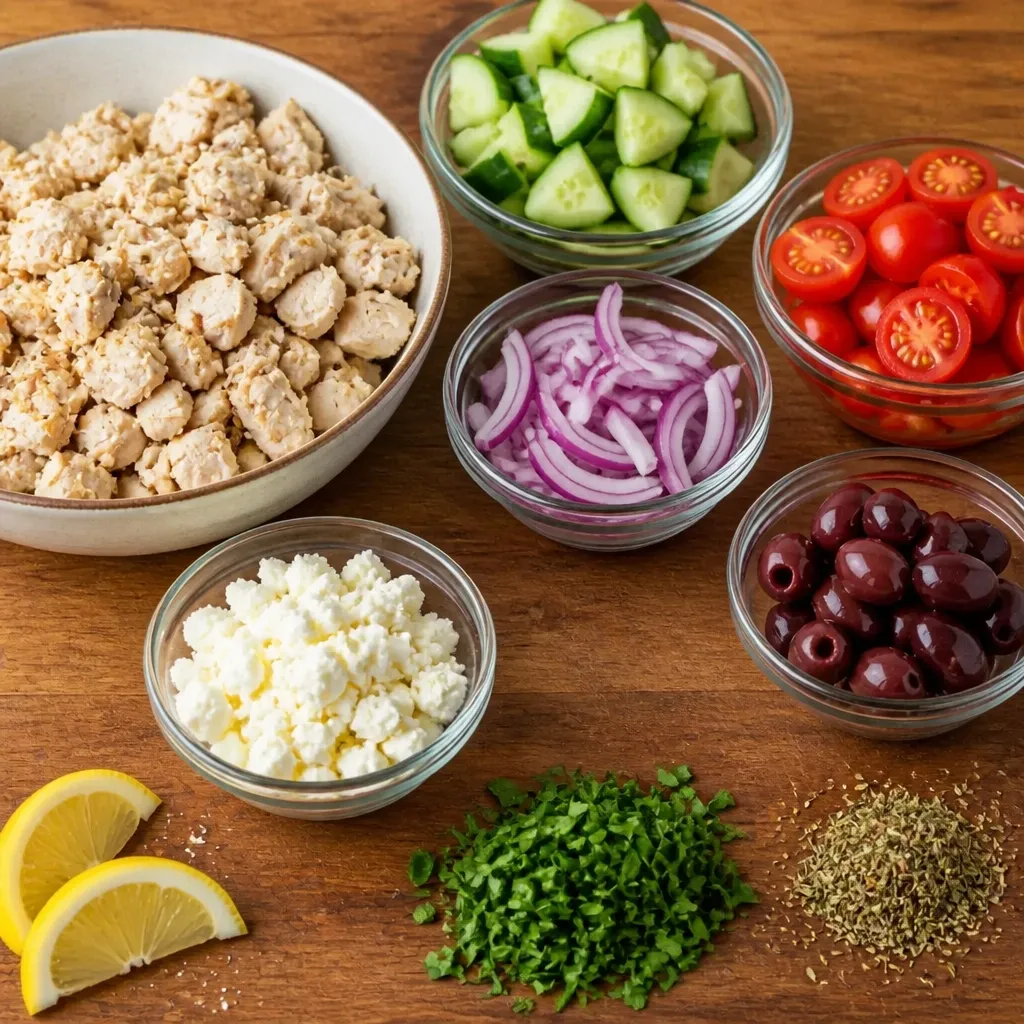
- 2½ to 3 cups cooked chicken, sliced or cubed
- 1 cup diced cucumber
- 1 cup halved cherry tomatoes
- ¼ cup thinly sliced red onion
- ¼ to ⅓ cup Kalamata or black olives
- ½ cup crumbled feta
- 2 to 3 tablespoons chopped parsley or dill
- ¼ cup extra-virgin olive oil
- 2 to 3 tablespoons lemon juice
- ½ to 1 teaspoon dried oregano
- Salt and black pepper, to taste
Method
- Combine the cooked chicken, cucumber, tomatoes, onion, olives, feta, and herbs in a large bowl.
- Whisk the olive oil, lemon juice, oregano, salt, and pepper until briefly emulsified.
- Pour the dressing over the salad and toss gently.
- Serve immediately or chill for 15 to 20 minutes before serving.
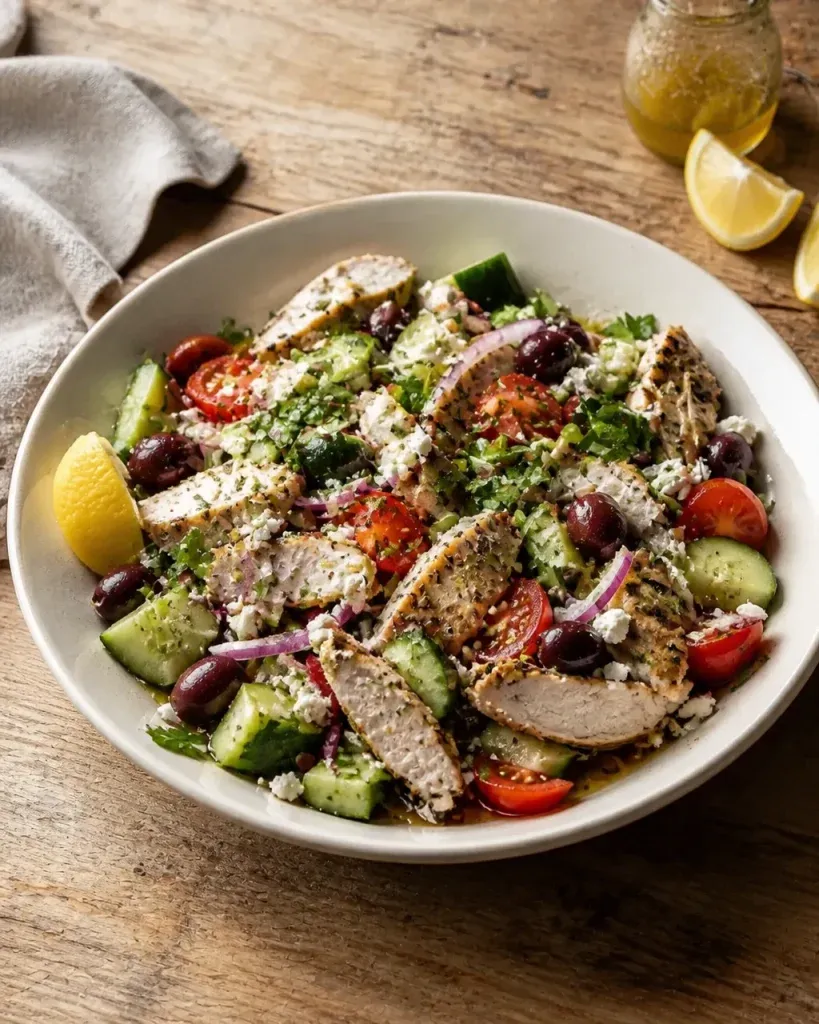
A good keto dinner should not feel like a punishment served in a very small bowl. This Mediterranean chicken salad with feta is bright, filling, and wonderfully simple. You get tender chicken, creamy-salty feta, crisp vegetables, briny olives, and a lemony dressing that pulls everything together. Use it as a reliable starting point if you are new to keto: or simply need one of those healthy dinner ideas that does not create a sink full of dishes.
Tips & Technique: Build Flavor Through Contrast
Start with properly cooked chicken
Use cooked chicken that is tender rather than rubbery. If you are cooking it fresh, avoid treating the breast like a piece of furniture that needs to be sanded into submission. Chicken breast is lean, so it loses moisture quickly when overcooked. Check the thickest part with a thermometer and cook until it reaches 165°F (74°C).
Let freshly cooked chicken rest before cutting it. Resting gives the juices a moment to redistribute instead of running straight onto your cutting board. Slice or cube it once it is warm rather than piping hot, especially if you plan to chill the salad. Very hot chicken can soften the vegetables and make the dressing seem greasy.
Leftover roasted chicken works beautifully here. Cook extra when making Cookpedia’s simple lemon herb roasted chicken, then turn the leftovers into lunch the next day. That is the sort of practical planning that makes quick family meals feel less like a heroic act.
Let the Maillard reaction do the heavy lifting
If you are cooking chicken specifically for this salad, aim for light browning rather than pale, steamed meat. Browning happens through the Maillard reaction, when heat transforms proteins and sugars on the surface into hundreds of savory flavor compounds. In plain English: golden edges taste better.
Pat the chicken dry before cooking and avoid crowding the pan. Moisture on the surface must evaporate before browning can begin. If too many pieces sit together, they trap steam and gently boil instead. Delicious? Not especially. Give the chicken room, use moderate-high heat, and let the surface develop color before moving it around.
Balance the dressing instead of drowning the salad
The dressing works because it balances fat, acid, salt, and aroma. Olive oil brings roundness, while lemon juice adds acidity. Acid brightens heavy flavors and makes fresh vegetables taste more vivid, but too much can make the salad sharp and thin.
Whisk or shake the dressing until the oil and lemon juice briefly combine into an emulsion. This helps the dressing cling to the chicken and vegetables instead of separating into an oily puddle at the bottom of the bowl. Add dried oregano and black pepper for aroma, then go carefully with extra salt. Feta and olives already bring plenty of sodium to the party.
Taste the dressing before it meets the salad. It should taste slightly more intense than you want the finished dish to be because the vegetables and chicken will dilute it. This tiny bit of kitchen science saves you from the classic “why does this taste like cucumber water?” problem.
Control moisture for a crisp finish
Cucumber and tomatoes contain a lot of water. That is excellent for freshness and less excellent for a salad that needs to stay appealing in the refrigerator. Cut the vegetables shortly before serving, or pat them gently with a clean towel if they are particularly wet.
Do not aggressively salt watery vegetables hours in advance. Salt draws water from plant cells through osmosis, which can leave you with limp cucumber and a dressing that has mysteriously doubled in volume. Season the salad close to serving time, or keep the dressing separate if you are preparing it ahead.
Choose a firm cucumber and avoid overly soft tomatoes. Use tomatoes in a sensible portion if you are tracking carbohydrates closely. The salad stays low-carb because it leans on non-starchy vegetables, chicken, olive oil, feta, and olives rather than grains, beans, or sweet dressings.
Add the feta at the right moment
Fold in the feta gently. You want some creamy crumbles and some larger pieces that remain distinct. If you stir too vigorously, the cheese disappears into the dressing and turns the whole salad cloudy. That is not a disaster: it simply becomes more of a feta dressing: but a little texture makes the meal more satisfying.
Keep the olives and feta in balance. Their salty, briny flavor is powerful, so they should sharpen the salad rather than dominate it. If your olives are especially salty, rinse them briefly and dry them before adding them.
Give the salad a short rest
Serve the salad immediately for maximum crunch, or let it rest in the refrigerator for about 15 to 20 minutes so the oregano, lemon, and olive oil can mingle. Do not leave it sitting warm for long. Cooked chicken and dairy-based foods should be refrigerated promptly and handled with the same care as any prepared protein dish.
For more simple weeknight inspiration, browse Cookpedia’s 30-minute meals and chicken recipes. This salad is especially useful when you want something fresh but do not want to turn dinner into a project.
Variations: Keep the Structure, Change the Mood
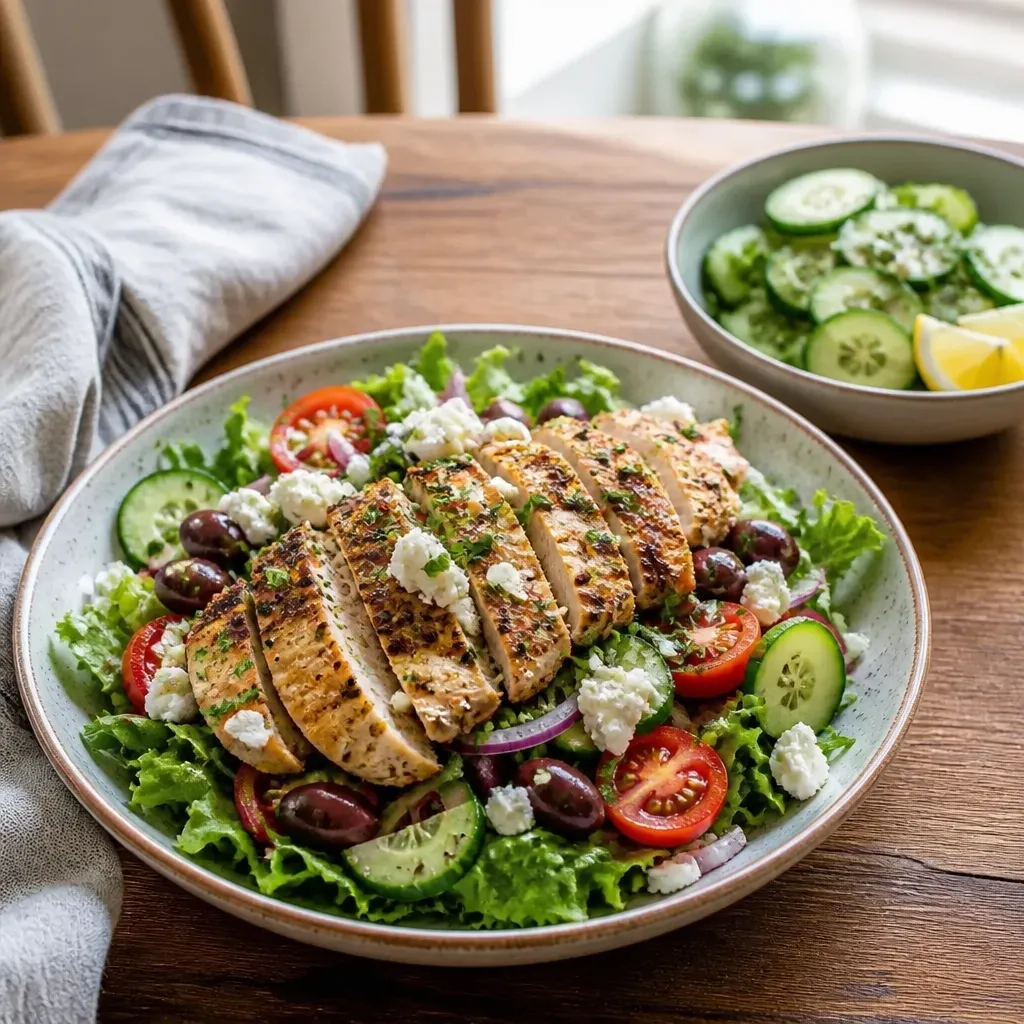
Turn the salad into lettuce cups for a crunchy, hand-held dinner. Use sturdy romaine leaves or butter lettuce and keep the filling chilled until serving. This option is useful when you want to avoid bread, wraps, and other carb-heavy carriers without sacrificing the fun of assembling your own meal.
Make it creamy with a tzatziki-style dressing. Stir plain full-fat Greek yogurt with lemon, grated cucumber, garlic, and herbs, then use it in place of some or all of the olive oil dressing. Check the nutrition label if you are following a strict carbohydrate limit, since yogurt contains naturally occurring milk sugar.
Add avocado for extra richness, or use chopped celery and bell pepper for more crunch. For a seafood variation, replace some of the chicken with canned tuna or cooked shrimp. Keep the Mediterranean backbone: lemon, herbs, olives, and feta: so the swaps still taste intentional rather than like a refrigerator clean-out wearing sunglasses.
You can also serve the salad over greens with a fried egg for a more substantial plate. Keep portions of tomato and onion moderate if you are closely counting net carbohydrates. Keto-friendly does not mean carbohydrate-free, and labels plus portion sizes still matter.
Side Dish Pairings: Add Brightness, Not More Heaviness
This salad is already a complete meal, so choose sides that add contrast. Crisp romaine with a sharp lemon vinaigrette is an easy match. The extra acidity cuts through the olive oil and feta, while the lettuce adds volume without bringing many carbohydrates.
Serve roasted zucchini, asparagus, or green beans when you want something warm. Roast them until the edges brown slightly; that caramelization gives the plate a deeper flavor and keeps the vegetables from tasting bland beside the lively salad.
For a cooling option, offer a small bowl of cucumber, dill, and yogurt. Keep the seasoning restrained so it supports rather than competes with the lemon dressing. Sparkling water with lemon or mint makes a clean, refreshing drink alongside the meal.
If you are building a weekly rotation that includes air fryer recipes dinner favorites, use air-fried zucchini or broccoli as the warm side. Just keep the seasoning simple and let the salad remain the bright part of the plate.
FAQ: Beginner Questions, Solved
Is feta cheese keto-friendly?
Feta can fit comfortably into a keto meal because it is generally low in carbohydrates and adds fat, protein, and strong flavor. The important word is portion. Cheese is calorie-dense, and large amounts can make a light salad surprisingly heavy. Check the label on your brand, especially if you are tracking carbohydrates precisely, and use feta as a salty accent rather than the entire personality of the bowl.
What if my salad turns watery?
Drain the excess liquid and refresh the flavor with a small splash of lemon juice and a little olive oil. Prevent the problem next time by drying the cucumber and tomatoes, seasoning closer to serving, and storing the dressing separately. Avoid adding more salt to a watery salad before tasting it; salt may pull even more moisture from the vegetables.
What if the chicken tastes dry?
Toss the chicken with a little dressing and let it rest for several minutes before serving. The oil helps coat the surface, while the lemon adds brightness. For future batches, cook chicken only to the safe internal temperature, allow it to rest, and slice it against the grain. If you regularly have leftover dry chicken, use thigh meat instead. It contains more fat and is more forgiving.
Can I use rotisserie chicken?
Yes. Rotisserie chicken is one of the easiest shortcuts for this recipe. Remove the skin if you prefer a leaner salad, and check the label if you are strict about added sugars or seasoning blends. Taste before adding salt because prepared chicken can already be well seasoned. Let the chicken cool slightly before mixing it with the vegetables so the salad stays crisp.
How long does Mediterranean chicken salad keep?
Store the salad in an airtight container in the refrigerator and aim to eat it within 2 to 3 days for the best texture and a cautious food-safety window. Refrigerate it within two hours of preparation, or within one hour when the temperature is above 90°F (32°C). If it smells sour, looks unusually slimy, or has been left warm too long, discard it. A bargain lunch is not worth a risky stomach.
Can I make it dairy-free?
Absolutely. Leave out the feta and replace some of its salty, creamy effect with extra olives, avocado, or a spoonful of tahini in the dressing. Tahini adds richness, so increase the lemon gradually to keep the salad balanced. If you use a dairy-free feta alternative, check its carbohydrate and sodium information because brands vary widely.
Is this salad a complete keto meal?
It can be, particularly when served with enough chicken and a satisfying amount of olive oil. Still, keto needs differ from person to person. Track the portions that matter to you, especially tomatoes, onion, yogurt-based variations, and prepared dressings. Treat this recipe as a flexible foundation rather than a nutritional promise. For more practical inspiration, explore Cookpedia’s healthy recipes and build a rotation that keeps meals varied, filling, and realistic.