Recipe
Servings
4 1×
Serves 4Prep 15 minCook 15 minTotal 30 min
Ingredients
- 4 salmon fillets
- Olive oil or melted butter
- Salt and black pepper
- Garlic powder or finely minced garlic
- 1 cup full-fat Greek yogurt
- 1 small cucumber, finely chopped or grated
- Fresh dill, chopped
- Fresh lemon juice and a little lemon zest
- Optional: Dijon mustard or a pinch of red pepper flakes
Method
- Heat the oven and prepare the salmon on a lined baking tray. Season the fillets and bake until the thickest part reaches 145°F (63°C) and flakes easily.
- While the salmon cooks, salt the cucumber, let it drain, and squeeze out excess moisture.
- Stir the cucumber with Greek yogurt, dill, lemon, pepper, and any optional seasonings.
- Rest the salmon briefly, then serve with the sauce alongside.
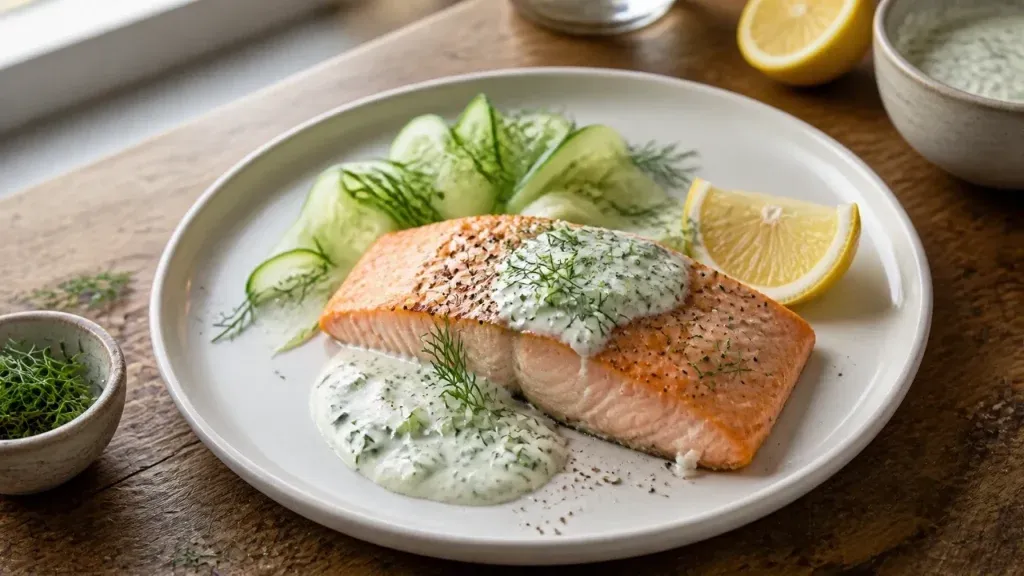
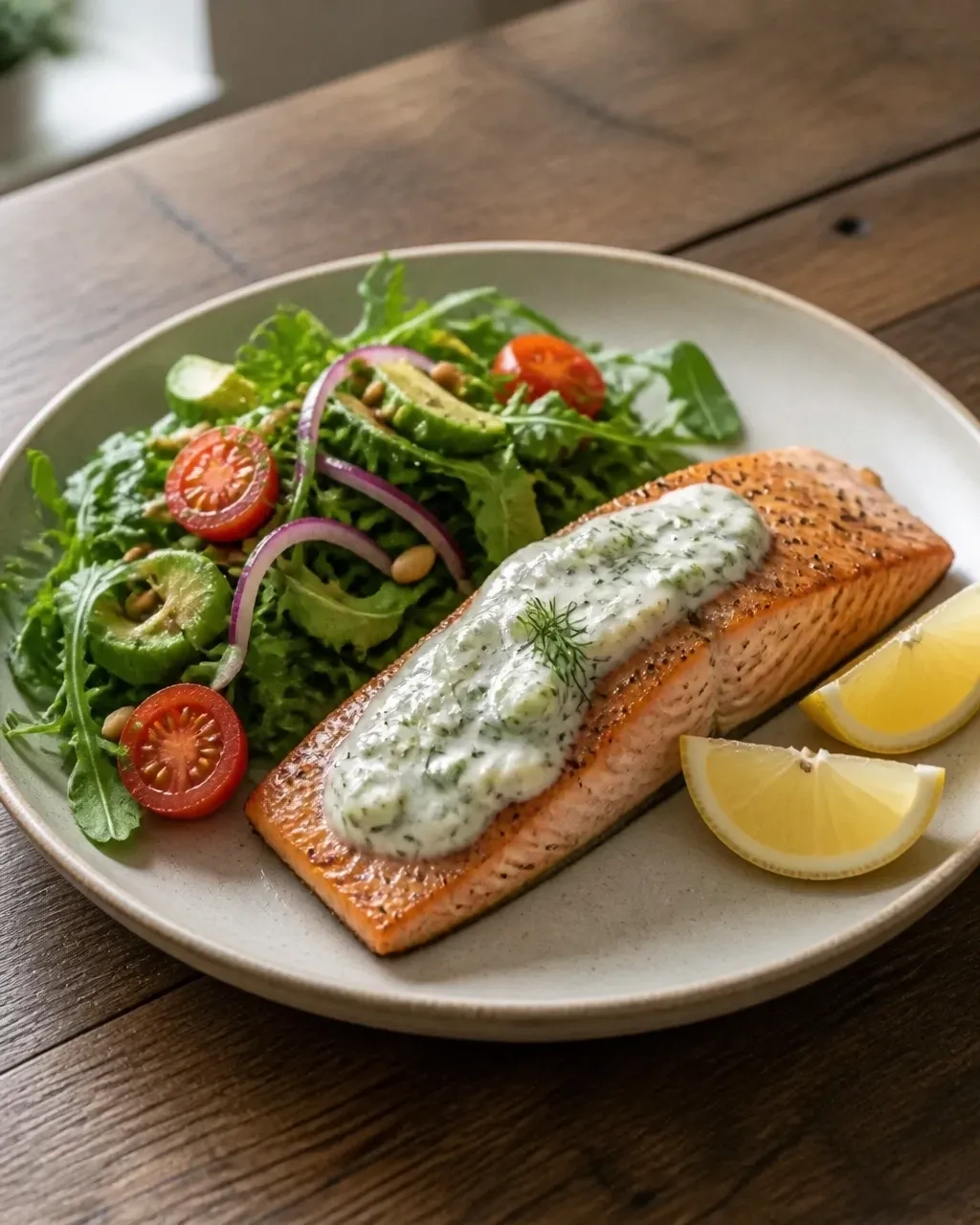
If you are new to keto, start with a dinner that does not require a spreadsheet, a specialist shop, or heroic levels of willpower. This baked salmon is simple, satisfying, and brightened by a cool cucumber-dill sauce. The fish cooks quickly, the sauce needs no complicated technique, and the whole plate feels fresh rather than “diet food.” Keep this one in your weeknight rotation alongside Cookpedia’s collection of healthy recipes.
Why This Salmon Stays Moist: Heat, Protein, and Timing
Salmon is wonderfully forgiving, right up until you cook it too long. Its muscle fibers tighten as heat rises, squeezing out moisture and leaving you with the dreaded dry fish situation. Avoid that by treating the oven temperature and cooking time as a team, not as loose suggestions.
Bake the fillets in a moderately hot oven and begin checking early. Thickness matters more than the clock: a slim fillet may finish several minutes before a chunky center-cut piece. Check the thickest part with an instant-read thermometer and aim for 145°F (63°C) for food safety. The flesh should look opaque and separate into moist flakes when tested.
Do not judge doneness by color alone. Salmon can remain slightly darker in the center while being safely cooked, especially if it is a richly colored variety. Use temperature and texture together. Then let the fish rest briefly before serving. Resting gives the heat a moment to settle through the fillet and allows the juices to redistribute instead of running straight across the plate.
Use a light coating of oil or butter to help the surface brown and prevent sticking. You do not need to drown the salmon; a little fat carries seasoning and encourages a tender exterior. Keep the seasoning uncomplicated. Salmon already brings plenty of flavor, so lemon, black pepper, garlic, and dill can do the heavy lifting without burying it.
The Sauce Is a Texture Exercise, Not Just a Stir
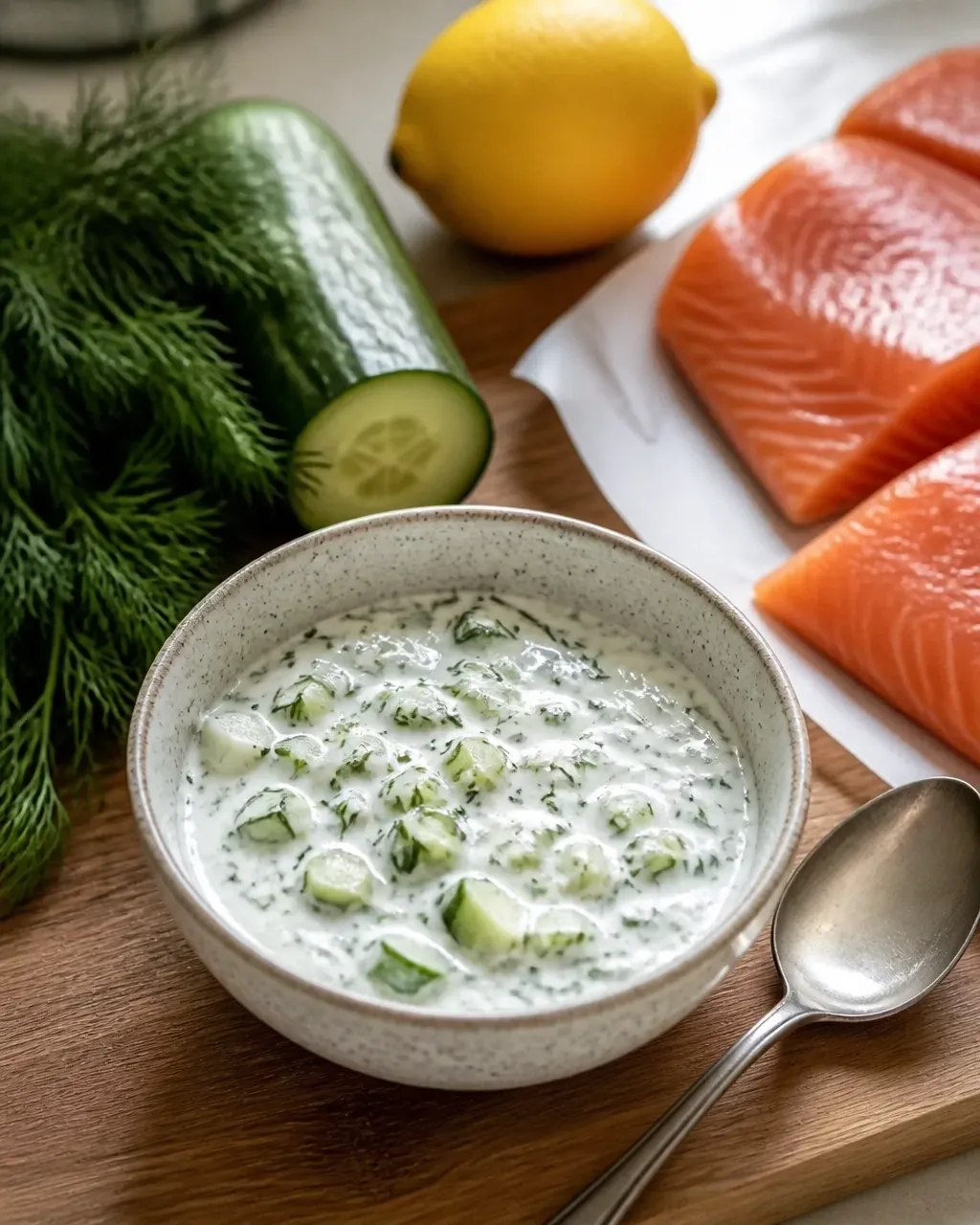
The creamy cucumber dill sauce works because it balances several sensations at once: coolness, acidity, richness, and crunch. It also has one annoying habit, cucumber releases water. Ignore that fact and your sauce may become less creamy and more cucumber puddle.
Salt pulls water from cucumber cells through osmosis. That is helpful when you want crisp, concentrated cucumber, but not when all that liquid lands in your yogurt. Salt the chopped or grated cucumber, let it sit briefly, and drain or squeeze it well before mixing. Be firm here. “A little damp” is still enough to loosen a small bowl of sauce.
Choose thick Greek yogurt or another strained yogurt. Its denser protein structure contains less free liquid, so it gives you a creamy sauce with better staying power. Full-fat yogurt is particularly pleasant with salmon because its richness smooths out the fish’s savory flavor. Check the label if you are tracking carbohydrates, since brands vary.
Add lemon gradually. Acid wakes up the sauce, but too much can make dairy taste sharp and can encourage separation if the sauce sits for a long time. Stir gently rather than beating it aggressively. Yogurt is a delicate protein gel; excessive agitation can make it release whey. You are making sauce, not auditioning for a butter commercial.
Mix the sauce close to serving time and keep it cold. If you need to prepare it ahead, drain the cucumber thoroughly and hold back a little lemon until just before dinner. Stir in extra strained yogurt if the texture loosens.
Season in Layers for More Flavor with Less Fuss
Season the salmon before baking, then taste the sauce separately. This creates contrast. The fish should be savory and warm; the sauce should be cool, tangy, and herbaceous. If both components taste equally salty or equally acidic, the plate can feel flat.
Use dill in the sauce for freshness, but do not forget that dried dill and fresh dill behave differently. Fresh dill gives a softer, greener flavor. Dried dill is more concentrated and slightly woodier, so use it carefully. Add cucumber for crunch, lemon for lift, and black pepper for a gentle bite.
Serve the sauce beside the salmon rather than covering the entire fillet. That preserves the browned surface and lets you control each bite. Creamy sauce is excellent, but it should be a supporting actor, not the entire cast.
Variations That Keep the Plate Keto-Friendly
Keep the basic salmon-and-sauce structure, then change the accent. For a warmer flavor, add smoked paprika, cumin, or a little ground coriander to the fish. These spices bring depth without adding meaningful carbohydrates.
Make the sauce more Mediterranean with chopped parsley, oregano, and a few minced capers. The capers add a briny punch that works beautifully with rich salmon. For a sharper version, add Dijon mustard and reduce the lemon slightly. Mustard brings complexity without turning the sauce into a sour cream situation.
Swap cucumber for finely chopped celery if you want more crunch and less water release. Use avocado in place of part of the cucumber for a richer sauce, but add it shortly before serving because avocado darkens and thickens as it sits.
If you prefer dairy-free meals, use an unsweetened coconut-based yogurt or a thick dairy-free Greek-style alternative. Check the carbohydrate label carefully; some products contain added sugars or starches. Thin alternatives may need a little extra seasoning and less lemon.
For a spicy variation, mix in jalapeño, cayenne, or chili flakes. Add heat gradually. You can always increase it, but no amount of cucumber can rescue a sauce that has become a small fire.
Side Dish Pairings: Add Contrast, Not Competition
Choose sides that bring texture and acidity without crowding the plate. A crisp green salad with arugula, cucumber, radish, and a simple lemon vinaigrette adds freshness and keeps the meal light. Avoid a heavy creamy dressing when the salmon already has sauce; balance is the goal.
Roasted asparagus, broccolini, or green beans provide a warm, slightly bitter counterpoint to the cool yogurt sauce. Finish the vegetables with lemon zest or a splash of vinegar after roasting. Acidity cuts richness, while a little char adds depth.
For extra crunch, serve the salmon with shredded cabbage dressed in lemon and olive oil. Cabbage holds its texture well and makes this dish practical for leftovers. If you are feeding people who are not following keto, offer warm crusty bread or roasted potatoes separately rather than changing the main dish.
Frequently Asked Questions
Can I use frozen salmon?
Yes. Thaw it completely in the refrigerator before baking and pat it dry. Extra surface moisture can make the salmon steam instead of brown, and it can dilute your seasoning. Never thaw fish on the counter. If you bake from frozen, expect a longer cooking time and check the internal temperature carefully.
Why did my cucumber sauce turn watery?
The cucumber probably carried too much liquid into the yogurt, or the sauce sat for too long. Salt and drain the cucumber before mixing, use thick strained yogurt, and keep the sauce chilled. If it loosens, stir in more Greek yogurt rather than adding a low-carb thickener at random. The simplest fix is usually the best one.
Can I make the sauce ahead?
Make it several hours ahead if needed, but drain the cucumber thoroughly and keep the sauce refrigerated in a covered container. For the freshest texture, add a final squeeze of lemon and a little fresh dill just before serving. Stir gently, then check the seasoning again.
How do I know when salmon is done without drying it out?
Use an instant-read thermometer at the thickest point and target 145°F (63°C). Also look for flesh that is opaque and separates into moist flakes. Start checking early because fillets vary dramatically in thickness. Do not keep baking simply because the surface is not deeply browned; salmon can be fully cooked without looking dramatic.
Is this suitable for a beginner keto plan?
It can fit comfortably into many keto approaches because salmon contains no meaningful carbohydrates and the sauce uses low-carb ingredients. However, yogurt brands and portion sizes differ, so check the nutrition label and calculate your serving if you are following a strict target. Many beginners aim for roughly 20g of net carbohydrates per day, but individual needs vary.
Can I use low-fat yogurt?
You can, but expect a thinner, tangier sauce. Full-fat Greek yogurt gives the best creamy texture and pairs naturally with salmon. If you use low-fat yogurt, drain the cucumber especially well and avoid adding too much lemon at once. Also check for added sugar, which can sneak into flavored or reduced-fat products.
What should I do with leftovers?
Cool the salmon promptly and refrigerate it in a sealed container. Eat it within a couple of days, or flake it into a salad with the cucumber-dill sauce. Reheat gently, preferably covered, because high heat dries cooked fish quickly. You can also enjoy it cold; salmon is perfectly happy in a lunch bowl while your microwave takes the afternoon off.
Can I cook this in an air fryer?
Yes, if your fillets fit without touching. Use a lightly oiled basket, cook at a moderate temperature, and begin checking early because air fryers vary. The same safety target applies: check the thickest part and cook the salmon to 145°F (63°C). Serve the sauce cold and add it after cooking so it stays creamy and fresh.