Recipe
Servings
4 1×
Serves 4Prep 10 minCook 17 min
Ingredients
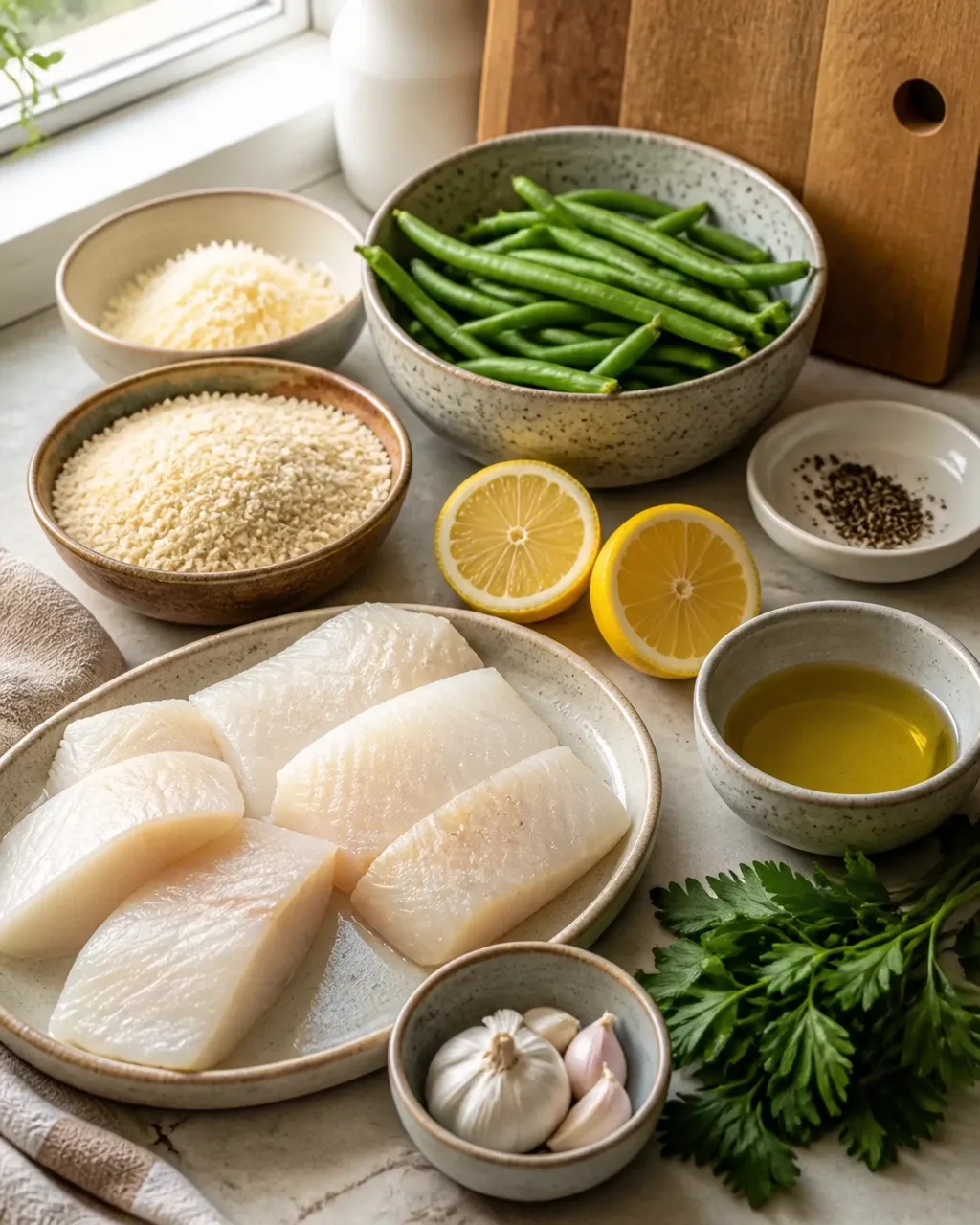
- 4 cod fillets
- ½ cup finely grated Parmesan
- ½ cup panko breadcrumbs
- 1 egg
- 1 pound green beans, trimmed
- 1 lemon, zested and juiced
- 1 garlic clove, minced
- 2 tablespoons olive oil
- ½ teaspoon paprika
- Salt, black pepper, and chopped parsley
Method
- Pat the cod dry and season it lightly.
- Dip each fillet in beaten egg, then press it into the Parmesan-panko mixture.
- Arrange the cod on a lined baking sheet and bake at 425°F until golden and the thickest part reaches 145°F.
- Meanwhile, cook the green beans until tender-crisp.
- Toss the beans with olive oil, garlic, lemon zest, lemon juice, parsley, salt, and pepper.
- Rest the cod briefly, then serve it with the lemon green beans.
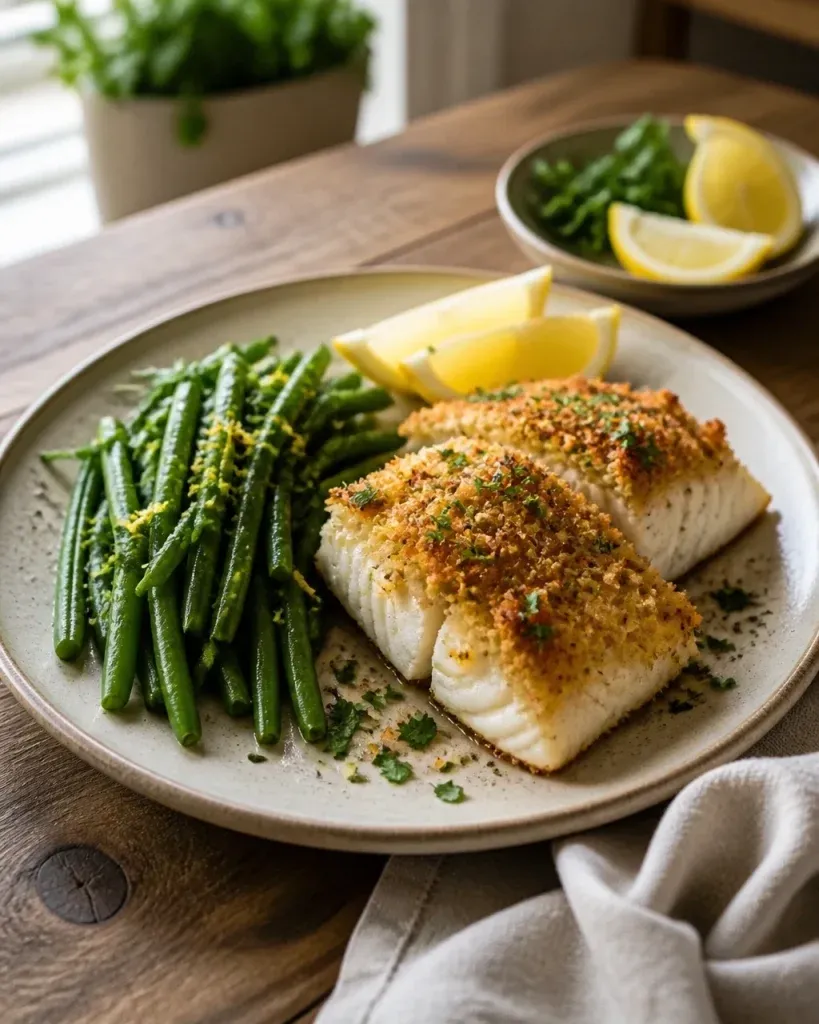
When dinner needs to be quick, healthy, and genuinely enjoyable, reach for this crispy Parmesan cod with lemon green beans. The fish bakes under a golden, savory crust while the beans stay bright, tender, and pleasantly snappy. It is the kind of meal that looks a little fancy but behaves like one of my favorite weeknight shortcuts: simple, fast, and very difficult to mess up.
Why the Parmesan Crust Turns Crisp Instead of Soggy
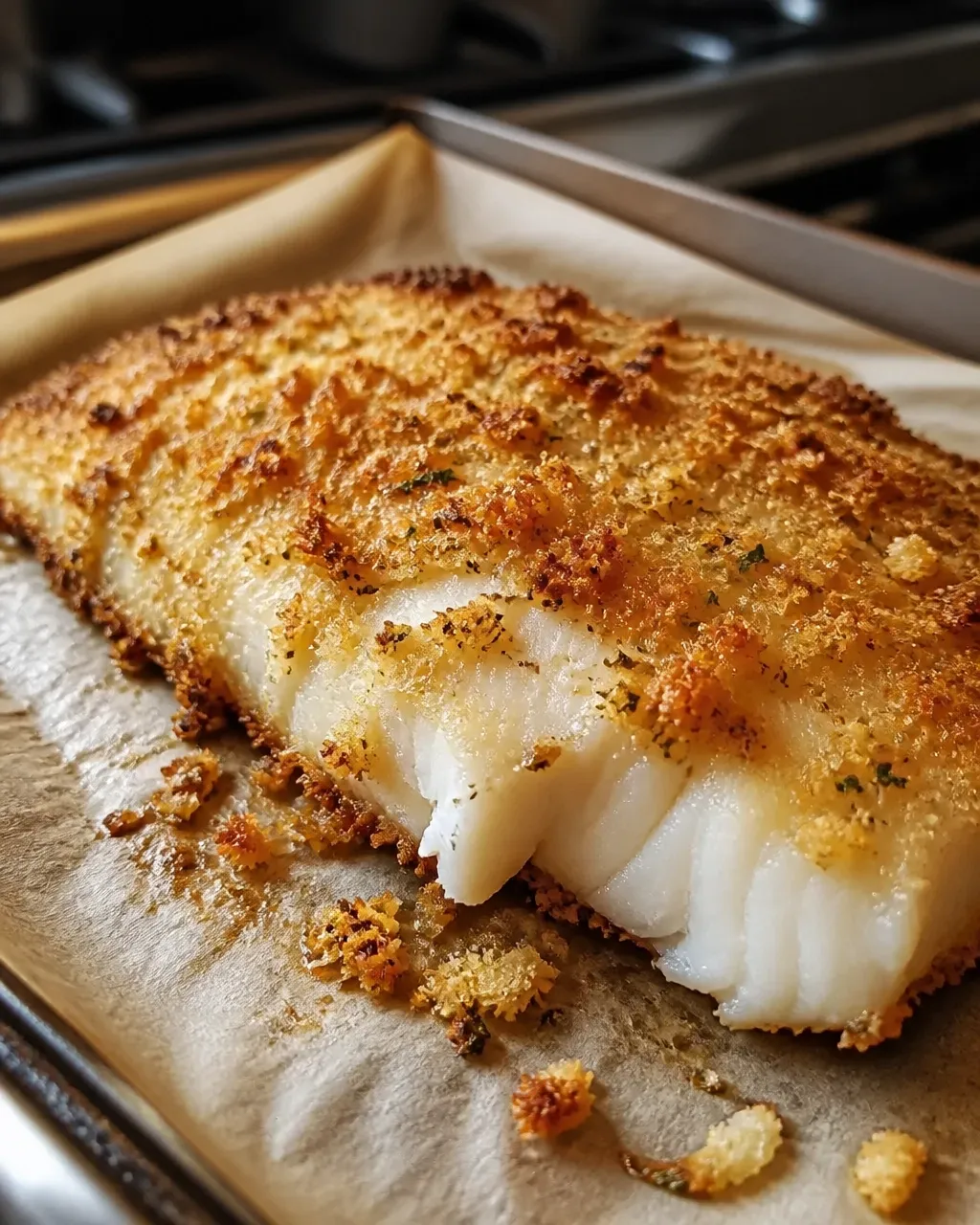
The first non-negotiable is moisture control. Pat the cod dry before coating it. Water on the surface turns into steam, and steam is the sworn enemy of crisp crumbs. A dry fillet gives the Parmesan mixture something to cling to and lets the heat brown the coating instead of gently steaming it.
Use finely grated Parmesan rather than thick shreds. Smaller pieces spread evenly, melt quickly, and create more contact with the crumbs. That contact matters because browning happens where the coating meets the hot surface. The cheese also brings proteins and sugars that deepen in color as the crust cooks, giving you that toasted, nutty flavor without needing a deep fryer.
Add a little panko for texture. Parmesan alone can melt into a salty layer, but panko creates tiny air pockets and rough edges. Those craggy bits catch the oven’s heat and become crisp. Think of them as the architectural support system of your dinner.
Bake at a high temperature, around 425°F, and give the cod room on the tray. Crowding traps moisture between the fillets, which softens the crust. Leave a little space around each piece and use parchment or a lightly greased baking sheet. The goal is hot air and direct heat, not a fish sauna.
Avoid coating the top too thickly. A heavy layer may look impressive before baking but can slide off when the fish flakes. Press the crust firmly enough to adhere, then stop. You want a savory jacket, not a cod-shaped breadcrumb mountain.
Check the thickest part with an instant-read thermometer. Cod is done at 145°F, or when the flesh is opaque and flakes easily. The thermometer is the more reliable judge because fillets vary in thickness. A slender piece may finish quickly, while a chunky center needs more time. Do not rely on the crust’s color alone; Parmesan can brown before the fish is cooked through.
Let the fish rest for a few minutes after baking. This gives the hot juices time to settle and allows the crust to firm slightly. Serve it immediately afterward, while the contrast between crisp topping and tender fish is at its best.
The green beans have their own small science lesson. Cook them only until tender-crisp, then finish them with lemon off the heat. Acid tastes brighter when it is not cooked aggressively, and adding it at the end keeps the beans lively rather than dull. Lemon zest brings fragrant citrus oils, while lemon juice supplies the sharpness that cuts through the salty, rich crust.
Variations That Keep the Balance
The easiest way to change this meal is to adjust the flavor profile of the crust without losing its texture. Add Italian seasoning and parsley for a classic herb-and-cheese version. Use smoked paprika and a pinch of cayenne when you want gentle warmth. For a sharper crust, mix in a little lemon zest, but do not add too much juice to the crumbs; excess liquid is how crispness goes missing.
Swap cod for haddock, pollock, or another firm white fish. Keep the fillets close in thickness so the cooking time remains predictable. Thicker fish may need several extra minutes, while thin fillets can overcook quickly.
For a lower-carbohydrate version, replace the panko with crushed pork rinds or extra Parmesan. The crust will be denser and more cheese-forward, so use a slightly thinner coating. You can also try the same seasoning on salmon, though the richer fish will need a different cooking time and will not have quite the same delicate texture.
Want to use an air fryer? This fits neatly into your collection of air fryer recipes for dinner. Cook the coated fish in a single layer at about 400°F, checking early because the circulating air browns the crust quickly. Keep the green beans separate so they do not release moisture onto the coating.
Side Dishes That Make the Plate Sing
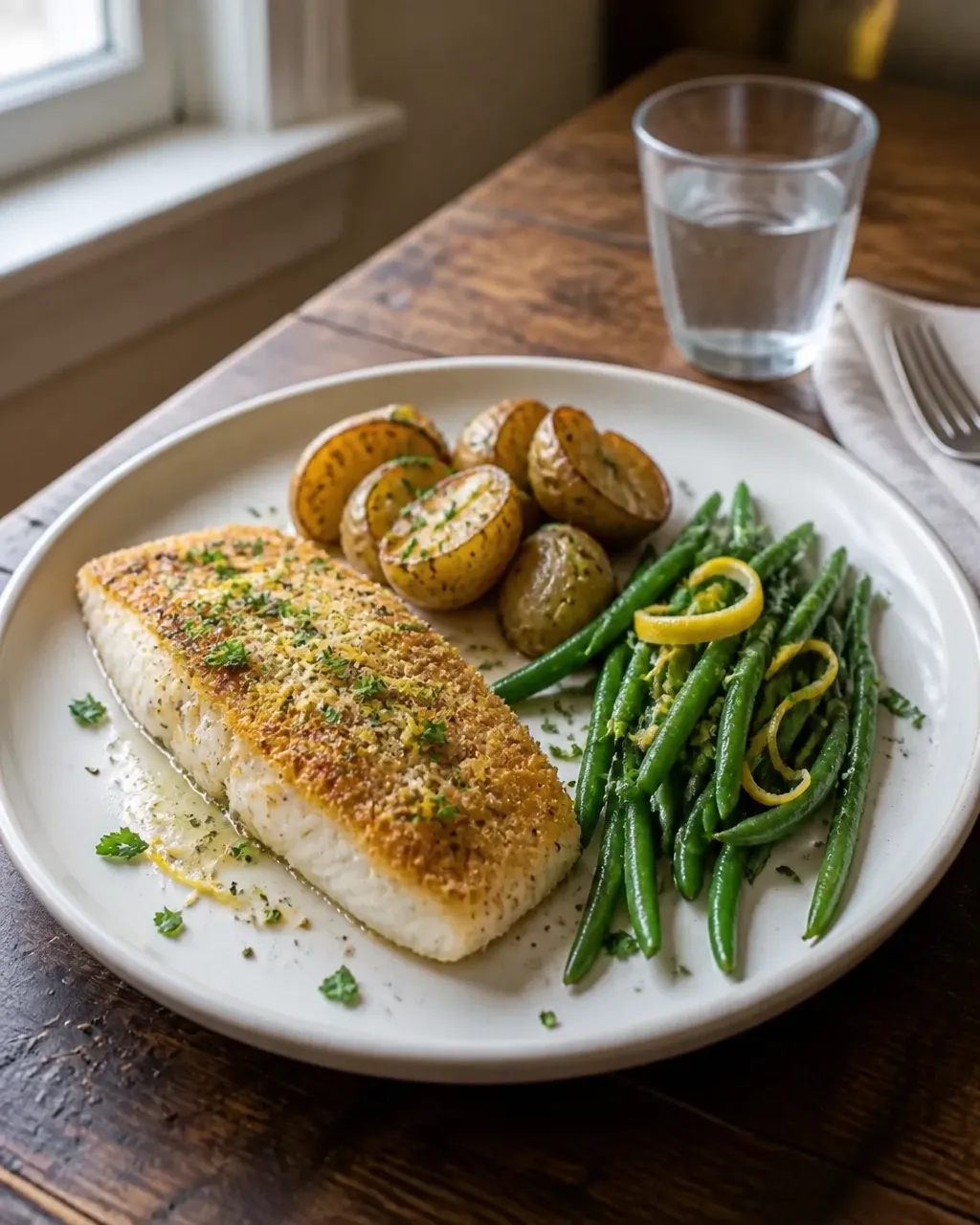
The lemon green beans already provide freshness and acidity, so choose a side that adds gentle comfort rather than another competing flavor. Roasted baby potatoes are ideal: their crisp edges and fluffy centers make the meal more filling without overpowering the fish.
For a lighter plate, add a simple arugula salad with cucumber and a sharp vinaigrette. The peppery greens reinforce the lemon’s brightness. If you need more staying power, serve the cod with brown rice, quinoa, or a small portion of crusty bread for catching the lemony juices.
Keep sauces restrained. A heavy cream sauce can bury the delicate cod and make the Parmesan crust feel greasy. Use a spoonful of yogurt mixed with lemon and herbs instead, or simply pass extra lemon wedges at the table. For more ideas in the same weeknight spirit, browse Cookpedia’s 30-minute meals and healthy recipes.
FAQ: Troubleshooting Crispy Parmesan Cod
Why did my Parmesan crust turn soft?
The most common culprit is surface moisture. Pat the cod dry, avoid overcrowding the baking sheet, and do not cover the fish after baking. Covering traps steam against the crust. Also check that your oven is fully preheated; a lukewarm oven delays browning and gives moisture more time to soften the coating.
Can I use frozen cod?
Yes, but thaw it completely first and dry it very well. Frozen fish releases extra water as it cooks, which can loosen the crust and leave the center watery. Thaw the cod in the refrigerator, then press it gently with paper towels before coating. Do not bake it straight from frozen for this recipe unless you are prepared to adjust the timing and accept a less reliable crust.
How do I stop the fish from sticking?
Line the baking sheet with parchment or brush it lightly with oil. Make sure the crust is pressed onto the fish rather than scattered loosely around it. Let the cod cook undisturbed until the coating firms. If you try to turn it too early, the crust may stick or tear.
My cod is dry. What happened?
Cod is lean, so it moves from tender to dry faster than fattier fish. Use the thermometer and begin checking the thickest fillet before the estimated cooking time ends. Pull the fish as soon as it reaches 145°F, then let it rest briefly. Starting with very thin fillets or an oven that runs hot can also shorten the cooking time.
Can I prepare the crust ahead?
Mix the dry crust ingredients ahead and store them in an airtight container. Keep the fish separate and coat it shortly before baking. If the crumbs sit on the raw cod for too long, they absorb moisture and lose their crisping power. Prepare the green beans close to serving time as well; reheating tends to make them soft and olive-colored.
What if I do not have panko?
Use regular breadcrumbs, crushed crackers, or finely crushed cornflakes. Regular breadcrumbs create a finer, more compact crust, while cornflakes give a louder crunch. Whichever you use, keep the coating fairly thin and combine it with Parmesan so the topping browns evenly.
Can I reheat leftovers?
Reheat the cod in a 375°F oven or air fryer until warmed through. Avoid the microwave if you want to preserve the crust; it heats the moisture inside the fish and turns the coating soft. Store the green beans separately and warm them gently, finishing with another squeeze of lemon to wake up the flavor.
Is this suitable for a family dinner?
Absolutely. The seasoning is mild, the cooking time is short, and the components are familiar. For especially selective eaters, serve lemon wedges on the side and keep the green beans lightly seasoned. It earns a place among my favorite quick family meals because everyone can adjust the final squeeze of lemon to taste.