Recipe
Servings
4 servings 1×
Serves 4Prep 10 minCook 25 minTotal 35 min
Ingredients
- 4 salmon fillets
- 1 pound carrots, peeled and cut into sticks
- 2 tablespoons olive oil, divided
- 2 tablespoons balsamic vinegar
- 1 tablespoon honey or maple syrup
- 1 garlic clove, minced
- 1 teaspoon fresh thyme leaves
- Salt and black pepper, to taste
Method
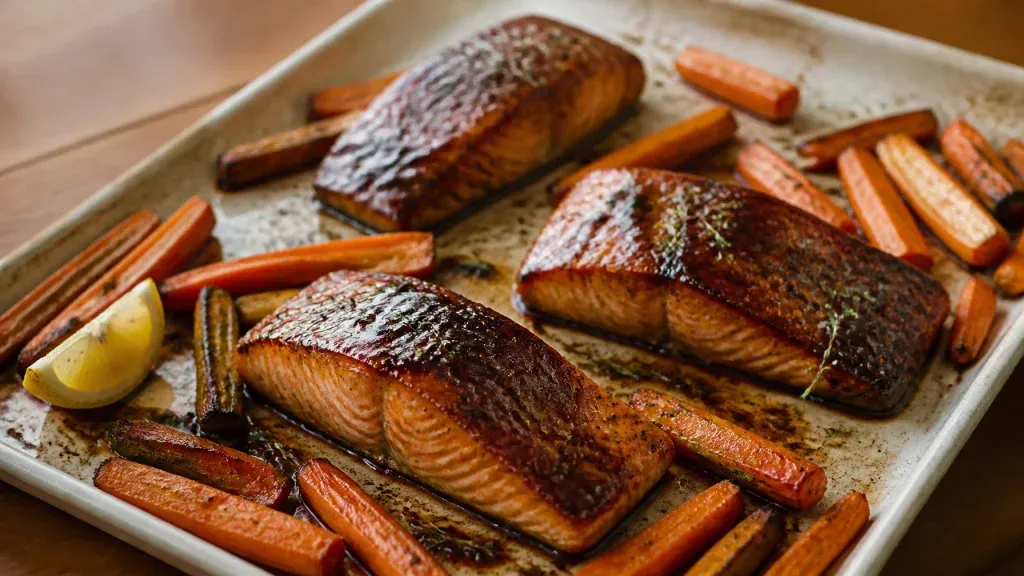
- Heat the oven to 425°F (220°C). Toss the carrots with one tablespoon olive oil, salt, pepper, and thyme on a rimmed sheet pan. Roast for 15 minutes.
- Whisk the balsamic vinegar, honey, garlic, and remaining olive oil. Pat the salmon dry and season it with salt and pepper.
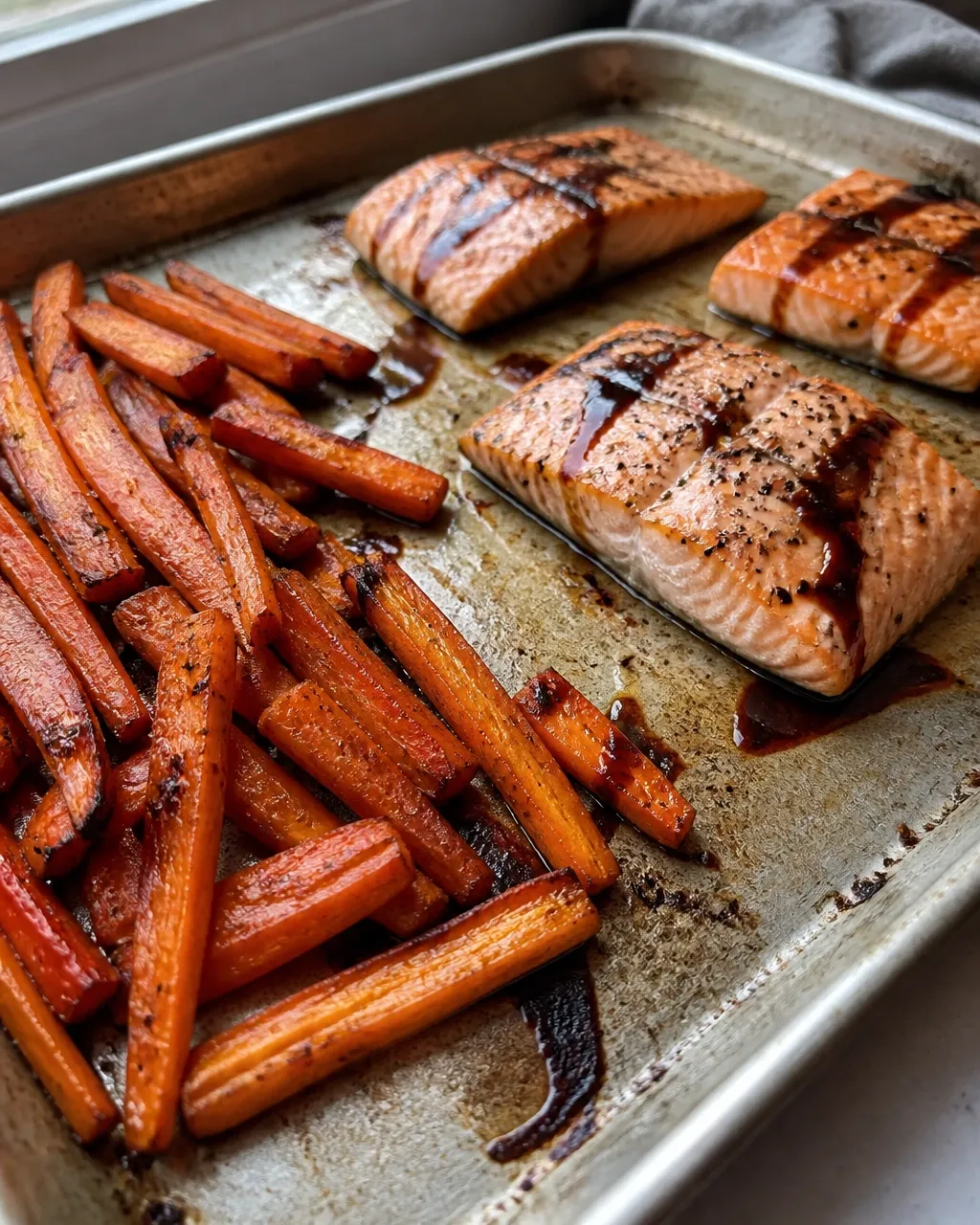
- Push the carrots to the sides of the pan and place the salmon in the center. Brush the fillets with the balsamic glaze.
- Roast for 10–12 minutes more, brushing once with more glaze, until the salmon is opaque and reaches 145°F (63°C) in the thickest part.
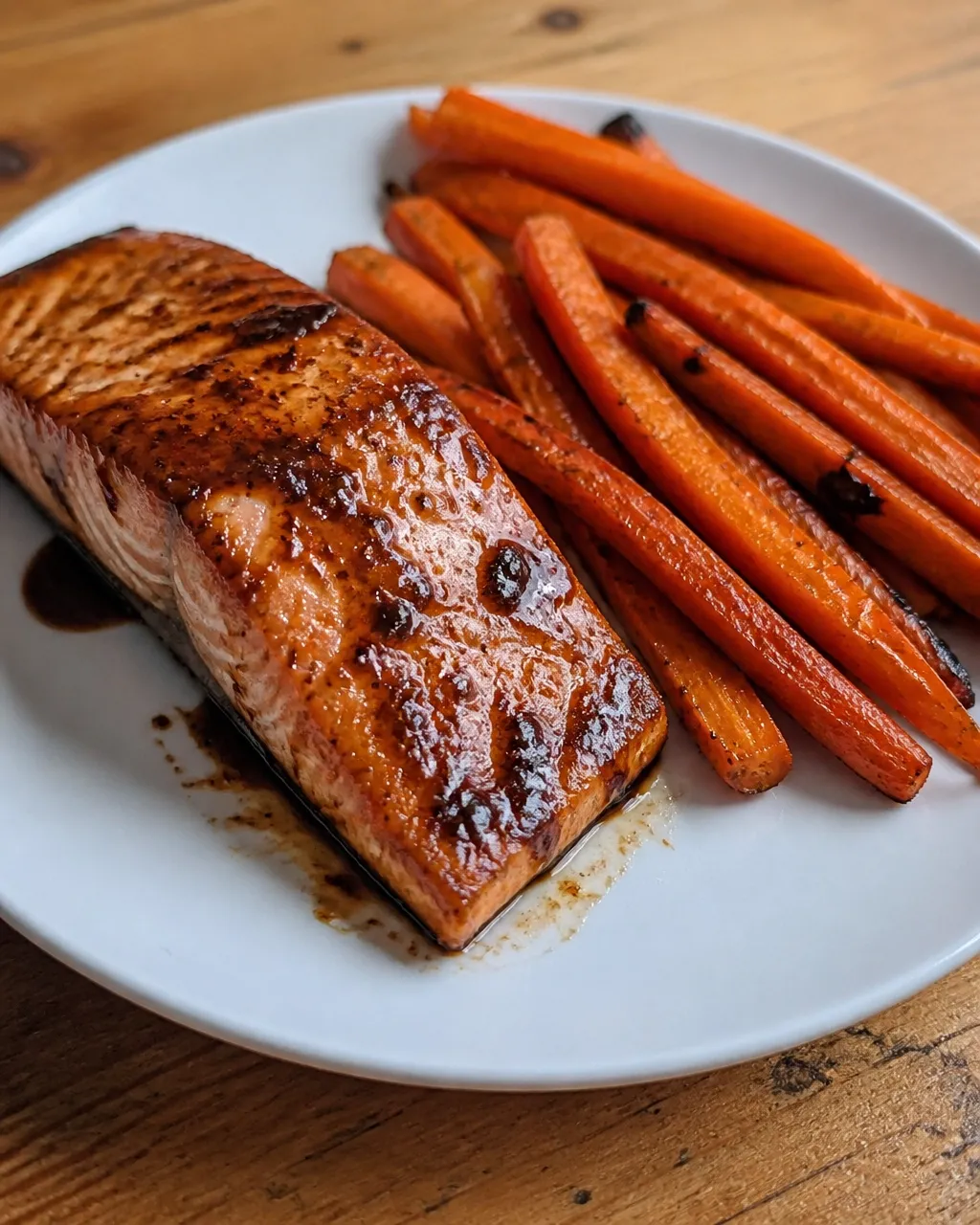
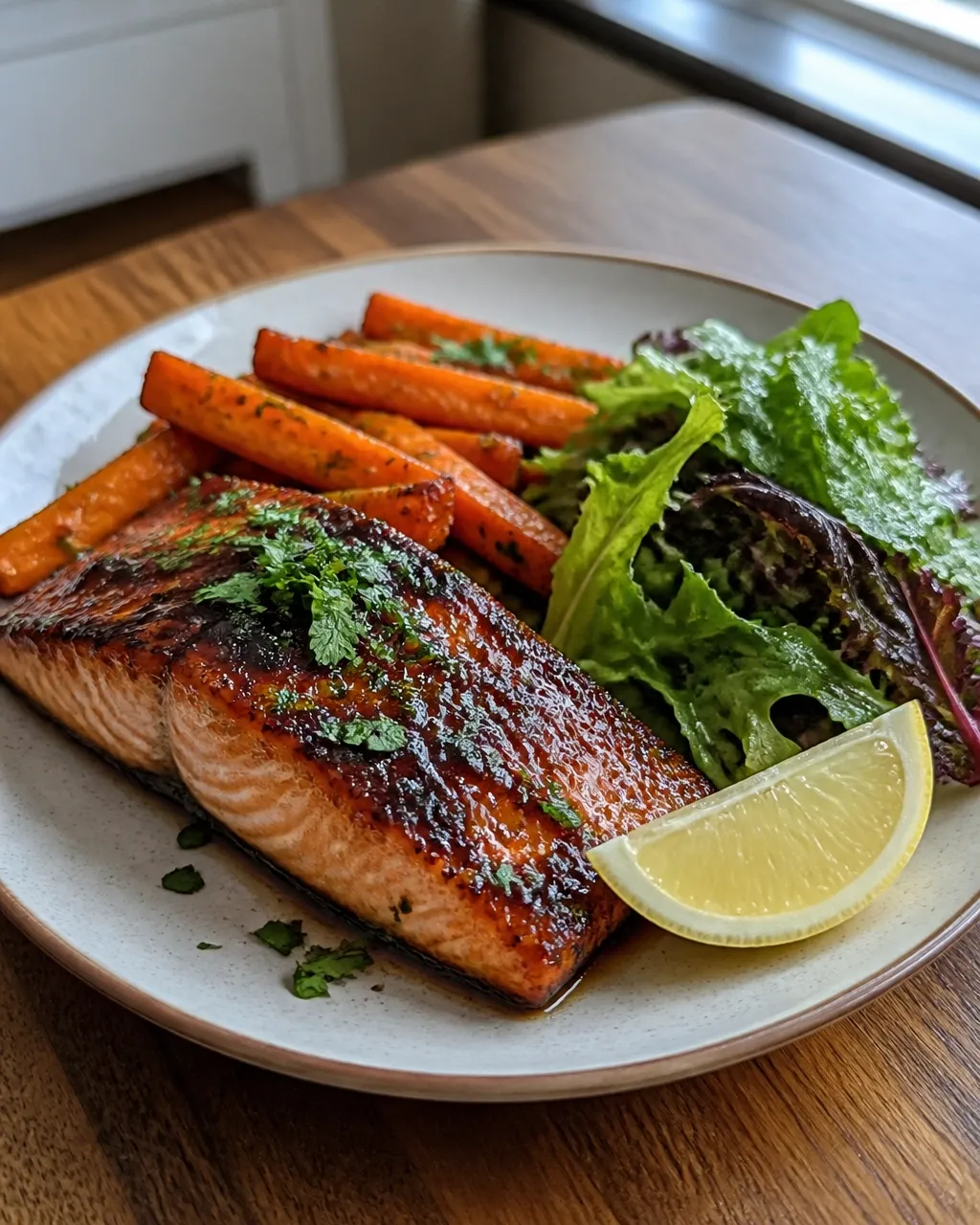
- Rest the salmon for a few minutes, spoon over any remaining glaze, and serve with the roasted carrots.
Some dinners ask for a full evening. This one asks for a hot oven, a baking tray, and roughly half an hour of your attention: which is much more reasonable. Balsamic glazed salmon with roasted carrots brings together rich, tender fish, sweet caramelized vegetables, and a sharp-sweet glaze that tastes far more complicated than it is.
I love this recipe for busy nights because it delivers color, protein, and serious flavor without creating a sink full of culinary evidence.
Recipe snapshot: Serves 4 · About 30 minutes · Oven temperature: 400°F (200°C)
Why This Sheet-Pan Dinner Works
The first non-negotiable is timing. Carrots are dense vegetables, while salmon is tender and cooks quickly. Put both in the oven at the same time and you will likely get one of two outcomes: crunchy carrots with perfect salmon, or tender carrots with salmon that has forgotten what moisture is. Start the carrots first, then add the fish once they have a head start.
Cutting matters, too. Keep the carrot pieces similar in size, and avoid making thick chunks beside skinny slivers. Uniform pieces cook at a similar rate, while wildly different sizes produce the familiar sheet-pan lottery: one burnt carrot, one raw carrot, and one mysteriously perfect carrot everyone fights over.
Give the carrots room. Spread them across the tray rather than piling them into a cheerful orange heap. Roasting depends on dry heat reaching the surface. When vegetables are crowded, they trap steam and soften instead of browning. Browning is where the deeper flavor lives, thanks to caramelization and the Maillard reaction. You do not need a chemistry degree here; you simply need to stop the carrots from sitting on top of one another.
Build the Glaze Around Balance
Balsamic vinegar brings acidity, fruitiness, and a little bite. A sweetener rounds off that sharpness and helps the glaze thicken. Dijon mustard adds savory depth and helps the mixture hold together, while garlic gives it a warm background note.
Do not treat the glaze as a sugary blanket. The goal is balance, not dessert salmon. Simmer it gently until it becomes syrupy enough to cling to a spoon. A glaze that is too thin slides off the fish; one that is reduced too aggressively can become sticky, bitter, or louder than the salmon itself.
Remember that the glaze thickens as it cools. Stop reducing when it looks slightly looser than the final texture you want. The carryover thickening will do some of the work for you. Cooking has many mysteries, but this one is simply evaporation wearing a tiny chef’s hat.
Brush the salmon shortly before it goes into the oven. If you coat it too early, the acidic mixture can begin changing the fish’s surface and the sweetener may scorch before the center is cooked. Save a little clean glaze for serving, and never reuse glaze that has touched raw salmon unless you boil it thoroughly.
Dry Fish Browns Better
Pat the salmon dry before seasoning. Moisture on the surface must evaporate before browning can begin, so a wet fillet spends energy steaming itself. Dry the surface and you encourage better color, more concentrated flavor, and fewer watery patches under the glaze.
Place the fish with the skin side down if the skin is attached. The skin acts as a small protective barrier between the hot tray and the delicate flesh. It also makes lifting the cooked salmon easier. If you prefer not to eat the skin, leave it on during roasting and slide the flesh away when serving.
Use the thickest part of the fillet to judge doneness. Thin ends will cook first, so do not let them bully you into removing the whole tray too early. For maximum food safety, the USDA recommendation for fish is 145°F (63°C) in the thickest part. A thermometer gives you a more reliable answer than a fork and prevents the classic “just checking” routine that turns dinner into fish confetti.
At 400°F, individual fillets commonly need around 8 to 12 minutes, depending on thickness. Treat that as a guide, not a commandment carved into a cutting board. Salmon continues cooking briefly after it leaves the oven, so remove it as soon as it reaches your preferred safe doneness and allow it to rest for a couple of minutes.
Let the Oven Do the Heavy Lifting
Roasted carrots should show browned edges and yield easily when pierced, but they should not collapse into orange paste. That sweet spot comes from high enough heat, enough space, and a little patience.
Resist opening the oven repeatedly. Every peek releases heat and extends cooking time. Check once when you add the salmon, then use your thermometer near the end. If the carrots need more color after the salmon is ready, transfer the fish to a plate and return the vegetables to the oven briefly. Do not sacrifice a perfectly cooked fillet for a carrot that wants a tan.
This is exactly the kind of efficient cooking that makes Cookpedia’s quick meals useful on a weeknight. Keep the method simple, but stay firm about the details that affect texture.
Variations That Keep the Balance
Make It Citrus-Balsamic
Add lemon zest to the glaze or finish the cooked salmon with lemon juice. Use the juice at the end rather than flooding the glaze early. Fresh acidity tastes brighter, while prolonged cooking can flatten its aroma. The result is especially good when the balsamic feels rich and you want the plate to taste lighter.
Add a Little Heat
Stir a pinch of red pepper flakes into the glaze, or add a small amount of smoked paprika to the carrots. Keep the heat modest. Chili should make the sweet glaze more interesting, not turn dinner into a dare.
Swap the Vegetable
Use broccoli florets, green beans, parsnips, or Brussels sprouts. Adjust the starting time according to density: parsnips need a similar head start to carrots, while green beans may need much less. Choose vegetables with comparable cooking times if you want to keep this as one easy tray.
Use Maple Instead of Honey
Maple syrup gives the glaze a deeper, woodsy sweetness and works beautifully with roasted root vegetables. Keep the amount restrained so the balsamic remains noticeable. For more simple, balanced ideas, browse Cookpedia’s healthy dinner collection.
Side Dish Pairings: Add Contrast, Not Competition
This salmon already brings richness, sweetness, acidity, and a little caramelized drama. Choose sides that create contrast rather than adding another heavy sauce.
Serve it with steamed rice, quinoa, or a small portion of roasted potatoes if you want extra staying power. Keep the grain simply seasoned so it can catch the glaze without competing for attention. A lemony arugula salad adds peppery freshness, while steamed green beans provide a crisp, clean counterpoint to the soft salmon and tender carrots.
For a cooler side, try plain Greek yogurt mixed with lemon zest and herbs. The creamy tang cuts through the balsamic sweetness in much the same way a squeeze of lemon does. Avoid pairing this dish with another sweet roasted vegetable unless you genuinely enjoy a dinner that tastes like a polite argument between two desserts.
For more efficient weeknight inspiration, explore Cookpedia’s 30-minute meal recipes.
Frequently Asked Questions
Can I use frozen salmon?
Yes. Thaw it completely in the refrigerator before cooking, then pat it very dry. Frozen fish releases extra water as it cooks, which can dilute the glaze and prevent browning. Avoid glazing a frozen fillet and hoping the oven sorts it out; ovens are hardworking, but they are not magicians.
What if my glaze tastes too sharp?
Add a small amount of extra honey or maple syrup, then taste again. Do not solve the problem by adding a large amount at once. Balsamic vinegar varies widely in acidity and sweetness, so adjust gradually. A small knob of butter stirred in off the heat can also soften the edges and give the glaze a rounder finish.
What if the glaze burns?
Sweeteners darken quickly at high heat. If the glaze is browning too fast while the salmon is still undercooked, loosely cover the fish with foil and continue cooking until the center reaches the appropriate temperature. Reduce the glaze less aggressively next time, and brush on a thinner layer at the beginning. Add the final drizzle after cooking for brighter flavor without scorching.
Why are my carrots soft but not browned?
They probably released steam instead of roasting. Check that the pieces were dry, the tray was not crowded, and the oven was fully preheated. Use a larger tray if necessary. You can also roast the carrots for a few extra minutes after removing the salmon. Browning needs exposed surfaces, so space is not optional.
Can I cook everything at the same time?
Only if the carrots are cut very thin or partially cooked first. Standard carrot sticks need more time than salmon. Start them alone, then add the fish later. This small scheduling choice is the difference between a balanced sheet-pan meal and a plate that requires emergency side dishes.
Can I prepare the glaze ahead?
Absolutely. Refrigerate it in a covered container for several days, then warm it gently or let it come close to room temperature before using. If it becomes very thick, loosen it with a splash of water. Keep glaze that has contacted raw fish separate from the clean finishing glaze, and boil any contaminated mixture before serving.
How should I store leftovers?
Refrigerate leftovers within two hours in a covered container and use them within three to four days. Reheat gently in a low oven or at reduced microwave power. High heat drives moisture out of salmon quickly, leaving you with a dry fillet and a deeply personal grudge against leftovers.
Can I turn this into an air fryer dinner?
You can, but treat the salmon and carrots as separate timing problems. Air fry the carrots first, then add the salmon for the shorter cooking period. Use a light coating of glaze near the end because sweet sauces can darken quickly in the concentrated heat. This makes a useful addition to your collection of air fryer recipes dinner options, but the sheet-pan method is easier when you are feeding several people.
Is this a healthy dinner?
It can fit comfortably into a balanced meal, especially when served with a simple grain and a green vegetable or salad. Salmon provides protein and beneficial fats, while carrots add fiber and natural sweetness. Keep the glaze portion sensible and let the roasted ingredients do most of the flavor work. That is the general rule behind dependable healthy dinner ideas: build flavor with technique, not just more sauce.