Recipe
Servings
Servings 1×
Ingredients
- Salmon
- Asparagus
- Garlic
- Lemon
- Cooking oil
Method
- Use the pan correctly, and it becomes a small, efficient roasting environment where heat, airflow, and surface moisture all work in your favor.
- Pat the salmon dry before seasoning it.
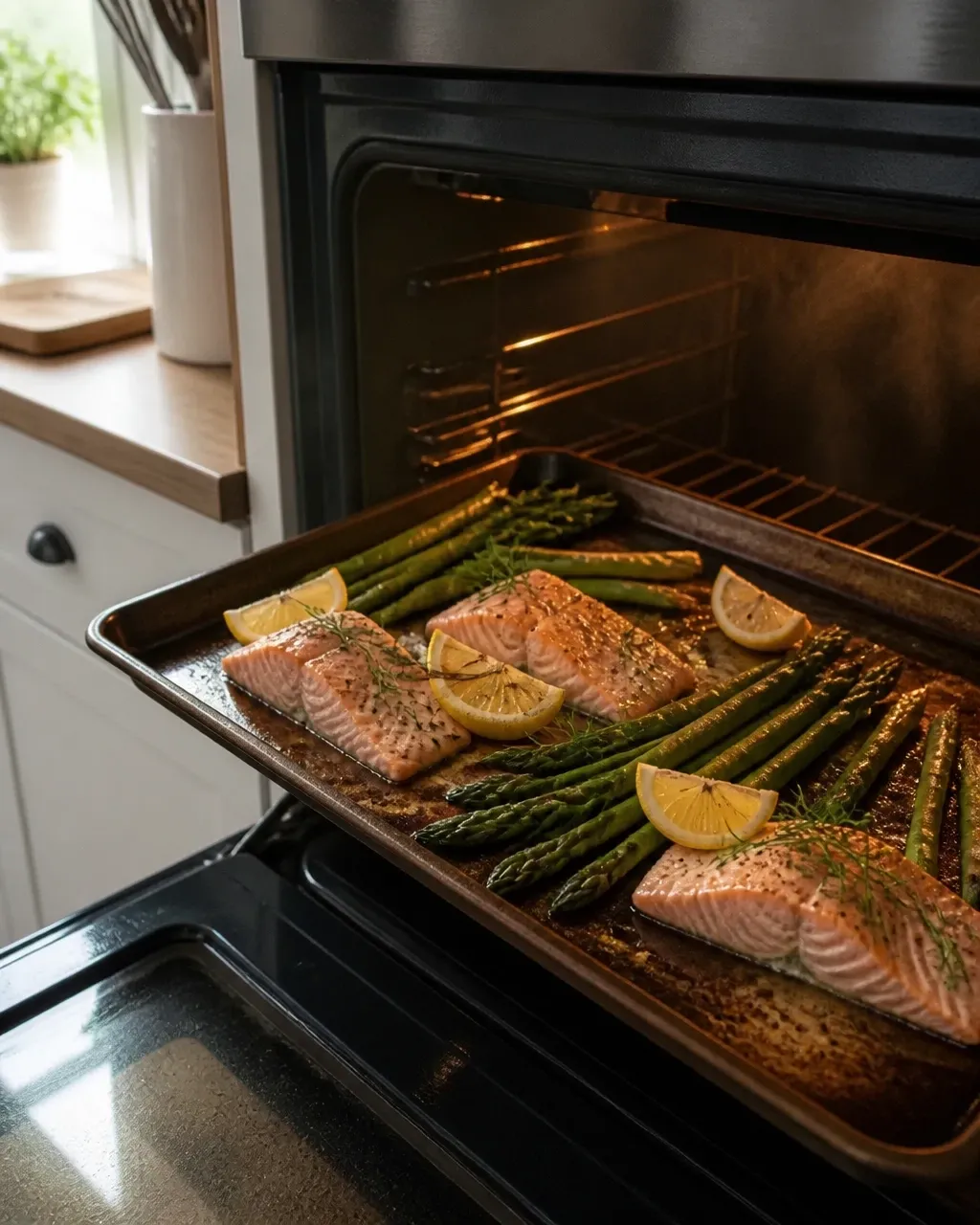
- Give the vegetables room to sit in a single layer, and leave a little breathing space around the salmon.
- Use lemon for brightness, then finish with an extra squeeze at the table if needed.
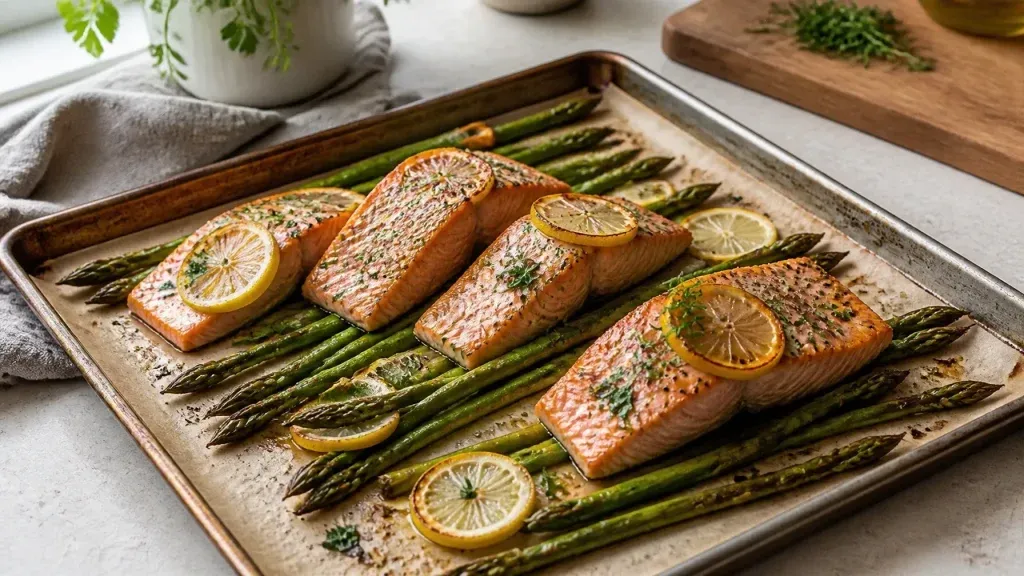
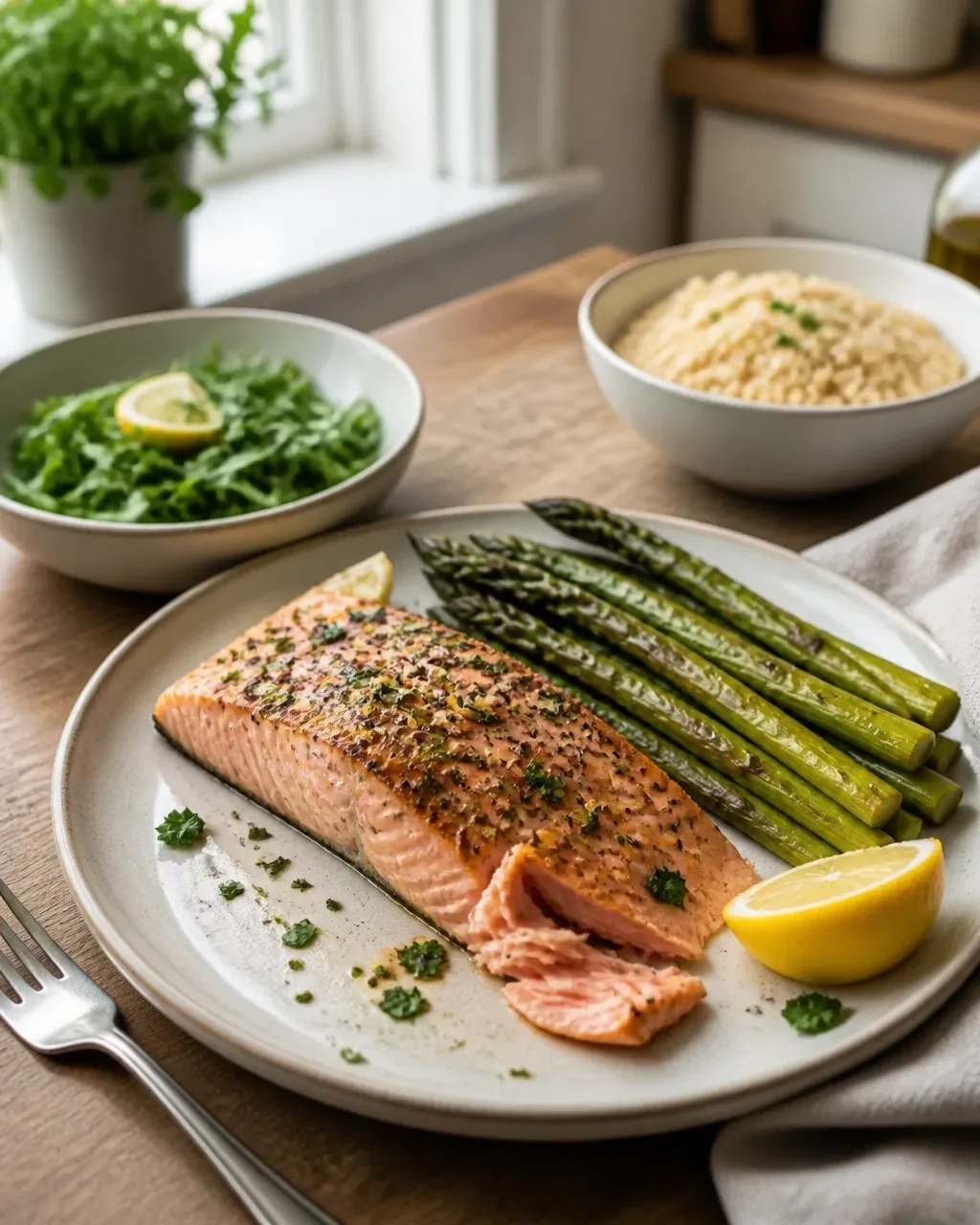
When dinner needs to be healthy, fast, and unlikely to create a mountain of dishes, turn to this sheet pan lemon herb salmon and asparagus. The salmon stays tender, the asparagus develops lightly browned edges, and lemon keeps every bite bright instead of heavy. It is the sort of meal that makes a busy evening feel under control. Not glamorous. Not fussy. Just genuinely good food doing its job.
Why This Sheet Pan Method Works
Sheet pan cooking is more than tossing food onto a tray and hoping for the best. Use the pan correctly, and it becomes a small, efficient roasting environment where heat, airflow, and surface moisture all work in your favor.
Dry surfaces brown; wet surfaces steam
Pat the salmon dry before seasoning it. This is non-negotiable if you want more than pale, slightly damp-looking fish. Surface moisture must evaporate before browning can begin. If the salmon is wet, the oven spends its early energy boiling away that moisture instead of developing roasted flavor.
The same principle applies to asparagus. Dry stalks roast. Crowded, wet stalks steam. Give the vegetables room to sit in a single layer, and leave a little breathing space around the salmon. Your sheet pan is not public transportation. Everyone needs personal space.
Browning happens when the surface becomes hot and dry enough for the Maillard reaction to take place. This reaction creates the savory, nutty flavors we associate with roasted food. It is one reason a hot oven can make simple salmon and vegetables taste far more interesting than steamed versions.
Choose a temperature that balances speed and moisture
A moderate-hot oven, usually around 400°F to 425°F, gives this dinner its useful balance. The heat is strong enough to brown the asparagus tips and lightly color the salmon’s surface, but it does not require a long cooking time that encourages the fish to dry out.
Salmon fillets cook quickly because they are relatively thin and contain a good amount of moisture. Asparagus has a similar schedule, particularly when the stalks are medium-sized. That timing overlap is the secret to cooking both on one pan without complicated scheduling.
Check the salmon early, especially if the fillets are thin. Thickness matters more than the clock. A thick center needs more time than a narrow tail piece, even if both came from the same package.
Use fat to carry flavor
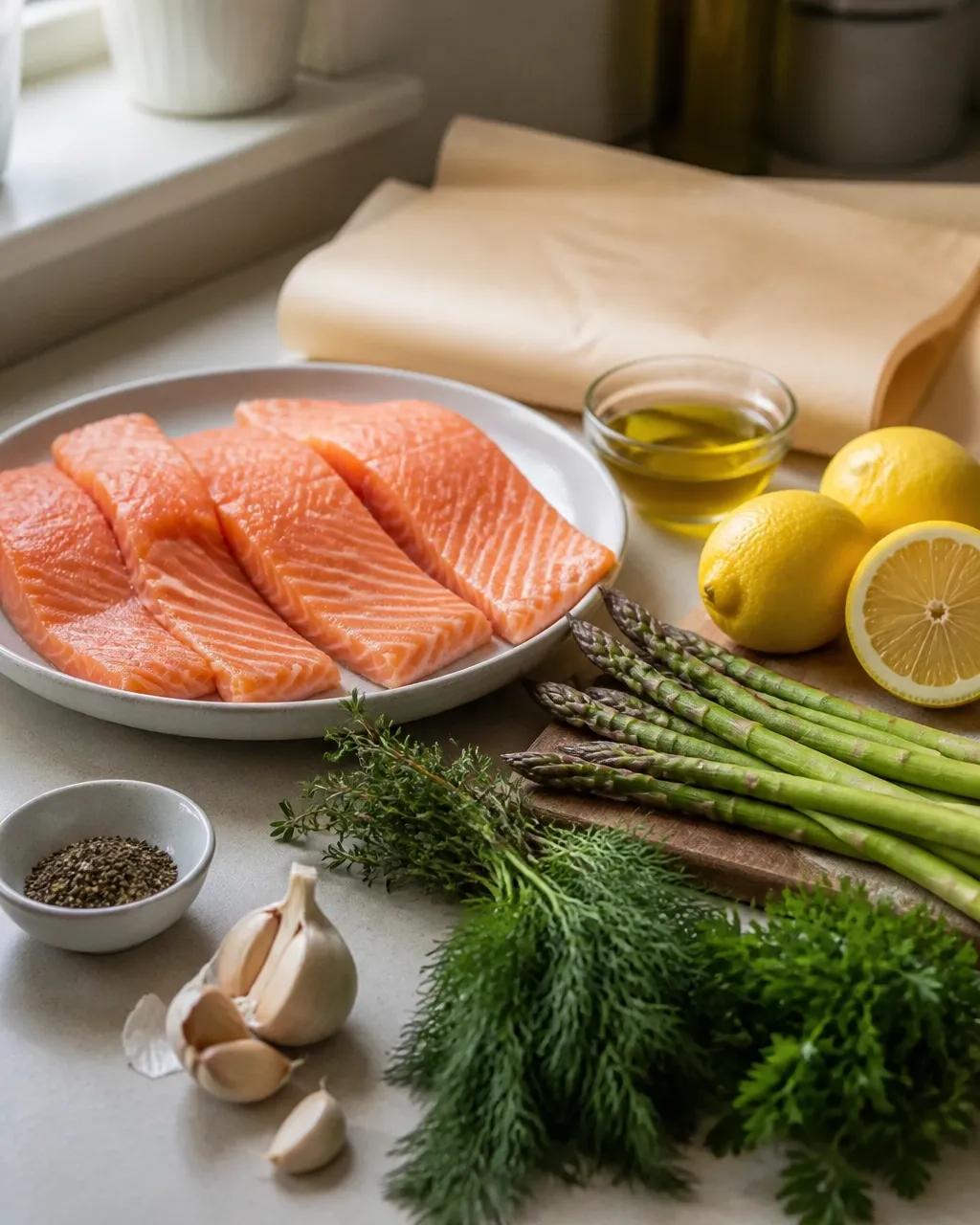
Olive oil does several useful jobs here. It helps herbs and garlic cling to the food, spreads seasoning across the surface, and improves contact between the hot pan and the vegetables. Fat also carries aromatic compounds, which means the flavor of fresh herbs reaches your palate more effectively than it would on a completely dry surface.
Do not drown the salmon. Too much oil can pool on the pan and soften the edges rather than helping them brown. Coat lightly and evenly. The asparagus should look seasoned, not submerged.
Let lemon brighten, not dominate
Lemon brings acidity, and acidity is the balancing tool this dish needs. Salmon has a naturally rich, buttery quality. Lemon cuts through that richness and makes the fish taste cleaner and fresher.
Add lemon thoughtfully. Too much juice sitting on the salmon before roasting can make the surface wet and interfere with browning. Use lemon for brightness, then finish with an extra squeeze at the table if needed. Lemon slices add aroma during roasting, while fresh juice at the end supplies a sharper, livelier note.
Think of acid as the editor of the plate. It does not need to shout. It simply removes the dullness that rich food can sometimes collect.
Trust temperature over guesswork
For food safety, the USDA recommends cooking fish to 145°F (63°C) in the thickest part of the fillet. Check the center with an instant-read thermometer, inserting it from the side when possible so the tip reaches the thickest section.
The salmon should also look opaque and flake easily with a fork. These visual signs are useful, but they are not a replacement for a thermometer. Fish can appear finished while the center is still undercooked, or look slightly moist while already past its best texture.
For more food-safety guidance, see the USDA safe temperature chart.
Account for carryover cooking
Food continues cooking after it leaves the oven. The outside of the salmon is hotter than the center, so heat keeps moving inward during the short rest. This is called carryover cooking, and it is why the fish may become firmer after you remove the pan.
Rest the salmon briefly before serving. Do not leave it sitting for ages, because steam can soften the roasted surface. A few quiet minutes is enough time for the juices to settle while you grab plates and pretend you planned the timing perfectly.
Variations That Keep the Balance
Keep the basic roasting technique steady, then change the flavor direction. That gives you variety without reinventing dinner every Tuesday.
Mediterranean lemon herb
Use oregano, parsley, garlic, and a little crumbled feta after roasting. The salty feta adds richness, so keep the lemon generous and serve the salmon with something crisp or peppery. A few chopped olives can bring briny depth, but avoid adding too many salty elements at once.
Honey mustard glaze
Combine a small amount of honey with Dijon mustard and lemon. Honey encourages surface browning, while mustard contributes acidity and savory bite. Brush on a thin layer rather than a thick coating. Excess sugar can darken too quickly in a hot oven.
Smoky paprika and lime
Replace the usual herb profile with smoked paprika, garlic, and lime. The smoky notes make the salmon feel deeper and more substantial, while lime keeps the finish sharp. Add a little chopped cilantro after roasting if you enjoy its fresh, citrusy character.
Garlic chili salmon
Add red pepper flakes or a little chili crisp after cooking. Spicy heat can make rich salmon taste lighter because it keeps your palate alert. Pair this version with plain rice or a cooling cucumber salad rather than another aggressively seasoned side.
Add a sturdier vegetable
If you want more volume, include vegetables such as sliced bell peppers, zucchini, or cherry tomatoes. Avoid adding dense vegetables like raw potatoes at the same time as the salmon. They need a head start in the oven, or you will end up with perfectly cooked fish and stubbornly crunchy potatoes. Nobody wants that plot twist.
Side Dish Pairings for a Balanced Plate
Let the salmon and asparagus remain the center of attention. Choose sides that add a different texture or counter the dish’s richness.
Serve a lemony arugula salad for peppery crunch and extra acidity. The greens refresh the palate between bites and keep the meal from feeling too soft. A simple cucumber salad works for the same reason.
Add cooked quinoa, brown rice, or a slice of crusty whole-grain bread when you need more staying power. These sides absorb the flavorful juices without introducing another heavy sauce. For a lower-carbohydrate plate, add roasted mushrooms or a crisp cabbage slaw instead.
If you are planning quick family meals, keep the sides simple. One sharp salad and one straightforward grain are enough. For more inspiration, browse Cookpedia’s healthy recipes and quick meals collections.
FAQ: Solving Common Salmon and Asparagus Problems
What if my salmon is dry?
The most likely causes are overcooking, very thin fillets, or an oven that runs hotter than its setting suggests. Check the thickest part early rather than relying only on the recipe timer. Remove the pan once the fish reaches the safe temperature recommended by the USDA, then rest it briefly.
Also check the size of your fillets. A thin tail portion can finish several minutes before a thick center cut. If the pieces vary dramatically, group similar sizes together and monitor them separately.
What if the asparagus is still tough when the salmon is done?
Asparagus thickness makes a major difference. Very thick stalks need more time than thin ones. Trim away the woody ends, and consider splitting thick stalks lengthwise so they roast more quickly.
You can also give the asparagus a short head start before adding the salmon. This works especially well when the vegetable pieces are large. Do not solve the problem by keeping the salmon in the oven indefinitely. Fish is not a patience competition.
Why did my asparagus turn soggy?
You probably crowded the pan or used vegetables that were wet after washing. Excess moisture creates steam, and steam prevents browning. Dry the asparagus thoroughly, spread it out, and use a large enough pan to keep the stalks from overlapping.
A lined pan helps with cleanup, but it does not fix overcrowding. Surface area still matters. If necessary, use two pans rather than forcing everything onto one small tray.
Can I use frozen salmon?
Yes, but thaw it first for the most even cooking. Frozen fish releases extra moisture as it heats, which can make the surface steam instead of brown. Pat thawed salmon thoroughly dry before seasoning it.
If you cook it from frozen, expect the cooking time to increase and the exterior to develop less color. Use the thermometer, not appearance alone, to determine when it is ready.
What if I do not have fresh herbs?
Use dried herbs, but use less because their flavor is more concentrated. Add delicate fresh herbs after roasting when possible, since long exposure to high heat can mute their brighter aromas.
Dried oregano, Italian seasoning, thyme, and dill can all work. Keep the profile focused rather than combining every jar in the spice cabinet. Salmon appreciates confidence.
Can I prepare this meal ahead of time?
Prepare the seasoning mixture and trim the asparagus earlier in the day. Store them separately in the refrigerator, and keep the salmon chilled until you are ready to cook.
Cooked salmon is best within a few days when refrigerated promptly in a sealed container. Reheat gently, because high heat drives moisture out quickly. You can also enjoy leftovers cold over greens, tucked into a grain bowl, or folded into a quick lunch salad.
Can I make this in an air fryer?
You can adapt the same dry-heat principles for an air fryer, but do not assume the oven timing will transfer directly. Air fryers circulate hot air more intensely and have smaller cooking chambers, so salmon may finish faster. Cook the fish and asparagus in a single layer, avoid crowding, and check the salmon early.
This is a useful option when you are collecting air fryer recipes dinner ideas, but the sheet pan remains easier when cooking several portions at once.
What if the lemon flavor is too strong?
Balance it with a little olive oil, chopped herbs, or a mild grain on the plate. You can also add lemon after roasting instead of before, giving you more control over the final acidity.
If the dish tastes flat rather than sour, add salt before adding more lemon. Salt improves flavor perception, while extra acid can make an already sharp dish feel unbalanced.
Is this meal healthy enough for regular weeknights?
It fits neatly into many healthy dinner ideas because it combines protein, vegetables, and a small amount of flavorful fat without relying on a heavy sauce. The exact nutrition depends on portion size and sides, so build the plate around what satisfies you.
Keep the focus on balance: enough salmon to feel full, plenty of vegetables, and a side that suits your appetite. Healthy cooking should be practical enough to repeat, not so strict that it collapses by Wednesday.