Recipe
Servings
4 1×
Serves 4Prep 15 minCook 30 min
Ingredients
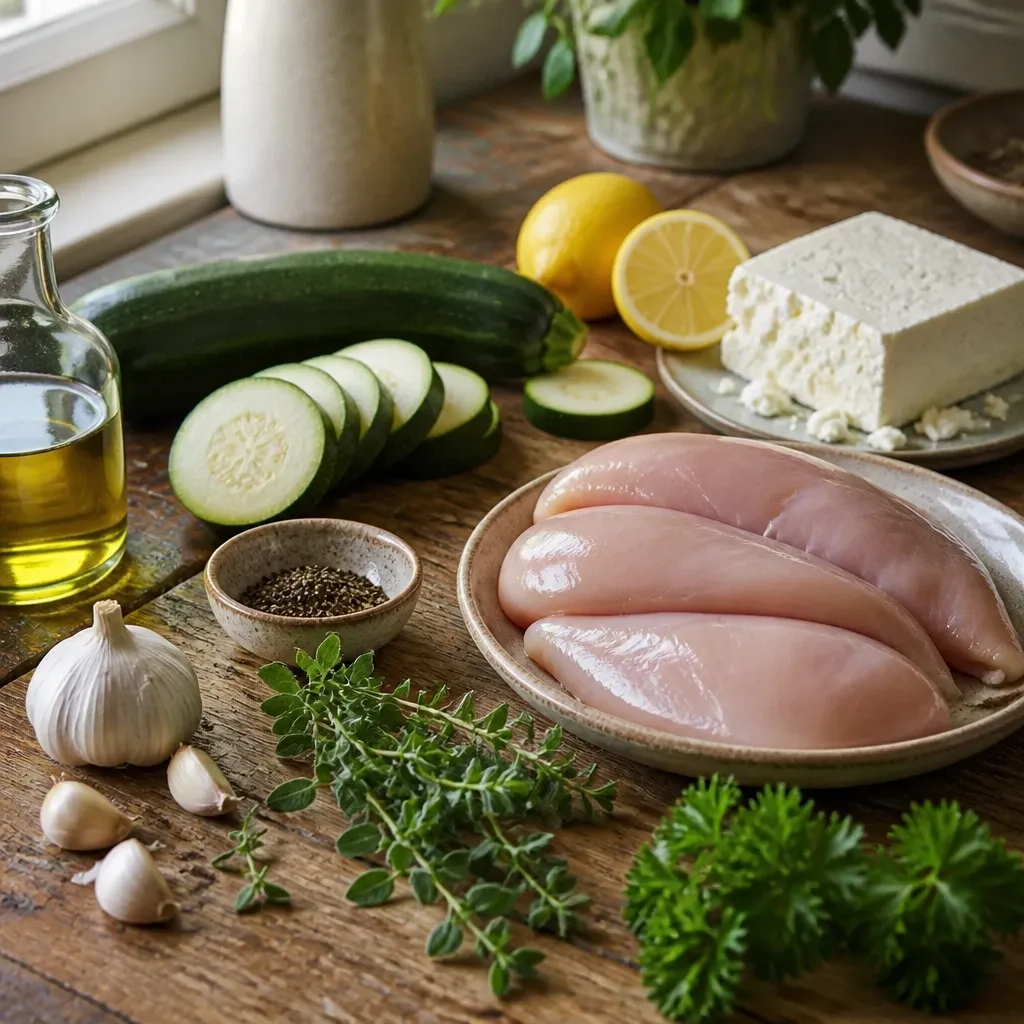
- 1½ pounds boneless, skinless chicken breasts or thighs
- 3 medium zucchini, cut into thick half-moons
- 2 tablespoons olive oil
- 3 garlic cloves, finely chopped
- 1 tablespoon chopped fresh oregano
- 1 teaspoon fresh thyme leaves
- Zest and juice of 1 lemon
- ½ teaspoon kosher salt, plus more to taste
- ½ teaspoon black pepper
- 4 ounces feta, crumbled
- 2 tablespoons chopped fresh parsley
Method
- Heat the oven to 425°F and line a rimmed sheet pan.
- Coat the chicken with olive oil, garlic, herbs, lemon zest, salt, and pepper.
- Roast the chicken for 12–15 minutes.
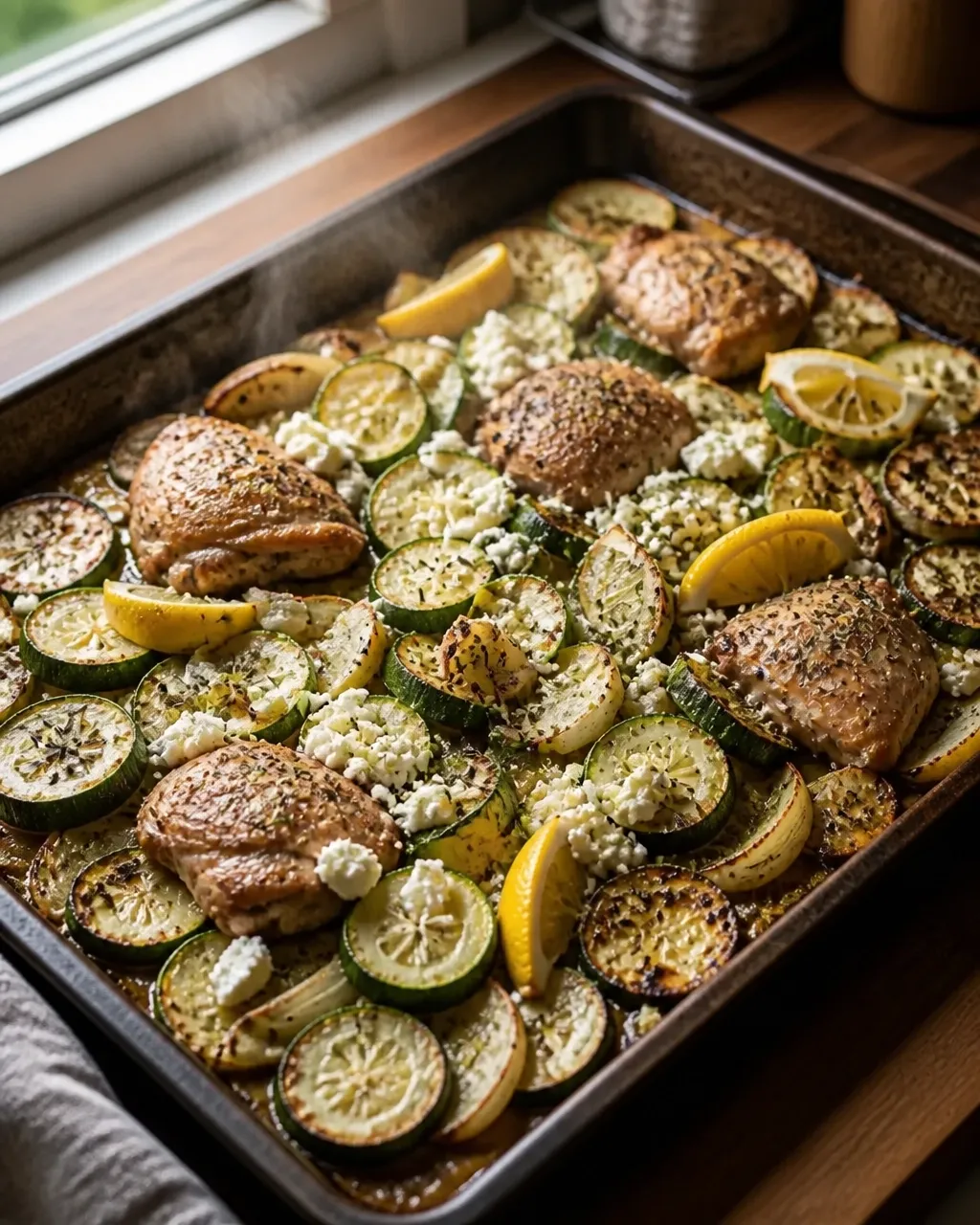
- Add the seasoned zucchini around the chicken, keeping everything in a single layer.
- Continue roasting until the zucchini is browned and the chicken reaches 165°F in the thickest part.
- Scatter feta over the pan, rest for five minutes, then finish with lemon juice and parsley.
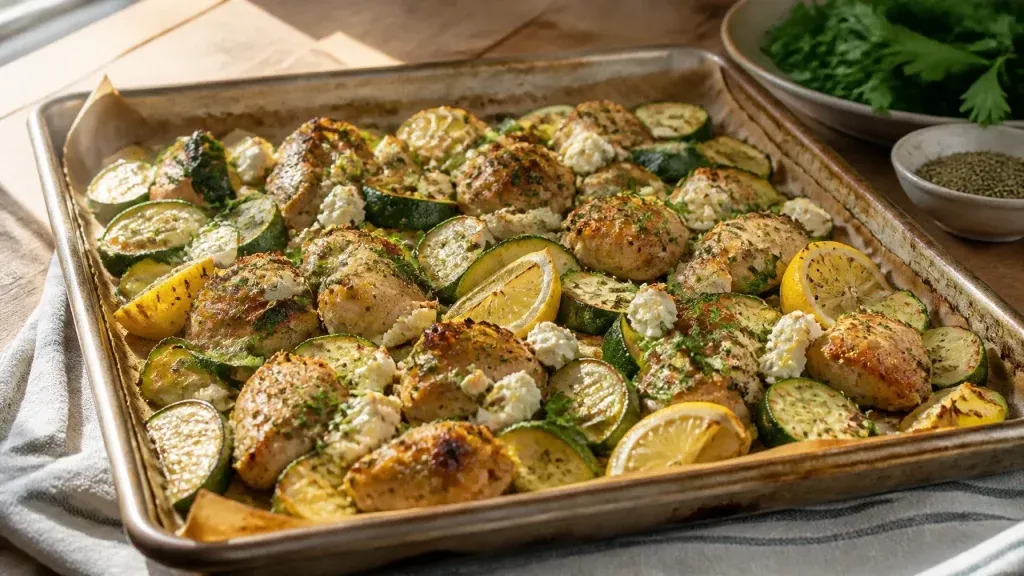
When dinner needs to be healthy, satisfying, and on the table without turning the kitchen into a disaster zone, reach for a sheet pan. This herb chicken with zucchini and feta brings together juicy roasted chicken, tender vegetables, salty cheese, and bright lemon in one easy meal. It is exactly the sort of dinner I make when I want something wholesome but refuse to wash six pans afterward.
Tips & Technique: Make the Oven Do the Heavy Lifting
The most important rule for sheet pan chicken is simple: use high heat and trust a thermometer, not the clock. Set the oven around 425°F for strong browning, or use 400°F if your oven runs hot. Roasting at a higher temperature helps the outside of the chicken develop color before the inside loses too much moisture.
That golden surface comes from the Maillard reaction, which is the friendly bit of food science responsible for deeper savory flavor. Heat encourages proteins and natural sugars on the chicken to rearrange and form new flavor compounds. In less scientific language, browned chicken tastes far more interesting than pale chicken that has simply become warm.
Dry the chicken before seasoning it. Surface moisture has to evaporate before browning can begin, so wet chicken steams first and browns later, if it gets around to browning at all. Patting it dry takes seconds and gives the heat a much better chance to do useful work.
Use a moderate amount of olive oil rather than drenching everything. Oil helps transfer heat from the hot pan to the food and encourages crisp edges, but too much creates a greasy puddle that prevents vegetables from roasting cleanly. Toss the zucchini until lightly coated, then spread it out so each piece has breathing room.
That spacing is non-negotiable. Overcrowd the pan and the zucchini releases moisture into the surrounding air. The oven becomes a small, humid sauna, and your vegetables steam instead of caramelize. Leave visible gaps between the chicken and zucchini. If you are doubling the recipe, use two pans rather than stacking everything onto one crowded tray.
Cut the zucchini into thick half-moons or chunky spears. Thin slices soften quickly and can collapse before the chicken is finished. Chunkier pieces hold their shape, pick up browned edges, and still become tender inside. Zucchini contains a great deal of water, so a little restraint with the knife pays off.
Stagger the cooking times. Start the chicken first, then add the zucchini once the meat has had a head start. This is how you get chicken that is safely cooked at the same moment the zucchini is tender rather than mushy. Think of the sheet pan as a tiny schedule, not a free-for-all.
Season in layers, but remember that feta brings plenty of salt. Keep the initial seasoning sensible and adjust after the cheese goes on. Feta also contributes tangy acidity, which keeps the roasted flavors from feeling heavy. Finish with lemon juice and fresh herbs after cooking to add a sharper, fresher note.
Add the feta near the end or scatter it over the hot pan after roasting. Feta does not melt into a smooth, stretchy blanket like mozzarella. It softens while keeping its crumbly personality, which is exactly what this dish needs. Early in the oven, it can dry out or brown too aggressively.
Check the chicken in its thickest section with an instant-read thermometer. The USDA and CDC guidance on chicken safety recommends 165°F. Insert the thermometer into the thickest part without touching bone or the pan. Check more than one piece if they are different sizes.
Let the chicken rest for a few minutes before serving. Resting gives the juices time to redistribute instead of running straight onto the cutting board. Do not skip this because you are hungry. You have already waited for the oven; give the chicken five more minutes to get itself together.
For more roast-chicken inspiration, compare the technique with Cookpedia’s Simple Lemon Herb Roasted Chicken or browse the Cookpedia chicken collection.
Variations That Keep the Balance
Swap boneless chicken breasts for boneless thighs if you prefer darker, richer meat. Thighs are more forgiving because their extra fat helps them stay juicy. Cook them until they reach at least 165°F, then give them a short rest.
Change the herb profile to match what you have. Rosemary and thyme make the dish woodsy and savory, while parsley, dill, or basil make it lighter. Add smoked paprika for warmth, or use a pinch of chili flakes if your dinner table enjoys a little mischief.
Make it Mediterranean by adding cherry tomatoes, olives, and a few thin red onion wedges. The tomatoes bring juicy acidity, while olives echo the salty feta. Avoid adding too many wet ingredients at once, or the pan may steam rather than roast.
For a dairy-free version, leave out the feta and finish with toasted almonds, pumpkin seeds, or a spoonful of creamy tahini sauce. If you normally search for air fryer recipes dinner, you can adapt the chicken and zucchini in batches, but keep the pieces spaced apart and check the chicken temperature early because air fryers cook quickly.
Side Dish Pairings: Add Freshness and Texture
Serve this chicken with a simple grain such as couscous, quinoa, brown rice, or farro. The grains catch the lemony pan juices and make the meal more filling without competing with the herbs.
Add a crisp cucumber salad dressed with lemon or red wine vinegar. The cool crunch cuts through the warm, salty feta and gives the plate a useful temperature contrast.
Warm pita or crusty whole-grain bread also works beautifully, especially if you want the meal to stretch for hungry people. For more vegetable-forward options, pair the chicken with Cookpedia’s healthy recipes or keep the whole meal firmly in the dinner collection.
Skip a heavy cream sauce here. The chicken already has richness from olive oil and feta, so choose sides that bring acidity, crunch, or freshness instead.
FAQ
Can I use chicken breasts and thighs together?
Yes, but do not assume they will finish at the same time. Chicken breasts are lean and can dry out if left in the oven while thighs catch up. Use pieces of similar thickness, or remove the breasts once they reach 165°F and let the thighs continue until tender. A thermometer removes the guesswork.
Why is my zucchini watery instead of browned?
Usually, the pan is overcrowded or the zucchini was cut too thin. Zucchini naturally contains a lot of water, and crowded pieces release steam into one another. Spread them across the pan with space between each piece, use thicker cuts, and roast at a properly preheated temperature. Do not pile the vegetables into a mound and expect crisp edges. Ovens are clever, but they are not miracle workers.
What if the chicken browns before it is cooked through?
Lower the oven temperature slightly or loosely cover the chicken with foil while it finishes. Browning happens at the surface, while doneness depends on internal temperature. If the outside is dark but the center is behind schedule, protect the surface and continue cooking until the thickest part reaches 165°F.
Can I marinate the chicken overnight?
Use a short marinade for the best texture. Lemon juice adds brightness and can tenderize the outer surface, but a long exposure to strong acidity may make that surface soft or slightly mushy. Marinate for 30 minutes to a few hours, then pat the chicken lightly dry before roasting so it browns properly.
How should I store leftovers?
Cool the chicken and zucchini promptly, then refrigerate them in an airtight container for up to three days. Store any extra feta separately if possible. Reheat gently in a covered skillet or microwave until hot, adding a small splash of water if the chicken seems dry. Avoid reheating at full blast for several minutes; that is a reliable way to turn juicy chicken into edible packing material.
Can I prepare this ahead of time?
Prepare the herb mixture, chop the zucchini, and portion the feta earlier in the day. Keep the raw chicken refrigerated and separate from the vegetables until you are ready to cook. Assemble the pan just before roasting so the zucchini does not sit in salt and release excess moisture. This small bit of planning makes busy evenings much easier and keeps the dish firmly in the category of quick family meals.
Is this a complete healthy dinner?
It can be. The chicken provides protein, zucchini adds vegetables, and feta contributes flavor so you do not need a heavy sauce. Add a whole grain or a crisp salad if you want more fiber and staying power. Among practical healthy dinner ideas, this one earns its place because it offers balance without demanding complicated prep or a sink full of dishes.