Recipe
Servings
4 servings 1×
Serves 4Prep 15 minCook 12 minTotal 27 min
Ingredients
- 1 1/2 pounds chicken tenderloins
- 1/2 cup all-purpose flour
- 2 large eggs, beaten
- 1 cup panko breadcrumbs
- 1 teaspoon paprika
- 1/2 teaspoon garlic powder
- 1 tablespoon olive oil spray
- Salt and black pepper, to taste
Method
- Heat the air fryer to 400°F (200°C). Pat the chicken tenders dry and season them with salt and pepper.
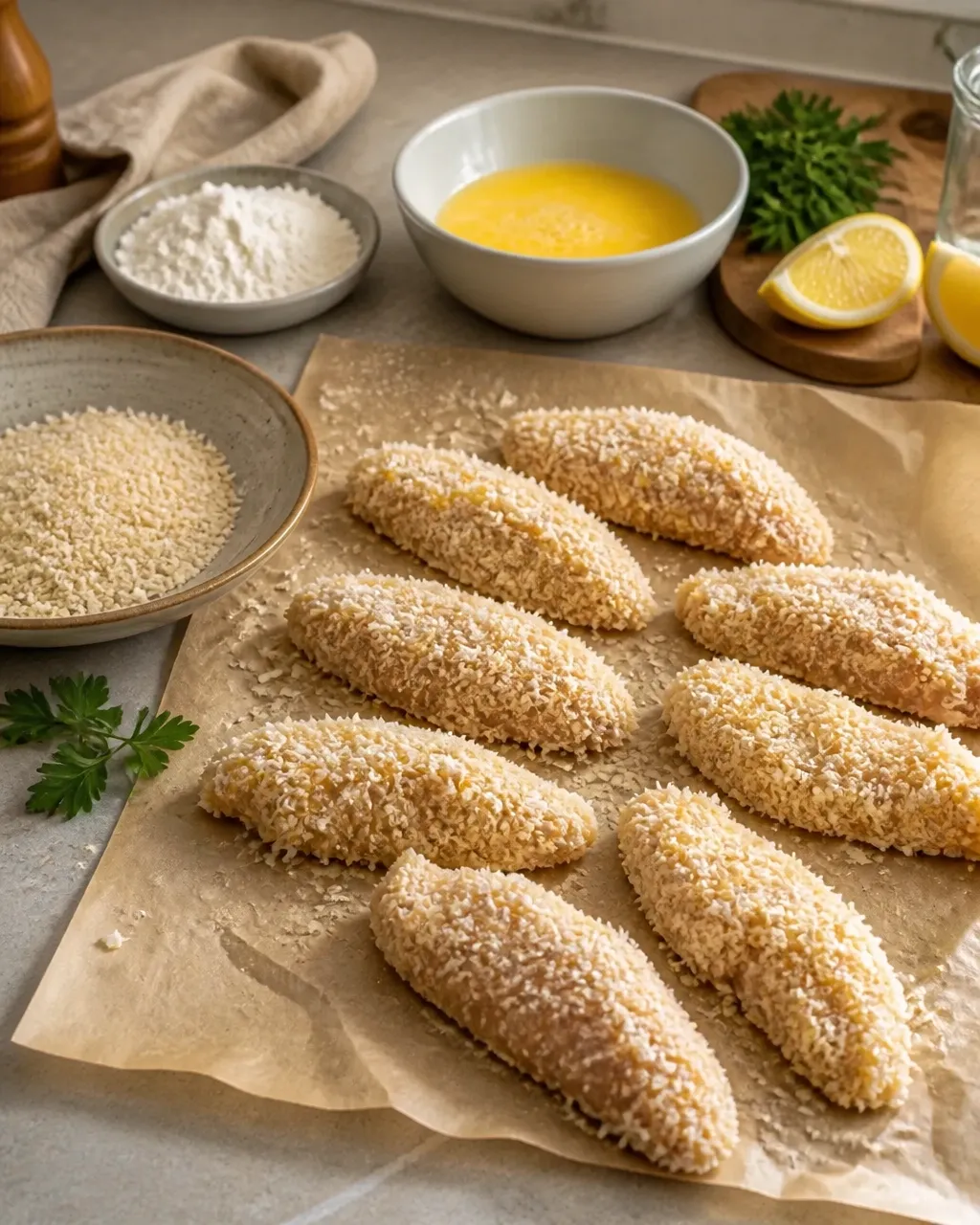
- Put the flour, beaten eggs, and panko mixed with paprika and garlic powder in three shallow bowls.
- Dredge each tender in flour, dip it in egg, and coat it evenly with the seasoned panko. Shake off excess crumbs.
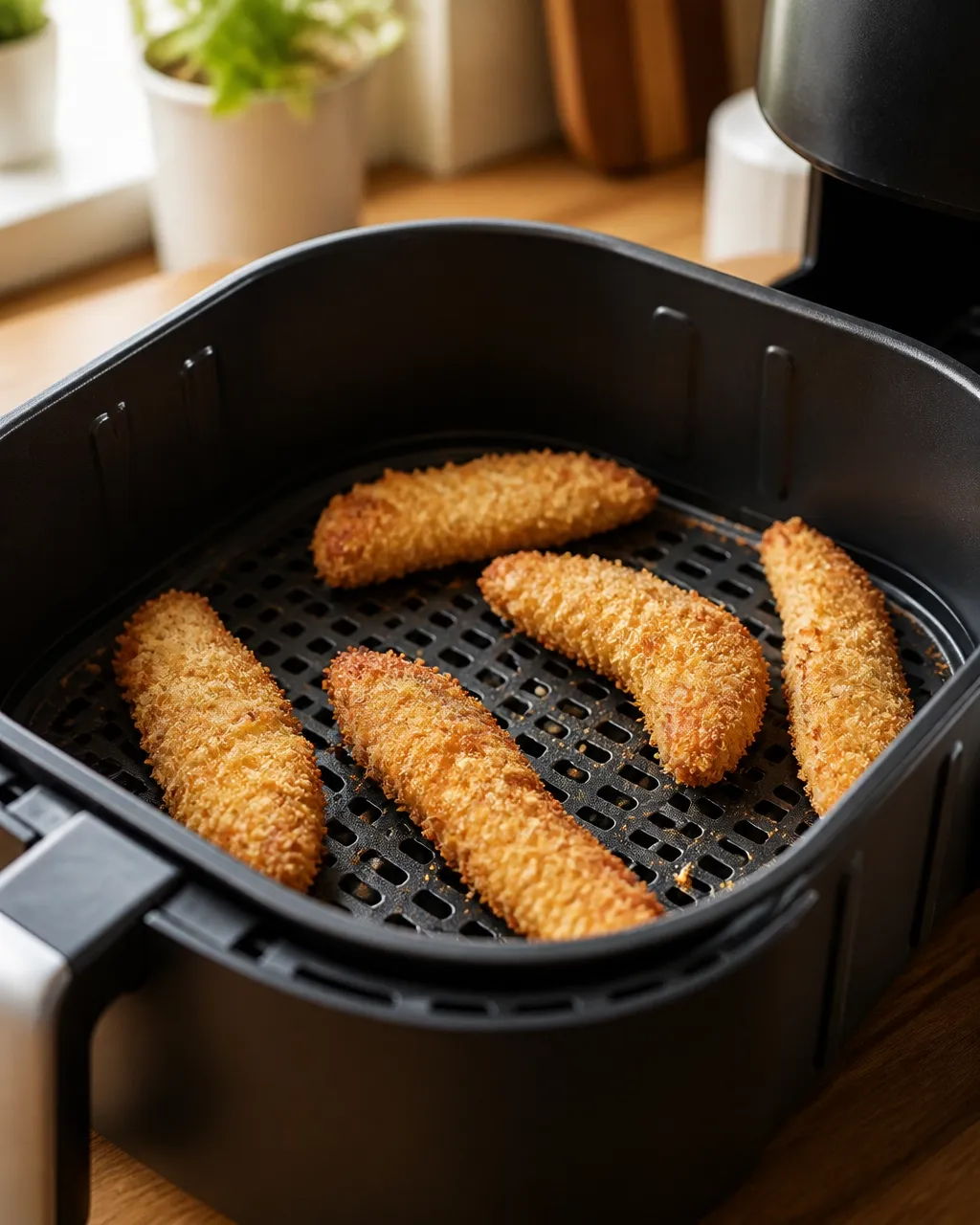
- Arrange the tenders in a single layer in the air-fryer basket, leaving space between them. Spray lightly with oil.
- Air-fry for 10–12 minutes, turning halfway, until deeply golden and the chicken reaches 165°F (74°C). Serve hot.
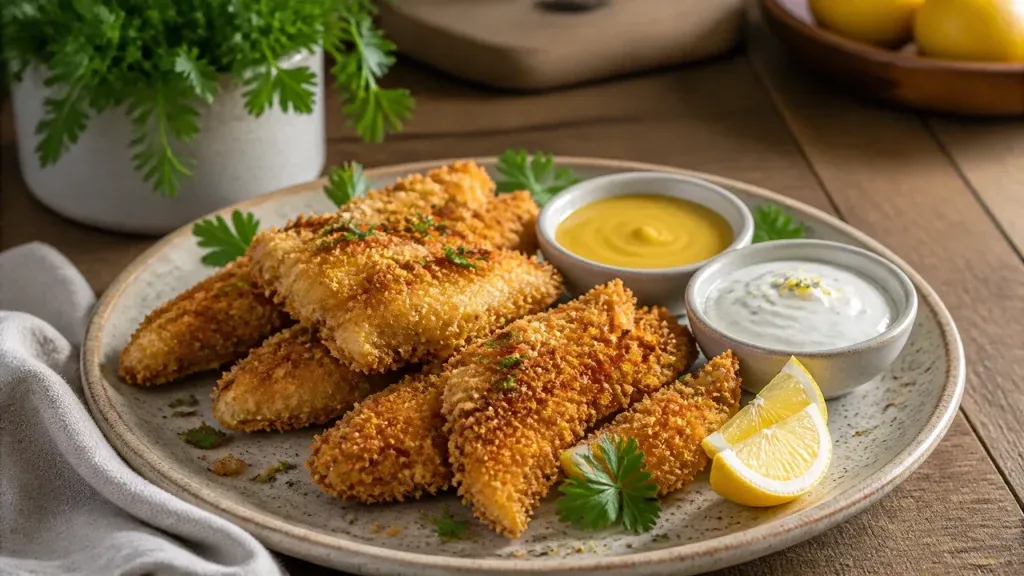
If you are searching for “air fryer recipes dinner” that actually satisfy the whole table, start here. These chicken tenders are crisp outside, juicy inside, and quick enough for a busy evening. The air fryer does the heavy lifting, but a few small details decide whether you get a crunchy coating or a sad, pale jacket. Follow the science, respect the spacing, and let dinner become the easy part.
Tips & Technique: Build a Crust That Stays Crisp
Dry the surface before you bread
Moisture is the enemy of crunch. Chicken naturally holds water at its surface, and any extra moisture from packaging or rinsing can loosen the coating. Pat the chicken dry before breading so the first layer can cling properly.
Think of the coating as a small wall. The flour creates the foundation, the egg acts as a binder, and the crumbs form the textured outer layer. If the foundation is wet and slippery, the rest of the wall will wobble off during cooking.
Avoid soaking the chicken unless you have time to dry it thoroughly afterward. A short buttermilk soak can make the meat tender, but it also adds surface moisture. Drain it well, pat it dry, and do not rush the coating.
Use panko for more crunch
Choose panko breadcrumbs when you want a craggy, audible crunch. Their larger flakes create more little ridges and air pockets than fine breadcrumbs. Those ridges brown quickly and give the tenders a fried-style texture without a deep pot of oil.
Mix in a little cornstarch if you like an especially light crust. Cornstarch contains less protein than wheat flour and creates a more brittle, delicate shell as it dries. Use restraint, though. Too much can make the coating dusty rather than crisp.
Season every layer lightly instead of dumping all the flavor into the crumbs. This spreads seasoning across the chicken and crust, so each bite tastes balanced rather than salty on the outside and bland in the middle.
Treat oil as a browning tool
An air fryer is not oil-free cooking; it is low-oil cooking. A thin coating of oil helps the crumbs conduct heat and brown evenly. It also prevents the flour from staying chalky and pale.
Spray or brush the breaded tenders lightly on both sides. Cover the dry-looking patches, but do not drench the coating. Too much oil can make the crust heavy, while too little leaves you with dry spots that never develop good color.
Use a neutral oil with a high smoke point. Keep the spray moving so it lands as a fine mist rather than forming wet puddles. If you see pale floury areas after cooking begins, add a small amount of oil during the flip.
Preheat for immediate browning
Preheat the air fryer before adding the chicken. A hot basket starts cooking the coating straight away, which encourages surface drying and browning. A cold basket gives moisture more time to escape from the chicken and soften the crumbs.
This is the same reason a hot oven produces better roasted vegetables than a lukewarm one. Heat must reach the food quickly enough to dry and brown the outside before the interior overcooks.
Set the air fryer around 380–400°F, then adjust for your machine. Air fryers vary widely in fan strength, basket design, and actual temperature. Use the timing as a guide, not a commandment carved into a bread crumb.
Leave breathing room
Arrange the tenders in one layer with space between them. Hot air needs a clear path around every piece. When tenders overlap, the crowded areas trap steam, and steam softens breading.
Do not fill the basket simply because there is room for one more tender. Cook in batches if necessary. It may add a few minutes, but it saves the entire crust from becoming limp. This is one of the non-negotiables.
Flip for even heat exposure
Turn the tenders halfway through cooking. The fan browns the exposed surface, while the basket side receives heat differently. Flipping gives both sides a fair chance at crispness and reduces the risk of one side staying soft.
Handle the chicken gently. If the crust sticks, loosen it carefully rather than pulling the tender away in one heroic, crumb-shedding motion. A light coating of oil and a preheated basket will help prevent sticking next time.
Trust the thermometer
Check the thickest part of the largest tender with an instant-read thermometer. Chicken is safe when it reaches 165°F (74°C), according to standard poultry-safety guidance. Color helps, but it cannot replace a temperature check.
Remove thinner pieces as they finish if your air fryer cooks unevenly. Return any under-temperature pieces for another minute or two. Avoid cooking every tender until the largest one is done; that is a reliable way to turn half the batch dry.
Let the cooked tenders rest briefly before serving. Resting gives the hot juices a moment to settle instead of rushing onto the plate. Do not leave them sealed in a container, though. Trapped steam will soften the crust. Keep them uncovered or on a rack if you are waiting.
Variations: Change the Flavor Without Losing the Texture
Keep the coating method consistent, then change the seasoning. Add smoked paprika and garlic for a classic savory version, or use lemon zest and dried herbs for a brighter finish. A pinch of cayenne brings heat without changing the cooking method.
Make a lighter version by using whole-wheat breadcrumbs, but expect a slightly denser crust. Whole-wheat crumbs contain more bran and can brown quickly, so watch the color during the final minutes. For a gluten-free option, use certified gluten-free panko or crushed cornflakes.
Turn the tenders into a family-friendly taco filling by seasoning the crust with cumin, mild chili powder, and oregano. Slice them after resting and tuck them into tortillas with crunchy cabbage and a sharp lime-based sauce.
For a spicy-sweet variation, add a little hot sauce to the egg mixture and serve the finished chicken with honey mustard. Keep sugary glazes off the tenders until the end. Sugar browns quickly and can burn before the chicken is cooked.
You can also make these ahead for quick family meals. Bread the chicken, chill it uncovered briefly so the coating sets, then cook when needed. Avoid stacking raw breaded pieces in a sealed container; pressure and trapped moisture will flatten the crust.
Side Dish Pairings: Add Freshness and Contrast
Crispy chicken needs a side that brings balance, not another heavy blanket. Serve it with cabbage and cucumber slaw dressed with lemon or vinegar. Acidity cuts through the savory crust, while the vegetables add cool crunch.
Roasted sweet potato wedges make the meal heartier and bring gentle sweetness. Add a sharp yogurt sauce, pickled onions, or a squeeze of lemon to keep the plate from feeling too rich.
For a faster plate, pair the tenders with steamed broccoli, green beans, or a tomato-and-avocado salad. These are useful healthy dinner ideas because the vegetables need little preparation and add color, fiber, and freshness without competing with the chicken.
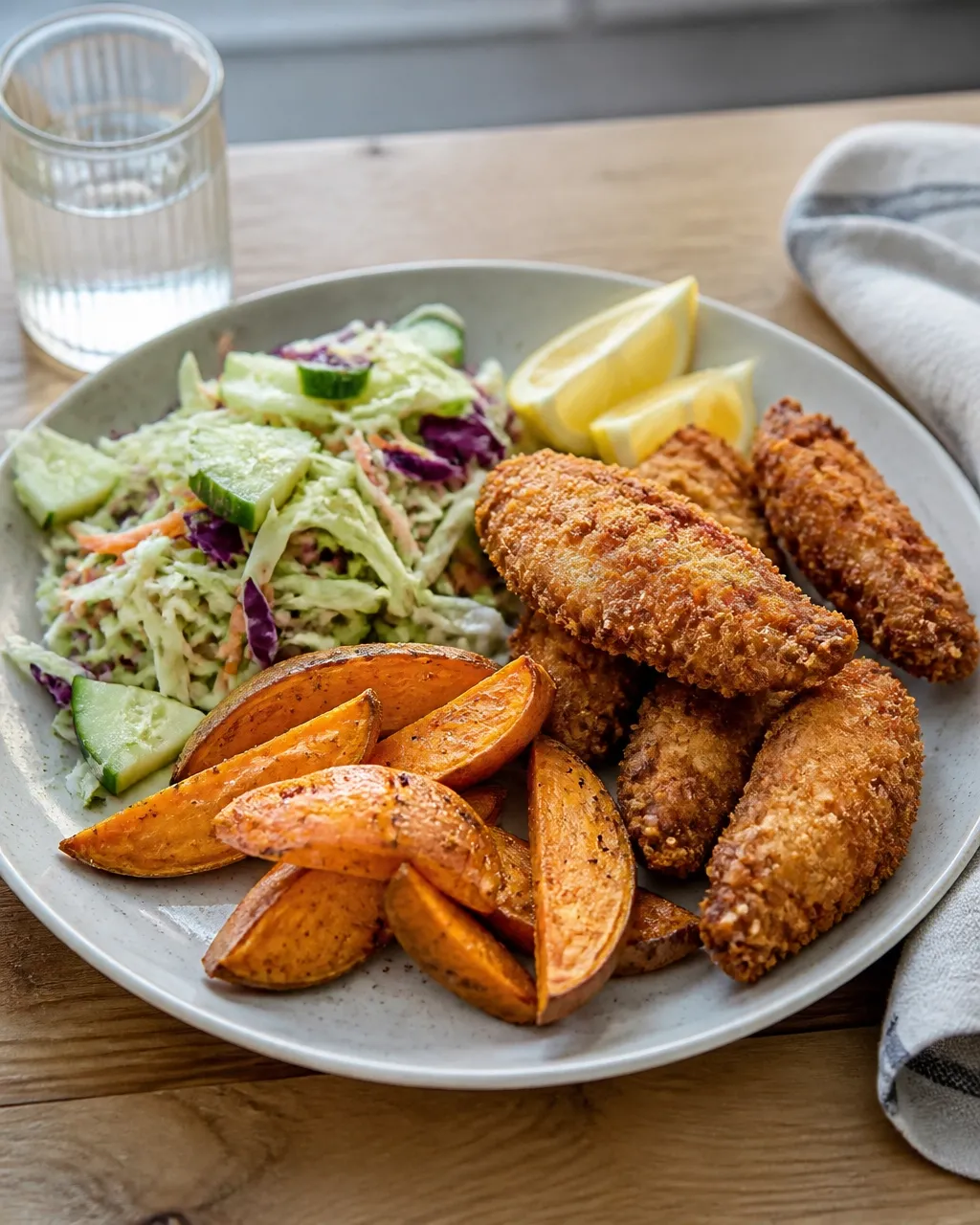
Choose one dipping sauce with richness and one with acidity. Creamy ranch works well beside a mustardy or lemony dip. Offer barbecue sauce for sweetness, but add something tangy on the plate to keep each bite lively.
FAQ: Troubleshoot the Crunch
Why did my chicken tenders turn out soggy?
The basket was probably crowded, the chicken was too wet, or the coating did not receive enough oil. Overlapping pieces trap steam, and steam is excellent at softening crumbs.
Cook in a single layer with visible gaps. Pat the chicken dry before breading, and lightly oil the coating. Place cooked tenders on a wire rack rather than directly on a plate if you are holding them for a few minutes. A plate allows steam to collect underneath.
Why is the breading falling off?
The coating may not have had a dry foundation, or the chicken may have been moved too much. Pat the chicken dry, shake off excess flour, and press the crumbs firmly onto the surface. Let the breaded pieces sit for a few minutes before cooking so the layers can bond.
Do not flip too early. Once the crust has started to set and brown, it will release more easily from the basket.
Can I cook frozen chicken tenders in the air fryer?
Yes, if they are commercially prepared frozen tenders, follow the package directions and check the center with a thermometer. For homemade tenders, freezing changes the moisture inside the coating and chicken, so the crust may not brown as evenly.
Cook homemade frozen pieces in a single layer and expect a longer cooking time. Check several pieces, especially if they vary in thickness. Never rely on a golden exterior alone; the center still needs to reach 165°F.
How do I keep the chicken juicy?
Avoid using pieces with dramatically different thicknesses. Thin tenders finish quickly while thick ones are still cooking, which makes the thin pieces dry by the time the batch is safe.
Use a short brine or buttermilk soak if you want extra insurance, but dry the chicken carefully before breading. Cook just until the thickest piece reaches 165°F, then rest briefly. Do not keep cooking “for safety” once the thermometer has done its job.
Can I reheat the tenders without losing the crunch?
Use the air fryer rather than the microwave. Reheat at about 350°F until the center is hot and the coating has crisped again. Leave space between the pieces and avoid covering them, because trapped steam will soften the crust.
Reheating works best when the tenders were cooled and stored without sauce. Keep dips on the side and add fresh sauce only when serving.
Are air fryer tenders a healthy dinner?
They can fit into a balanced meal, especially because air frying uses much less oil than deep frying. Still, the breading and dipping sauces contribute calories, so balance the plate with vegetables and choose a sauce thoughtfully.
The bigger win is practicality. Simple cooking methods make it easier to prepare satisfying meals at home, and these tenders can sit comfortably among other healthy dinner ideas without demanding a long evening in the kitchen. For more weeknight inspiration, browse Cookpedia’s chicken recipes, quick meals, and healthy recipes.