Recipe
Servings
Servings 1×
Ingredients
- All-purpose flour
- Baking powder
- Granulated sugar
- Fine sea salt
- Whole milk ricotta cheese
- Large eggs (yolks and whites separated for maximum lift)
- Fresh lemon juice and zest
- Whole milk
- Pure vanilla extract
- Unsalted butter (for the pan)
Method
- Whisk the Dry Matrix: Combine your flour, baking powder, sugar, and salt in a large bowl. This ensures even distribution of the leavening agent.
- Emulsify the Wet Base: In a separate bowl, whisk together the ricotta, egg yolks, milk, lemon juice, zest, and vanilla until smooth.
- The Gentle Fold: Pour the wet mixture into the dry ingredients. Use a spatula to fold the mixture just until the flour streaks disappear. Small lumps are your friends; they prevent gluten over-development.
- The Egg White Secret: For "ultra-fluffiness," beat your egg whites to soft peaks in a separate clean bowl and gently fold them into the final batter. This adds physical air pockets to the chemical ones.
- Conduct the Heat: Heat your skillet over medium-low heat. Add a small knob of butter.
- Monitor the Phase Change: Pour the batter and wait for the surface bubbles to form and pop. Flip carefully and cook for another 2 minutes until the structure is set and the center is no longer translucent.
- Service: Plate immediately while the internal steam is still providing maximum volume.
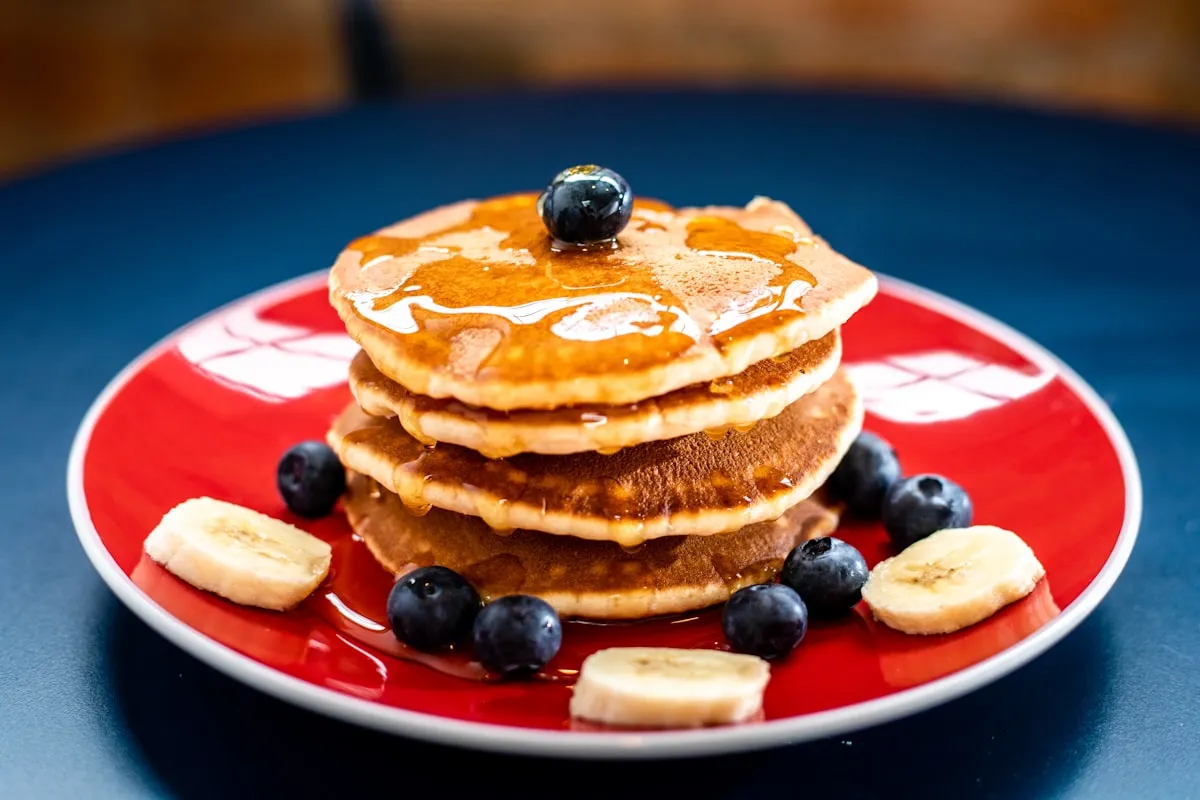
If you have ever stared at a flat, rubbery pancake and wondered where your morning went wrong, you aren't alone. Achieving true "fluffiness" isn't an art, it’s a rigorous exercise in gas retention and protein management. To master these lemon ricotta pancakes, you must understand that you are essentially building a temporary architectural structure designed to trap carbon dioxide. By manipulating the chemistry of leavening agents and the unique properties of ricotta, you can transform a standard batter into a light, airy masterpiece. These represent some of my favorite easy healthy breakfasts because they rely on fundamental kitchen science rather than processed fillers.
The Molecular Mechanics of Leavening and Lipids
To understand the lift in these pancakes, you must first respect the double-action mechanism of baking powder. When you hydrate the dry ingredients, an immediate acid-base reaction occurs: sodium bicarbonate reacts with the acidic salts in the powder to produce CO2 gas. This is why you must avoid over-mixing. Every time you whisk the batter, you are physically knocking out those precious gas bubbles. If you deplete the gas before the batter hits the heat, your pancakes will be dense and uninspired.
However, gas production is only half the battle; you also need a structure strong enough to hold that gas without becoming tough. This is where the physics of gluten comes into play. When wheat flour meets water, two proteins, glutenin and gliadin, link up to form a rubbery network. While gluten is great for bread, it is the enemy of the pancake. Here is your secret weapon: ricotta cheese.
The lipids (fats) in ricotta act as "shortening" agents. They physically coat the flour particles, creating a barrier that prevents those proteins from bonding too tightly. This results in a "short" crumb, meaning the final product is tender and delicate rather than chewy. Furthermore, ricotta contains whey proteins that denature and solidify as they cook, providing a secondary support system that keeps the pancake upright even as the steam evaporates.
Acidity is the final catalyst in this chemical equation. By incorporating fresh lemon juice, you aren't just adding flavor; you are providing an additional acidic environment that ensures every last molecule of baking powder is activated. This ensures a rapid expansion of gas the moment the batter hits the pan. It is a brilliant example of how budget friendly recipes can utilize simple chemical reactions to achieve premium results.
Thermal Conductivity and Bubble Formation
When your batter finally makes contact with the hot surface of your skillet, you are initiating a phase change. The water in the batter begins to turn into steam, which expands into the pre-existing CO2 pockets created by your leavening agents. Use a heavy-bottomed pan to ensure even thermal conductivity; hot spots will cause the exterior to burn before the internal proteins have a chance to set.
Watch for the "surface signaling" of bubbles. When you see small craters forming on the top of the batter and the edges beginning to lose their sheen, you have reached the optimal point of protein coagulation. Flip them decisively. If you wait too long, the internal pressure will cause the bubbles to burst, and the structure will collapse, leaving you with a pancake that is heavy on the stomach and light on the plate.
Nutrient-Dense Variations for Sustained Energy
If you are looking for quick healthy meals that cater to specific dietary needs, this scientific framework is remarkably adaptable. You can modify the structural matrix without sacrificing the lift.
- The Fiber Boost: Substitute up to 40% of the all-purpose flour with oat flour. Oat flour lacks the gluten-forming potential of wheat, which actually assists in maintaining tenderness, though you may need an extra half-teaspoon of baking powder to compensate for the heavier weight of the grain.
- The Protein Power-Up: For those focused on muscle synthesis, swap the ricotta for a high-dry-matter cottage cheese. You will need to blitz it in a blender first to ensure a smooth emulsion, but the increased casein content provides a sturdier structural wall for the gas bubbles.
- Dairy-Free Emulsions: If you must avoid dairy, a thick almond-based "ricotta" can work, but you lose the specific whey protein structure. In this case, I recommend adding a tablespoon of ground flaxseed hydrated in water to act as a supplemental binder.
Balancing the Plate: Side Dish Pairings
The science of a perfect meal doesn't end with the pancake; it’s about the synergy of the entire plate. Because these pancakes are rich in fats and proteins from the ricotta and eggs, you need high-acidity pairings to cleanse the palate.
- Macerated Berries: Toss fresh raspberries or blueberries with a teaspoon of lemon juice and a pinch of zest. The citric acid cuts through the creamy density of the ricotta, making each bite feel as light as the first.
- Whipped Greek Yogurt: Instead of heavy syrup, use a dollop of Greek yogurt. The lactic acid provides a sharp contrast to the sweetness, while the high protein density ensures you remain satiated until your next meal.
- Crispy Prosciutto: For a savory contrast, a thin slice of oven-baked prosciutto provides the necessary sodium and texture (the crunch) to offset the soft, pillowy crumb of the pancake.
Frequently Asked Questions (FAQ)
What if my pancakes aren't rising?
Check the expiration date on your baking powder. This chemical leavener loses its potency over time as it reacts with ambient moisture in the air. To test it, drop a teaspoon into hot water; if it doesn't fizz aggressively, it’s chemically inert and needs to be replaced. Also, ensure you aren't over-mixing, which destroys the initial CO2 bubbles.
Why is my ricotta pancake soggy in the middle?
This is usually a result of excess moisture or improper temperature control. Ricotta varies in water content by brand. If your ricotta looks watery, strain it through a paper towel for ten minutes before adding it to the batter. Additionally, if your pan is too hot, the exterior will brown (Maillard reaction) before the heat can penetrate the center to set the proteins. Lower the heat and cook slower.
Can I make the batter the night before?
Scientifically speaking, no. Because baking powder begins reacting the moment it touches liquid, most of your gas will escape while the batter sits in the fridge. You will be left with a flat, dense disc. For the best "physics of fluffiness," mix the dry and wet ingredients only when you are ready to cook.
Why do my pancakes taste metallic?
A metallic aftertaste is usually a sign of using too much baking powder or a brand that contains sodium aluminum sulfate. When the acid in the recipe isn't enough to fully neutralize the base, you are left with that "tinny" flavor. Stick to the recommended measurements and look for aluminum-free baking powder.
Does the temperature of the ricotta matter?
Yes. Using cold ricotta can causes the fats in your melted butter (if used) to seize into small clumps, leading to uneven distribution. For a smooth, stable emulsion, try to bring your ricotta and eggs to room temperature before mixing.
Ingredients
- All-purpose flour
- Baking powder
- Granulated sugar
- Fine sea salt
- Whole milk ricotta cheese
- Large eggs (yolks and whites separated for maximum lift)
- Fresh lemon juice and zest
- Whole milk
- Pure vanilla extract
- Unsalted butter (for the pan)
Instructions
- Whisk the Dry Matrix: Combine your flour, baking powder, sugar, and salt in a large bowl. This ensures even distribution of the leavening agent.
- Emulsify the Wet Base: In a separate bowl, whisk together the ricotta, egg yolks, milk, lemon juice, zest, and vanilla until smooth.
- The Gentle Fold: Pour the wet mixture into the dry ingredients. Use a spatula to fold the mixture just until the flour streaks disappear. Small lumps are your friends; they prevent gluten over-development.
- The Egg White Secret: For "ultra-fluffiness," beat your egg whites to soft peaks in a separate clean bowl and gently fold them into the final batter. This adds physical air pockets to the chemical ones.
- Conduct the Heat: Heat your skillet over medium-low heat. Add a small knob of butter.
- Monitor the Phase Change: Pour the batter and wait for the surface bubbles to form and pop. Flip carefully and cook for another 2 minutes until the structure is set and the center is no longer translucent.
- Service: Plate immediately while the internal steam is still providing maximum volume.