Recipe
Serves
4 1×
Serves 4Prep 10 minCook 15 minTotal 25 min
Ingredients
Method
- Heat the oven to 200C conventional or 180C fan. Line a baking tray.
- Mix the pistachios, breadcrumbs, lemon zest, dill, olive oil, salt and a grind of pepper in a bowl.
- Lay the salmon on the tray, skin-side down. Spread the top of each fillet with wholegrain mustard.
- Press the pistachio crust firmly onto the mustard-topped surface so it sticks in an even layer.
- Bake for 12 to 15 minutes until the salmon flakes at the thickest point and the crust is golden.
- Rest for 2 minutes, then serve with lemon wedges.
Pistachio Crusted Salmon
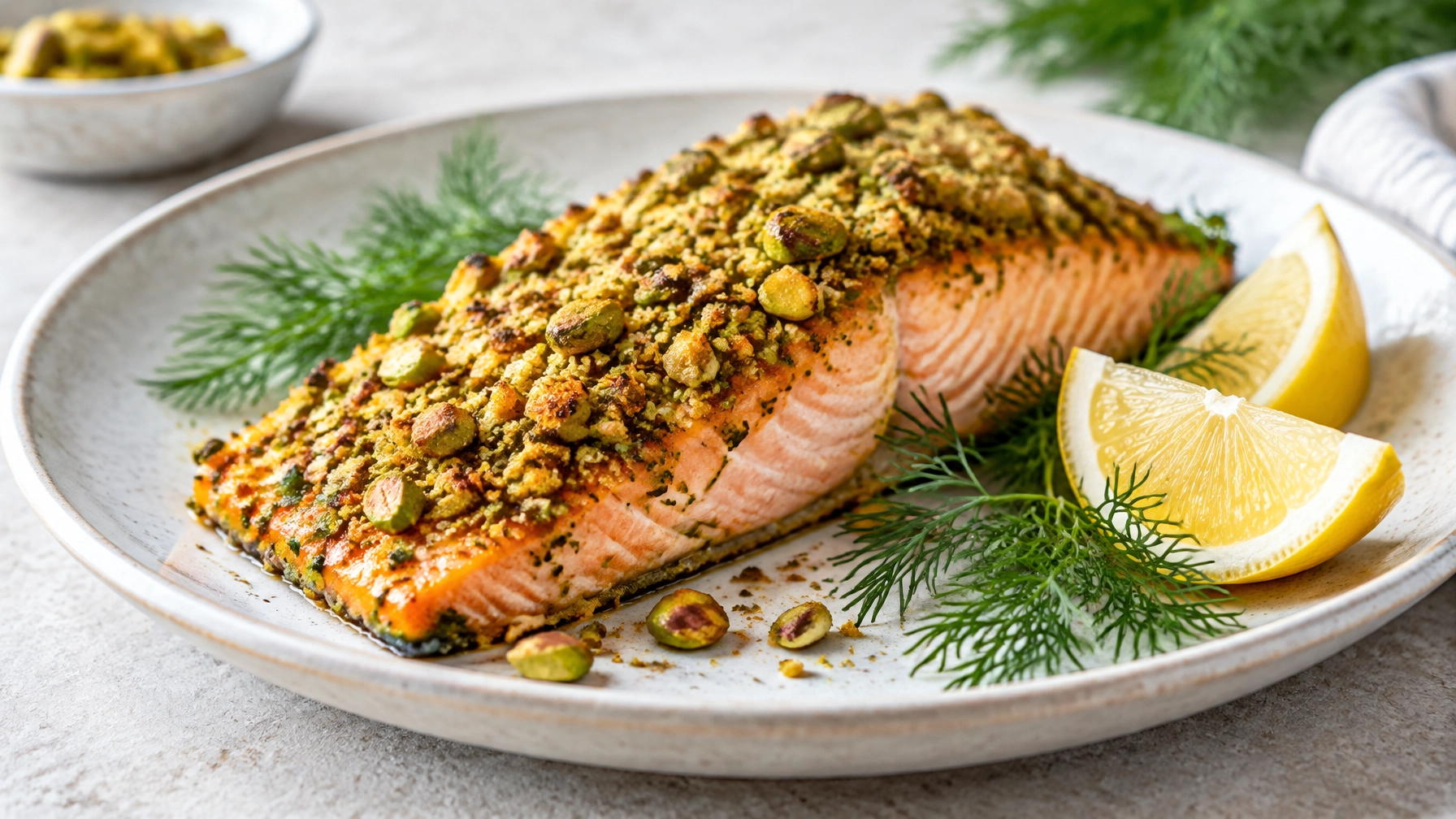
Pistachio crusted salmon looks impressive and takes 25 minutes.
The crust of chopped pistachios, breadcrumbs, lemon zest and dill turns golden in the oven while the salmon underneath stays succulent.
Serve with new potatoes and green beans for a dinner that earns its applause.
Recipe
Servings: 4
Prep time: 10 minutes
Cook time: 15 minutes
Total time: 25 minutes
Tips
The crust is made in one bowl from chopped pistachios, fresh breadcrumbs, lemon zest, dill, olive oil, salt and black pepper. Chop the pistachios roughly rather than finely. Larger pieces provide the intended coarse texture; very fine pieces can make the topping sandy.
Wholegrain mustard is spread over the top of each fillet before the crust is added. It helps the crumb mixture adhere to the fish. Press the topping firmly into an even layer, paying attention to the edges. A loose coating is more likely to fall away when the salmon is lifted from the tray.
The recipe gives a baking range of 12 to 15 minutes. Fillet thickness can affect how quickly the centre cooks, so check the thickest point rather than relying only on the surface colour. The salmon should flake at that point, while the pistachio topping should be golden. Allow the cooked fillets to rest for 2 minutes before serving.
For a different texture, the recipe notes that salmon is done at about 50C in the centre for silky flesh, or 60C for firm flakes. Chopped pistachios should remain coarse enough to give the topping texture.
Prepare the sides with the salmon’s cooking time in mind. New potatoes and green beans are suggested accompaniments. Lemon wedges are served alongside the fish, providing a fresh finish to the nutty crust and dill.
Variations
Dill can be replaced with tarragon or parsley. Both options change the herb profile while keeping the same basic crust method. Chop the chosen fresh herb and use it in place of the dill.
For a garlic note, add 1 crushed garlic clove to the crust mixture. Combine it with the pistachios, breadcrumbs, lemon zest, herbs, olive oil, salt and pepper before pressing the topping onto the mustard-coated fillets.
The same crust can be used on cod or hake fillets. The specified salmon baking time is 12 to 15 minutes, but different fillets may vary in thickness. Check that the fish flakes at its thickest point and that the crust is golden before serving.
FAQ
Q: Can I prepare ahead?
A: The crust and fillets can be assembled in the morning and refrigerated until baking. Keep the assembled fish refrigerated, then bake it when needed. Check the thickest part of each fillet for flaking, and confirm that the crust is golden before serving.
Q: Can I use frozen salmon?
A: Thaw the salmon fully first and pat it very dry so the crust adheres. Excess moisture on the fish can make it harder for the mustard and topping to stay in an even layer. Once dry, follow the method as written.
Q: Is it gluten-free adaptable?
A: Yes. Use gluten-free breadcrumbs in place of the fresh breadcrumbs. The rest of the listed ingredients remain as specified, but check ingredient packaging if you need to confirm suitability for a particular dietary requirement.
Q: What if the crust browns too fast?
A: Cover the salmon loosely with foil for the last few minutes of baking. This helps limit further browning while the fillets finish cooking. Check the thickest point for flaking before taking the tray from the oven.