Recipe
Servings
5–6 1×
Serves 5–6Prep 15 minCook 30 minTotal 45 min
Ingredients
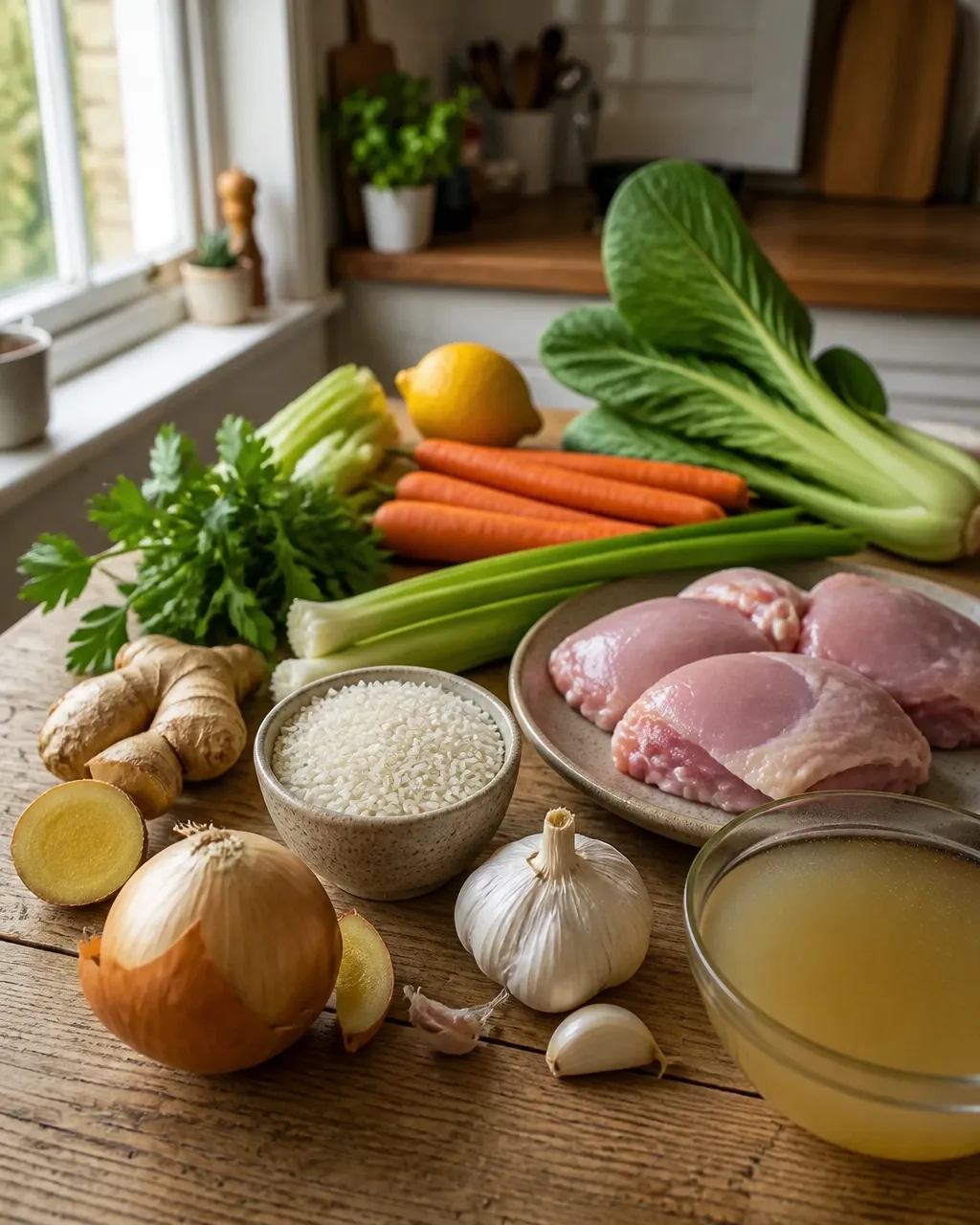
- 1 tablespoon neutral oil
- 1 medium yellow onion, diced
- 3 garlic cloves, finely chopped
- 2 tablespoons fresh ginger, grated
- 1 cup long-grain white rice, rinsed
- 6 cups low-sodium chicken broth
- 1 pound boneless, skinless chicken thighs
- 2 medium carrots, sliced
- 2 celery stalks, sliced
- 2 cups baby spinach or chopped bok choy
- 1 tablespoon soy sauce
- Juice of 1 lemon
- 3 scallions, sliced
- 2 tablespoons chopped cilantro or parsley
- Salt and black pepper, to taste
Method
- Warm the oil in a large pot over medium heat. Cook the onion, garlic, and ginger until softened and fragrant, about 4 minutes.
- Stir in the rice and toast for 1 minute.
- Add the broth, chicken, carrots, celery, soy sauce, a pinch of salt, and black pepper. Bring to a boil, then reduce to a gentle simmer.
- Cover partially and cook for 18–22 minutes, stirring occasionally, until the rice is tender and the chicken reaches 165°F (74°C).
- Transfer the chicken to a plate, shred it with two forks, and return it to the pot. Stir in the spinach or bok choy and cook for 2–3 minutes.
- Remove from the heat. Add lemon juice, scallions, and herbs. Taste and adjust seasoning before serving.
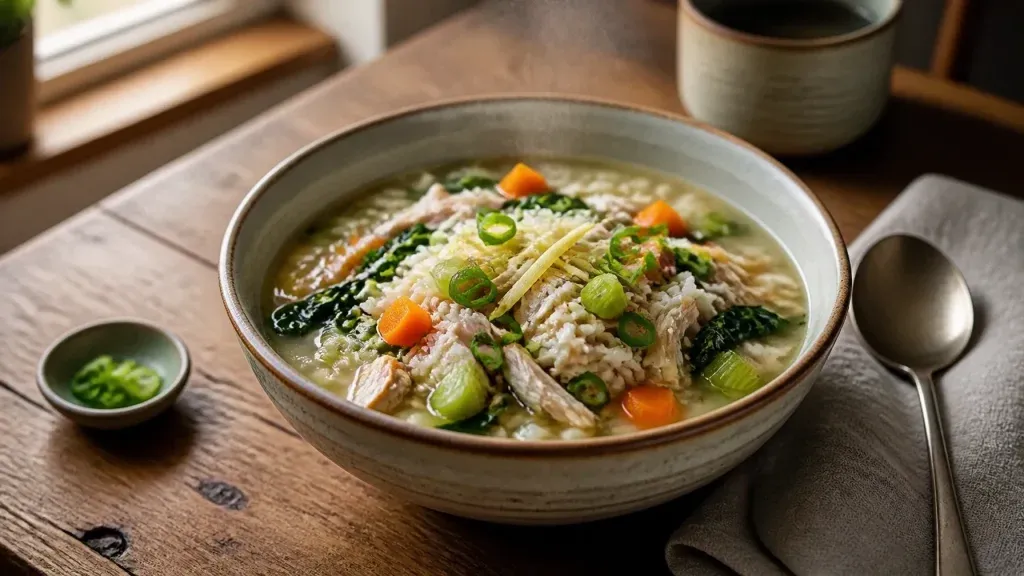
There is a special kind of comfort in a soup that feeds everyone and leaves you with one pot to wash. This ginger chicken and vegetable rice soup is warm, bright, filling, and practical enough for a busy Tuesday. The ginger gives the broth a clean, lively kick, while rice adds body without cream or complicated tricks. Keep the simmer gentle, add the vegetables at the right moment, and let the recipe card below do the heavy lifting.
Why This One-Pot Soup Tastes So Good
One-pot cooking works best when you respect the order in which ingredients release flavor. Treat the pot like a small laboratory, with fewer goggles and much better smells.
Start by giving the onion, garlic, and ginger time in a little oil. This is not busywork. Heat softens the onion’s sharp sulfur compounds and encourages sweetness, while the oil carries aromatic molecules through the broth more effectively than water alone. Ginger also becomes rounder and less raw when briefly cooked, but it still keeps its fresh character if you save a little for the finish.
Use a gentle heat rather than blasting the aromatics until they brown heavily. Dark garlic can turn bitter, and bitter soup is a surprisingly efficient way to make everyone order takeout.
Rice is the quiet multitasker here. As it cooks, starch moves into the broth and gives the soup a naturally silky texture. Toasting the grains briefly before adding the liquid adds a subtle nutty note and helps them keep a little more structure. Do not overdo it, though. The goal is toasted rice, not rice with a dramatic backstory.
Choose long-grain white rice when you want a soup that cooks in a reasonable weeknight window. Short-grain rice releases more starch and creates a thicker, almost porridge-like result. Brown rice brings extra chew but needs much longer to soften, so it changes the timing and can leave your chicken and vegetables waiting around too long.
Keep the broth at a steady simmer once the chicken goes in. A hard boil makes chicken proteins contract quickly, which can leave lean meat firm and stringy. Gentle simmering gives the chicken time to cook evenly while allowing its savory juices and fat to mingle with the broth.
Use boneless chicken thighs if you want the most forgiving result. They contain more fat and connective tissue than breast meat, so they stay tender through simmering. Chicken breast works, too, but check it early and avoid letting it bob around in the pot long after it reaches doneness.
The non-negotiable safety check is temperature: chicken must reach 165°F (74°C) in the thickest part. Use a thermometer rather than judging by color. The USDA safe temperature chart is a useful reference for poultry and leftovers.
Add quick-cooking vegetables near the end. Carrots and celery need a little time to soften, but leafy greens, zucchini, peas, and bok choy can lose color and texture if simmered into oblivion. Adding them late keeps the soup lively. You want tender vegetables, not vegetables that have formally retired.
Finish with lemon or lime juice, scallions, cilantro, or a small splash of soy sauce. Acid does not make the soup sour when used carefully; it balances the richness of chicken and makes the ginger taste brighter. Add it at the end so its fresh flavor remains noticeable.
For more simple, low-fuss cooking, browse Cookpedia’s collection of one-pot meals and chicken recipes.
Variations That Keep the Balance
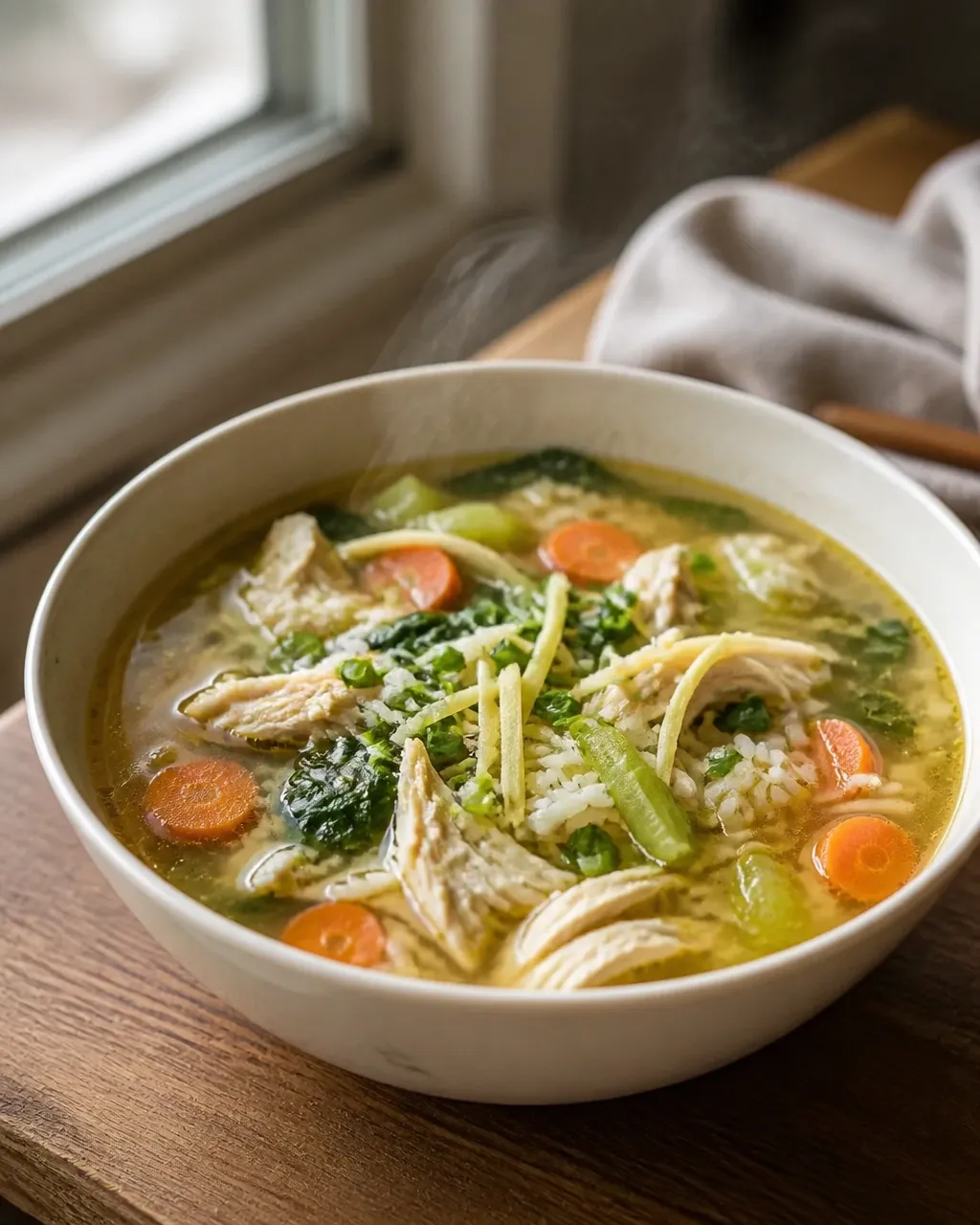
Make it lemony and herby. Add extra lemon zest with the juice and use parsley instead of cilantro. This version is especially good when you want a lighter-tasting bowl without changing the basic method.
Turn up the Southeast Asian character. Replace part of the soy sauce with fish sauce, add a little lime instead of lemon, and finish with cilantro and thinly sliced red chili. Keep the fish sauce modest; it brings savory depth quickly.
Use a different protein. Turkey thigh works in the same way as chicken thigh. For cooked rotisserie chicken, cook the rice and vegetables first, then stir the shredded meat in near the end so it warms without drying out.
Make it vegetarian. Swap chicken broth for vegetable broth and use chickpeas, white beans, or cubed tofu. Add the protein once the rice is nearly tender. A teaspoon of toasted sesame oil at the end adds richness, so you can skip extra oil earlier if desired.
Go creamy without cream. Stir in a spoonful of tahini at the end, loosened with a little hot broth. Add lemon to keep the result balanced. The soup will become richer, so serve it with something crisp rather than another soft side.
Side Dish Pairings: Add Contrast, Not Competition
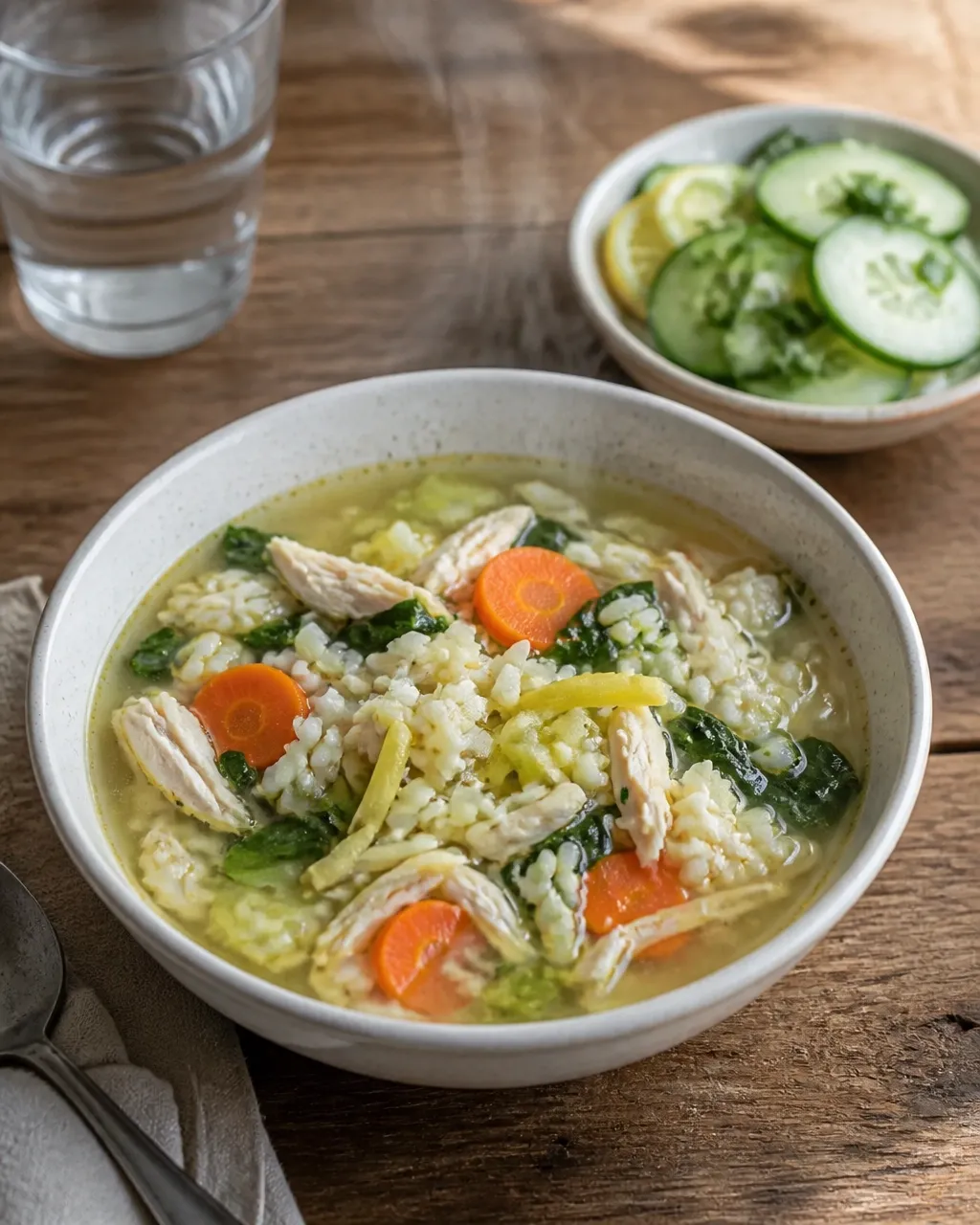
This soup already contains protein, rice, and vegetables, so pair it with texture and acidity rather than another heavy carbohydrate.
A crisp cucumber salad with lemon, rice vinegar, or lime is the easiest match. Its cool crunch cuts through the warm, savory broth and keeps the meal from feeling too soft. Add herbs, sliced scallions, or a few toasted sesame seeds if you like.
Serve steamed greens with a sharp dressing when you want more vegetables. Broccoli, green beans, or bok choy all work well, especially with a little lemon or chili.
For hungrier evenings, add a small piece of toasted sourdough or flatbread. Keep it modest, the rice is already doing the filling work. This is one of those quick meals that does not need a table full of side dishes to feel complete.
FAQ: Troubleshooting Your Chicken and Rice Soup
Can I use brown rice?
Yes, but do not swap it in without changing the cooking plan. Brown rice usually needs considerably longer to soften than white rice. That extra simmering time can overcook the chicken and turn delicate vegetables mushy. Use a quick-cooking brown rice if available, or cook it separately and add it toward the end. For the most reliable weeknight result, stick with long-grain white rice.
Why did my soup become too thick?
Rice continues absorbing broth as it sits, so a soup that looks perfectly brothy at dinner may become thicker the next day. Stir in hot chicken broth or water until it reaches the consistency you want, then taste and correct the salt and lemon. Add liquid gradually; you can always loosen soup, but removing water requires a tiny kitchen miracle.
How do I stop the chicken from becoming dry?
Choose chicken thighs, maintain a gentle simmer, and check the meat with a thermometer. Remove breast meat as soon as the thickest part reaches 165°F (74°C), especially if the pieces are small. Shred the chicken and return it to the soup only after the rice and vegetables are ready. This keeps it moist instead of making it endure an unnecessary second cooking marathon.
Can I use cooked chicken?
Absolutely. Prepare the broth, rice, and vegetables first, then stir in shredded cooked chicken during the final few minutes. Heat it thoroughly rather than letting it merely become warm. Leftovers should reach 165°F (74°C) when reheated.
Can I add frozen vegetables?
Yes. Frozen peas, corn, or mixed vegetables are convenient choices. Add them near the end, allowing a few extra minutes for the soup to return to a simmer. Avoid adding a large frozen block all at once, because it can drop the temperature and interrupt cooking.
How should I store leftovers?
Rice-containing soup needs sensible temperature control. Refrigerate it within two hours, dividing a large batch into shallow containers so it cools quickly. Keep it refrigerated and use within three to four days. Reheat only the portion you need until steaming hot throughout, ideally to 165°F (74°C). Expect the rice to absorb more broth in storage; simply loosen it with a splash of hot stock before serving.
Is this a good make-ahead meal?
Yes, with one small texture warning: the rice will continue to swell. For the best make-ahead texture, cook the rice separately and add it to each bowl, or prepare the soup slightly looser than usual. If convenience matters more than perfectly distinct grains, cook everything together and enjoy the thicker leftovers. It is still a dependable option for healthy dinner ideas and quick family meals.