Recipe
Servings
4 1×
Serves 4Prep 15 minCook 25 minTotal 40 min
Ingredients
- 2 tablespoons olive oil or another cooking oil
- 1 medium onion, diced
- 2 carrots, diced
- 2 celery stalks, diced
- 3 garlic cloves, minced
- 3 medium potatoes, cut into bite-size pieces
- 2 cans white beans, drained and rinsed
- 4 cups vegetable broth
- 1 cup water
- 1 teaspoon dried thyme
- ½ teaspoon smoked paprika, optional
- Salt and black pepper, to taste
- 1 tablespoon nutritional yeast, optional
- 1–2 teaspoons lemon juice, to finish
- Chopped parsley or extra thyme, for serving
Method
- Warm the oil in a large pot over medium heat. Add the onion, carrots, celery, and a pinch of salt. Cook until the vegetables soften.
- Stir in the garlic, thyme, and smoked paprika, if using. Cook briefly, just until fragrant.
- Add the potatoes, white beans, broth, and water. Bring the pot to a boil, then reduce the heat to a gentle simmer.
- Cook until the potatoes are completely tender, about 15–20 minutes.
- Mash some of the potatoes and beans directly in the pot, or blend a portion of the soup until smooth and stir it back in.
- Season with salt, pepper, nutritional yeast, and lemon juice. Serve hot with parsley or thyme.
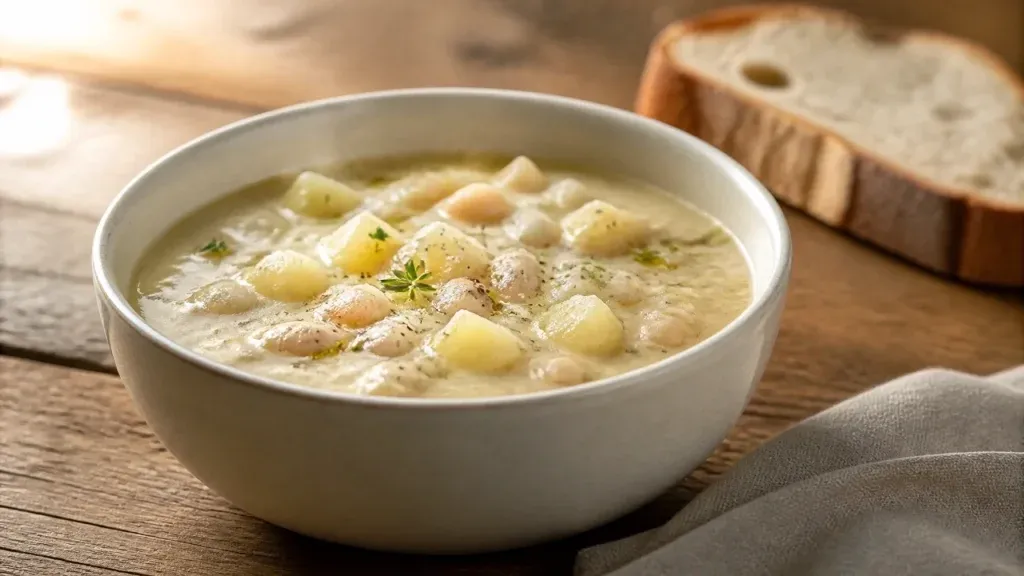
Some soups ask you to buy twelve ingredients, three specialty spices, and one mysterious vegetable you will never use again. This creamy potato and white bean chowder takes a kinder approach. It uses humble pantry staples, creates its own velvety texture, and turns a few inexpensive ingredients into a genuinely satisfying meal. No cream is required, and no culinary gymnastics are hiding around the corner.
Tips & Technique: The Science of Creamy Chowder Without Cream
Let potatoes do the thickening
The creamy texture here is not a trick. It is starch doing its quiet, dependable work.
Potatoes contain starch granules that absorb liquid and swell as they heat. This process, called gelatinization, gives the broth more body. As the potatoes soften, some starch naturally escapes into the cooking liquid. That is why a pot of potato soup becomes thicker as it simmers.
Cut the potatoes into fairly even pieces so they finish cooking at the same time. Keep them bite-size rather than tiny. Small pieces break down quickly and can make the soup pasty, while larger pieces may stay firm in the center when the rest of the chowder is ready.
Use a gentle simmer, not a furious boil. Aggressive boiling can cause the outside of the potatoes to disintegrate before the centers are tender. You want a mixture of intact pieces and soft edges, not potato confetti.
Use white beans as a second creamy engine
White beans bring more than protein and staying power. They also contain starch and soluble fiber, both of which help create a smooth, thick texture when the beans are mashed or blended.
Cannellini beans make the chowder especially creamy because they have a soft interior and thin skins. Great Northern beans are slightly firmer but still work beautifully. Navy beans create an even thicker result, although they can break down more quickly.
Rinse canned beans before adding them. This removes excess canning liquid and helps the broth taste cleaner. It also gives you better control over the chowder’s salt level, which is particularly useful when your vegetable broth is already seasoned.
Mash for rustic texture or blend for silkiness
Choose your texture based on your mood and equipment.
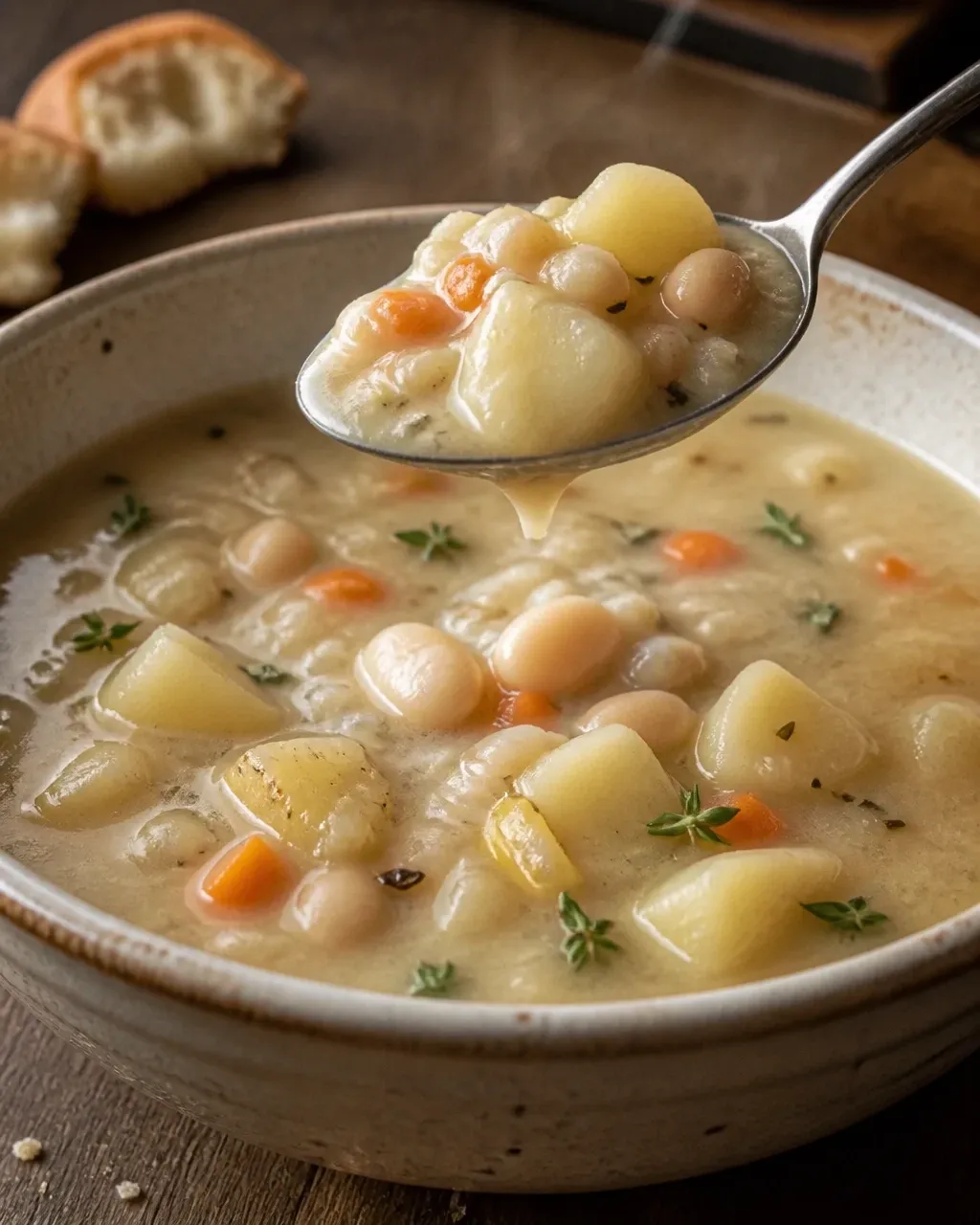
Mashing directly in the pot gives you a chunky, homey chowder. Press some of the potatoes and beans against the side of the pot, then stir them through the broth. This releases starch without turning every vegetable into a purée.
Partial blending gives you a smoother base. Blend only a portion of the soup, mostly beans, potatoes, and broth, then return it to the pot. Keep some chunks behind for contrast. A completely smooth soup can be lovely, but a chowder should give you something to chew.
Do not blend the entire pot for several minutes unless you want a gluey texture. Potatoes contain starch that can become sticky when aggressively processed. A short blend is helpful; a food processor audition is not.
Build flavor before adding the liquid
The onion, carrot, celery, and garlic are not decorative background singers. They create the flavor foundation.
Give the diced vegetables enough time to soften in the oil before adding the broth. This draws out their natural sweetness and removes the raw, sharp taste that can linger in rushed soups. Add the garlic later because it cooks faster and can turn bitter if left over medium heat for too long.
Add dried herbs while the broth is simmering so their flavor has time to spread. Finish with lemon juice only after cooking. Acidity brightens the soup and balances the gentle sweetness of the potatoes, but prolonged boiling can flatten its fresh effect.
Season in layers. Add a little salt when softening the vegetables, taste again after the broth reduces, and make the final adjustment at the end. This is firmer advice than “season to taste,” but your future self will appreciate it.
Keep the chowder thick but pourable
A good chowder should coat a spoon without behaving like mashed potatoes in disguise. If yours is too thick, loosen it with hot water or extra broth. Add liquid gradually so you do not overshoot.
If the chowder seems thin, avoid immediately reaching for flour or cornstarch. Simmer it uncovered for a few minutes, then mash another portion of the potatoes and beans. The natural starches are already in the pot; give them a chance to help.
Remember that the soup will thicken as it cools. Judge the final texture after letting it sit for a few minutes, not while it is bubbling aggressively.
Variations for Different Pantries and Preferences
Turn this into a flexible template rather than a one-time dinner.
For extra vegetables, add frozen corn, chopped kale, spinach, peas, or diced zucchini near the end of cooking. Frozen vegetables are especially useful because they are inexpensive, last for months, and require no chopping drama.
Use rosemary instead of thyme for a more woodsy flavor, or add a pinch of chili flakes for gentle heat. Smoked paprika gives the chowder a slightly deeper, almost campfire-like character without adding meat.
Make it fully vegan by using vegetable broth and skipping any dairy garnish. Nutritional yeast adds savory depth, while a drizzle of olive oil provides richness without changing the basic method.
For a thicker, protein-forward bowl, add another portion of white beans and blend a little more of the soup. For a lighter version, keep more of the vegetables whole and use extra broth.
You can also add leftover cooked chicken, shredded turkey, or a little diced ham if that suits your household. Stir cooked meat in near the end so it warms without becoming dry.
This is one of those healthy dinner ideas that does not require a separate trip to a specialty store. It is also a useful addition to your collection of quick family meals, especially when the fridge is looking more optimistic than stocked.
Side Dish Pairings: Add Contrast, Not Competition
Serve the chowder with something crisp or tangy. A simple green salad dressed with lemon vinaigrette cuts through the soup’s creamy texture and keeps the meal from feeling heavy.
Crusty bread is the classic choice because it gives you a practical reason to scrape the bowl clean. Toasted whole-grain bread adds chew and a little nutty flavor, while cornbread brings a sweeter contrast. Cookpedia’s golden skillet cornbread is a natural visual pairing, although the recipe itself should be served warm and crumbly rather than used as a soup ornament.
For something fresh, add sliced apples, cucumber, or a sharp cabbage slaw. Pickled onions also work well. Their acidity wakes up the mild beans and potatoes in much the same way lemon juice does.
If you are planning a broader meat-free meal, browse Cookpedia’s vegetarian dinner recipes for another simple side or follow the quick meals collection for weeknight-friendly ideas.
FAQ
Can I make this chowder without a blender?
Yes. Mash part of the soup directly in the pot with a potato masher, wooden spoon, or the back of a ladle. You will get a more rustic texture, but the chowder will still thicken because mashed potatoes and beans release starch and fiber into the broth.
Do not mash everything unless you want a smooth soup. Leave some pieces whole for contrast.
Why did my chowder turn gluey?
The most common cause is over-blending potatoes. Potato starch becomes sticky when it is processed too aggressively, especially while hot. Blend only a small portion and use short pulses.
Overcooking can also cause the potatoes to collapse completely. Stop simmering as soon as the pieces are tender. If the chowder is already gluey, thin it with hot broth and add a few separately cooked potato cubes or beans for texture.
What if the soup is too thin?
First, simmer it uncovered for five to ten minutes. Evaporation will concentrate the broth. Next, mash more potatoes and beans into the pot.
If the potatoes are already tender and you need a faster fix, blend a small ladleful of beans with some broth and stir it back in. Avoid adding dry flour directly to the soup, as it can clump and leave a raw taste.
Can I use dried white beans?
Absolutely, but cook them separately until tender before adding them to the chowder. Dried beans vary in age and cooking time, so relying on them to cook fully alongside the potatoes can leave you with either hard beans or overcooked vegetables.
Canned beans are the fastest budget option, while dried beans can be more economical if you already keep them in the pantry.
Can I freeze potato and white bean chowder?
You can, but expect a small texture change. Potatoes may become slightly grainy after freezing and thawing, while blended beans usually hold up well.
Cool the chowder quickly, store it in airtight containers, and thaw it in the refrigerator. Reheat gently, adding broth or water as needed. Stir rather than boil hard, and finish with a little lemon juice to refresh the flavor.
How long will leftovers keep?
Store cooled chowder in the refrigerator for up to four days. Reheat it on the stove over medium-low heat or in the microwave in short intervals, stirring between each one.
The soup will thicken overnight because the starches continue to absorb liquid. Loosen each portion with a splash of broth or water before reheating.
Is this chowder high in protein?
White beans provide a useful amount of plant-based protein, and they make the soup more filling than a potato-only chowder. For an even more substantial bowl, add extra beans, serve it with whole-grain bread, or pair it with a crisp salad.
It is a practical example of healthy dinner ideas built around inexpensive, minimally processed ingredients, not a bowl that expects you to feel virtuous while still being hungry an hour later.
Can I make it in a slow cooker?
Yes, although the stovetop gives you better control over texture. Add the vegetables, potatoes, beans, broth, and seasonings to the slow cooker and cook until the potatoes are tender. Mash or blend part of the soup at the end, then add lemon juice and adjust the seasoning.
Add delicate greens during the final few minutes so they stay bright instead of disappearing into the chowder.