Recipe
Servings
Servings 1×
Cook 20 min
Ingredients
- Salmon
- Cod
- Tomatoes
- Lemon
- Feta
- Cooking oil
- Salt
- Black pepper
Method
- Let’s be honest: by Tuesday night, the dream of a five-course meal has usually been replaced by the reality of "whatever is in the freezer." But I’m here to tell you that you don't have to settle for sad nuggets.
- Use a paper towel to pat the cod fillets until they are bone-dry on both sides.
- Use an instant-read thermometer and pull the pan out at 140°F; the residual heat will carry it to the finish line while you’re walking it to the table.
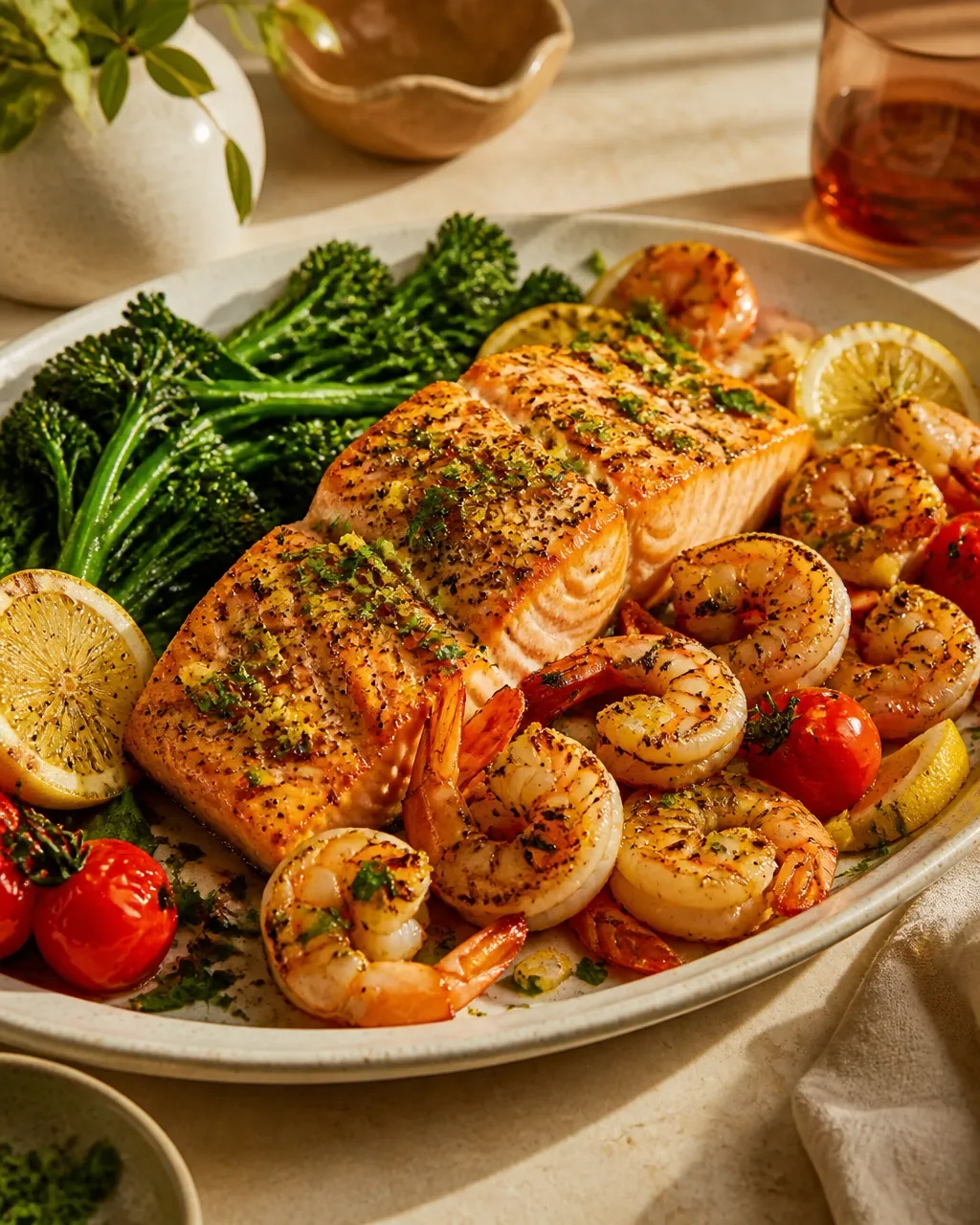
Let’s be honest: by Tuesday night, the dream of a five-course meal has usually been replaced by the reality of "whatever is in the freezer." But I’m here to tell you that you don't have to settle for sad nuggets. You deserve a meal that feels like a coastal escape to Greece without the mountain of dishes that usually follows. This Mediterranean one-pan baked cod with olives is my go-to for quick family meals that actually taste like they came from a restaurant. It’s light, it’s zesty, and because it all happens on one tray, you’ll spend more time eating and less time scrubbing the sink.
The Science of the Perfect Flake
Cooking fish can be intimidating because the window between "perfectly succulent" and "rubber eraser" is incredibly small. To master this dish, you need to understand the physics of the fillet. Cod is a lean protein, meaning it lacks the fatty insulation of salmon. If you hit it with high heat for too long, the muscle fibers tighten up and squeeze out all the moisture.
Dry your fish like your dinner depends on it. Use a paper towel to pat the cod fillets until they are bone-dry on both sides. This is non-negotiable. If the surface is wet, the heat of the oven goes into evaporating that water (steaming) rather than browning the fish (the Maillard reaction). You want roasting, not steaming.
Preheat your pan before the fish even touches it. Slide your empty sheet pan into the oven while it’s heating up. When you finally place your seasoned cod onto that hot metal, you get an immediate sear that kickstarts the flavor development. This technique is a secret weapon for healthy dinner ideas that don't taste bland.
Trust the thermometer, not your "vibes." Target an internal temperature of 145°F (63°C). At this point, the proteins have denatured just enough to turn the flesh opaque and allow it to flake along its natural seams, but they haven't tightened so much that the juice is lost. Use an instant-read thermometer and pull the pan out at 140°F; the residual heat will carry it to the finish line while you’re walking it to the table.
Flavor Variations: Balancing the Brine
The beauty of the Mediterranean profile is the balance of salt, fat, and acid. The cod is your blank canvas, the olive oil provides the richness, and the lemon provides the punch. However, you can easily pivot based on what’s in your pantry.
- The Briny Boost: Swap half the olives for capers. Capers are flower buds that have been pickled, and they offer a sharper, more aggressive acidity than olives. They "cut" through the buttery texture of the cod perfectly.
- The Umami Bomb: Toss in a handful of halved cherry tomatoes. As they bake, they’ll blister and release their sugars, creating a natural sauce that mingles with the olive juice.
- The Creamy Contrast: Five minutes before the timer goes off, sprinkle some crumbled feta over the top. The saltiness of the cheese complements the olives, and the slight melt adds a creamy mouthfeel to the flaky fish.
- The Heat Map: If you like a kick, add thinly sliced jalapeños or a dusting of crushed red pepper flakes. The heat wakes up the mild white fish without overpowering the delicate herbs.
Side Dish Pairings for a Balanced Plate
When you’re thinking about sides, look for textures that can soak up the liquid gold, that mixture of olive oil, lemon juice, and fish juices, left on the pan.
Lemon Herb Couscous: This is the ultimate partner for one-pan meals. It takes five minutes to prepare and acts like a sponge for all those Mediterranean flavors. The tiny grains provide a textural contrast to the large flakes of the cod.
Blistered Green Beans: If you want to keep things in the healthy dinner ideas category, throw some trimmed green beans onto the same pan as the fish. They’ll roast in the same amount of time, picking up the char from the hot pan and the saltiness from the olives.
Crispy Smashed Potatoes: If you have a bit more time, serve the cod over potatoes that have been boiled, smashed, and roasted until the edges are jagged and crunchy. The crunch of the potato against the soft fish is a match made in heaven.
Frequently Asked Questions
Can I use frozen cod for this?
Yes, but with a major caveat: you must thaw it completely in the refrigerator first. Frozen fish often contains extra moisture (sometimes used as a preservative or "glaze"). If you bake it from frozen, it will release all that water onto the pan, and you’ll end up with "poached" fish instead of roasted fish. Once thawed, follow the "pat dry" rule religiously.
What if I don't like olives?
I hear you: olives can be polarizing. If they aren't your thing, replace them with marinated artichoke hearts or even thinly sliced fennel. You need something with a bit of "personality" to stand up to the lemon and garlic, otherwise, the dish might feel a bit flat.
My fish always sticks to the pan. How do I stop that?
Beyond preheating the pan, ensure you’re using enough high-quality extra virgin olive oil. Don't be shy. If you're still worried, a piece of parchment paper is a safe bet, though you’ll lose a little bit of that direct-contact searing power. Avoid using cheap cooking sprays; they can leave a sticky residue that actually makes the problem worse over time.
Is this recipe suitable for an air fryer?
While this is designed as a sheet-pan meal, you can certainly adapt it for air fryer recipes dinner. Just ensure you don't overcrowd the basket. The air needs to circulate around the cod to get that roasted texture. You’ll likely need to reduce the cooking time by about 20-30%, so start checking the internal temp around the 8-minute mark.
How do I know the fish is fresh when I’m buying it?
Use your senses. Fresh cod should have a mild, clean scent (not "fishy" or like ammonia). The flesh should be translucent and firm, not opaque or mushy. If you're buying a whole fillet, look for a bright white color without any yellowing or darkening around the edges.
Creating high-impact meals doesn't require a culinary degree; it just requires respecting the ingredients. By mastering the simple science of drying and temperature control, you can turn a basic piece of white fish into the highlight of your week. For more simple, soulful inspiration, check out our other recipes on Cookpedia. Now, get that pan in the oven and let’s get cooking!