Recipe
Servings
Servings 1×
Ingredients
- Pork
- Pasta
- Zucchini
- Garlic
- Lemon
- Honey
- Butter
- Salt
Method
- Pat the pork chops dry before seasoning or placing them in the skillet.
- Use a heavy skillet and heat it properly before adding the pork.
- Sear both sides to develop flavor, then lower the heat so the center can cook without scorching the outside.
- Use an instant-read thermometer in the thickest part, avoiding the bone if your chops are bone-in.
- Sear the pork first in a high-heat cooking fat.
- Transfer the cooked chops to a plate and rest them for at least three minutes.
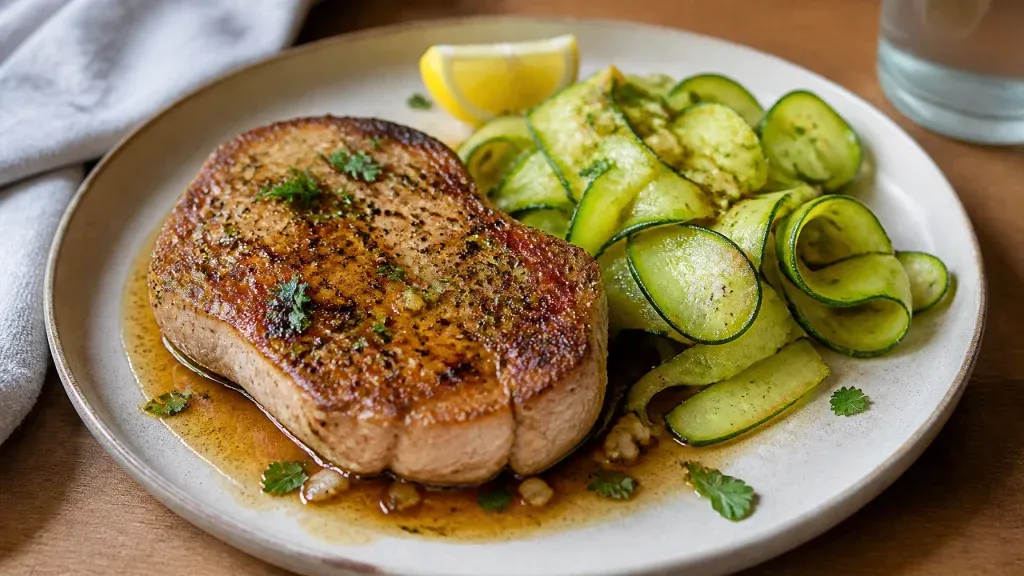
If you are new to keto cooking, start with a meal that does not require a spreadsheet, six specialty flours, or a heroic amount of patience. These garlic butter pork chops with zucchini ribbons are savory, fast, and wonderfully low in carbohydrates. You get a browned, juicy chop, tender-crisp vegetables, and a buttery garlic sauce that makes the whole plate taste far more complicated than it is.
Tips & Technique: Build Flavor Without Drying the Pork
Start with a dry surface for better browning
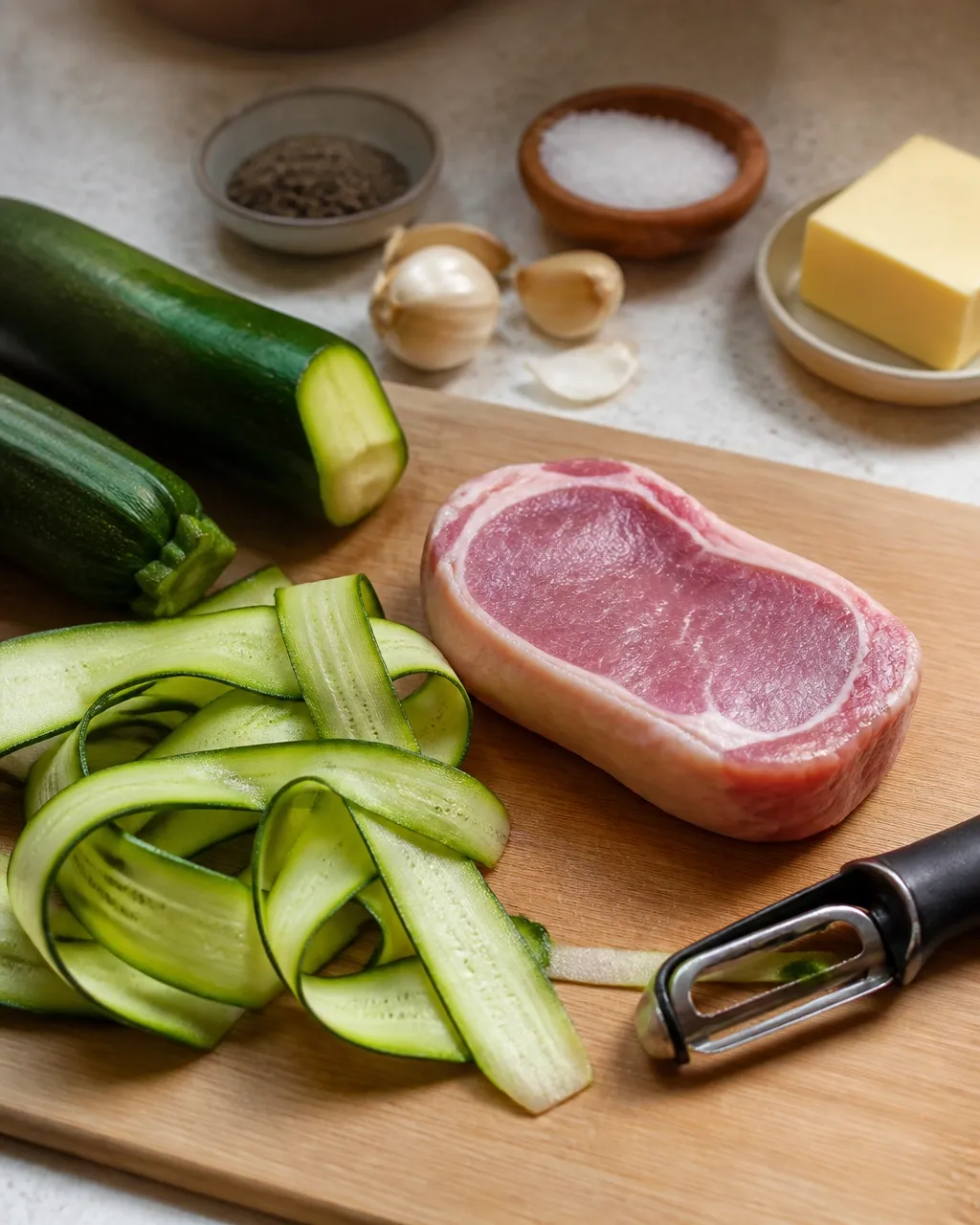
Pat the pork chops dry before seasoning or placing them in the skillet. This small step is non-negotiable. Surface moisture must evaporate before the meat can brown, so a wet chop tends to steam instead of sear.
A dry surface lets the skillet heat create the deep golden crust you want. That crust comes from the Maillard reaction, a group of chemical changes that occur when proteins and sugars on the surface meet high heat. It produces the roasted, savory aromas that make a simple pork chop taste like proper dinner rather than “protein on a plate.”
Use a heavy skillet and heat it properly before adding the pork. The pan should be hot enough for an immediate, confident sizzle. Avoid crowding the chops, too. Leave enough space for heat to circulate, or cook in batches if necessary.
Choose the right heat for the chop’s thickness
Thin chops cook quickly and can go from juicy to dry before you have time to say, “Where did I put the thermometer?” Sear them briefly, then check their temperature early.
Thicker chops need a little more patience. Sear both sides to develop flavor, then lower the heat so the center can cook without scorching the outside. If the chop is especially thick, finish it gently in the oven after searing.
Do not rely on color alone. Pork can remain slightly pink at a safe temperature, and a browned exterior tells you very little about the center. Use an instant-read thermometer in the thickest part, avoiding the bone if your chops are bone-in.
The USDA safe temperature guidance recommends cooking whole cuts of pork to 145°F (63°C), followed by at least a three-minute rest. Follow that standard every time.
Add garlic and butter after the initial sear
Butter brings richness, but it can burn if you add it to a ripping-hot skillet at the beginning. Garlic can burn even faster, turning bitter and bossy. Neither deserves that kind of power.
Sear the pork first in a high-heat cooking fat. Once the crust has formed, reduce the temperature and add the butter and garlic. The gentler heat lets the garlic release its aroma while the butter picks up the browned bits left in the pan.
Those browned bits are flavor concentrates. As the butter melts, scrape them gently with a wooden spoon and spoon the sauce over the pork. This is called basting, and it helps coat the chop while transferring garlic, butter, and pan flavor across the surface.
Keep the garlic moving. If it sits in one hot spot, it may brown too quickly. Fragrant and lightly golden is excellent; dark brown and bitter is a tiny kitchen tragedy.
Rest the pork before slicing
Transfer the cooked chops to a plate and rest them for at least three minutes. This is both a food-safety step and a texture step.
During cooking, heat pushes moisture toward the center of the meat. Cutting immediately allows more of that moisture to run onto the plate. Resting gives the heat time to even out and the muscle fibers time to relax, so the juices stay where you want them: in the pork.
Use the resting time to finish the zucchini ribbons. That way, the pork remains warm while the vegetable side gets its final touch.
Treat zucchini ribbons like a quick-cooking vegetable, not pasta
Zucchini contains a lot of water. Thin ribbons soften almost instantly, which makes them convenient but also easy to overcook. Keep the cooking time short and stop while the ribbons still have a little structure.
Do not salt them too early or too heavily. Salt draws out water, and watery zucchini can dilute your garlic butter sauce. Season lightly near the end, then add brightness with lemon juice or fresh herbs if you like.
Aim for ribbons that bend easily but do not collapse into a wet pile. The contrast matters: the pork should be rich and substantial, while the zucchini should bring freshness, moisture, and a gentle vegetal bite.
For more weeknight cooking inspiration, browse Cookpedia’s quick meals collection or see how we approach pork in our air fryer honey garlic pork chops.
Variations: Keep the Plate Keto-Friendly and Balanced
Make it herby
Add rosemary, thyme, or Italian seasoning to the butter sauce. Use dried herbs during cooking so they have time to bloom in the fat, then finish with fresh parsley for a brighter aroma. Keep the herbs restrained; garlic butter already brings plenty of personality.
Add gentle heat
Stir a pinch of red pepper flakes into the butter after lowering the heat. The fat carries the chili flavor across the pork and zucchini, while the zucchini softens the heat slightly. Start small and add more only if needed.
Use lemon for contrast
Finish the sauce with a small squeeze of lemon. Acidity cuts through butter and keeps the dish from tasting heavy. Add it after cooking rather than during the sear, since too much liquid early in the process can interfere with browning.
Try mushrooms or spinach
Sauté sliced mushrooms before the zucchini, allowing them time to release their moisture and brown. For spinach, add it at the very end and cook only until wilted. Both options remain low in carbohydrates, but check packaged sauces and seasonings for hidden sugars if you are following keto closely.
Swap the pork cut
Boneless chops cook quickly, while bone-in chops tend to stay a little more forgiving because they are often thicker. Pork tenderloin medallions also work, but monitor them carefully. Leaner cuts have less margin for overcooking, so the thermometer becomes even more important.
Side Dish Pairings: Add Brightness, Not More Richness
This plate already contains rich pork and buttery sauce, so pair it with sides that bring acidity, crunch, or freshness. A simple arugula salad with lemon dressing works particularly well. Peppery greens wake up the palate, while the dressing keeps each bite from feeling too rich.
Try a crisp cucumber salad with vinegar, dill, and a little salt. The cool crunch contrasts with the hot skillet meal and adds plenty of texture without bringing in starchy carbohydrates.
Roasted broccoli or asparagus also fits nicely. Roast them until the edges are browned, then finish with lemon instead of adding more butter. If you want a creamy element, use a small spoonful of unsweetened Greek yogurt mixed with herbs, provided it fits your personal keto plan.
Cookpedia’s healthy recipe collection has more ideas for building balanced plates around simple proteins and vegetables.
FAQ: Troubleshooting Your Pork Chops and Zucchini
Why are my pork chops dry?
The most common causes are overcooking, chops that are too thin, or skipping the rest. Use a thermometer rather than cooking by time alone, especially when chop thickness varies.
Remove whole-cut pork from the heat when it reaches the safe target of 145°F, then rest it for at least three minutes. If your chops are thin, begin checking early. A minute or two can make a significant difference.
Also, do not press the chops against the pan. Pressing does not cook them faster in any useful way; it simply squeezes out moisture.
What if my pork is still pink in the middle?
Pink does not automatically mean undercooked. Whole cuts of pork can remain slightly pink after reaching 145°F and completing the recommended rest. Check the temperature in the thickest part with a clean thermometer.
If it has not reached the target, return the chop to the skillet and cook gently until it does. If you cut into it too early, do not panic; measure the temperature, then continue cooking if necessary.
Why did my garlic butter burn?
The pan was probably too hot when the butter and garlic went in, or the garlic stayed in one place too long. Searing requires high heat, but butter and minced garlic need gentler treatment.
Lower the heat after browning the pork. Add the butter first, let it melt, then add the garlic and stir or swirl the pan frequently. If the butter smells bitter or the garlic is very dark, wipe out the pan and start the sauce again. Burnt garlic will not become charming with additional butter.
How do I stop zucchini ribbons from becoming watery?
Cook them briefly, avoid overcrowding the skillet, and season near the end. If the pan is full, the zucchini releases water faster than it can evaporate.
You can also let the ribbons sit on a clean towel for a few minutes before cooking to remove some surface moisture. Do not squeeze them aggressively; they are vegetables, not a stress ball.
Stop cooking as soon as the ribbons are flexible but still slightly firm. They will continue softening from residual heat on the plate.
Can I prepare this meal ahead of time?
Prepare the zucchini ribbons and season the pork a few hours ahead, then keep both refrigerated separately. Bring the skillet to the table only after cooking; reheating pork chops too aggressively makes them tough.
For leftovers, slice the pork and warm it gently in a covered skillet with a splash of water or a little butter. Reheat the zucchini for only a short time, or serve it cold as part of a salad. The texture will not be exactly the same as freshly cooked, but it can still make a useful lunch.
Is this suitable for every keto plan?
The basic combination is low in carbohydrates because it centers on pork, butter, garlic, and zucchini rather than grains, potatoes, or sugary sauces. However, exact carbohydrates depend on portion size and any additions.
Check labels on seasoning blends, bottled dressings, and prepared sauces. Some contain sugar or starch. If you track macros strictly, calculate the recipe using the exact brands and quantities you use. For broader inspiration, explore more quick family meals that can be adapted to your preferred eating style.
Start with the recipe card’s core method, trust your thermometer, keep the zucchini quick, and let the garlic butter do the heavy lifting. That is the beginner-friendly keto dinner formula: simple technique, bold flavor, and no unnecessary kitchen drama.