Recipe
Servings
Servings 1×
Ingredients
- Ground turkey
- Zucchini
- Tomatoes
- Garlic
- Lemon
- Cooking oil
- Salt
Method
- Start with a wide skillet and enough heat to create real contact between the turkey and the pan.
- Cut firmer vegetables into smaller pieces and leave more delicate vegetables slightly larger.
- Use medium-high heat when you want golden edges.
- Spread them out, keep the pan uncovered when possible, and resist the urge to add every vegetable at once.
- Add fresh parsley, basil, or tender herbs closer to serving.
- Finish with lemon juice, a small splash of vinegar, or another bright acidic element.
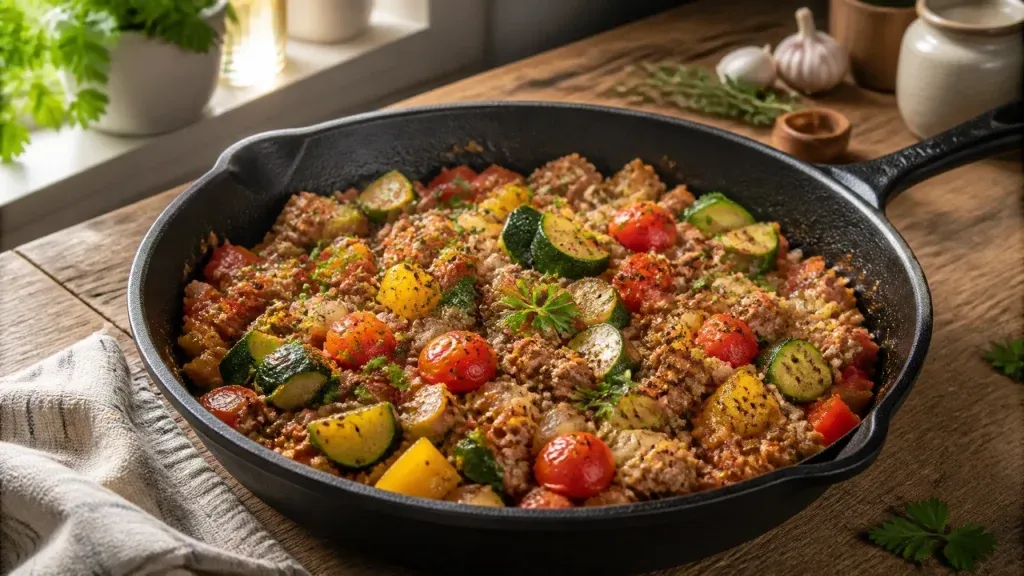
Some evenings call for a dinner that is nourishing, flavorful, and finished before your energy completely leaves the building. This garlic herb turkey and vegetable skillet delivers exactly that. It uses one pan, a handful of everyday ingredients, and a simple flavor strategy: brown the turkey, let the vegetables keep their character, and finish with herbs and acidity. Think of it as one of those healthy dinner ideas that tastes far more exciting than its short ingredient list suggests.
Tips & Technique: Build Flavor with Heat, Moisture, and Timing
Brown the turkey instead of simply turning it gray
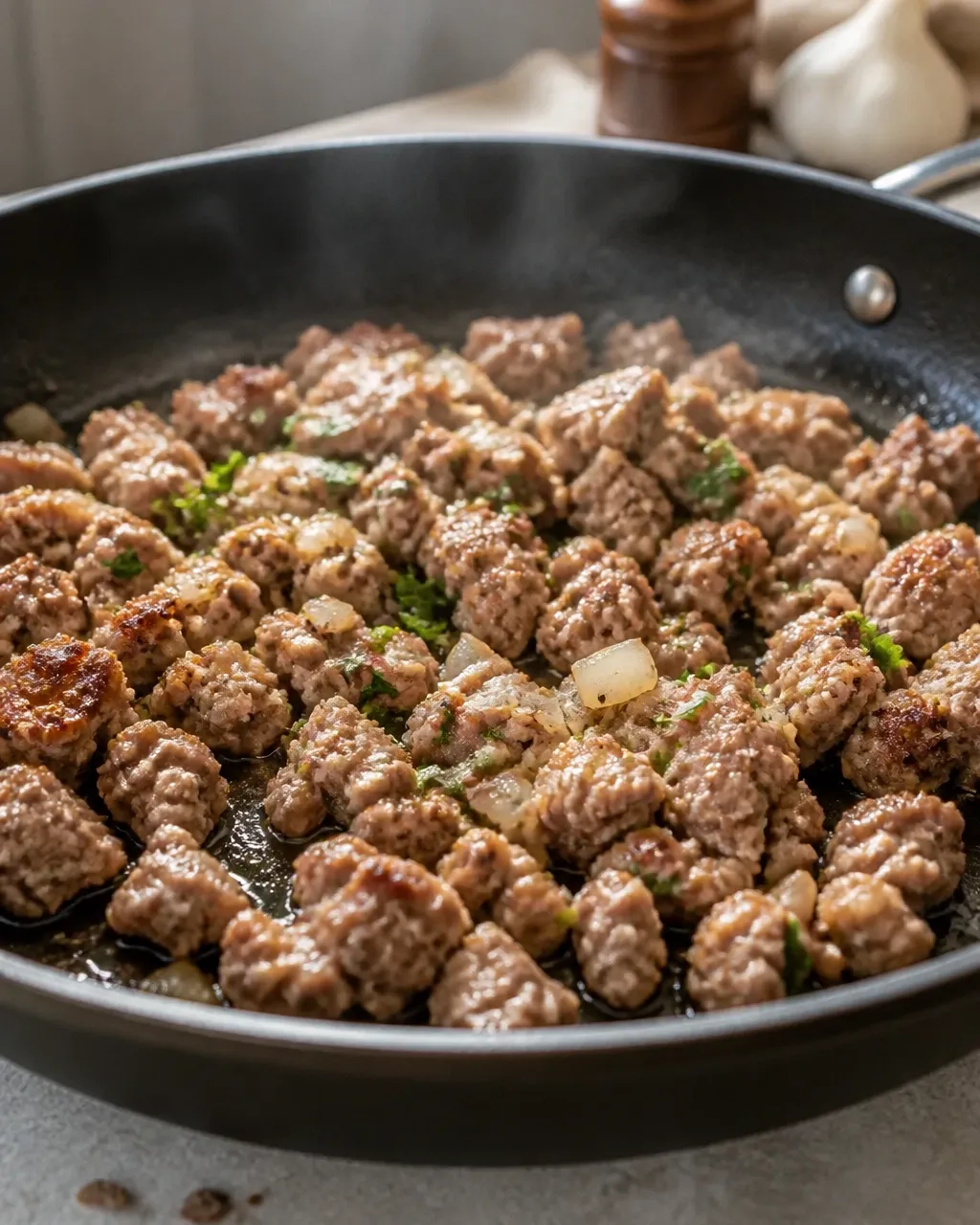
Start with a wide skillet and enough heat to create real contact between the turkey and the pan. Ground turkey contains more moisture and usually less fat than ground beef, so it needs a little help developing color. Give it room. If you pile too much into a small pan, the temperature drops and the turkey releases steam. You will still cook it, but you will lose the savory browned edges that make the dish taste satisfying.
Avoid stirring constantly. Break the turkey into crumbles, then let those crumbles sit against the hot surface long enough to color. This encourages the Maillard reaction, the chemical process that creates deeper roasted, nutty, and savory flavors. It is the difference between “perfectly fine” and “can I have another serving?”
Keep vegetables colorful and pleasantly firm
Vegetables do not all cook at the same speed, and pretending otherwise is how you end up with soft peppers and crunchy zucchini: or the reverse. Cut firmer vegetables into smaller pieces and leave more delicate vegetables slightly larger. That gives everything a fair chance to finish around the same time.
Use medium-high heat when you want golden edges. A crowded pan traps moisture, so the vegetables steam instead of brown. Spread them out, keep the pan uncovered when possible, and resist the urge to add every vegetable at once. Zucchini and peppers should become tender while still holding their shape. Cherry tomatoes can soften later and release just enough juice to help create a light, savory coating.
Add garlic and dried herbs where they can bloom
Garlic and dried herbs contain aromatic compounds that become more noticeable when warmed in fat. Stirring them into the turkey and pan juices helps distribute their flavor throughout the skillet rather than leaving little pockets of seasoning.
Watch the garlic closely. It should smell sweet and fragrant, not dark and bitter. Garlic can go from golden to burnt with startling confidence. Add fresh parsley, basil, or tender herbs closer to serving. Their delicate aromas fade with prolonged heat, so treat them as a finishing note rather than background noise.
For more guidance on building a one-pan dinner, browse Cookpedia’s collection of one-pot meals. The same principles show up again and again: use one pan intelligently, layer flavor, and let the cooking surface do some of the work.
Use acidity at the end to wake everything up
A skillet built from turkey, olive oil, and herbs can taste rich but slightly flat. Finish with lemon juice, a small splash of vinegar, or another bright acidic element. Acidity does not make the dish taste sour when used carefully. It sharpens the savory flavors and keeps the turkey from feeling heavy.
Add acidic ingredients after the turkey and vegetables have had time to brown. Acid lowers surface pH and can slow the browning reactions you want at the beginning. Build color first, then add brightness. It is a small sequencing choice with a big payoff.
Lemon zest works especially well because it adds fragrant citrus oils without extra liquid. Finish with zest, juice, and fresh herbs, then taste before adding more salt. Bright flavors can make a dish seem more seasoned, which means you may need less.
Control moisture for a skillet rather than a stew
Keep the pan uncovered while you want liquid to evaporate. If the skillet looks watery, do not immediately add more seasoning or thickener. Give the moisture a little time to cook off. Browning and reduction both depend on evaporation.
If the vegetables are taking longer to soften, a brief cover can trap steam and speed things along. Remove the lid afterward so the excess moisture can escape. This covered-then-uncovered approach gives you tender vegetables without sacrificing the concentrated flavor of a skillet.
Check the turkey with a thermometer
Do not rely only on color. Ground turkey should reach 165°F (74°C) throughout. Check the thickest part of the turkey mixture with an instant-read thermometer, following the USDA safe temperature chart.
That temperature is non-negotiable. Lean turkey can look cooked before the center is ready, especially when the crumbles are large. Once the turkey reaches a safe temperature, avoid prolonged cooking. Lean meat loses moisture quickly, and nobody wants a skillet full of tiny poultry pebbles.
Variations: Keep the Method, Change the Mood
Treat this skillet as a flexible template rather than a rigid performance. Swap zucchini for green beans, broccoli florets, mushrooms, or chopped eggplant. Choose vegetables with similar cooking times if you want the pan to stay simple. Add baby spinach at the end so residual heat wilts it without turning it dull.
For a Mediterranean direction, use oregano, parsley, lemon, and a crumble of feta at the table. Add smoked paprika and chili flakes for a warmer, slightly bolder version. If you prefer a more Italian feel, bring in basil, fennel seed, and a spoonful of grated Parmesan.
You can also replace the turkey with lean ground chicken, pork, or a plant-based mince. Adjust the cooking time and always check the appropriate safe temperature for meat. For a meat-free version, use white beans or lentils, but add them near the end so they warm through without breaking apart.
Need extra staying power? Serve the skillet over brown rice, quinoa, couscous, or a small portion of whole-grain pasta. For a lower-carbohydrate plate, keep the skillet as it is and add a crisp salad. It fits comfortably beside other healthy Cookpedia dinner ideas without requiring a separate cooking project.
Side Dish Pairings: Add Contrast, Not More Work
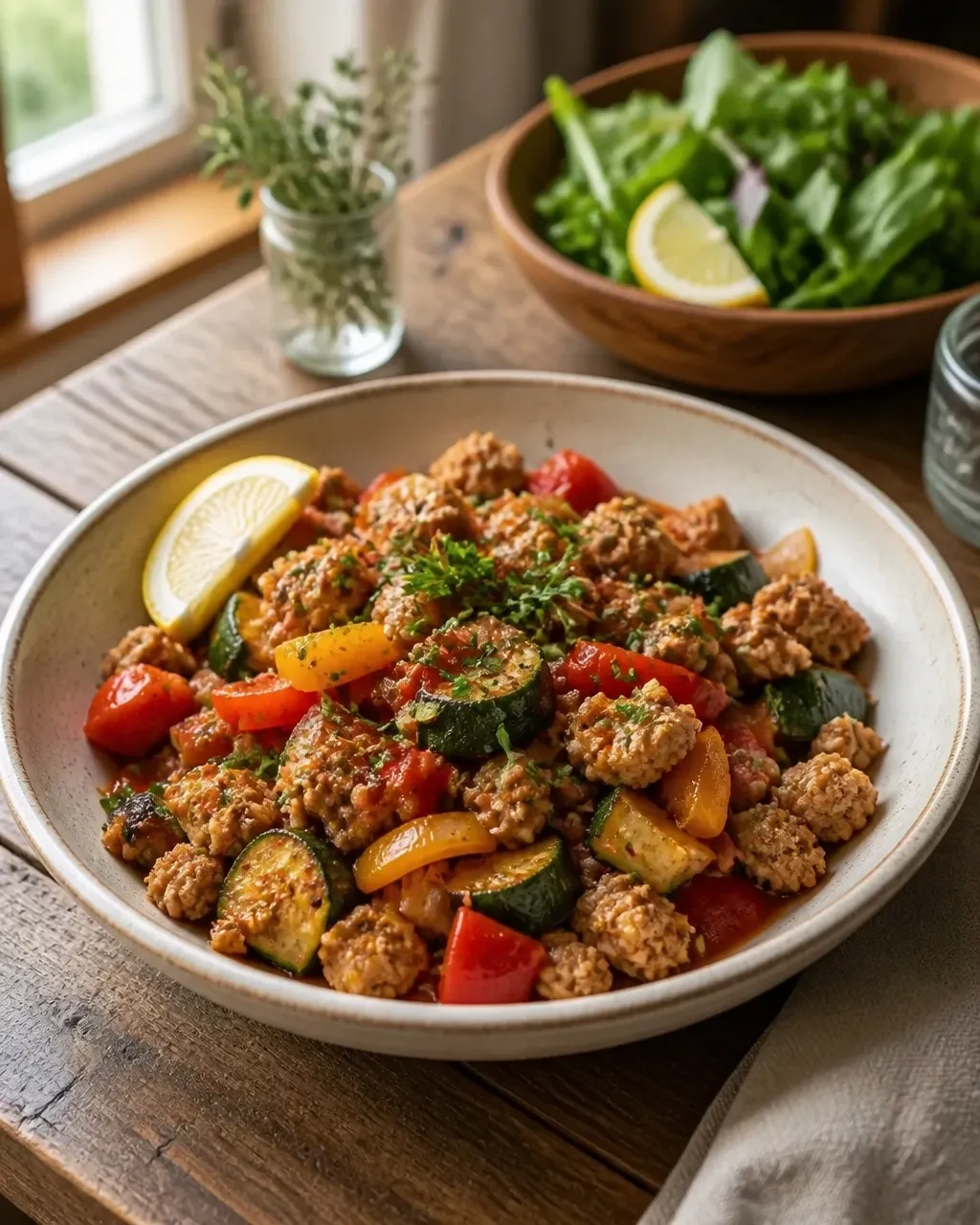
Pair this skillet with something fresh, crisp, or pleasantly acidic. A lemony green salad is the easiest choice. Peppery arugula, cucumber, and a sharp vinaigrette cut through the savory turkey and make each bite feel lighter.
Warm whole-grain bread is useful for catching the herb-scented juices, while a small serving of roasted potatoes makes the meal more substantial for hungrier diners. Keep the potatoes simply seasoned; the skillet already brings plenty of garlic and herbs.
For a cooler contrast, serve a spoonful of plain yogurt mixed with lemon zest and parsley on the side. The creamy tang balances the browned turkey without turning dinner into a heavy sauce situation. If you are assembling quick family meals, choose one side that can be tossed together while the skillet finishes rather than creating a second elaborate recipe.
FAQ: What If My Skillet Goes Off-Script?
What if my ground turkey releases a lot of liquid?
Keep cooking uncovered and avoid adding more oil straight away. The liquid needs to evaporate before browning can happen. If the pan is very crowded, transfer some turkey to a plate and brown it in batches. Moisture is not a failure, but leaving it pooled in the pan will make the meat simmer instead of sear.
What if the turkey tastes dry?
Lean turkey dries out when it is cooked too long or crumbled too finely. Use moderate heat after browning, avoid pressing the meat repeatedly, and stop cooking once it reaches 165°F. A finishing spoonful of olive oil, a squeeze of lemon, or a cool yogurt topping can also restore a more generous texture.
What if the vegetables are still crunchy when the turkey is done?
Move the cooked turkey to a plate if necessary and let the vegetables continue cooking with a splash of water or broth. Cover the skillet briefly to use steam, then uncover it again to reduce the liquid. This protects the turkey from overcooking while giving firm vegetables the extra time they need.
What if the skillet tastes bland?
Check the balance rather than adding salt blindly. Add a little lemon juice or vinegar first, then taste again. Brightness often makes existing seasoning more noticeable. After that, add salt in small amounts, followed by black pepper and fresh herbs. If the flavor still feels thin, a small amount of tomato paste, Parmesan, or feta can add savory depth.
Can I prepare this ahead of time?
Yes. Cook the skillet, cool it promptly, and refrigerate it in a sealed container. Reheat gently in a skillet or microwave, adding a splash of water or broth if the vegetables and turkey look dry. The vegetables will soften slightly overnight, but the garlic-herb flavor usually becomes rounder.
Can I freeze leftovers?
You can freeze the cooked turkey and vegetables, although the vegetables may lose some firmness after thawing. Cool the food completely before packing it into an airtight container. Thaw it in the refrigerator, then reheat until steaming hot. Add fresh lemon and herbs after reheating to bring back the brightness.
How can I make this a faster dinner?
Prepare the vegetables before the skillet gets hot, use a wide pan, and choose vegetables that cook quickly. Frozen chopped vegetables can work when fresh produce is unavailable, but expect more moisture and give the pan extra time to evaporate it. If you were searching for air fryer recipes dinner, keep this one in your weeknight rotation too: it offers the same fast, low-fuss spirit without needing a second appliance.
What should I serve for picky eaters?
Keep the vegetables in recognizable pieces and serve stronger toppings separately. Fresh herbs, lemon, feta, and yogurt can be offered at the table so everyone can adjust the final flavor. For especially hungry eaters, add rice or bread rather than complicating the skillet itself. Simple, customizable dinners are often the most reliable quick family meals.
Is this suitable for meal prep?
It is. Divide the cooled skillet into individual portions and refrigerate for several days, following your household’s food-safety practices. Store fresh herbs and lemon separately when possible, then add them after reheating. That last-minute freshness keeps leftovers from tasting tired.
For another practical one-pan option, try Cookpedia’s Cozy One-Pan Chicken Pot Pasta, or explore the broader quick meals collection. Keep the pan wide, the heat purposeful, and the finish bright. That is the whole weeknight strategy.