Recipe
Servings
1 1×
Serves 1Prep 2 minCook 5 min
Ingredients
- Rolled oats
- One ripe banana
- Milk or unsweetened plant milk
- Creamy peanut butter
- Ground cinnamon
- A small pinch of salt
- Optional toppings: sliced banana, chopped peanuts, chia seeds, or a light drizzle of maple syrup
Method
- Mash part of the banana and slice the rest.
- Combine the oats, milk, mashed banana, cinnamon, and salt in a small saucepan.
- Cook gently until the oats soften and the mixture becomes creamy.
- Stir regularly so the bottom does not catch.
- Take the pan off the heat and swirl in the peanut butter.
- Spoon the oatmeal into a bowl, then finish with the reserved banana and any toppings you like.
- Let it stand for one minute before eating; the oats will continue thickening as they cool.
- For a microwave version, use a large microwave-safe bowl and pause once to stir.
- Choose a larger bowl than you think you need.
- Oatmeal has a dramatic little moment when it bubbles.
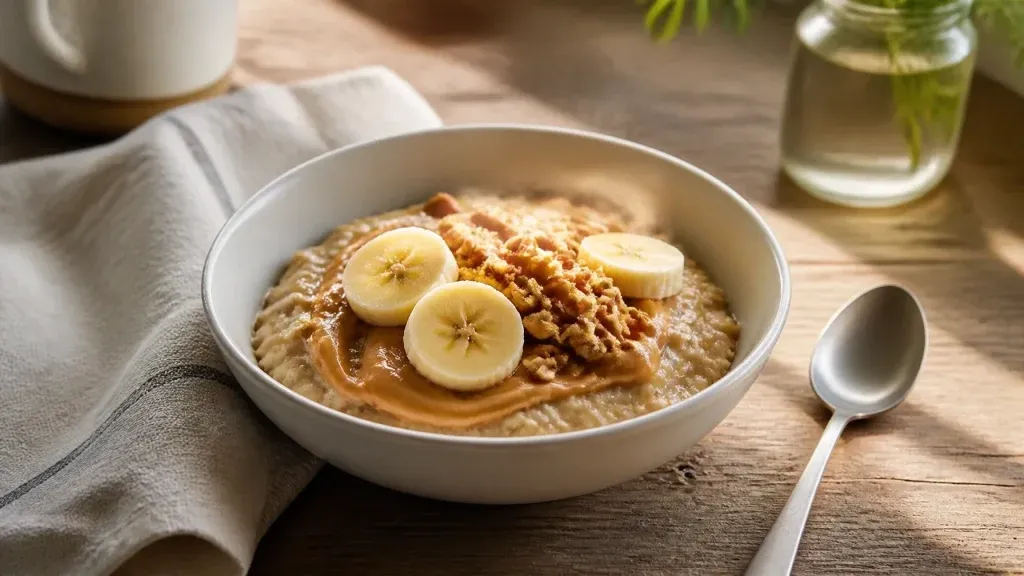
Some mornings need a breakfast that behaves itself. No complicated prep, no pile of dishes, and no mysterious ingredient that has been hiding at the back of the cupboard since February. This warm banana peanut butter oatmeal is creamy, filling, gently sweet, and ready in minutes. It is one of my favorite easy healthy breakfasts because it uses everyday ingredients while still tasting like a small, cozy treat.
How to Get Creamy Oatmeal Without Making It Gluey
Let Starch Do the Thickening
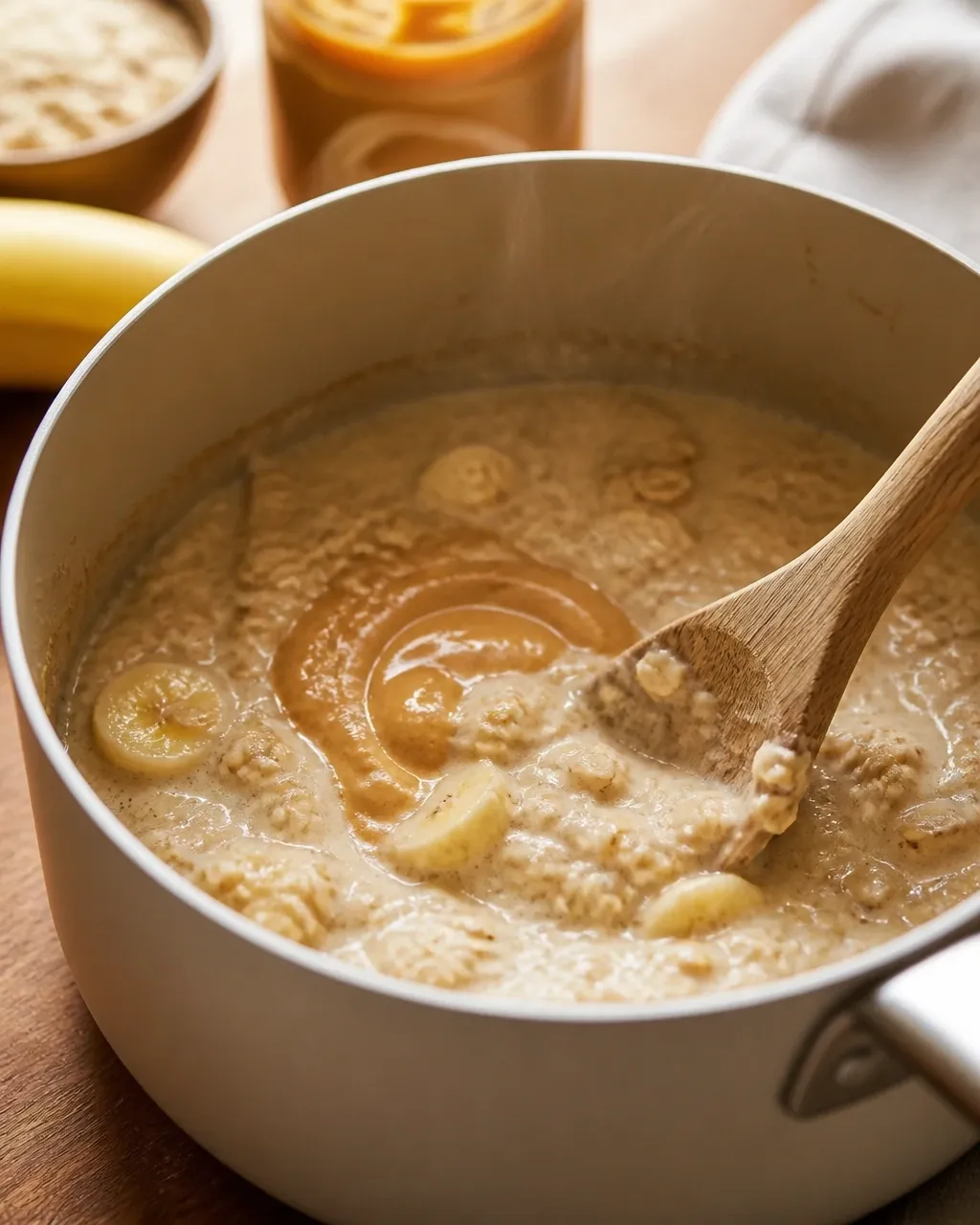
The creamy texture comes from starch, not from adding loads of cream or sugar. As oats heat in liquid, their starch granules absorb moisture and swell. This process, called gelatinization, turns separate oats and milk into a cohesive porridge.
Use gentle, steady heat. A furious boil makes the liquid evaporate too quickly while the oats remain unevenly cooked. Keep the mixture at a soft simmer and stir from the bottom every so often. Cook until the oats are tender and the bowl looks slightly looser than you want it to be.
That last detail matters. Oatmeal thickens as it sits because the starch continues absorbing liquid after cooking. Stop at the right moment and you will get spoonable creaminess. Cook until it already looks stiff in the pan, and you may end up with breakfast cement.
Mash the Banana for Natural Sweetness
Use a ripe banana with plenty of brown speckles. As bananas ripen, some of their starch converts into simpler sugars, so a ripe fruit tastes sweeter and blends more easily into the oatmeal.
Mash half of the banana directly before cooking. This disperses through the oats, adding sweetness and body to every bite. Keep the other half sliced for the top. That small contrast makes the bowl more interesting: smooth porridge underneath, soft fruit on top.
Do not mash the entire banana unless you want a very uniform, pudding-like texture. For a more textured bowl, leave larger pieces and let them soften during cooking.
Add Peanut Butter at the End
Stir peanut butter in after the oatmeal comes off the heat. The warmth loosens its natural oils and creates a smooth, nutty swirl without allowing the fat to dominate the cooking process.
Adding it too early is not disastrous, but it can make the oatmeal feel heavier and may cause the mixture to stick more readily to the pan. Stirring it in at the end gives you better control. Mix it completely for a rich, even flavor, or leave a few ribbons visible for a more generous finish.
Choose natural peanut butter if you like, but stir the jar thoroughly first. The oil that rises to the top is part of the peanut butter, not a kitchen emergency.
Use Salt to Sharpen Sweetness
Do not skip the pinch of salt. It will not make the oatmeal taste salty; it will make the banana and peanut butter taste more complete. Salt suppresses some bitter or flat notes and helps sweetness register more clearly.
Add cinnamon for warmth, but keep it measured. Too much cinnamon can make the bowl taste dusty and dry. A small amount supports the banana without taking over.
For a little more brightness, add a few drops of vanilla after cooking. You can also finish with a tiny pinch of flaky salt if you enjoy the sweet-salty combination.
Choose Your Liquid for the Texture You Want
Milk gives the smoothest, richest result and adds a little protein. Unsweetened soy milk is especially useful if you want a plant-based bowl with more staying power. Almond milk creates a lighter texture, while water keeps the oatmeal simple and lets the banana and peanut butter lead.
Start with the recommended amount of liquid, then adjust at the end. Add a splash if the oats are too thick. Cook for another minute if they seem watery. Avoid pouring in a large amount all at once; you can always loosen oatmeal, but rescuing a thin bowl takes longer.
For more background on the nutrition of this classic pairing, compare the general guidance in this banana peanut butter oatmeal recipe from Boston Medical Center. The exact nutrition will change with your milk, portion size, and peanut butter.
Simple Variations That Still Taste Balanced
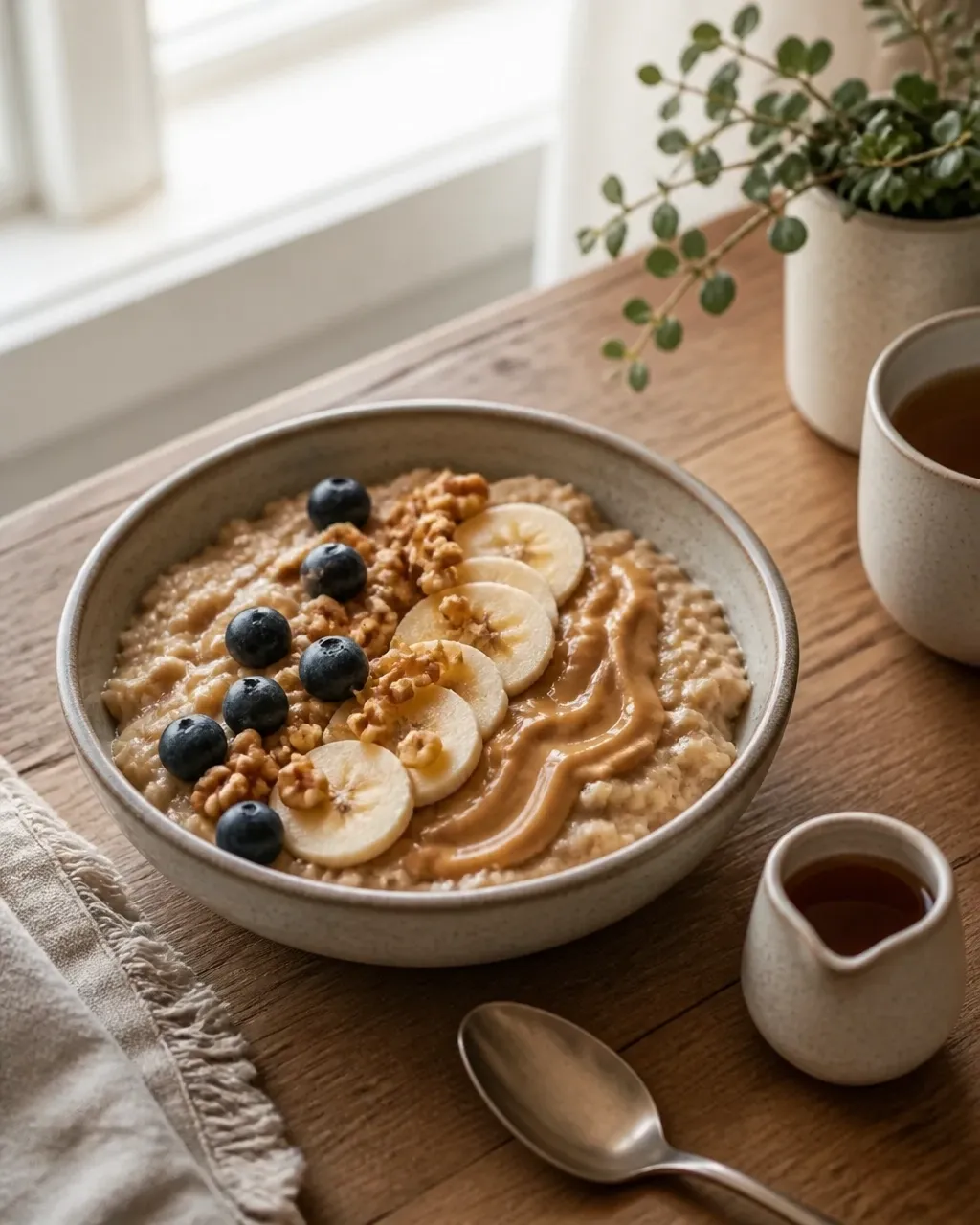
Make It Higher in Protein
Use milk or unsweetened soy milk, then top the cooked oatmeal with Greek yogurt after it cools slightly. Do not stir cold yogurt into boiling oatmeal; the temperature shock can make it look grainy. A spoonful on top keeps the texture fresh and adds tang to balance the sweet banana.
Make It Vegan
Choose plant milk and check that your peanut butter contains no dairy additives. Soy milk gives the most substantial texture, while oat milk makes the bowl especially soft and naturally sweet. Add hemp hearts or chia seeds if you want extra texture.
Make It Chocolatey
Stir in unsweetened cocoa powder with the oats and banana. Cocoa brings bitterness, so use a very ripe banana and add a small amount of maple syrup only if needed. Finish with peanut butter for a banana-chocolate combination that tastes dessert-adjacent without becoming pudding.
Use Another Nut or Seed Butter
Swap peanut butter for almond butter, cashew butter, or sunflower seed butter. Almond butter is slightly drier and more assertive, so add a splash of milk if the oatmeal feels thick. Sunflower seed butter works well for peanut-free households, but check the label if allergies are involved.
For more low-fuss inspiration, browse Cookpedia’s breakfast recipes and healthy recipe collection.
Side Dish Pairings for a More Complete Breakfast
Keep the sides fresh and crisp so the meal does not become one large bowl of soft food. Serve the oatmeal with a handful of berries, orange segments, or sliced apple. Their acidity and juiciness cut through the creamy peanut butter and wake up the banana.
Add plain Greek yogurt or a boiled egg when you need more protein. The savory edge of an egg works surprisingly well beside a lightly sweet breakfast.
For a warm pairing, serve a small piece of whole-grain toast with a thin layer of butter or tahini. Keep it modest; the oatmeal already brings carbohydrates and fat. The goal is balance, not constructing a breakfast buffet before your first cup of coffee.
If you are planning several quick family meals, this oatmeal can be the dependable breakfast that keeps the morning moving. Save the more elaborate cooking for when everyone is actually awake.
Frequently Asked Questions
Can I use quick oats instead of rolled oats?
Yes. Quick oats cook faster and release starch more readily, so expect a softer, smoother bowl. Reduce the cooking time and watch the liquid closely. Avoid cooking them as long as rolled oats, or the texture may become overly thick.
What if my oatmeal is too thick?
Add warm milk or water one splash at a time and stir well. Warm liquid blends in more smoothly than cold liquid and will not cool the bowl as quickly. Let it stand for a minute before adding more because the oats may loosen as the starch redistributes.
What if my oatmeal is too thin?
Return it to low heat and cook for another minute or two, stirring regularly. You can also let it sit off the heat. Do not add extra oats straight into a hot finished bowl unless you are willing to accept a slightly chewy texture; dry oats need time to hydrate.
Can I make it with steel-cut oats?
You can, but steel-cut oats need substantially more liquid and cooking time. They will not deliver a five-minute breakfast. Cook them separately according to their package directions, then fold in banana and peanut butter near the end. Choose rolled oats when speed and creaminess are the priority.
Why does my oatmeal taste bland?
Check the salt first. A missing pinch can make even sweet ingredients taste flat. Then consider the banana: an underripe banana contributes less sweetness and less aroma. Add cinnamon, vanilla, or a small amount of maple syrup only after tasting. Peanut butter brands also vary widely in salt and sweetness, so adjust gradually.
Can I prepare it ahead of time?
Yes. Cool the oatmeal promptly, refrigerate it in a covered container, and use it within three days. It will thicken considerably in the refrigerator because the starch continues setting. Reheat gently with a splash of milk, stirring halfway through. Add fresh banana and peanut butter after reheating for the best flavor and texture.
Is this suitable for a peanut allergy?
Not with standard peanut butter. Use sunflower seed butter or a certified peanut-free nut butter, and check labels carefully for cross-contact warnings. Do not assume a product is safe simply because it contains no obvious peanuts.
Can I freeze banana peanut butter oatmeal?
You can, although the texture may become softer after thawing. Freeze individual portions, thaw overnight in the refrigerator, and reheat with extra liquid. Fresh toppings will do most of the work when it comes to restoring contrast.
Make this bowl your own, but keep the non-negotiables: use ripe banana, cook gently, season with salt, and stir in the peanut butter at the end. That is how a few humble ingredients become a warm breakfast worth repeating.