Recipe
Servings
Ahead Strategy: Build Breakfast Before the Rush 1×
Serves Ahead Strategy: Build Breakfast Before the Rush
Ingredients
- Eggs
- Bread
- Zucchini
- Mushrooms
- Spinach
- Tomatoes
- Feta
- Salt
- Black pepper
Method
- Use the recipe card for the exact quantities and baking time, then follow these techniques for muffins that stay tender instead of turning into rubbery egg pucks.
- Use moderate heat and start checking near the earlier end of the recommended baking time.
- Let the muffins rest briefly in the pan after baking.
- Remove them while they are warm, but not piping hot.
- Keep other vegetables under control, too.
- Cook them first, or use modest amounts, so they contribute flavor without turning breakfast into a puddle.
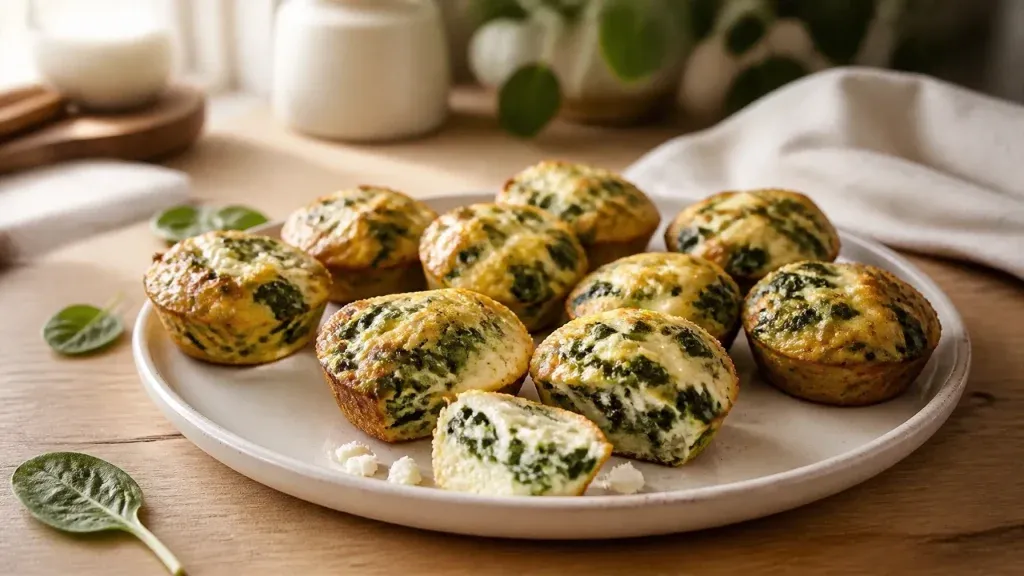
Some mornings call for toast. Others call for something warm, savory, and sturdy enough to survive a hectic commute. These spinach and feta crustless quiche muffins sit happily in that second camp. They are light but satisfying, packed with simple flavor, and easy to prepare ahead. Think of them as tiny omelets with better manners: no fork required, no pastry drama, and very little washing up.
Use the recipe card for the exact quantities and baking time, then follow these techniques for muffins that stay tender instead of turning into rubbery egg pucks.
The Egg-Custard Science: Set the Center Without Toughening It
Eggs give these muffins their structure. As they heat, the proteins unfold and link together, changing the mixture from liquid to a delicate custard. That transformation is useful, but it has a limit. Push the eggs too far and the proteins tighten, squeezing out moisture and creating a firm, bouncy texture.
Bake with control. Use moderate heat and start checking near the earlier end of the recommended baking time. The muffins should look puffed around the edges, while the centers remain just set. A slight wobble is not a failure; it is a sign that the residual heat will finish the job as they cool.
Avoid waiting for a deep golden top. Egg muffins do not need to look like cupcakes to be ready. The edges usually cook first, and they can become dry while the center is still catching up. Check the middle rather than judging the whole tray by its color.
Let the muffins rest briefly in the pan after baking. The heat trapped inside will continue cooking the custard gently, and the structure will firm enough to release cleanly. Remove them while they are warm, but not piping hot.
Moisture Control: Treat Spinach Like a Tiny Water Balloon
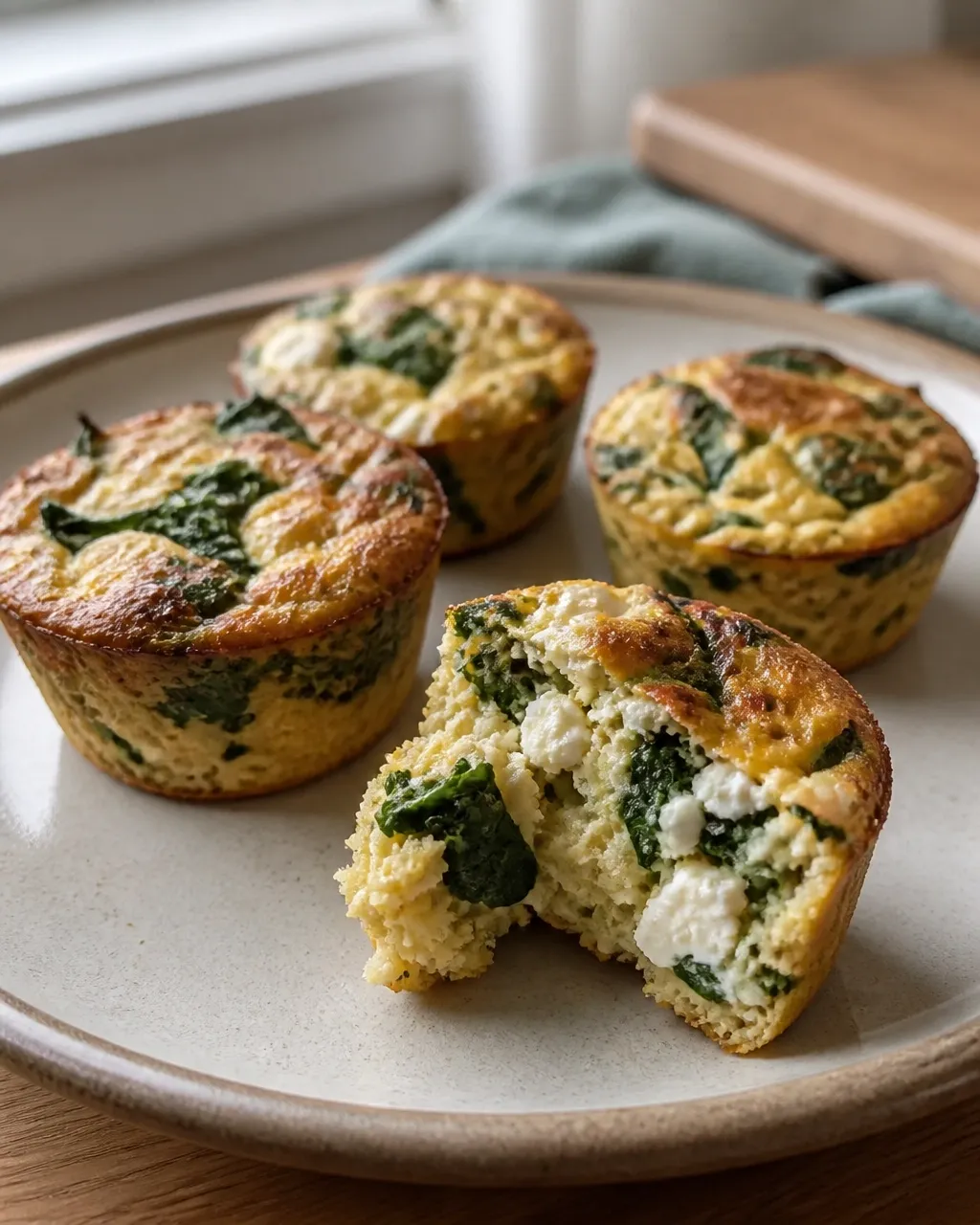
Spinach is the biggest texture troublemaker in this recipe. Fresh leaves contain a surprising amount of water, and frozen spinach contains even more once thawed. If that moisture goes straight into the egg mixture, it can leak out during baking and leave watery pockets around the muffins.
Wilt fresh spinach first. This collapses the leaves, concentrates their flavor, and makes it easier to remove excess moisture. If you use frozen spinach, thaw it completely and squeeze it firmly. Do not merely drain it and hope for the best. Spinach is optimistic about how much water it can hide.
Cool cooked spinach slightly before combining it with the eggs. Very hot vegetables can begin setting the egg mixture unevenly, especially around the edges of the bowl. A short cooling period gives you a more uniform custard and prevents accidental scrambling before the muffins reach the oven.
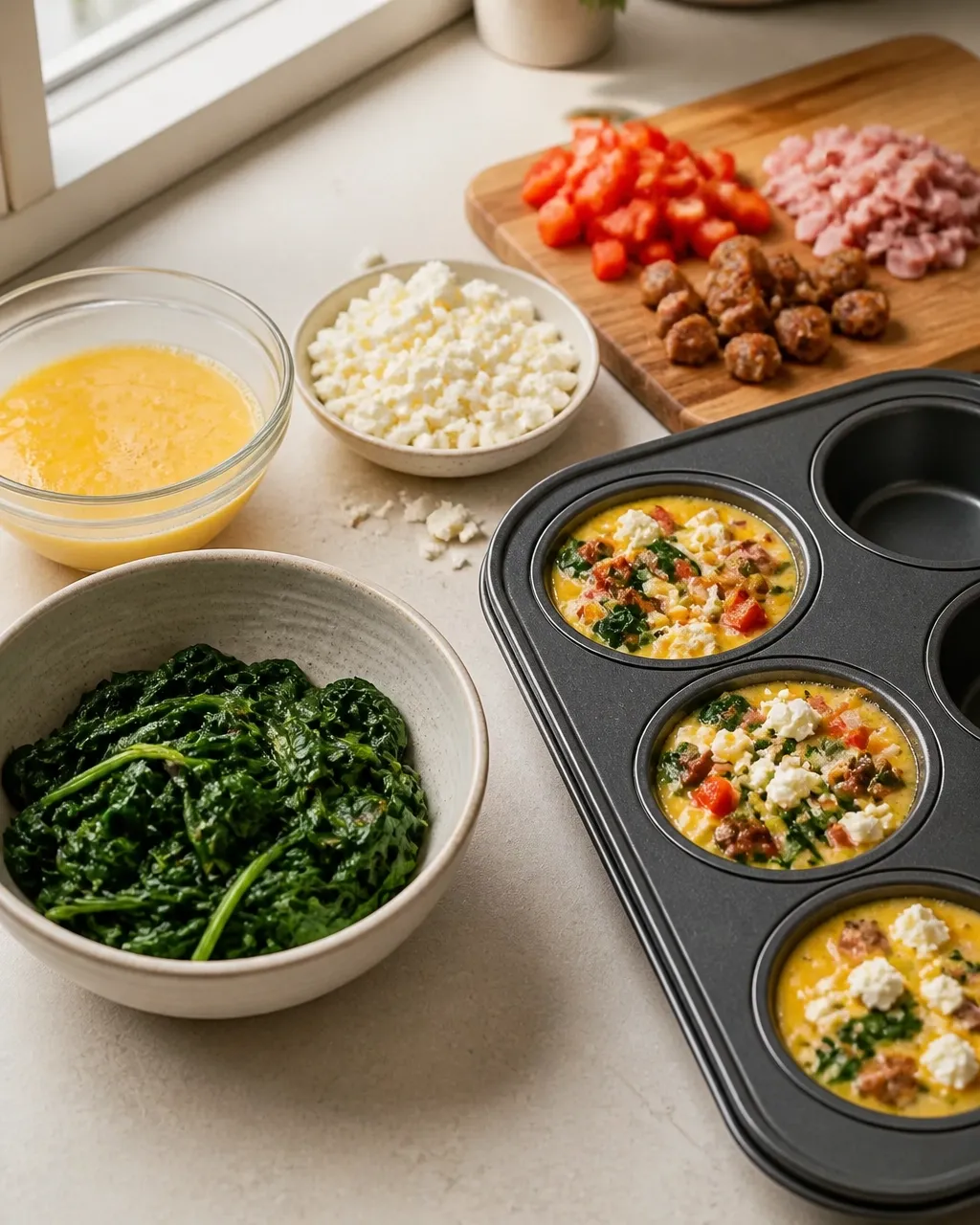
Keep other vegetables under control, too. Mushrooms, zucchini, and tomatoes all release water. Cook them first, or use modest amounts, so they contribute flavor without turning breakfast into a puddle. This is one of the non-negotiables.
Feta, Salt, and Flavor Balance
Feta brings a lot of personality to a mild egg base. Its salty tang cuts through the richness of the custard, while its crumbly texture creates little creamy pockets throughout each muffin. Because feta is already salty, season the egg mixture conservatively. You can add more at the table, but you cannot retrieve salt once it has marched into the bowl.
Use freshly ground black pepper generously enough to sharpen the flavor. Add herbs for lift rather than piling on every seasoning in the cupboard. Spinach, feta, and eggs already have a clear Mediterranean direction; let those flavors stay recognizable.
Crumble the feta into small, uneven pieces. Tiny bits distribute more evenly, while a few larger pieces give you welcome salty bursts. Avoid mixing so aggressively that the cheese disappears completely into the eggs.
Grease the muffin tin thoroughly, including the upper edges of each cup. Crustless quiche has no pastry barrier, so it will cling to any dry patch with impressive determination. Silicone pans usually release easily, but a well-greased metal tin works perfectly.
For the cleanest release, allow the muffins to cool for several minutes before loosening the edges with a thin knife or small spatula. Do not attack them straight from the oven. They are fragile when hot and need a moment to become properly muffin-shaped.
Make-Ahead Strategy: Build Breakfast Before the Rush
These muffins are excellent meal-prep food because their flavor improves slightly after resting, while their shape makes portioning simple. Bake a batch when you have a calm half-hour, then refrigerate the cooled muffins in an airtight container.
Do not seal them while they are steaming hot. Trapped steam condenses inside the container and softens the edges. Cool them until no longer warm, then refrigerate promptly. Keep them chilled and enjoy them within about four days for the best quality.
Reheat gently. A microwave works for speed, but use short bursts rather than blasting them until they hiss. An oven or toaster oven at a moderate temperature gives a more even result. Stop as soon as the center is warm; additional heat only tightens the egg proteins.
Freeze the muffins if you want a longer breakfast plan. Arrange them in a single layer until firm, then transfer them to a freezer-safe container. Thaw overnight in the refrigerator when possible and reheat gently. Expect the texture to be slightly less delicate than fresh, but still very useful on a busy morning.
Variations: Keep the Structure, Change the Personality
Treat the egg mixture as a flexible base. Swap some of the spinach for cooked mushrooms and add thyme for a deeper, earthier version. Use roasted red pepper for sweetness and color, or fold in chopped broccoli for extra bite. Always cook watery vegetables first and cool them before mixing.
Add chopped spring onions for a fresh, lightly sharp finish. A small amount of grated cheddar makes the muffins richer, while goat cheese gives them a tangier, creamier character. If you use another salty cheese, reduce the added salt again.
For a higher-protein breakfast, serve the muffins with plain Greek yogurt or cottage cheese rather than forcing extra ingredients into the custard. For a lighter dairy profile, reduce the feta slightly and add more herbs, black pepper, or lemon zest.
Keep add-ins modest. Overfill the cups with vegetables or cheese and you reduce the amount of egg available to bind everything together. The result may taste good but crumble on the way to your mouth, which is a poor design choice for breakfast.
These muffins also fit neatly into the same practical rhythm as quick family meals: prepare one reliable base, customize a few portions, and make the morning easier without cooking from scratch every day.
Side Dish Pairings: Add Contrast, Not Competition
Pair two muffins with fresh fruit for brightness and fiber. Orange segments, berries, or sliced melon work especially well because their acidity and juiciness balance the salty feta and rich egg custard.
Add whole-grain toast if you want a more substantial breakfast. Its chew and nutty flavor provide a useful contrast to the soft muffins. A spoonful of plain yogurt with herbs can bring coolness and acidity, while a simple tomato or cucumber salad makes the plate feel fresh without adding much work.
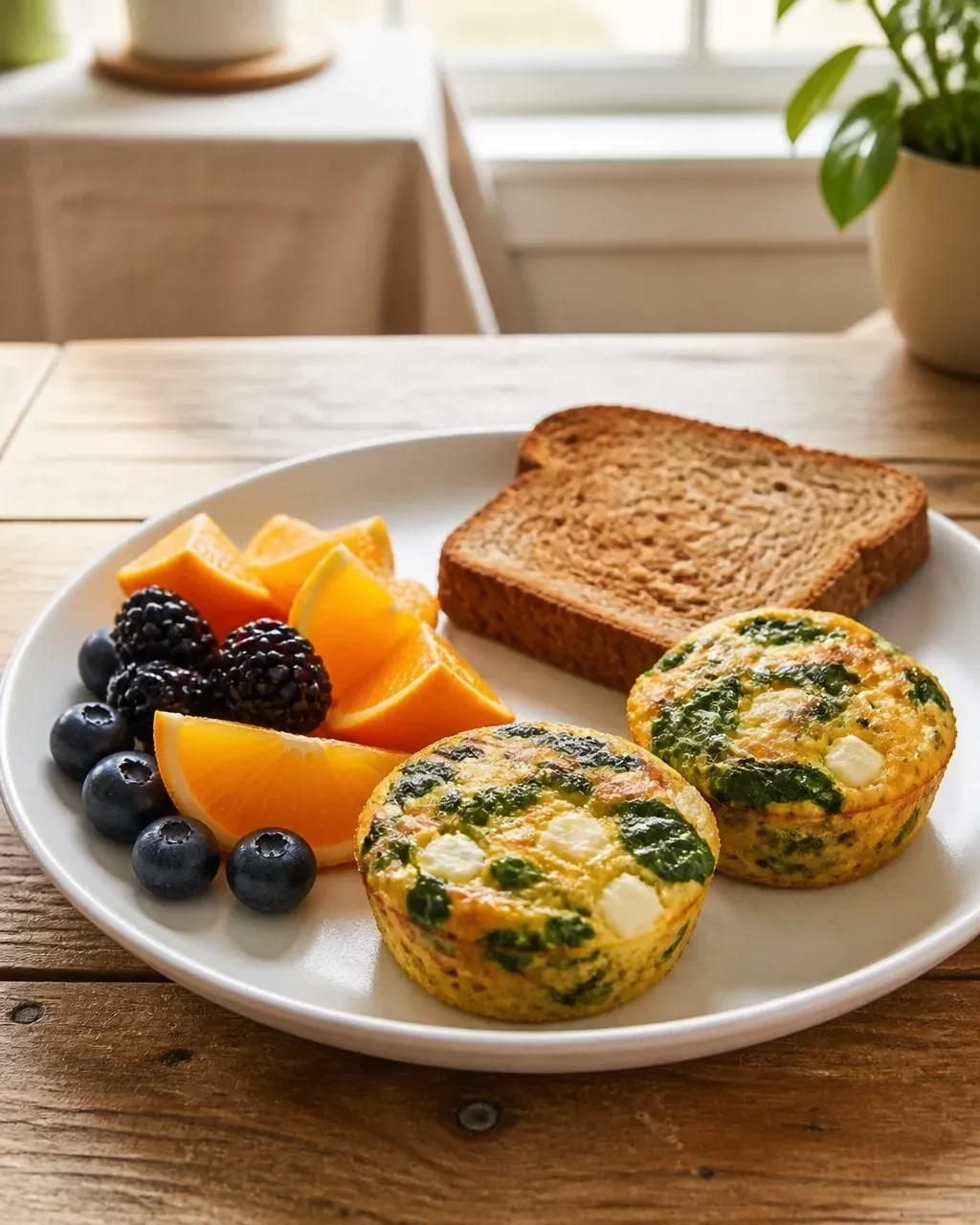
Avoid pairing them with several rich sides at once. Bacon, buttery toast, and creamy sauces can overwhelm the delicate flavor. Keep at least one side crisp, juicy, or acidic, and the whole breakfast will taste more balanced.
For more simple morning inspiration, browse Cookpedia’s breakfast collection and healthy recipes. If you enjoy the spinach-and-feta combination, our one-pan shakshuka uses the same salty, savory contrast in a skillet format.
FAQ: Troubleshooting Your Quiche Muffins
Why are my quiche muffins watery?
Usually, the spinach or another vegetable carried too much moisture into the mixture. Wilt fresh spinach and squeeze frozen spinach thoroughly. Cook mushrooms, zucchini, or tomatoes before adding them, then cool them slightly. Avoid increasing the vegetable quantity beyond what the egg mixture can hold.
Why did the muffins turn rubbery?
Overbaking is the most common reason. Egg proteins continue to firm as they heat, and excessive heat makes them contract tightly. Remove the muffins when the centers are just set with a slight wobble. Let carryover heat finish the cooking instead of waiting for a browned, completely rigid center.
Why did they stick to the muffin tin?
Crustless quiche needs a well-greased surface because there is no pastry crust to separate it from the pan. Coat the cups and their upper edges carefully. Let the muffins rest after baking, then loosen them with a thin knife. Silicone liners or a silicone pan can make release easier.
Can I use frozen spinach?
Yes. Frozen spinach is convenient and works well, but thaw it fully and squeeze out as much water as possible. Do not add it frozen, because it will lower the mixture’s temperature and release water as the muffins bake. Excess liquid is the enemy of a neat custard.
Can I make these without feta?
You can. Replace it with another crumbly cheese, use a smaller amount of grated cheese, or leave cheese out and increase the herbs and pepper. Remember that feta contributes both salt and fat, so a cheese-free version may need more seasoning and may taste slightly leaner.
Can I use egg whites instead of whole eggs?
You can replace some whole eggs with egg whites, but avoid removing all the yolks if you want a tender texture. Yolks contain fat and emulsifiers that make the custard richer and softer. An all-white version can set more firmly and dry out faster, especially if overbaked.
How long do they keep in the refrigerator?
Store cooled muffins in an airtight container and use them within about four days for the best texture. Refrigerate them promptly rather than leaving them out for an extended period. Reheat only the portion you plan to eat so the rest stays fresh.
Can I freeze spinach and feta quiche muffins?
Yes. Cool them first, freeze them in a single layer, and then move them to a freezer-safe container. Thaw overnight in the refrigerator for the most even reheating. Warm them gently and stop once the center is hot; aggressive reheating can make previously frozen eggs firm.
Why did the muffins puff up and then collapse?
That is normal. Steam and expanding air make the egg mixture rise in the oven, but the structure settles as it cools. A dramatic collapse may indicate too much moisture or undercooking, but a modest dip is simply the natural behavior of a crustless egg custard.
Are these a complete breakfast?
They provide protein, vegetables, and satisfying fat, but balance depends on your portion and appetite. Add fruit for freshness and fiber, or whole-grain toast for extra carbohydrates and staying power. Use the plate: not just the muffin( as the complete breakfast.)