Recipe
Servings
Servings 1×
Cook 2026 min
Ingredients
- Salmon
- Quinoa
- Potatoes
- Broccoli
- Asparagus
- Carrots
- Zucchini
- Cucumber
- Lemon
- Balsamic vinegar
- Honey
- Mustard
- Pesto
- Feta
- Butter
- Cooking oil
Method
- Use a high oven temperature, around 400°F to 425°F.
- Use an instant-read thermometer to be certain.
- Toss them in a single layer.
- Use a fork to gently flake the thickest part; if it gives way easily and looks opaque rather than translucent, you are in the clear.
If you have twenty minutes and a single sheet pan, you have no excuse for a sad desk salad or a lukewarm bowl of cereal. My favorite way to tackle the evening rush is with this Sheet Pan Lemon Herb Salmon. It is one of those easy dinner recipes that makes you look like a culinary genius while secretly requiring less effort than finding the TV remote. You get succulent, flakey fish and charred, snappy greens in the time it takes to brew a pot of coffee.
The Science of the Perfect Roast
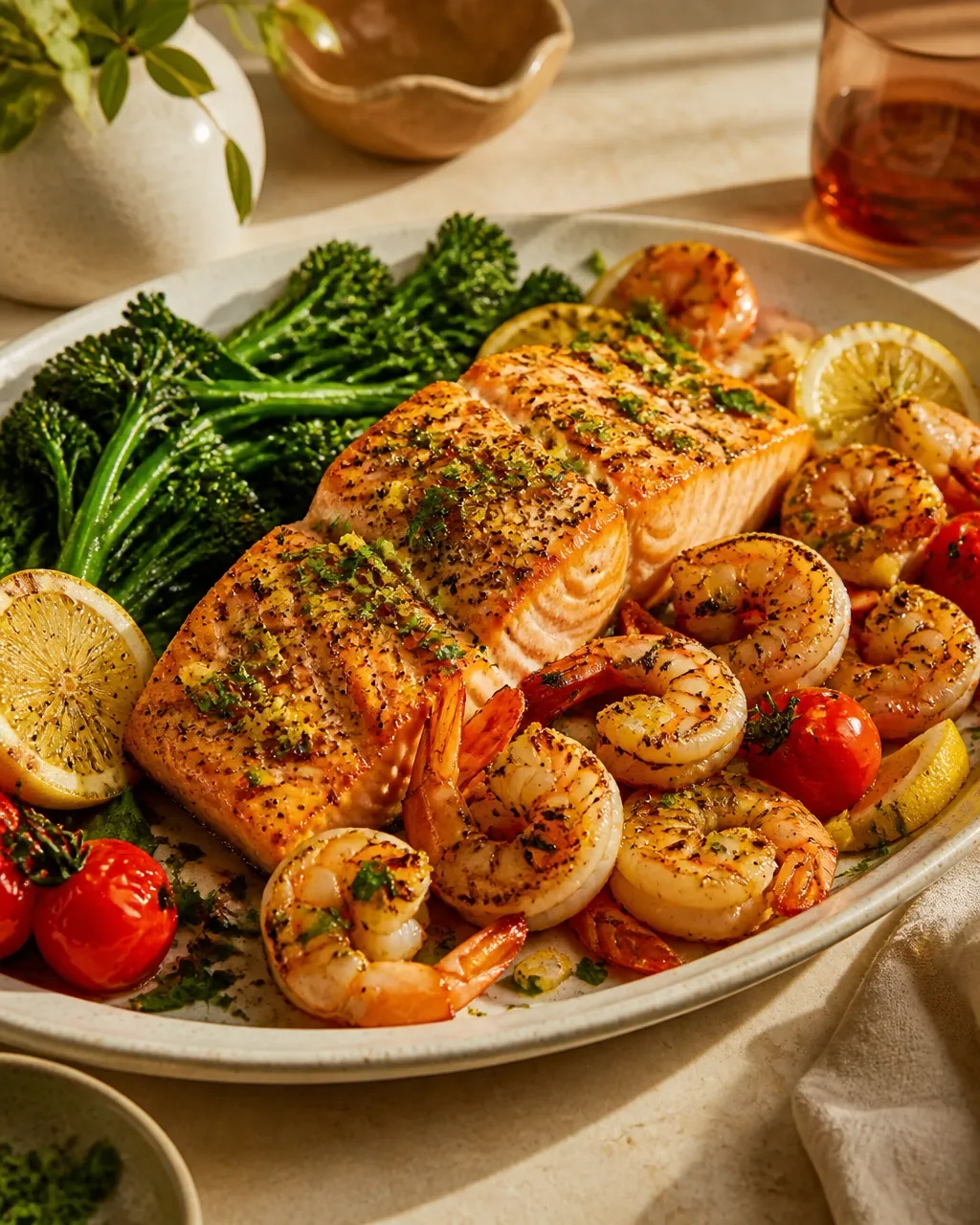
Cooking salmon is a lesson in thermodynamics. The goal is to heat the center just enough to denature the proteins without turning the outer layers into dry, chalky slabs. Use a high oven temperature, around 400°F to 425°F. This creates a temperature gradient that encourages the Maillard reaction on the surface (that’s the fancy term for browning and flavor development) while the radiant heat gently finishes the interior.
Always match your cooking time to the thickness of the fillet, not just what the clock says. A general rule is about 4 to 6 minutes for every half-inch of thickness. If you are working with a thick center-cut piece, give it more time. If you have a thin tail piece, check it early. Use an instant-read thermometer to be certain. Pull the salmon at 125°F for a medium-rare, restaurant-style finish; the residual heat will carry it up to a perfect 130°F while it rests on your counter.
Don't ignore the prep of your asparagus. Trim the woody ends where the spear turns from green to white; this part is mostly lignin, which is essentially wood fiber that no amount of roasting will make tender. Toss them in a single layer. If you crowd the pan, the moisture escaping from the vegetables will trap steam, and you’ll end up with soggy, limp spears instead of the crisp-tender texture that makes healthy weeknight dinners actually enjoyable.
Check your salmon for visual cues as well. When you see tiny white beads appearing on the surface, that is albumin, a protein that gets squeezed out as the muscle fibers tighten. If your fish is covered in it, you’ve gone too far. Pull it immediately. Use a fork to gently flake the thickest part; if it gives way easily and looks opaque rather than translucent, you are in the clear.
Flavor Variations to Keep it Fresh
While lemon and herbs are the gold standard, you don't have to stay in one lane. Think about the balance of fat, acid, and heat. If you want a Mediterranean vibe, swap the butter for high-quality extra virgin olive oil and toss in some halved kalamata olives and crumbled feta during the last five minutes of roasting. The saltiness of the cheese cuts through the richness of the salmon beautifully.
For those who crave a bit of a kick, a spicy honey-mustard glaze is a game changer. The sugar in the honey helps the salmon caramelize even faster, creating a sticky, savory crust that is hard to beat. If you are leaning into plant-forward profiles, use a thick basil pesto. Slather it on the fish before it hits the oven; the oils in the pesto protect the delicate flesh from the direct heat, acting as a flavor-packed insulator.
If you are looking for more 15 minute meals, you can even switch out the asparagus for other quick-cooking greens like broccolini or thinly sliced zucchini. The key is choosing vegetables that share the same "roast profile" as the fish. Avoid root vegetables like potatoes or carrots unless you par-boil them first, as they’ll still be rocks by the time your salmon is perfectly cooked.
Perfect Side Dish Pairings
Even though this is a complete meal on its own, sometimes you need a little extra something to round out the plate. Balance is the priority here. Since salmon is a "fatty" fish (the good kind!), you want sides that offer acidity or a light, airy texture.
A simple quinoa pilaf or a scoop of fluffy couscous works wonders for soaking up the lemon-butter juices left on the pan. If you want to keep things strictly low-carb, a bright arugula salad with a sharp balsamic vinaigrette provides a peppery crunch that contrasts the buttery salmon. For a truly healthy spread, consider a chilled cucumber and dill salad. The cooling effect of the cucumber is the perfect foil to a warm, roasted fillet.
Frequently Asked Questions
What if my salmon has the skin on?
Cook it skin-side down! The skin acts as a protective barrier between the hot metal of the pan and the delicate flesh. It also helps the fillet hold its shape. If you want crispy skin, don't use parchment paper; place the fish directly on a well-oiled, preheated sheet pan.
Can I use frozen salmon for this?
Yes, but thaw it completely first. If you cook it from frozen, the outside will be overdone before the center even thinks about melting. Pat the thawed fish extremely dry with paper towels. Any excess moisture will turn into steam, which prevents that beautiful roasting you're looking for in easy dinner recipes.
Why is my asparagus always mushy?
You are likely overcrowding the pan or using spears that are too thin for the heat. Thicker spears actually roast better at high temperatures. If you only have "pencil" asparagus, wait and add them to the pan halfway through the salmon's cooking time. This ensures they don't turn to grey mush while the fish finishes.
Does the lemon really matter during cooking?
Absolutely. The citric acid in the lemon juice begins to break down the connective tissues in the fish, while the zest provides aromatic oils that infuse the flesh. Roasting the lemon slices alongside the salmon mellows their sharp bite, turning them into sweet, jammy garnishes that you can actually eat.
How do I store and reheat leftovers?
Store them in an airtight container for up to two days. When reheating, avoid the microwave if possible; it turns salmon into rubber. Instead, place it back in a 300°F oven for a few minutes with a splash of water and a loose foil tent to create a mini-steamer. This preserves the moisture without overcooking the proteins again.
Making healthy weeknight dinners shouldn't feel like a chore. By mastering the simple science of the sheet pan, you can turn a few basic ingredients into a high-quality meal that fits into even the most chaotic schedule.
{“@type”:”BlogPosting”,”image”:”https://cdn.marblism.com/LWGNKmwUMG6.webp”,”author”:{“name”:”Penny”,”@type”:”Person”},”@context”:”https://schema.org”,”headline”:”Easy Dinner Recipes: Sheet Pan Lemon Herb Salmon with Asparagus”,”publisher”:{“logo”:{“url”:”https://cookpedia.com/logo.png”,”@type”:”ImageObject”},”name”:”Cookpedia”,”@type”:”Organization”},”mainEntity”:{“@type”:”FAQPage”,”mainEntity”:[{“name”:”What if my salmon has the skin on?”,”@type”:”Question”,”acceptedAnswer”:{“text”:”Cook it skin-side down to protect the flesh and help the fillet hold its shape. For crispy skin, place it directly on a well-oiled, preheated pan.”,”@type”:”Answer”}},{“name”:”Can I use frozen salmon for this?”,”@type”:”Question”,”acceptedAnswer”:{“text”:”Yes, but thaw it completely and pat it dry first to avoid steaming the fish instead of roasting it.”,”@type”:”Answer”}},{“name”:”Why is my asparagus always mushy?”,”@type”:”Question”,”acceptedAnswer”:{“text”:”Overcrowding the pan or using very thin spears for the entire cooking time usually causes mushiness. Add thin spears halfway through if needed.”,”@type”:”Answer”}}]},”description”:”Learn how to make a perfect sheet pan lemon herb salmon with asparagus. This quick and healthy weeknight dinner uses simple science to get restaurant-quality results at home.”,”datePublished”:”2026-07-20″,”mainEntityOfPage”:{“@id”:”https://cookpedia.com/sheet-pan-salmon-asparagus”,”@type”:”WebPage”}}