Recipe
Servings
Servings 1×
Ingredients
- Tofu
- Pasta
- Rice
- Tortillas
- Cauliflower
- Carrots
- Greens
- Peas
- Cucumber
- Garlic
- Fresh ginger
- Lime
- Cooking oil
- Soy sauce or tamari
- Sesame
- Chili seasoning
- Salt
Method
- Let’s be honest: when you walk through the door after a long day, the last thing you want is a kitchen project that takes an hour.
- Use starch as your secret weapon.
- Give the tofu at least three minutes of undisturbed contact with the pan to develop a crust.
- Add your minced ginger and garlic only after the tofu is crisp and the heat is slightly managed.
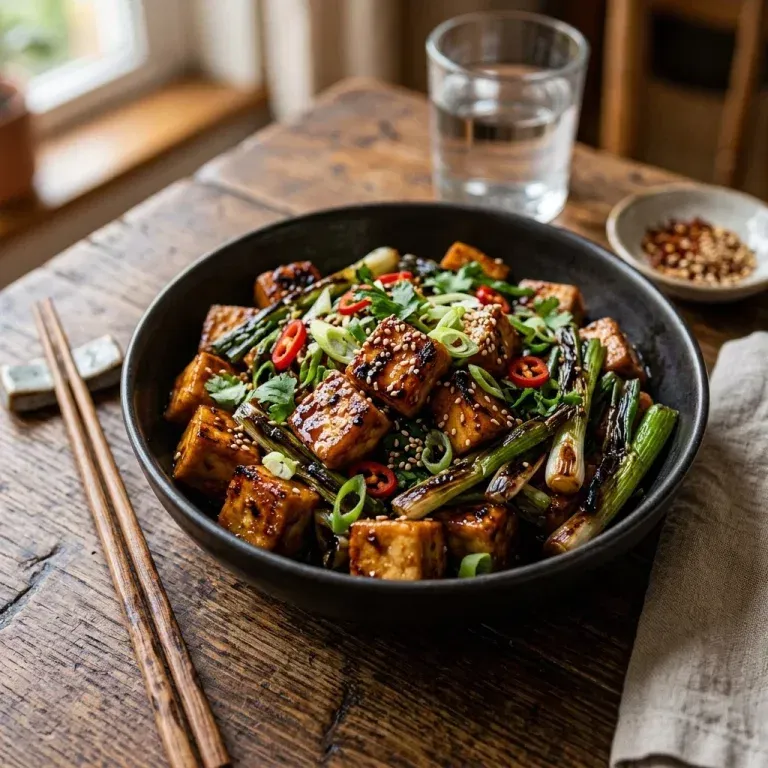
Let’s be honest: when you walk through the door after a long day, the last thing you want is a kitchen project that takes an hour. You want food, you want it fast, and you want it to taste like you actually put effort into it. That is exactly where my 15-Minute Teriyaki Ginger Tofu Stir-Fry comes into play. This is one of those essential 15 minute meals that proves "quick" doesn't have to mean "compromised." It’s punchy, crispy, and honestly better than takeout.
The Science of the Sizzle: Mastering Tofu Texture
If you think tofu is "mushy," you aren't cooking it right. I’m being firm here because your dinner depends on it. Tofu is a sponge, and a sponge full of water will never get crispy. When you throw wet tofu into a pan, you aren't searing it; you’re boiling it from the inside out. To get that restaurant-quality crust, you have to treat moisture like your worst enemy.
Press your tofu. Even if the package says "extra-firm," press it anyway. Wrap that block in a clean towel and put something heavy on it for at least ten minutes while you prep everything else. This physical pressure forces out the free water between the soy protein networks. Once it’s pressed, pat it dry. If the surface is wet, the Maillard reaction, that magical chemical dance where proteins and sugars brown under high heat, can’t start until all that surface water has evaporated. By drying it first, you jump-start the browning process immediately.
Use starch as your secret weapon. Tossing your dried tofu cubes in a light coating of cornstarch creates a "micro-armor" on the surface. When that starch hits the hot oil, it gelatinizes and then quickly dehydrates into a thin, shatteringly crisp shell. This shell also gives the teriyaki sauce something to cling to later. Avoid using a heavy hand; a thin, even dusting is all you need. If it looks like a powdered donut, you’ve gone too far. Shake off the excess.
Preheat your pan until the oil shimmers. If the tofu doesn't sizzle the moment it touches the metal, take it out and wait. You need that initial hit of high heat to set the starch. Also, stop moving it! Give the tofu at least three minutes of undisturbed contact with the pan to develop a crust. If you stir it constantly, you’re just cooling down the pan and inviting sogginess. This technique is similar to how we handle textures in our air fryer recipes dinner collection, maximum surface contact, minimum interference.
Aromatics and the Anatomy of a Glossy Glaze
While your tofu is getting its life together in the pan, you need to think about the aromatics. Ginger and garlic are the heart of this dish, but they are also incredibly fragile. Fresh ginger contains gingerols, which provide that sharp, spicy bite. When you sauté them briefly in oil, they transform into zingerone, which tastes warmer and more complex.
Avoid burning your aromatics. Garlic, specifically, contains sugars that turn bitter the second they cross the line from golden to brown. Add your minced ginger and garlic only after the tofu is crisp and the heat is slightly managed. You only need about 45 seconds of "blooming" in the oil to release the volatile oils that carry all that flavor.
The glaze itself is a balancing act of salt, sugar, and acidity. We use soy sauce for the salt and umami (thanks to the glutamates), and a sweetener like maple syrup or brown sugar to provide the stickiness. But a great teriyaki needs acid, usually rice vinegar, to "lift" the flavors. Without acid, the sauce feels heavy and one-dimensional.
To get that iconic mirror-like finish, we rely on starch gelatinization again. Mixing a bit of cornstarch with cold liquid before adding it to the simmering pan ensures it dissolves evenly. If you add dry starch to a hot pan, it will clump into little grey pearls of sadness. Aim for a sauce that is thick enough to coat a spoon but still fluid. If it looks like hair gel, whisk in a splash of water to thin it out. Mastering this balance is the key to creating quick family meals that people actually request a second time. This is the same principle I discuss when achieving the perfect glossy sauce in our pasta recipes.
Flavor Variations: Keeping it Balanced
The beauty of this stir-fry is how easily it adapts to what’s in your fridge, as long as you maintain the balance of flavors. If you’re looking for more healthy dinner ideas, start by swapping the vegetables.
- The Heat Seeker: If the ginger isn't enough kick for you, add sliced bird's eye chilies or a dollop of chili garlic sauce to the aromatics. The capsaicin in the peppers provides a sharp contrast to the sweet maple syrup in the glaze.
- The Citrus Twist: Replace half of the rice vinegar with fresh lime juice or orange juice. The citric acid provides a different "brightness" than the acetic acid in vinegar, and the citrus oils in the zest add a floral top note that pairs beautifully with ginger.
- The Nutty Crunch: Toss in a handful of toasted cashews or peanuts at the very end. The fats in the nuts help carry the spice of the ginger across your palate and provide a structural contrast to the soft interior of the tofu.
- The Vegetable Swap: Use snap peas, bok choy, or julienned carrots. Just remember the rule of density: hard veggies (like carrots) go in first, and leafy ones (like bok choy) go in at the very end so they just barely wilt.
Perfect Side Dish Pairings
A stir-fry is an intense experience, it’s salty, sweet, and bold. You need side dishes that provide a "landing pad" for those flavors.
Steamed Jasmine Rice is the classic choice for a reason. Its subtle floral aroma and neutral profile act as a sponge for any excess teriyaki sauce. If you’re feeling adventurous, try a Cold Smashed Cucumber Salad. The cooling effect of the cucumber and the sharp hit of rice vinegar help reset your taste buds between bites of the warm, rich tofu.
For a lower-carb option, Cauliflower Rice works surprisingly well here, but don't just steam it. Sauté it in a dry pan first to cook off the moisture so it doesn't turn your stir-fry into a soup. If you want more crunch, a simple Shredded Cabbage Slaw with a touch of sesame oil and lime juice adds a fresh, textural element that cuts through the richness of the glazed tofu. These pairings turn a simple recipe into one of the most reliable quick family meals in your rotation.
FAQ: Science-Based Troubleshooting
Why is my tofu sticking to the pan?
It’s likely one of two things: your pan wasn't hot enough or you’re using the wrong pan. When cold protein hits a cold pan, it forms a chemical bond with the metal. You need the "Leidenfrost effect", where a layer of vapor forms between the food and the pan, to keep it moving. Use a non-stick or a very well-seasoned cast iron, and wait for that oil to shimmer.
Can I use an air fryer for the tofu?
Absolutely. If you want to lean into air fryer recipes dinner techniques, toss the starched tofu cubes in the air fryer basket at 400°F (200°C) for about 10-12 minutes. This is actually a great "cheat code" for getting a super even crust without using much oil. Just toss the crispy cubes into the sauce at the very end. You can find similar time-saving tricks in our guide to kielbasa pierogi air fryer roasts.
My sauce turned into a thick glob. What happened?
You either used too much cornstarch or you let it boil for too long. Starch thickens as it reaches its gelatinization point, but if you keep cooking it, the starch granules can actually burst and lose their thickening power, or they just evaporate so much water that it becomes a paste. Add a tablespoon of water or broth and whisk vigorously over low heat to bring it back.
Is it okay to use ground ginger instead of fresh?
Look, in a pinch, yes. But understand that the flavor profile changes entirely. Fresh ginger is sharp and citrusy; dried ginger is warm and earthy. If you must use dried, use only about a quarter of the amount, and know that you’ll lose that signature "zing" that makes this one of the best 15 minute meals.
Why is my stir-fry so watery?
You probably crowded the pan. When you put too many vegetables or pieces of tofu in at once, the temperature of the pan drops. Instead of searing, the food begins to release its own internal moisture and steams. Cook in batches if you have a small pan. It’s better to spend an extra three minutes cooking in two rounds than to eat soggy tofu.
What are some other healthy dinner ideas using this sauce?
This teriyaki base is universal. Use it for stir-fried shrimp, thinly sliced chicken breast, or even roasted Brussels sprouts. The core science of balancing the "big four" (salt, sweet, acid, umami) remains the same regardless of the protein you choose.