Recipe
Serves
4 1×
Serves 4Prep 10 minCook 40 minTotal 50 min
Ingredients
Method
- Heat the oven to 220C conventional or 200C fan. Toss the aubergine cubes with 3 tbsp oil and salt on a tray.
- Roast for 25 minutes until golden and soft.
- Meanwhile, cook the pasta in well-salted water until just al dente. Reserve a mug of pasta water.
- Heat the remaining oil in a large pan and cook the onion for 7 minutes until soft.
- Add the garlic, smoked paprika and chilli for 1 minute, then pour in the passata, sugar and salt. Simmer 10 minutes.
- Stir the roasted aubergine into the sauce, breaking some cubes down against the pan.
- Add the mascarpone and stir until melted and silky.
- Toss in the pasta with a splash of pasta water. Serve with parmesan and basil.
Smoky Aubergine and Tomato Pasta
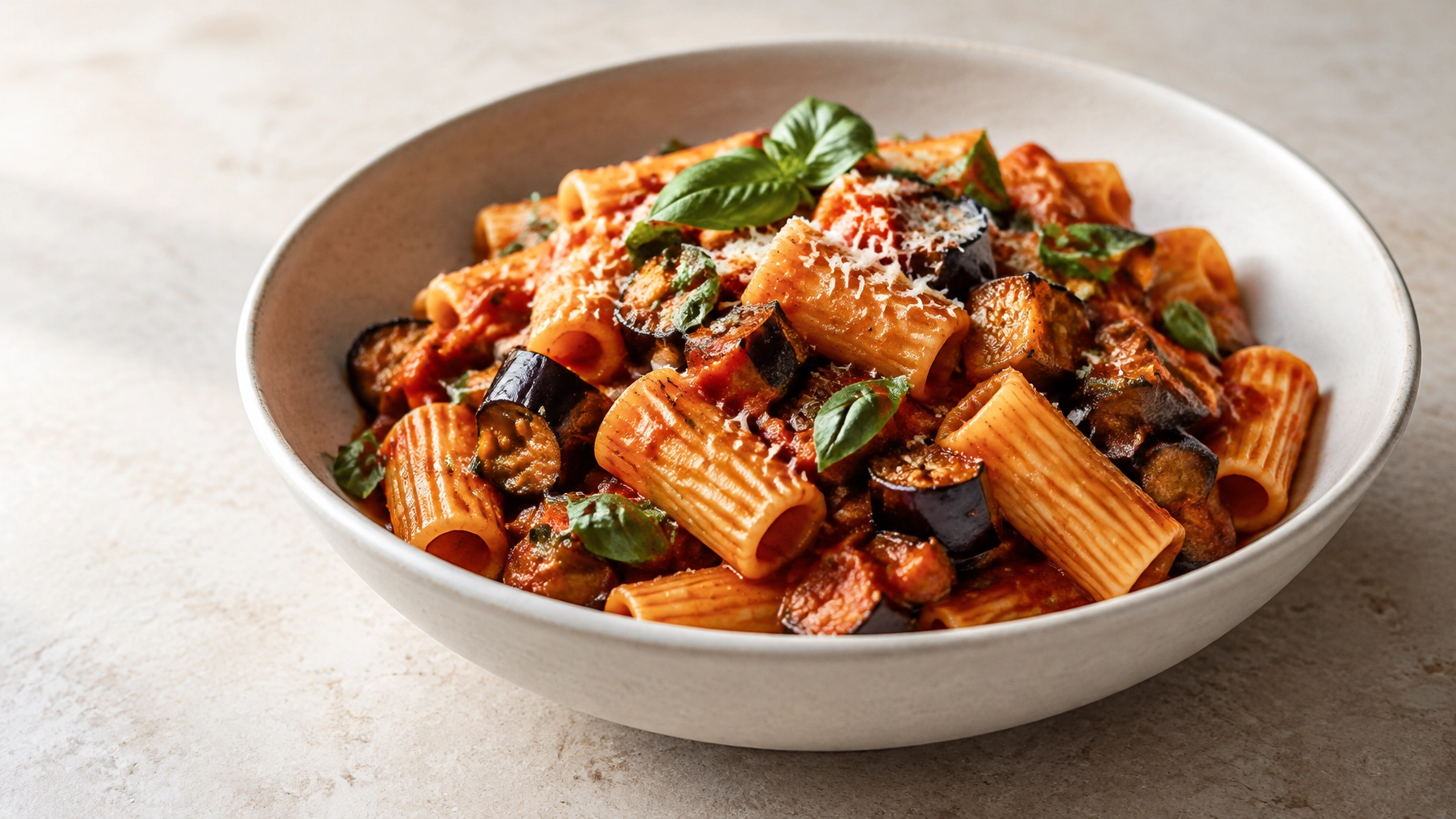
Smoky aubergine and tomato pasta turns soft roasted aubergine into a silky sauce that clings to every strand.
Smoked paprika deepens the tomato base while a spoon of mascarpone makes it rich.
It is a weeknight pasta that tastes like slow Sunday cooking.
Recipe
Servings: 4
Prep time: 10 minutes
Cook time: 40 minutes
Total time: 50 minutes
Tips
- Roasting the aubergine keeps the sauce from going greasy.
- The pasta water is starchy and helps the sauce cling; do not forget to reserve it.
- Simmer the passata until it darkens a shade for deeper flavour.
Cut the aubergines into evenly sized 2 cm cubes so they roast at a similar rate. Spread them across the tray rather than piling them up. Room around the cubes allows hot air to circulate and helps their surfaces brown. The aim is soft aubergine with golden edges, ready to fold into the tomato sauce. If the cubes are crowded, they can soften without browning as evenly.
Keep an eye on the aubergine towards the end of roasting. It should be soft enough to break down against the pan, but still include some pieces that hold their shape. Breaking down a portion thickens the sauce; leaving the rest intact gives it texture. Both results come from the same batch, so the sauce does not need blending.
Reserve the pasta water before draining. A mug is more than the recipe is likely to need, but it provides room to adjust the sauce as you toss everything together. Add a splash at a time. The starch in the water helps the tomato sauce coat the pasta, while adding too much at once can make it thin. Stop when the pasta is coated and the sauce moves easily around the pan.
The sauce and pasta finish cooking together, so cook the pasta only until just al dente before combining. The reserved water makes it possible to loosen the sauce without adding more oil. Stir gently as you toss, particularly if using rigatoni, so the aubergine stays distributed through the pan rather than gathering at the bottom.
Seasoning is distributed across several ingredients in this recipe. The aubergine is tossed with salt, and the sauce includes salt, sugar, smoked paprika and chilli. Well-salted pasta water seasons the pasta as it cooks. Taste the sauce before adding the pasta and make any adjustment then, accounting for the saltiness of the cheese that will be served at the end.
Variations
- Add torn mozzarella under the grill for a baked version.
- Stir in capers and olives for a brinier sauce.
- Use courgettes alongside the aubergine in summer.
For a baked version, transfer the sauced pasta to an ovenproof dish, scatter torn mozzarella over the top and place it under the grill until the cheese melts. Keep the pasta coated in sauce before baking. The grill stage changes the finish without requiring a different tomato base.
Capers and olives add a saltier, brinier character. Stir them into the sauce after the passata has simmered, then taste before adding extra salt. Their flavour carries through the sauce, so a small amount can be enough to alter its balance. They also work alongside the smoked paprika and roasted aubergine without changing the basic method.
Courgettes can be used alongside the aubergine in summer. Cut them into pieces of a similar size and roast them with the aubergine so both vegetables are ready to go into the sauce together. The mixture will have more vegetables and a different texture, while the passata, paprika and mascarpone remain the base.
The pasta shape can also be selected according to what is available. Rigatoni and penne both provide ridges or tubes that hold sauce. The recipe's method remains the same: cook the pasta until just al dente, reserve pasta water, then toss it with the sauce before serving.
FAQ
Q: Can I make it vegan?
A: Swap the mascarpone for 2 tbsp olive oil or a plant-based cream and omit the parmesan. Check the pasta and any plant-based cream labels if you need to confirm that they contain no animal-derived ingredients. The tomato sauce, roasted aubergine, smoked paprika and basil provide the base of the dish.
Q: Can I freeze the sauce?
A: Yes, freeze the sauce alone for up to 3 months and cook pasta fresh. Let the sauce cool before placing it in a suitable freezer container. Leave room at the top of the container and label it with the date. Defrost it before reheating, then cook and combine with fresh pasta.
Q: Which pasta shape is best?
A: Something with ridges or tubes that catches the chunky sauce. Rigatoni and penne are listed for this recipe because their shape works with the aubergine pieces and thick tomato sauce. Use the cooking time on the pasta packet as a guide, stopping when it is just al dente before tossing it with the sauce.
Q: How do I reheat leftovers?
A: In a pan with a splash of water over medium heat. Stir as the pasta warms so the sauce loosens and coats it evenly. Add a little more water if needed, rather than adding it all at once. Heat until the pasta and sauce are hot throughout.